Posts Tagged With: nature blogs

Hello Kitty!

Hello Kitty!

EEA2B434-D773-447F-AE67-FD375D02B0EB

We are excited to meet our first animal of this year’s travels. We unpacked our gear at our camp. We’ll be exploring several kinds of habitats here the Southwest. We spent our first evening looking for a wild cat, the ocelot. These spotted cats roam in the southern most regions of the southwest. They are not easy to spot, but we were lucky and found one!

04A4EBB4-3127-441F-B433-A632945C473C

Ocelot Fun Facts: 

  • Ocelots are mostly nocturnal. Like all cats, they are carnivores. They eat rabbits, rodents, birds and reptiles.
  • Ocelots can swim well.
  • Ocelots are mostly solitary. They scent mark their territories.
  • They are kept as pets, which is a very bad idea. They are not like your domestic housecat, They are strong and destructive. These cats belong in the wild.
  • They are know to be shy.
  • Females give birth to a litter in a den, where the cubs will stay til they around 3 months old.

5FB30FE2-8FA7-4DDC-99F7-66ECC20A1FB2

These small big cats are gorgeous. The were once listed as threatened by the IUCN because they were hunted for their coats. They still are losing habitat, but for now their populations are stable. Yay!!!

Categories: adventure, Animals, Children, conservation, education, endangered species, Environment, nature, science, Today's Post, wildlife | Tags: , , , , , , , , , | 1 Comment

Where will E&E’s next adventure be?

Where will E&E’s next adventure be?

Are you ready to guess where our October adventure will be? Read the clues and let us know your answer! The first to answer correctly on Instagram, Facebook, Twitter or here in the comments will get an E&E prize!

We are staying on the continent we call home.

It’s a large place to try and roam.

We are heading towards the west.

We hear it is quiet the best.

There are mountains in plain sight.

There are cactus standing in all their might.

Four deserts compromise the region.

Not it’s not Norwegian.

It can be very dry and rocky.

And for sure it is not Milwaukee.

The animals here are adapt to dry habitats.

There are birds, reptiles and even rats.

So can you guess where we are?


Categories: adventure, Animals, Children, conservation, education, Environment, nature, science, Today's Post, wildlife | Tags: , , , , , , , , | 1 Comment

Back to Basics- Habitats 2

Back to Basics- Habitats 2

Yesterday we talked about land habitats, today we are covering water habitats. We are hitting up some of the basics, but there are more water habitats on the earth- understandable since 75% of the planet is covered in water.

Fresh water habitats are those without salt! Let’s talk about those:

Wetlands: an area where aquatic plants thrive. They can include marshes, bogs or swamps. Wetlands can be fresh water, salt water or brackish water (a mix of fresh and salt). They can have some dry seasons or stay wet all year round. Many animals call this their home including alligators, birds and mollusks.

wetlands

Lakes/ponds: are usually closed bodies of water. They can be large or small. They can be natural or man made. They are mostly fresh water, with the exception of a few salt water lakes. Lakes are home to many different fish, some of whom only call one lake their home. 

lake


Rivers/streams: rivers and streams are fresh water habitats where the water continuously moves. The longest river in the world is the Amazon. Rivers and streams lead to the ocean. Animals that call rivers and streams home, must adapt to not going down stream. Some animals leave their ocean home to have offspring in the fresh water environment and some do the opposite- like salmon. 
river


Brackish waters: where fresh water and salt water mix. You will find this habitat at the mouth of a river, estuaries and mangroves. Brackish mangroves are important habitats for many animals who have their offspring their in the roots of the trees. These nurseries keep little fish save from larger predators.

brackish water


Ocean Habitats:

Deep oceans: deep oceans are dark places. The sunlight can not penetrate these depths. The animals that call this harsh environment home must adapt to living where there is no plant life. Such alien creatures as the frilled shark, the anglerfish and giant spider crabs call this home.

deep ocean


Open oceans: the open ocean is the area where sun penetrates the water. This massive habitat is the often called the marine desert. There are little nutrients here. Animals that call the open ocean their home must be fast and efficient swimmers, like mako sharks, tuna and dolphins.

open ocean


Coral reefs: these amazing habitats are the most diverse in all of the oceans. Many animals call it home, including the coral that build the reef. Coral reefs are similar to the rainforest. Animals that call the reef home include, clownfish, anemones and sponges.

coral reef


Intertidal zone: the intertidal zone is on the shore, in between the low tides and the high tides. We often think of places with tide pools when it comes to intertidal zones. The animals that live here, like muscles must be able to survive life outside of water. It is a harsh environment to call home. 

These are just a few of the water habitats that are on our planet. The ocean especially has some harsh environments and yet life still exists. Sooooooo cool!

Categories: adventure, Animals, Children, conservation, Environment, habitats, nature, oceans, science, Today's Post, wildlife | Tags: , , , , , , , , | 1 Comment

Back to Basics- Symbiosis

Back to Basics- Symbiosis

Symbiosis is a big word! Edmond thought he would teach you how to pronounce it before we explained more about it.

Symbiosis: interaction between two different organisms living in close physical association, typically to the advantage of both.

    -Mutualism: symbiosis that is beneficial to both organisms involved. (Ex- anemones and clownfish)

clown

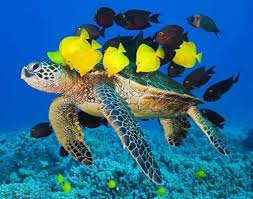
     -Commensalism: a relationship between individuals of two species in which one species obtains food or other benefits from the other without either harming or benefiting the latter. (Ex- yellow tangs and sea turtle)

turtle

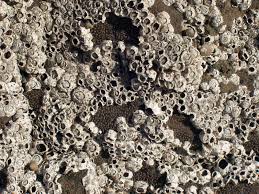
      -Parasitism: relationship in which one organism (the parasite) benefits and the other (the host) is generally harmed. Parasites derive nutrition from their host and may also gain other benefits such as shelter and a habitat in which to grow and reproduce. (Ex- barnacles)

barnacles


Now you know all about symbiosis, including how to pronounce it!

Categories: adventure, Animals, Children, conservation, education, Environment, nature, science, Today's Post, vocabulary, wildlife | Tags: , , , , , , , , , | 1 Comment

Back to Basics- Insects

Back to Basics- Insects

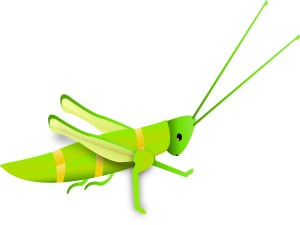
We are day number 3 of our back to basics month. Today we are learning about insects with our professor of insects Gracie Grasshopper!

ellie_edmund_professors-grasshopper

Number of species- nearly 1 million, that’s right we insects account for about 97% of all known species on earth. We arthropods outnumber all other animals on earth.

Insect traits:

  • Insects have a segmented body. It’s divided into 3 sections; the head, the thorax and the abdomen.
  • Insects are invertebrates. We do not have endoskeletons, like the mammals, birds, fish and reptiles. We have an exoskeleton! Our bodies are covered in hard coverings made of chitin.
  • We have two antennae and 6 legs. Each leg has five parts.
  • We hatch from eggs.

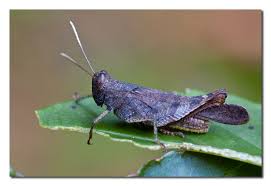
Insects are generally divided into two groups, insects with wings and insects without wings. I myself have wings.

insect

We either have compound eyes or simple eyes and there are some of us with both types.

We do not have true ears, but we have organs that help us listen to vibrations in our environment.

We do not have lungs or gills to breathe. Instead we have a series of tubes to “breathe” oxygen and expel carbon dioxide.

Yes, we insects have brains. They are tiny and we don’t quiet use them the way other animals do.

insect2

There you have the basics of being an insect!

Categories: adventure, Animals, Children, conservation, education, Environment, insects, nature, science, Today's Post, wildlife | Tags: , , , , , , , , , | 1 Comment

Back to Basics- Fish

Back to Basics- Fish

Time to brush up on your fish knowledge with professor Sylvia the Seahorse!

ellie_edmund_professors-seahorse


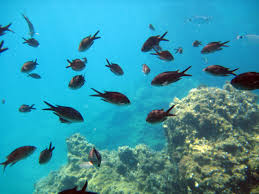
Number of fish species- 24,000 and growing! Scientists discover new species all the time! We fish were the first vertebrate animals on the earth! We occupy the world’s oceans and fresh water bodies of water; including lakes, rivers and ponds.

Fish traits:

  • Fish have gills that we use to extract oxygen from water and expel carbon dioxide. They serve the same function as a mammal’s lungs.
  • Fish have scales. Our scales are different, some are smooth and some are rough. Sharks’ scales are called dermal denticles. Some fish like hagfish have no scales.
  • Fish have fins for swimming. Fins are shaped for the type of swimming a fish does- some are built for speed and some are small (like mine).
  • We fish are vertebrates, we all have back bones.
  • Most fish are exothermic, cold blooded.

Fish are classified in three groups; jawless fish (hagfish and lamprey- they also have no scales), cartilaginous (sharks and rays) and bony.

fish2

Some fish lay eggs, some incubate their eggs in a womb and some incubate their young in wombs similar to mammals.

We fish can detect chemicals and vibrations. We often have keen eyesight and a great sense of smell.

Fish do have ears! Not big goofy ones like some mammals, but internal ones.

fish

We also have an extra “organ” to help us “hear” and detect vibrations. This is called the lateral-line. This line of cells runs the length of our bodies and helps us detect motion. Schooling fish who swim in synchronized groups use their lateral line to swim in these formations.

Sharks and rays have yet another “organ” that helps them detect electrical fields. It’s called the ampullae of Lorenzini, gel filled cells that help our cartilaginous cousins detect even the faintest of electrical fields. This is something no other animal can do!

We also have a swim bladder that keeps us buoyant in the water. Fresh water fish have a bigger swim bladder than salt water fish. Bony fish swim bladders are filled with a gas that is less dense than water. In cartilaginous fish, their swim bladder is a large oil rich liver that is less dense than water! 


Categories: adventure, Animals, Children, conservation, education, Environment, fish, nature, oceans, science, Today's Post, wildlife | Tags: , , , , , , , , , , | 1 Comment

Back to Basics- Birds

Back to Basics- Birds

Our professor of birds is Professor Baxter and he is a Blue footed Booby! He’s going to share some basics about about birds!

ellie_edmund_professors-bfbooby

There are around 9,000 species of birds in the world. We are in every habitat on earth. Because we are so adaptable, we are considered the most successful animal on the planet. The earliest birds were descendants of the dinosaurs. Fossils of my long lost relatives have been found that are 150 million years old.

 first bird

What makes a bird a bird?

  • We have feathers. Our feathers are made from keratin.
  • We are endothermic (warm blooded).
  • We lay eggs.
  • We are vertebrates.
  • We have hollow bones. This helps us fly.
  • We have no teeth.

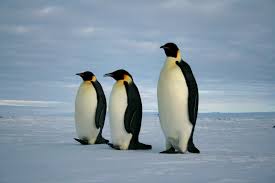
Feathers are our most distinctive feature. Feathers are made of keratin (the same protein that makes up human hair and nails). We have flight feathers on our wings. We have down feathers close to our body to keep us warm. Our tail feathers are made to help us fly. We must preen (clean) our feathers to keep them healthy. There are some birds who cannot fly including; kiwi, kakapo (the heaviest parrot on earth), penguins and ostrich.

kakapo

peguin

Our beaks/bills are also covered in keratin and they are shaped for what type of food we eat.

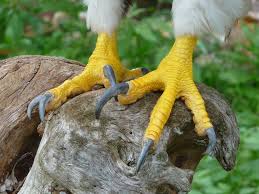
Instead of paws, we have feet. Our feet have 2 to 4 toes. Most of us have 4 toes, 3 that face forward and one that faces backward. This is perfect for sitting on tree branches. Those birds that spend time in water have webbed feet.

bird feet

We must keep our body temperature at 104 degrees. It is important that we control our heat loss.

Lastly, we lay eggs. Our mating rituals include dancing, songs and plumage displays. Our eggs are made of calcium carbonate. We lay eggs in nests, on rocks, on the beach and even on the ground. Some of us are born without feathers and our eyes closed. Some of us are, like ducks, are born with down feathers and our eyes open.

duck


Categories: adventure, Animals, birds, Children, conservation, education, Environment, nature, science, Today's Post, wildlife | Tags: , , , , , , , , , , | 1 Comment

Back to School 2017

Back to School 2017

ellie_edmund_professors-U-logo

Hellooooo! Welcome back everyone! We trust you had a wonderful summer, we know we enjoyed camp! It’s time to get back to the books and adventure though! This month we are kicking off school with a Back to Basics month! We’ll be go over some things you know and hopefully some things you don’t!

Come October we are heading off on our trip around the world just like last year, except where we go will be a secret. On the first day of each month, we’ll describe where we will be going and you will have to guess. We’ll have a prize each month for the first person to guess where we will be going!

As usual we’ll be meeting all kinds of new animal friends along the way! We hope you are excited for this wonderful new school year! Tomorrow we start with the bird basics!

Categories: adventure, Animals, Children, conservation, education, Environment, nature, science, Today's Post, wildlife | Tags: , , , , , , , , , | 1 Comment

Pelican! Pelican!

Pelican! Pelican!

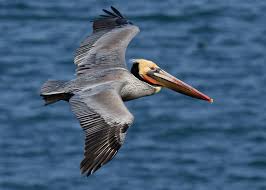
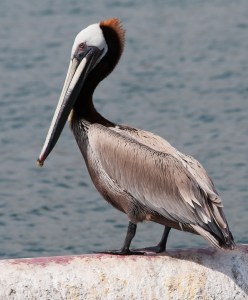
We are meeting one last animal at Camp E&E! The summer has flown by hasn’t it? We can hardly believe it! We could spend hours and hours watching the brown pelican take diving in the ocean scooping up eats! Let’s mee them today!

IMG_0337


Brown Pelcian Fun Facts: 

  • The Brown Pelican is the smallest of all pelican species.
  • They are plunge divers. They fly above the surface of the water and then drop or plunge into the sea to catch their prey.
  • Brown pelicans have a greenish skin on their face that is brighter during mating season.
  • Brown pelicans like to nest in trees, shrubs and mangroves.
  • Both parents incubate eggs. They usually have 2-3 chicks. One chick can eat up to 150 lbs of food by the time they are 10 months old! That’s a bunch of fish for little guys
  • Their pouch can hold up to 3 gallons and the stomach can hold around 1 gallon.
  • Brown pelicans are the state bird of Louisiana.

IMG_0339

We love pelicans! Love them! They are one of the coolest birds around! Do you love them as much as us? Stick around for the last craft day of camp tomorrow!

Categories: adventure, Animals, birds, camp, Children, conservation, education, Environment, nature, oceans, science, Today's Post, wildlife | Tags: , , , , , , , , , , , | 1 Comment

Wear Your Bonnet

Wear Your Bonnet

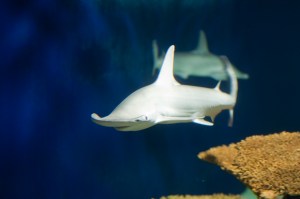
Can you imagine a shark wearing a bonnet? That would be funny looking- not to mention hard to swim with- hahaha! Today we are meeting a relative of the hammerhead- the bonnethead shark!!

IMG_0317

Bonnethead Shark Fun Facts: 

  • Bonnetheads are smaller sharks- they can grow up to 59 inches- about the length of a refrigerator.
  • They call estuaries, bays and sandy bottoms their home.
  • Their heads are more rounded than that of the larger hammerhead species.
  • Like all other sharks they are carnivores.
  • Bonnethead sharks live in small groups.
  • They can live up to 15 years.


IMG_0324

These smaller hammerheads are so cool. A recent study by scientists may suggest that they eat sea grass, which would make them omnivores! Wow! That would be super cool!

Categories: adventure, aliens, Animals, camp, Children, conservation, education, endangered species, Environment, fish, oceans, science, Today's Post, wildlife | Tags: , , , , , , , , , , , | 1 Comment

Blog at WordPress.com.