Posts Tagged With: oceans

NATIONAL DOLPHIN DAY!

NATIONAL DOLPHIN DAY!

dolphin2

It’s National Dolphin Day! We’ve got some fun facts and pictures for you to celebrate!

dolphin7

Dolphin Fun Facts:

  • There are 42 species of dolphins in the world; 38 live in oceans and 4 live in freshwater rivers.
  • All dolphins are carnivores. Some species can eat up 30 lbs of fish a day.
  • They have a two to three chambered stomachs. Most of the chambers store food and one digests their food.
  • Dolphins use echolocation to locate prey and communication with each other. The melon is a fatty rich structure on their heads that help them with echolocation.

dolphin5

  • Their communication includes clicks and whistles.
  • Dolphin communication can be very complicated and scientists know that dolphins even name each other.
  • Like all mammals, dolphins have hair. They are born with a few chin hairs that fall out as they grow older.
  • Dolphins can swim up 25 miles per hour.
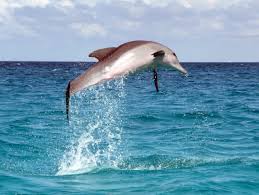
dolphin3

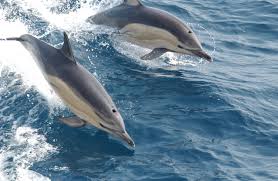
  • Dolphins are highly social and live in groups called pods.
  • They are considered to be highly intelligent too.
  • Dolphins are obligate breathers. They must think to breathe. They use their blowholes to breathe.
  • Dolphins sleep with one 1/2 of their brain asleep, so they can continue to breathe.
dolphindolphin2


Dolphins are fascinating creatures. There is much that scientists don’t know about their complex behavior and groups! We think they are just fantastic! Learn how to draw a dolphin here in our video!
Categories: adventure, Animals, Children, conservation, education, Environment, mammals, nature, oceans, science, wildlife | Tags: , , , , , , , , , , | 1 Comment

THAT IS ONE BIG DOLPHIN!

THAT IS ONE BIG DOLPHIN!

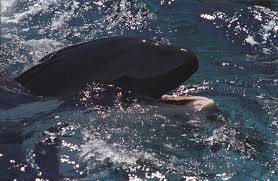
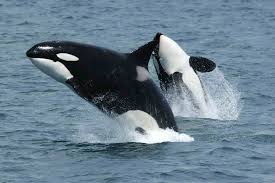
It’s time to meet one of the oceans most iconic animals! These black and white predators are known around the world and today you are going to learn more about them along with us!

orca3

  • Orcas live in oceans all around the world.

IMG_0217

  • They can grow up to 32 ft long and weigh up to 6 tons. That is the average weight of an adult male elephant!
  • Orcas are carnivores. They eat fish, seals, squid and even other whales.
  • They are listed as data deficient by the IUCN.
  • Orcas are also known as killer whales.

orca2orca

  • Scientists believe that orcas will eventually be split in to either subspecies or different species. There are orcas that stay in one location all year round (resident). There are orcas that live in smaller groups that travel where the food is abundant (transient). And there are orcas that hunt mainly very far from shore (offshore).
  • These carnivores live in pods and often hunt together as a group.

IMG_1025

  • Orcas have earned the nickname wolves of the sea, because of their group hunting techniques.
  • They can swim up to 33 mph!
  • Orcas have up to a 4″ layer of blubber to help keep them warm in cold waters.
  • Their teeth are 4″ long! Watch out for those chompers!
  • Orcas, like other toothed dolphins and whales, use echolocation to detect prey.
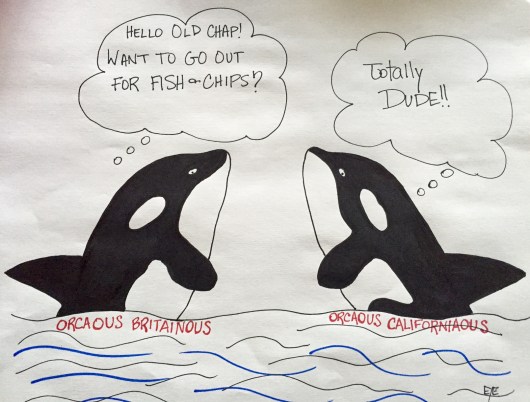
  • They are highly vocal. Pods are known to have their own unique language, dialect and culture. Scientists say the orcas’ dialects are very distinctive, like humans from the United Kingdom vs humans from Scotland.

FullSizeRender(41)

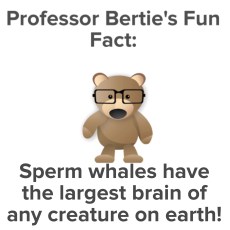
  • They have the 2nd heaviest brain of any marine mammal- our friend the sperm whale has the heaviest!

IMG_1024

Orcas are super cool! They are highly social and intelligent! Cultures around the world have told myths and stories of the killer whales for centuries. The Kwakwaka’wakw people believed that orcas were the rulers of the seas and sea lions were their slaves! Wow!


Categories: adventure, Animals, Children, conservation, education, Environment, mammals, nature, oceans, science, wildlife | Tags: , , , , , , , , , , | 1 Comment

LITERARY WHALE!

LITERARY WHALE!

We’re super excited to meet some cetaceans this week! Edmond even put on his snorkel gear to get closer to these great animals! Today we meet a whale made famous in the book Moby Dick!

8D17BA1A-2624-4D14-8492-BD259C8D83D9

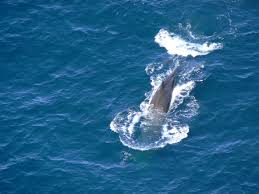
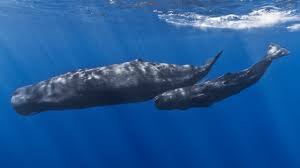
  • Sperm whales are found in oceans all around the world. IMG_0217
  • Sperm whales are toothed whales and carnivores. They eat fish and squid!
  • Sperm whales are listed as vulnerable by the IUCN.
  • Sperm whales can grow up to 59 feet long and weigh up to 45 tons. They are longer than a school bus!  IMG_1019(1)
  • Sperm whales are in fact the largest of the toothed whales!
  • Sperm whales are known to battle and sometimes eat giant squid. Scientists have even observed squid suction cup wounds and scares.
  • Sperm whales are very vocal and they use echolocation to help them find prey.

IMG_0998

  • Sperm whales are known to dive to very deep depths- as deep as 3,200 feet down.
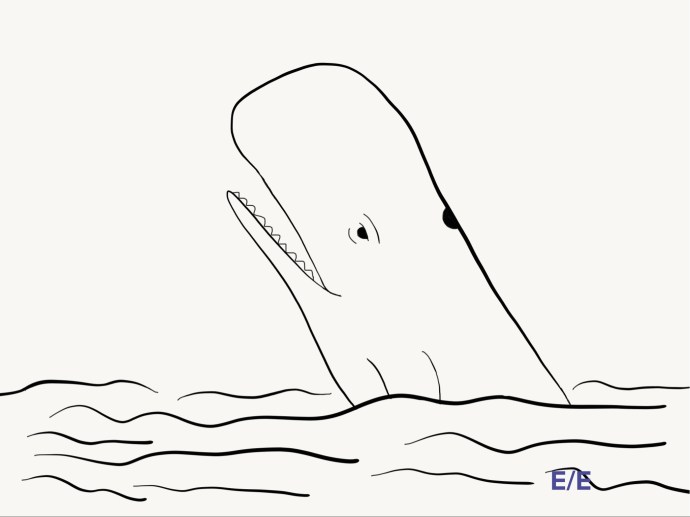
  • Their large squarish shaped heads are filled with a substance called spermaceti. Scientists are still unsure of it’s exact use, but they think it helps the whale maintain its buoyancy when it dives to deep depths.
  • These amazing whales can hold their breath for up to 90 minutes.
  • Female sperm whales live in pods in warmer waters all year round. They raise their young together.

sperm whalesperm whale2

whales8

  • Sperm whales may be one of the best known species of whales on earth. The book “Moby Dick” is the story of the struggle with a famed white sperm whale and a whaler. IMG_1020

We love these giants of the deep! They are such amazing creatures. Many cultures in the South Pacific revere their teeth as sacred. We have a sperm whale coloring sheet for you too!IMG_1021


Categories: adventure, Animals, Children, conservation, education, Environment, mammals, nature, oceans, science, wildlife | Tags: , , , , , , , , , , | 1 Comment

SCIENCE WORD OF THE WEEK!

SCIENCE WORD OF THE WEEK!

swow cetacean

Hello class and happy Monday! Things are really buzzing around the University this week and it all starts here with our science word of the week!

Today’s word is Cetacean: a marine mammal from the order of Cetacea. Cetaceans include whales, dolphins and porpoises. 

I know Ellie and Edmond and professor Bertie are so excited to meet some of these awesome creatures this week! I hope you’re excited too!

Categories: adventure, Animals, Children, conservation, education, Environment, nature, science, vocabulary, wildlife | Tags: , , , , , , , , , , | 2 Comments

WE ARE FANIMALY!

WE ARE FANIMALY!

We have a new fanimaly to share with you today! We have two animals that can be found in the intertidal zone that are related! Come learn about sea stars and sand dollars!


sand dollar

  • Sand dollars are animals! They are members of the enchinoderm family.
  • They are invertebrates.
  • Sand dollars are covered in tiny purple spines.
  • Those spines help them move and they use them as gills.
  • They have a five pointed shape.
  • Sand dollars have five teeth like projections that they use to chew their food.
  • Sand dollars can live up to 6 to 10 years.


seastar

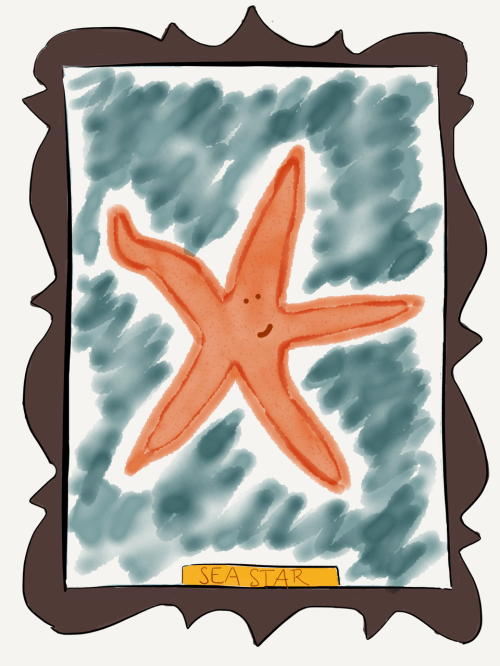
  • Sea stars are also echinoderms.
  • Sea stars are carnivores like sand dollars.
  • They have no blood or brains.
  • Most sea stars have 5 arms, but some can have as many as 40.
  • Sea stars have tiny little feet that they use to move and to pry apart prey like muscles.
  • Sea stars push their stomach outside their body to envelope their prey and digest it.
  • They can regenerate limbs.

These are just a few fun facts about these two animal relatives. Sea stars and sand dollars are both super cool! Which one do you like best?


Categories: adventure, Animals, Children, conservation, education, Environment, nature, oceans, science, wildlife | Tags: , , , , , , , , , | 1 Comment

A hare of a different kind!

A Hare of a Different Kind!

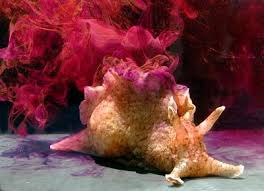
california sea hare

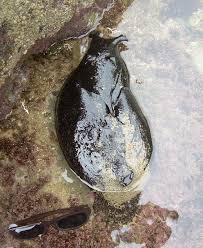
  • California sea hares can be found in intertidal zones from California to Northern Mexico.
  • They can grow up to 30 inches long and weigh up to 15 lbs, but on average they are about 15 inches long.
  • California sea hares are herbivores. They eat kelp and red algae.
  • Sea hares are members of the sea slug family.

FullSizeRender(40)

  • California sea hares are very toxic. That toxicity comes from the algae they eat.
  • When threatened, they can release either a pink ink or white milky ink. The pink ink smells like cedar.
  • California sea hares are nocturnal.
  • One of its known predators are the giant green anemone!
  • Sea hares have one foot on their underside they use to move!
  • Sea hares have the largest neurons of any animal on the planet.

california sea hare3

Sea hares are amazing creatures! They better stay away from our friends the giant green anemone. Scientists have studied these slugs for many years because of their simple but amazing neurological system.

Categories: adventure, Animals, Children, conservation, education, Environment, nature, oceans, science, wildlife | Tags: , , , , , , , , , | 1 Comment

It’s Easy Being Green!

It’s Easy Being Green!

We’re off to meet an anemone today, not a frog! These brightly colored animals are found in the intertidal zones off the coast of California! Woohoo! Let’s meet them!

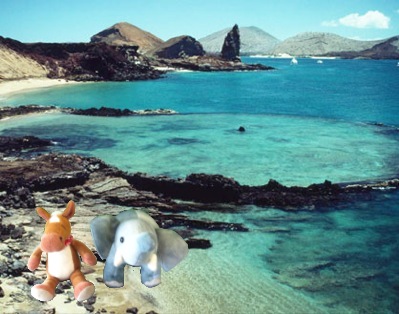
e e galapagos

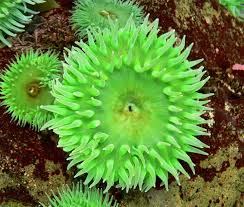
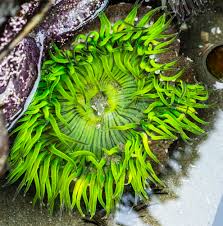
Giant Green Anemone Fun Facts:

  • Giant green anemones can be found along the coast of the Pacific ocean from Canada to Central America.
  • They can grow up to 7 inches in diameter and 17 inches high.
  • Giant green anemones are carnivores and eat muscles, crabs and small fish.
  • Anemones are invertebrates.

giant green anemone

  • They have stinging cells in their tentacles, called nematocysts. Namatocysts sting and paralyzed prey.
  • A giant green anemone can up to six rows of tentacles. FullSizeRender(38)
  • Giant green anemones have a symbiotic relationship with a type of algae called zooxanthellae. The algae gets protection and the anemone gets some nutrition from the algae.
  • The anemones green color does not come from the zooxanthellae.
  • Giant green anemones spit out waste through their mouths.
  • If you ever meet a giant green anemone, their stinging cells can’t hurt human hands, but you can hurt them, so best not to touch.

giant green anemone2Tide pools and intertidal zones are amazing places. They are special spots to visit when you are at the coast. You can find so many interesting creatures living there. We’re excited for Professor Sylvia to show us more of these great habitats tomorrow!

Categories: adventure, Animals, Children, conservation, education, Environment, nature, oceans, science, wildlife | Tags: , , , , , , , , , | 1 Comment

We Have the Right Whale

We Have the Right Whale

whales1

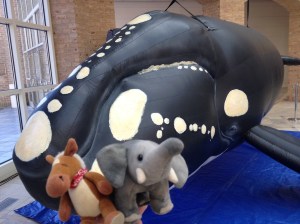
This week we’re meeting some plankton eaters! And today we’re meeting a whale that winters off the Georgia coast! In fact they are our state marine mammal! Woohoo! Let’s learn some cool stuff about these giants of the ocean!

right whale

Right whale fun facts:

  • Right whales are divided into two species, the Northern and the Southern. We’re meeting the North Atlantic right whale today!
  • These whales inhabit the ocean waters of the coast of North America.

FullSizeRender(37)

  • North Atlantic right whales grow up to 52 feet in length and weigh up to 70 tons! Wow!
  • North Atlantic right whales are critically endangered. There are around 400 of these amazing creatures left.
  • These baleen whales are carnivores. They feed on plankton like krill. They skim these tiny prey from the water using their baleen.
  • They feed generally in spring through fall in the cold waters of the Northern Atlantic Ocean near Canada.

IMG_0552

  • Female north Atlantic right whales are larger than the males.
  • Females migrate to the waters off of Georgia and Florida to calve. They have one baby at a time.
  • Northern right whales are slow swimmers and tend to stay near the surface.
  • They are often in danger of boat strikes. In their protected habitats, boats must keep slow speeds.
  • Scientist believe these giants live up to 50 years and maybe even up to 100 years.
  • There are great conservation efforts going on to protect these whales. They are one of the most endangered whale in the ocean today. Fortunately they have been protect since the 1930s, but recovery has been slow. You can learn more about those efforts from the NOAA website on them.

right whale2right whale3


Protecting the earth’s creatures and the habitats we share starts with all of us. These whales along with other ocean dwelling animals can be found with plastic in their stomachs. Make sure your plastic goods go into a recycling bin and never into wild habitats! Let’s do it for the Right Whale!

Categories: adventure, Animals, Children, conservation, education, Environment, mammals, nature, oceans, science, wildlife | Tags: , , , , , , , , , , | 1 Comment

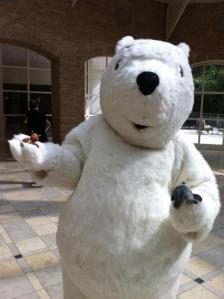
DO A CHEER FOR POLAR BEARS!

DO A CHEER FOR POLAR BEARS!

e & e polar bear

Happy International Polar Bear Day! Edmond is doing a cheer for polar bears! Join him!

GIVE US A P! P is Polar! Polar bears live in polar habitats near the arctic circle!

GIVE US A P!
P is Polar! Polar bears live in polar habitats near the arctic circle!


GIVE US AN O! O is for

GIVE US AN O!
O is for one pound! Baby polar bears weigh around one pound when they are born. They are pink and about 12 inches long!


GIVE US A L! L is for large! Polar bears are the largest land predator on earth!

GIVE US A L!
L is for large! Polar bears are the largest land predator on earth!


GIVE US AN A! A is for excellent! Polar bears are excellent swimmers! They are classified as marine mammals because they spend so much time in the water.

GIVE US AN A!
A is for awesome mom! Polar bears are awesome mothers. They look after their cubs for two years!


GIVE US A R! R is for reflect! Polar bear fur is translucent, not white! That fur reflects off the white snow giving them a white appearance!

GIVE US A R!
R is for reflect! Polar bear fur is translucent, not white! That fur reflects off the white snow giving them a white appearance!


GIVE US A B!! B is for black! Polar bears have black skin to help them absorb the heat from the sun!

GIVE US A B!!
B is for black! Polar bears have black skin to help them absorb the heat from the sun!


GIVE US AN E! E is for evolved! Scientists think polar bears evolved from brown bears!

GIVE US AN E!
E is for evolved! Scientists think polar bears evolved from brown bears!


GIVE US A B!! B is for black! Polar bears have black skin to help them absorb the heat from the sun! Their livers have 10 times more Vitamin A than any other animal on earth!

GIVE US A B!!
B is for black! Polar bears have black skin to help them absorb the heat from the sun! Their livers have 10 times more Vitamin A than any other animal on earth!


GIVE US A R! R is for really fat! Polar bears have up to 4 inches of blubber to keep them warm in those cold arctic habitats!

GIVE US A R!
R is for really fat! Polar bears have up to 4 inches of blubber to keep them warm in those cold arctic habitats!


We love our polar bear pals! These bears are losing their arctic habitats. We can help them by taking measures to use less energy at home, work or school by turning off those lights when you leave a room, unplug your laptop when you are done using it, ride your bike to work or carpool… All these help us keep our planet cleaner and safer!

Categories: adventure, Animals, Children, conservation, education, Environment, mammals, nature, science, Uncategorized, wildlife | Tags: , , , , , , , , , , | 2 Comments

WORLD WHALE DAY!

WORLD WHALE DAY!

whales1

We love the Northern Right Whale! They are state marine mammal of Georgia! They come to our coasts in the winter to have their calves!

We’re having a cetacean celebration today! Woohoo for World Whale Day! We’ll be sharing fun facts and a narwhal coloring sheet! Let’s get this party started!

  • Whales are marine mammals! They live in every ocean on the planet!
  • Being a mammal- whales should have hair, but they don’t! Well, they do have small hairs on their face when they are born and then the hair falls out!
  • The largest animal on earth is a blue whale! Their heart is the size of a VW beetle!

blue whale

  • Sperm whales can dive up to 1 miles below the surface.

sperm whale

  • Whales are divided in to two groups; toothed whales and baleen whales. Toothed whales have teeth to eat their prey. Baleen whales have long fibers in their mouth to eat plankton.
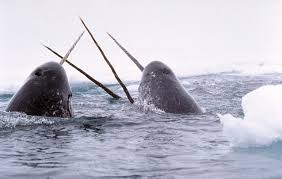
  • Male narwhals have an elongated tooth that sticks out of their head! They are called the unicorns of the sea!

narwhals

  • Bowhead whales are thought to live up to 200 years.

bowhead whale

  • Male humpback whales sing! They sing long and complex songs that can be heard up to 20 miles away.

IMG_0846

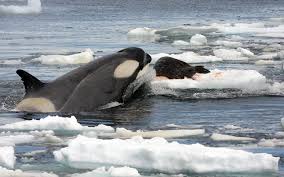
  • Killer whales are not actually whales; they are the largest member of the dolphin family!

killer whale

  • Gray whales are known to migrate 10,000-12,000 miles a year! They head to cold water to eat and then down to warmer waters to breed and give birth to their calves.

gray whales

Woohoo! We hope you enjoyed our whale facts! We love all 30 species of these giants of the ocean! We have a narwhal coloring sheet for you to enjoy! Share your final coloring sheet with us!

narwhal


Categories: adventure, Animals, Children, conservation, education, Environment, mammals, nature, oceans, science, wildlife | Tags: , , , , , , , , , , | 1 Comment

Blog at WordPress.com.