Posts Tagged With: oceans

WATERY WEDNESDAY # 59

WATERY WEDNESDAY # 59

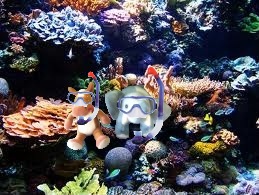
We’re getting our snorkeling gear out and heading the coral reefs of the Pacific Ocean today! We’re off to find a fish who lives with another animal who stings! Are you ready? Let’s do this!

e & e snorkeling

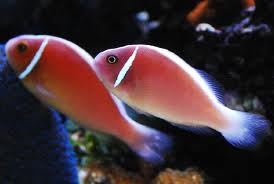
MEET THE PINK SKUNK CLOWNFISH!

pink skunk clownfish   Range/Habitat: Pacific Ocean/ coral reefs

   Diet: Omnivore: plankton, algae

   Length: 4”

  Conservation Status: common


Fun Facts:

  • Pink Skunk Clownfish are also known as the pink skunk anemonefish.
  • They have a symbiotic relationship with anemone and live among their tentacles.
  • Pink skunk clownfish have a long white stripe down their backs.
  • Pink skunk clownfish have a mucus coating that protects them to the toxins of the anemone.
  • They lay their eggs near their anemone hosts.


We bet you didn’t know there other species of clownfish out there! They aren’t all just orange and white! Animals that have mutual symbiotic relationships are so neat! Can you think of any other kinds of symbiotic relationships in the animal world?
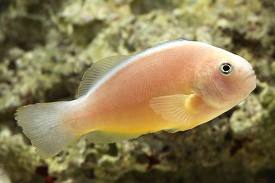
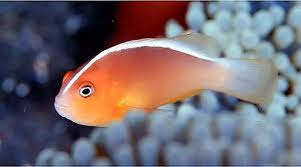
pink skunk clownfish2   pink skunk clownfish3


Categories: adventure, Animals, Children, conservation, education, Environment, fish, nature, oceans, science, wildlife | Tags: , , , , , , , , , , | Leave a comment

WATERY WEDNESDAY # 58

WATERY WENESDAY # 58

We’re going snorkeling to find a different kind of ocean dweller today. It’s not a fish, it’s not a mammal and it’s not coral! So are you ready to meet this mysterious animal? Let’s do this!
e & e snorkeling

MEET THE VIOLET SEA SNAIL!

violet sea snail   Range/Habitat: Atlantic-Pacific-Indian Oceans/ tropical-subtropical

waters

   Diet: Carnivore: floating cnidarians

   Length: 3 ¼”

   Conservation Status: common


Fun Facts:

  • Violet Sea Snails live on the oceans’ surface.
  • They are blind.
  • Violet sea snails have bright purple shells.
  • Their shells are very thin.
  • Violet sea snails make a “raft” of bubbles and mucus to stay afloat at the surface.
  • They snail is dark violet or black in color.


We haven’t met a snail so far in our adventures. Who knew they were so brightly colored and amazing? What other crazy creatures have we missed in our oceans?

violet sea snail2

Categories: adventure, Animals, Children, conservation, education, Environment, nature, oceans, science, wildlife | Tags: , , , , , , , , | 4 Comments

HAPPY AUSTRALIA DAY!!

HAPPY AUSTRALIA DAY!!!

We’re celebrating that awesome island nation that is full of amazing animals with some fun pictures!

Australia is home to deadly snakes, wild reptiles, adorable mammals and it has the largest number of marsupials on the planet! It is also home to the Great Barrier Reef, one of the most diverse ecosystems in the ocean! Wow! Australia is definitely one wild place! 

Enjoy!

Australian Crocodile

Australian Crocodile

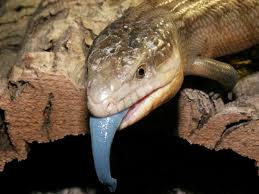
Blue Tongue Skink

Blue Tongue Skink


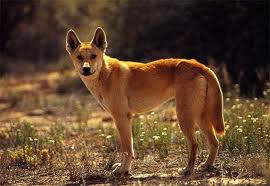
Dingo

Dingo

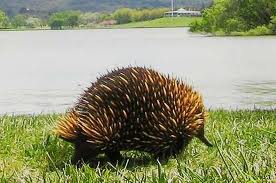
Echinda

Echinda


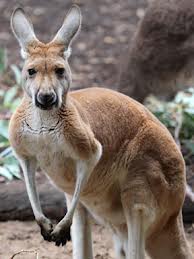
Kangaroo

Kangaroo


Koala!

Koala!


Numbat

Numbat

Platypus

Platypus

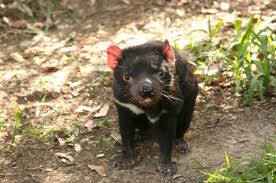
Tasmanian Devil

Tasmanian Devil


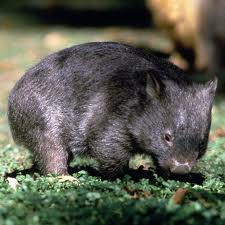
Wombat

Wombat


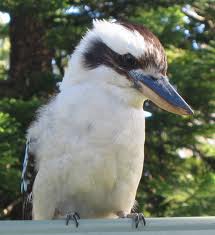
Kookaburro

Kookaburra


Great Barrier Reef

Great Barrier Reef


Great Barrier Reef

Great Barrier Reef


Categories: adventure, Animals, Australia, Children, conservation, education, Environment, marsupial, oceans, science, wildlife | Tags: , , , , , , , , , , | 2 Comments

WATERY WEDNESDAY # 57

WATERY WEDNESDAY # 57

We’re going scuba diving this Watery Wednesday to meet a master of camouflage! We better keep our eyes peeled and look amongst the corals to see if we can find…

e & e snorkeling

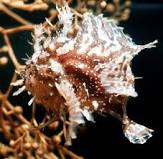
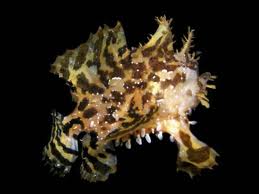
MEET THE SARGASSUM FISH!

sargassum fish   Range/Habitat: Tropical-sub-tropical oceans/ worldwide

   Diet: Carnivore: fish

   Length/Weight: up to 7 ½”/ up to 14 oz

   Conservation Status: common


Fun Facts:

  • Sargassum fish are members of the frog fish family.
  • Sargassum fish have variable patterns and colors to match their surroundings.
  • They are covered in spiny like protrusions.
  • Sargassum fish use their dorsal fin spine to lure prey.
  • They are ambush predators.
  • Sargassum fish have leg-like pectoral fins.


These crazy looking fish are so awesome! We think they look a bit like aliens! What do you think? What color would fit in with your habitat?

sargassum fish2  sargassum fish3

Categories: adventure, Animals, Children, conservation, education, Environment, fish, nature, oceans, science, wildlife | Tags: , , , , , , , , , , | Leave a comment

PENGUIN WEEK DAY # 5

PENGUIN WEEK DAY #5

It’s the last day of Penguin Week and we sure have had a blast meeting some of these flightless feathery friends and hope you’ve had fun too. Our last day of adventure takes us back to Antarctica to meet yet another cute penguin species!

e e arctic

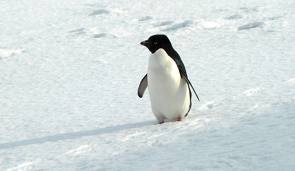
MEET THE ADELIE PENGUIN!

adelie penguins   Range/Habitat: Circumpolar Antarctica/ coasts-ice

   Diet: Carnivore: krill, small fishes

   Length/Weight: 18-24”/ 8 ¾-12 lb

   Conservation Status: common


Fun Facts:

  • Adelie penguins nest on the mainland of Antarctica.
  • They have blue-black feathers with pure white fronts.
  • Adelie penguins have white rings around the eyes.
  • Adelie penguins breed in colonies of up to 200,000 birds.
  • They build nest with rocks.
  • Adelie penguins have been seen stealing rocks from other penguins to make their nests.


Adelie penguins are so proper looking with their white bellies and sharp looking blue-black feathers. All they need now is a bowtie!

adelie penguins2    adelie penguins3


Categories: adventure, Animals, birds, education, Environment, nature, oceans, penguins, science, wildlife | Tags: , , , , , , , , , , | 10 Comments

PENGUIN WEEK DAY # 3

PENGUIN WEEK DAY #3

We’re off to South Georgia Island to meet a crested penguin who spends most of their life in the ocean, but form gigantic colonies during breading season! So let’s grab our coats and head down towards the south pole!

e e arctic

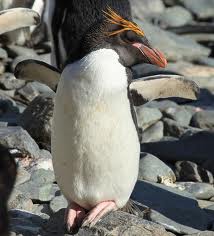
MEET THE MACARONI PENGUIN!

macaroni penguin   Range/Habitat: South Chile, South Atlantic/ rocky islands-oceans

   Diet: Carnivore: krill

   Length/Weight: 28”/ 7 ¾-14 lb

   Conservation Status: vulnerable


Fun Facts:

  • Macaroni penguins have a yellow crest of feathers on their head.
  • They were named after the macaroni hat of the 1800s.
  • Macaroni penguins are very vocal.
  • Macaroni penguins spend most of their time at sea.
  • They come ashore and form large breeding colonies.
  • Macaroni penguins form lifelong pair bonds.
  • Both male and female macaroni penguins incubate the egg.


We just love these little penguins with their fun name and their yellow crest of feathers on their head! We must see what we would look like with a fun crest on our heads!

macaroni penguin2  macaroni penguin3


e e macaroni hair

Categories: adventure, Animals, birds, Children, conservation, education, Environment, nature, penguins, science, wildlife | Tags: , , , , , , , , , , | 4 Comments

PENGUIN WEEK DAY # 2

PENGUIN WEEK DAY #2

For day two of Penguin Week we’re going South America! That’s right; we’re going to the temperate climates of South America to meet one cute little bird! Are you ready for today’s adventure?

e & e coast

MEET THE HUMBOLDT PENGUIN!

humboldt penguin   Range/Habitat: Western South America/ coasts-oceans

   Diet: Carnivore: anchovies, sardines

   Length/Weight: 22-26”/10-11 lb

   Conservation Status: vulnerable


Fun Facts:

  • Humboldt penguins were named after a cold weather current that goes in their habitat.
  • They have a black u shaped stripe on their chest.
  • Humboldt penguins have pink faces at the base of their beaks.
  • Humboldt penguins nest in underground burrows.
  • They form monogamous pairs.

Humboldt penguins are adorable! It’s so cool that they live in rocky outcrops on the coasts and not on an icy continent!

humboldt penguin2   humboldt penguin3


Categories: adventure, Animals, birds, Children, conservation, education, Environment, nature, oceans, penguins, science, wildlife | Tags: , , , , , , , , , , | Leave a comment

Year in Review!

2012 YEAR IN REVIEW!

Wow! We have one exciting year here at Ellie and Edmond headquarters! We’ve been to every continent on the planet in search of amazing animals and wow did we find some! We’ve met reptiles, mammals, fish and birds in almost every kind of habitat on earth! We sat down and looked over all our stats to see our most viewed post of the year and we’re re-posting it for you today! So let’s take one more adventure in 2012 and head out to meet one nifty reptile again!

AMERICAN ANIMALS WEEK DAY #2

It’s day two of American Animals week and we drove the RV down to the Southwestern United States to find a really cool reptile! Grab your sunscreen or mud and your sunglasses, because it’s going to be a hot one!

MEET THE GILA MONSTER!

   gila monsterRange/Habitat: Southwestern US-desert, scrub, rocky outcrops

   Diet: Carnivore: eggs and small animals

   Length: 14-20 “

   Conservation Status: threatened


Fun Facts:

  • Gila Monsters are one of two venomous lizards in the whole world (the other is the Guatemalan Beaded Lizard.)
  • They brightly colored to ward of predators.
  • Gila Monsters have a forked tongue like a snake and it helps them “smell” for prey.
  • They inject venom into their prey when they bite. They have special glands in their lower jaw that stores the venom.
  • Gila monsters’ tails store fat so they can survive when food is scarce or when they hibernate in the winter.
  • Gila monsters have bumpy heads. Those bumps are part of their skull.
  • They are not harmful to humans, despite their bad reputation! So Gila Monsters aren’t so monstrous after all!

We think Gila monsters are super cool! These amazing reptiles are protected here! That is good news, because it sure would be a shame if we didn’t have this neat lizard to see!


Categories: adventure, american, Animals, Children, conservation, education, Environment, lizards, nature, reptiles, wildlife | Tags: , , , , , , , , , , | Leave a comment

HOLIDAY ANIMAL WEEK # 55

HOLIDAY WEEK DAY #2

We’re staying in the arctic today to meet one large and fat animal! What do you know, they have tusks just like Ellie! Do you have your coats on? Let’s go meet this great holiday animal!

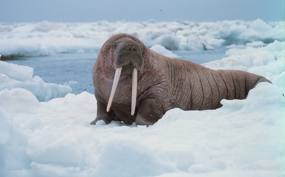
MEET THE WALRUS!

    Range/Habitat: Arctic/water, shoreline

   Diet: Carnivore: shrimp, sea-snails, fish

   Length/Weight: 9 ¾-12 ft/ 1 ¼ -2 ¼ tons

   Conservation Status: data deficient


Fun Facts:

  • Walrus are large marine mammals with flippers.
  • Walrus eat prey off the bottom of the oceans and use suction to eat.
  • They can stay underwater for up to 25 minutes and can dive down to 330ft deep.
  • They are highly social and often are seen in large groups, called herds.
  • Male walruses are twice the size of females.
  • They have rough wrinkly skin and very whiskery faces.
  • Walruses have tusks of ivory. They can grow up to 3 ft 3” long.

Walruses sure are huge and cute! How can you not like their whiskery faces? These blubbery mammals are loud, social and full of personality! They are one of our favorites!

walrus

walrus2

Categories: adventure, Animals, Children, conservation, education, Environment, mammals, nature, oceans, science, wildlife | Tags: , , , , , , , , , , | 3 Comments

WATERY WEDNESDAY # 55

WATERY WEDNESDAY # 55

We’re taking the E & E submarine out today to meet one of the oceans’ predators! These cartilaginous fish have mouths full of teeth, so we’ll be on the lookout from the safety of the sub!

e e sharks

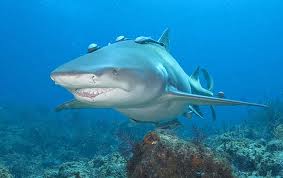
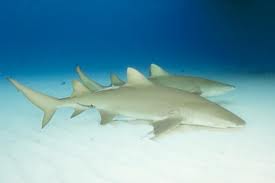
MEET THE LEMON SHARK!

lemon shark    Range/Habitat: Eastern Pacific-Western Atlantic/ oceans-near coasts

    Diet: Carnivore: stingrays, fish

    Length/Weight: up to 11 ft/over 400 lbs

    Conservation Status: common


Fun Facts:

  • Lemon sharks are also called Sharptooth sharks.
  • They are yellowish-brown in color.
  • Lemon sharks can go in brackish waters.
  • They have large blunt noses.
  • Lemon sharks have two rows of long, thin triangular shaped teeth to catch prey with; then rows of extra teeth behind those.

Lemon sharks are fierce predators, but they are also amazing animals. Ecosystems are dependent on top predators in the food chain and without them the oceans would be in big trouble. It is important that we respect sharks and help protect them!

lemon sharks2   lemon shark3

Categories: adventure, Animals, Children, conservation, education, Environment, nature, oceans, science, sharks, wildlife | Tags: , , , , , , , , , | Leave a comment

Blog at WordPress.com.