Posts Tagged With: science

MOMS MAMMAL MONDAY

MOMS MAMMAL MONDAY

We’re honoring all those moms out there this week by showcasing some amazing animal moms! Who’s excited? We sure are! There are so many cool animal and human moms out there! We’re starting off the week with the world’s largest land mom out there! That’s right folks; we are focusing on Ellie’s family today! Are you ready to meet a giant mammal mom? Grab your gear we’re going to Africa to meet the Ellie’s relatives!

MEET THE AFRICAN ELEPHANT!
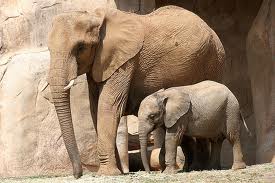
   Range/Habitat: Africa/ grasslands, savannas

   Diet: Herbivores: grass, leaves, roots, bark

   Length/Weight: 13-16 ft/ 4 ½-7 6/8 tons

   Conservation Status: threatened

Fun Facts:

  • African elephants are the largest of all elephant species and are the largest land animal on earth!
  • Both female and male African elephants have tusks!
  • African elephants have two opposable tips on the end of their trunks.
  • African elephants live in herds, led by the oldest female. The herd consists of related females and their offspring. Adult male African elephants are solitary.
  • An elephant’s gestation period (how long the mom is pregnant) is around 22 months! The is the longest pregnancy period of any mammal.
  • Newborn elephants weigh around 200 lbs. Man that is one big baby!
  • Newborn elephants drink around 3 gallons of milk a day!
  • Calves are totally dependent on their moms for the up to the first 3 years of life.
  • Elephants stay with their moms for around 16 years; they spend of most of that time learning to be an elephant!

WOW! Aren’t elephant moms amazing! Can you imagine being pregnant for almost 2 years of your life? It takes loads of hard work to raise a baby elephant! Luckily moms have help from the other females in the herd! It takes a herd to raise a baby elephant! Ellie salutes all the elephant moms out there!
Categories: Animals, Children, education, Environment, mammals, nature, science, wildlife | Tags: , , , , , , | 4 Comments

FEATHERY FRIDAY # 33

FEATHERY FRIDAY# 33

We just love our feathery friends and there are so many birds in the world! They come in all sizes and shapes and colors. They have common names and funny names, like today’s Feathery Friday bird! We’re off to Europe and Asia to meet a cute bird with a funny name.

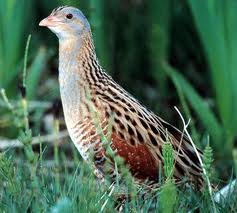
MEET THE CORNCRAKE!

   Range/Habitat: Europe-Asia

   Diet: Omnivore: invertebrates, grass, seeds

   Length/Weight: 10 ½-12”/ 4-7 oz

   Conservation Status: Common


Fun Facts:

  • Corncrakes have strong pointy bills.
  • Corncrakes are also called Landrails.
  • They are known for their loud raspy calls.
  • Corncrake’s calls can be heard from a mile away.
  • They can be heard calling up to 20,000 times in a night during the mating season.
  • Corncrakes migrate to Africa in the winter.
  • They migrate at night.
  • Corncrakes are often heard but not seen. They usually stay well hidden.

These birds are just adorable and their calls are so fun! Our Twitter pal @catchthetoucan who is a bird keeper in the UK, she sent us a corncrake call, sadly we could not download it :(. We did find it on this website: http://www.hark.com/clips/mlhhmctfdy-corncrake-call

Categories: Animals, birds, Children, education, Environment, nature, science, wildlife | Tags: , , , , , , , | 2 Comments

SUPER SURPRISE THURSDAY # 33

SUPER SURPRISE

THURSDAY# 33

It’s another Super Surprise Thursday and we’re going flying today! So let’s get our hang gliding gear on because we’ll need to go hang gliding to catch these agile birds!

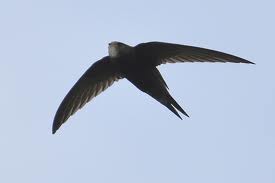
MEET THE COMMON SWIFT!

   Range/Habitat: Europe-Western Asia/ forest, grasslands

   Diet: Insectivores: Insects

   Length/Weight: 6 ½-7”/ 1- 1 ¾ oz

   Conservation Status: Common


Fun Facts:

  • Common swifts have long narrow wings.
  • They are fast and agile fliers.
  • Common swifts are small noisy birds.
  • They spend most of their lives in the air. They eat, mate and even sleep in the air.
  • Common swifts look like a boomerang when flying in the air.
  • Common swifts migrate to Africa during the winter.
  • Young swifts remain airborne for up to 3 years before landing to bread.


Common swifts are amazing birds! Can you imagine flying for up to 3 years without landing? Phew, that would be exhausting! They are such graceful birds too! We just love them!


Categories: Animals, birds, Children, education, Environment, nature, science, wildlife | Tags: , , , , , , , , | 2 Comments

WATERY WEDNESDAY # 33

WATERY WEDNESDAY# 33

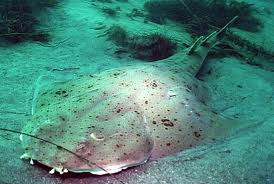
We’re staying in the ocean from our trip yesterday and we’re going to find a fish! Specifically we want to find a cartilaginous fish (their skeleton is made of cartilage)! Be careful where you step because these sharks like to bury themselves in the sand!

MEET THE ANGEL SHARK!

   Range/Habitat: Western North Atlantic/ ocean

   Diet: Carnivore: crustaceans, fish

   Length/Weight: up to 5 ft/ up to 60 lbs

   Conservation Status: Common


Fun Facts:

  • Angel sharks have flat bodies and wide heads.
  • They have wing like pectoral fins.
  • Their eyes are on top of their head and their gill slits are on the bottom.
  • Angel sharks bury themselves in the sand.
  • Angel sharks are also called the Sand Devil.
  • Angel sharks are ambush predators.
  • They have powerful jaws and teeth.

Angel sharks are beautiful fish! There are several different species and they each have different patterns that help them camouflage into the sandy bottom. Luckily these sharks are protected in the waters off the United Kingdom!


Categories: Animals, Children, education, Environment, fish, nature, science, wildlife | Tags: , , , , , , , | 2 Comments

REPTILIAN TUESDAY # 33

REPTILIAN TUESDAY # 33

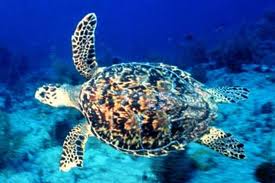
We’re diving into the ocean to meet today’s reptile! These special turtles spend most of their lives at sea and come ashore to lay their eggs! Are you excited yet? Grab your diving gear and let’s go!

MEET THE HAWKSBILL SEA TURTLE!

   Range/Habitat: Tropical Ocean waters worldwide/ coral reefs

   Diet: Carnivore: sponges, mollusks, comb jellies

   Length/Weight: 23 ½-32”/ 180 lbs

   Conservation Status: critically endangered


Fun Facts:

  • Hawksbill Sea Turtles are one of the smaller members of the sea turtle family.
  • They have serrated edge carapace (top shell).
  • Hawksbill Sea turtles beautiful scutes (covering on the top shell).
  • They have sharp pointy curved beaks.
  • They often rest in caves and ledges in the coral reef.
  • Most of the prey items that Hawksbill turtles is toxic to other animals.
  • They have a long life span, up to 50 years.


Hawksbill turtles are just amazing and beautiful! Thank goodness there are organizations and people out there trying to ensure that they are swimming in our oceans for hundreds of years to come! One great way to help sea turtles is to pick up your trash when you’re on the beach! Sea turtles often mistake plastic bags for food L!


Categories: Animals, Children, education, Environment, nature, reptiles, science, wildlife | Tags: , , , , , , , | Leave a comment

MAMMAL MONDAY # 33

MAMMAL MONDAY # 33

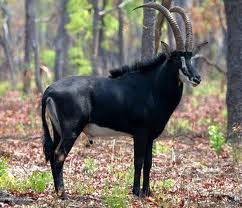
We’re off to the grasslands of Africa today to meet a most noble ungulate! These hoofed beauties have a lush dark coat of fur and long sharp horns for protection against predators! Do you have on your safari outfit yet? Let’s head out to meet these mammals!

MEET THE SABLE ANTELOPE!

   Range/Habitat: Eastern Africa

   Diet: Herbivores: grass, leaves

   Length/Weight: 6 ¼-8 ¾ ft/ 330-660 lbs

   Conservation Status: common


Fun Facts:

  • Male Sable Antelopes have beautiful black coats and females have lovely chestnut brown coats.
  • They live in herds led by a dominant male.
  • Sable antelopes have long ringed horns that point backward.
  • They use the horns for protection against predators.
  • Sable antelopes never stray too far from water.
  • Calves are also chestnut in color when born and spend the first few weeks of life hidden away from the herd.
  • Male sable antelopes leave the herd when they are mature and form bachelor groups before forming a herd of their own.


These antelopes are just spectacular with their long horns and shiny black coats! It is rare for an adult to be attacked by predators because of those horns! We wouldn’t want to be on the wrong end of them either! Ouch!


Categories: Animals, Children, education, Environment, mammals, nature, science, wildlife | Tags: , , , , , , , | Leave a comment

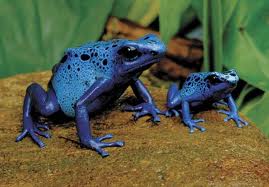
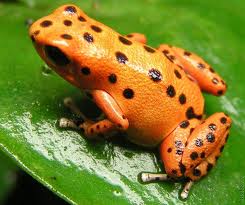
SAVE THE FROGS DAY!!

SAVE THE FROGS DAY!

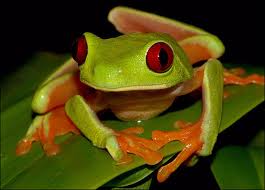
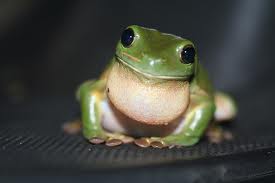
Today we are celebrating Save the Frogs Day! Many frogs are not doing well in the wild and it is up to us to help them out! You can check out the official Save the Frogs website to find out more on how you can help! Today we’re just going to tell you some fun frog facts & hopefully you will see why they are worth caring about!


FUN FROG FACTS:

  • Frogs have been on the planet for around 200 million years! That means they could have been hoping with the dinosaurs!
  • Frogs are amphibians!
  • The largest frog in the world is the Goliath Frog! You can read about them here!
  • The smallest frog in the world was just found a few months ago! Check them out!
  • There are about 4,900 species of frogs on our planet and scientists are sure we have not discovered them all! Man that is a ton of frogs.
  • A group of frogs is called an army! A group of toads is called a knot.
  • Toads are frogs! Toads generally have warty skin!
  • Frogs are cold blooded.
  • The most toxic vertebrate is the Golden Dart Frog.
  • Frogs absorb water through their skin.
  • Most frogs hibernate during the winter.
  • Frogs hatch from eggs.
  • Frogs ears can be found right behind their eyes!
  • Male frogs are the ones that croak, chirp, or ribbit. In fact frogs make all kinds of different sounds!

Here are two tunes by Kermit to help you celebrate! Frogs in the Glen and It’s Not Easy Being Green!


Categories: amphibians, Animals, Children, education, Environment, frogs, nature, science, wildlife | Tags: , , , , , , , , | 2 Comments

FEATHERY FRIDAY # 32

FEATHERY FRIDAY# 32

We were in South Africa yesterday and we’re staying on the continent today to meet a Feathery friend! We’re going to the forests today to meet a lovely little bird! Grab your binoculars because we’re going birding!

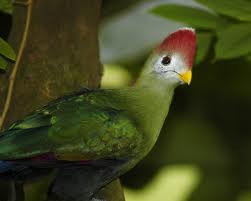
MEET THE RED CRESTED TURACO!

   Range/Habitat: Southwestern Africa/ forests

   Diet: Omnivore: fruits, leaves, snails

   Length/Weight: 16-17”/ 7-12 oz

   Conservation Status: Common


Fun Facts:

  • Red crested turacos have a special cooper pigment that is unique to the Turraco family.
  • If you stir a glass of water with a feather from the Red crested turaco, the water would turn pink!
  • Red crested turacos live in the canopy of the forests.
  • They have mobile outer toes for gripping branches.
  • They hop from branch to branch looking for food.
  • Red crested turacos are highly territorial.
  • They live in family groups or flocks.
  • Red crested turacos bond for life and both the female and male build the nest and incubate the eggs.
  • Red crested turacos disperse seeds throughout the forest through their poop!


Wow, aren’t these birds amazing with their funny crests on their heads? We could watch them hop around tree branches all day!

Categories: Animals, birds, Children, education, Environment, nature, science, wildlife | Tags: , , , , , , , | 3 Comments

SUPER SURPRISE THURSDAY # 32

SUPER SURPRISE

THURSDAY# 32

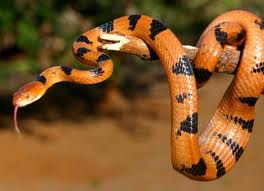
What’s up everyone? We’re heading to Africa today to meet a tiger! Ok, it’s not a real tiger, because we all know that tigers live in Asia! But we are meeting a snake that looks like tiger! So let’s back up our backpacks and our pith helmets and head to the African Savanna!

MEET THE AFRICAN TIGER SNAKE!

   Range/Habitat: Southern Africa/ grasslands

   Diet: Carnivore: lizards, rodents

   Length: 3 ¼-4 ft

   Conservation Status: Common


Fun Facts:

  • African Tiger Snakes are nocturnal (active at night).
  • They are slow moving.
  • They have large eyes to help them see at night.
  • African tiger snakes have vertical iris.
  • African tiger snakes are yellowish-brown and orange with black blotches.
  • They are venomous but their venom is not dangerous to humans.

Aren’t these snakes spectacular? They have such wonderful coloration that looks just like a tiger! If you could make a snake look like another animal what pattern would you do? Ellie would like to see a giraffe snake and Edmond wants to see a zebra snake!

Categories: Animals, Children, education, Environment, nature, reptiles, science, wildlife | Tags: , , , , , , , | 1 Comment

WORLD PENGUIN DAY!

HAPPY WORLD PENGUIN DAY!!!!

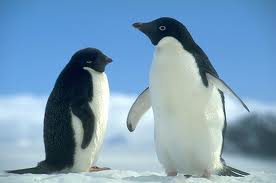
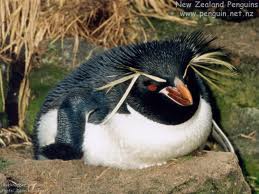
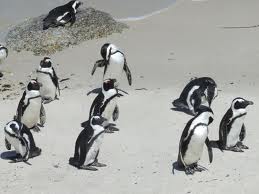
We’ll be posting fun facts on Twitter (@EllieandEdmond) and on Facebook today https://www.facebook.com/pages/Ellie-and-Edmond/254090144618348, but we wanted to leave our blog readers with some fun picture of penguins!

Adelie penguins


An Emperor Penguin & chick!


Rockhopper!


Chinstrap!

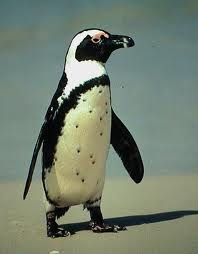
Penguins on the beach in South Africa!


Categories: Animals, birds, Children, education, Environment, nature, penguins, science, wildlife | Tags: , , , , , , , , | 3 Comments

Blog at WordPress.com.