conservation

WATERY WEDNESDAY # 77

WATERY WEDNESDAY # 77

 It’s time to grab your snorkel gear and meet today’s fish! Keep your eyes peeled in the cracks and crevices because that’s where these animals like to hide!

e & e snorkeling

MEET THE ZEBRA MORAY!

zebra moray   Range/Habitat: Pacific-Indian Ocean/ reefs

   Diet: Carnivore: fish, crustaceans

   Length/Weight:  up to 35”/ 22 lb

   Conservation Status: common


Fun Facts:

  •          Zebra Morays are fish.
  •          They have long muscular bodies with no pectoral or pelvic fins.
  •          Zebra morays usually hide in rocks or coral.
  •          Zebra morays are very territorial and can be aggressive.
  •          They have toxins in their skin to protect them from predators.

Zebra morays are really cool fish! Most people think they are eels, but they aren’t! We like their patterns too!

zebra moray2   zebra moray3


Categories: adventure, Animals, Children, conservation, education, Environment, fish, nature, science, wildlife | Tags: , , , , , , , , , , | Leave a comment

REPTILIAN TUESDAY # 77

REPTILIAN TUESDAY # 77

Woohoo, we’re excited that it’s Reptilian Tuesday! We’re going to southern Africa to meet an adorable little tortoise! Grab your sunscreen and gear and let’s go on an adventure!

e & e safari van

MEET THE SPECKLED PADLOPER TORTOISE!

speckled padloper   Range/Habitat: West Southern Africa/ desert-scrub

   Diet: Herbivore: succulent plants

   Length:  2 ¼- 3 ¼”

   Conservation Status: near threatened


Fun Facts:

  •          Speckled Padloper tortoises are the smallest tortoise in the world.
  •          They are also known as the Speckled Cape Tortoise.
  •          The males are smaller than the females.
  •          Speckled padloper tortoises hide under rocks for protection.
  •          Their shells are covered in tiny black spots.

These little tortoises are so cute! Tortoises come in such different sizes; from these tiny ones to the giant Galapagos tortoise! Which one is your favorite?

speckled padloper2   speckled padloper3

Categories: adventure, Animals, Children, conservation, education, Environment, nature, reptiles, science, wildlife | Tags: , , , , , , , , , | Leave a comment

MAMMAL MONDAY # 77

MAMMAL MONDAY # 77

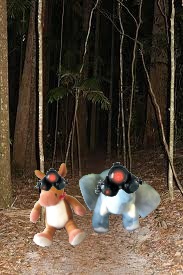
We’re going to South East Asia to find a member of the primate family! These little prosimians live high in the trees and are active at night! So grab your night vision goggles and let’s go on today’s adventure!

e & e night rainforest

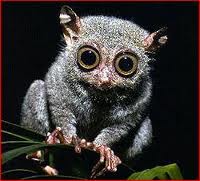
MEET THE WESTERN TARSIER!

western tarsier   Range/Habitat: Southeast Asia/ rainforests-mangroves

   Diet: Carnivore: insects, moths

   Length/Weight: 4 ¾-6”/ 3-4 oz

   Conservation Status: vulnerable


Fun Facts:

  •          Western Tarsiers have long tails.
  •          Western tarsiers are nocturnal.
  •          They are arboreal.
  •          Western tarsiers have huge eyes.
  •          They have pads on their toes to help them grip branches.
  •          Western tarsiers can turn their head around.

These little tarsiers are just ridiculously cute. These bug eaters are an important part of the forest ecosystem. They are just another reason we must protect their rainforest home.

western tarsier2   western tarsier3

Categories: adventure, Animals, Children, conservation, education, Environment, mammals, nature, science, wildlife | Tags: , , , , , , , , | Leave a comment

MONKEY WEEK DAY #5

MONKEY WEEK DAY #5

It’s the last day of Monkey Week and we’ve had a blast meeting all these great primates! We’re going back the rainforests of South America to meet today’s monkey! There is a good chance we’ll hear them before we see them! Let’s head out on today’s adventure!

e & e rainforest2

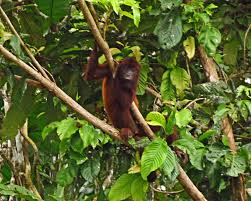
MEET THE RED HOWLER MONKEY!

red howler

   Range/Habitat: Northwest South America/ rainforests-mangroves

   Diet: Herbivores: fruit, leaves

   Length/Weight: 20-25”/15-21 lbs

   Conservation Status: common


Fun Facts:

  •          Red Howler monkeys are the largest of the howler monkey species.
  •          They are arboreal.
  •          Red howler monkeys use howls, whoops and calls to communicate with each other.
  •         Those calls can be heard up to 1 ¼ miles away.
  •     Red howler monkeys live in troops of one male with 3-4 females.
  •          Red howler monkeys have a prehensile tail that they use to hang from branches.

Red howler monkeys are amazing! We wished we had prehensile tails. Did you know that only new world monkeys have prehensile tails?

red howler2  howler monkey3

Categories: adventure, Animals, Children, conservation, education, Environment, mammals, nature, science, wildlife | Tags: , , , , , , , , , , | Leave a comment

MONKEY WEEK DAY #4

MONKEY WEEK DAY #4

GUESS THE MONKEY!!

glt

  • I live in the rainforests of Brazil.
  • I am about the size of a squirrel.
  • I am named after the king of the jungle.

WHO AM I?

Categories: adventure, Animals, Children, conservation, education, Environment, mammals, nature, science, wildlife | Tags: , , , , , , , , , , | Leave a comment

MONKEY WEEK DAY #3

MONKEY WEEK DAY #3!

We’re off to Japan to meet today’s monkey! These primates live in very cold climates and are very adaptive to that climate! Grab your coats and let’s head off to meet…

e e arctic

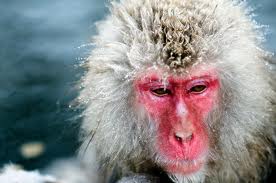
MEET THE JAPANESE MACAQUE!

japanese macaque   Range/Habitat: Japan/mountains-forests

   Diet: Omnivore: fruit, leaves, insects

   Length/Weight: 18-23”/ 17-24 lb

   Conservation Status common


Fun Facts:

  •          Japanese macaques are also known as the snow monkey.
  •          They live in the most northerly habitat of any monkey.
  •          Japanese macaques live in troops of around 40 individuals.
  •          Japanese macaques sit in hot springs to keep warm.
  •          They have a “culture”. They teach younger generations adaptive skills. These skills vary by troop.

Japanese macaques are really cute with their fluffy grey coats of fur and their little red faces. We think it is super cool that they have their own hot tubs!

japanese macaque2   japanese macaque3

Categories: adventure, Animals, Children, conservation, education, Environment, mammals, nature, science, wildlife | Tags: , , , , , , , , , , | Leave a comment

MONKEY WEEK DAY # 2

MONKEY WEEK DAY #2!

Woohoo for Day #2 of Monkey Week! We’re going to the rainforests of Northern South America to find a very cute, small monkey who lives high in the trees! Get your gear and let’s get ready to zip line through the rainforest!

e & e rainforest2

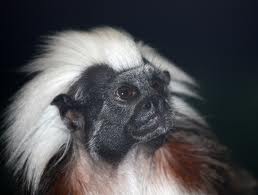
MEET THE COTTONTOP TAMARIN!

cotton top tamarin   Range/Habitat: Northwest South America/ rainforest

   Diet: Omnivore: fruit, buds, insects

   Length/Weight: 8-10”/ 14-16 oz

   Conservation Status endangered


Fun Facts:

  •          Cottontop Tamarins are arboreal.
  •          They have a crown of white fluffy fur on their head.
  •          Cottontop tamarins have long tails for balance.
  •          Cottontop tamarins live in small family troops with one breeding pair.
  •         Four out of five births are twins.
  •          Cottontop tamarins family members help take care of the offspring.

Cottontop tamarins are so cute with their crazy hairdos! There are more of these special monkeys in captivity than there are in the wild. We must really work to help protect these amazing animals.

cotton top tamarin2   cotton top tamarin3

Categories: adventure, Animals, Children, conservation, education, Environment, mammals, nature, science, wildlife | Tags: , , , , , , , , , , | Leave a comment

MONKEY WEEK!

MONKEY WEEK!

It’s theme week here at headquarters and we’re celebrating monkeys! These primates vary in size, habitat and behavior. There are Old World monkeys, that live in Africa and Asia and New World monkeys, which live in South and Central America. We’re going to South Asia today to meet the week’s first monkey! Grab your plane ticket and travel gear and let’s go meet…

e e temple

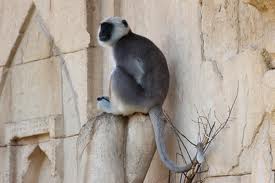
MEET THE HANUMAN LANGUR!

hanuman langur   Range/Habitat: South Asia/ forests, suburbs, mountains

   Diet: Herbivore: fruits, buds, shoots

   Length/Weight: 20-31”/ 23-44 lbs

   Conservation Status: common


Fun Facts:

  •          Hanuman Langurs are considered sacred by Hindus.
  •          They are the most widespread of all langur species in South Asia.
  •          Hanuman langurs are also called Gray Langurs.
  •          Hanuman langurs color varies by their habitat.
  •          They are diurnal.
  •          Male Hanuman langurs are larger than females.
  •          Hanuman langurs live in troops led by one or two males.

Hanuman langurs are fascinating monkeys. They often live near humans. Can you imagine considered being sacred? We think all animals are considered sacred 🙂 !

hanuman langur2hanuman langur4

Categories: adventure, Animals, Children, conservation, education, Environment, mammals, nature, science, wildlife | Tags: , , , , , , , , , | Leave a comment

FEATHERY FRIDAY # 76

FEATHERY FRIDAY #76

It’s Friday! It’s Friday! It’s Feathery Friday! We’re going right out our back door for today’s adventure in search of a really cool little feathery friend!

e e woods

MEET THE NORTHERN FLICKER!

northern flicker   Range/Habitat: North-Central America/ woodlands-suburbs

   Diet: carnivore: insects

   Length/Weight: 30-35”/ 100-175 g

   Conservation Status: common 


Fun Facts:

  •         Northern Flickers are members of the woodpecker family.
  •          They have long pointed bills.
  •          Northern flickers often feed on the ground.
  •          Northern flickers long bills are used for pecking in to the ground.
  •          They have spotted undersides.
  •          Northern flickers have long tails.

We love it when we find a Northern Flicker pecking on the ground in our neighborhood. Who knew there were woodpeckers who didn’t just peck on trees for their dinner?

northern flicker2  northern flicker3

Categories: adventure, Animals, birds, Children, conservation, education, Environment, nature, science, wildlife | Tags: , , , , , , , , , | 2 Comments

SUPER SURPRISE THURSDAY # 76

SUPER SURPRISE THURSDAY # 76

WHO AM I? Look at the picture, read the clues and take a guess!

snowy owl

  • I live in the Arctic.
  • I am a carnivore.
  • I am active during the day, unlike most of my relatives.

WHO AM I?

Categories: adventure, Animals, birds, Children, conservation, education, Environment, nature, science, wildlife | Tags: , , , , , , , , , | 2 Comments

Blog at WordPress.com.