endangered species

Birding Fun

Birding Fun!

We slept in after our big snorkeling trip yesterday! We hoped a plane to the island of O‘ahu for a few days in the late morning. We were on a mission to find one of Hawaii’s native birds in the wetlands! We were super lucky to spot some! Come learn about them with us!
59F6E868-22A6-4250-8599-99E3DAACE257

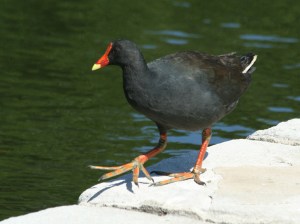
Hawaiian Gallinule Fun Facts: 

  • Hawaiian Gallinule are also known as the Hawaiian moorhen.
  • They can grow up to 12 inches long and weigh up 3/4 lbs.
  • They are omnivores. They eat grass, algae and insects.
  • These wetland birds do not have webbed feet. They are excellent swimmers though.
  • They molt once a year in the summer. The molt takes 25 days or so.
  • Hawaiian gallinule are known to be very secretive.
  • Nesting parents are very territorial. They both help incubate the eggs and protect the young chicks.
  • They are listed as Endangered by the IUCN.

0962979D-C220-4006-B1E7-3BC7457AA0D5

It was neat to see these shy water loving birds. We love their funny long legs and feet!

Categories: adventure, Animals, birds, Children, conservation, education, endangered species, Environment, nature, science, Today's Post, wildlife | Tags: , , , , , , , , , , , | 1 Comment

Swimming with Greens

Snorkeling with Greens

We decided to go snorkeling for our first time in Hawaii. The water is so gorgeous and inviting. We were excited to see what animals we would find! And wow- we met some green sea turtles grazing in the shallows!

EC9627EB-BC7C-45DD-A1A5-276328059D02

Green Sea Turtle Fun Facts: 

  • Green Sea Turtles have a smooth carapace.
  • They can grow up to 5 ft long and weigh up to 600 lbs.
  • The carapace (top shell) is a brown-olive color.
  • Green sea turtles have small heads, but strong flippers.
  • They are the only sea turtle that can be seen occasionally sunbathing on the beach.
  • Green sea turtles lay eggs on the beach.
  • They are herbivores. They eat sea grass, roots and algae. Young turtles are known to eat crabs and jellies.
  • They are listed as Endangered by IUCN.

C4275114-7C8C-4332-93C6-0EC165D0F670

We enjoyed seeing these majestic reptiles in the oceans. Green sea turtles get their name from their greenish skin color. It was so excited to snorkel with these sea turtles. They are known to come ashore and sun themselves on certain beaches around Hawaii- if you visit- wave quietly and from a distance!

Categories: adventure, Animals, Children, conservation, education, endangered species, Environment, nature, oceans, reptiles, Today's Post, wildlife | Tags: , , , , , , , , , , , | 1 Comment

Hawaii!!

Hawaii!

Hellooooo!! We’ve made it to the lovely islands of Hawaii! Now while it would be fun to sit on the beach drinking straight from a coconut, this horse and elephant have animals to meet and habitats to explore! Let’s get started by learning more about this amazing place!

9DE2C8F6-CA4A-4657-A5C8-BC6D1C31968A

Hawaii Fun Facts: 

  • Hawaii is the world’s longest archipelago (a group of islands). It has 132 islands. Eight of those make up the main inhabitated islands.
  • The Big Island has the most land space.
  • Hawaii has many awesome features, including the world’s most active volcano. Kilauea (the volcano’s name) is on the big island. It has been spewing lava for the last 30 years.
  • Mauna Kea is a dormant volcano on the Big Island. It is twice the size of Mt Everest! Most of it is underwater though. This volcano is often seen with snow on it during the winter.
  • Humpback whales, green sea turtles and hawksbill turtles all come to Hawaii to give birth or lay their eggs.
  • Hawaii has tropical wet (rain) and tropical dry forests!
  • The coral reefs of Hawaii are some of the most diverse in the world.


Categories: adventure, Animals, Children, conservation, education, endangered species, Environment, nature, oceans, science, Today's Post, wildlife | Tags: , , , , , , , , | 2 Comments

Where will the next E&E adventure be?

Where will the next E&E adventure be?

Are you ready for another E&E adventure? We left the Pantanal a little early for a winter break and to pack up for a different climate!

DD0FFDD2-1B17-4488-8A54-34B7A48CD4D3

Can you guess where our adventure will be from the clues?

As we pack our bags, we are heading out west to a land of myth and reality.

There can be warm tropical winds and snow capped volcanos all in one place. 

There are coral reefs and rainforests.

Lava flowing keeps the islands growing! 


Do you know where we are heading? 

Categories: adventure, Animals, Children, conservation, education, endangered species, Environment, nature, science, Today's Post, wildlife | Tags: , , , , , , , , | 1 Comment

Otter Otter

Otter Otter

We set out to meet one of the rarer animals of the Pantanal today! We located a few having a snack. These amazing members of the mustelid family are soooo cool!

12F8B7B6-41B6-47DF-B029-8742CDB04E23

Giant Otter Fun Facts: 

  • These large carnivores can get up to 6 ft long and weigh up to 75 lbs.
  • They have powerful tails and webbed feet for a life in the water.
  • These territorial giants live in small family groups.
  • Giant otters can eat up to 9lbs of fish a day.
  • They live in dens in the banks of the rivers they call home.
  • Giant otters are very vocal and use a variety of squeaks and screams. They are considered to be the most vocal otter species on earth.
  • They are often called the river wolf.
  • They are diurnal.
  • Giant river otters are listed as Endangered by the IUCN.

C9E6BD45-B421-4DC5-85BE-4F5B39DBF54E


We enjoyed seeing these amazing animals. They are now protected from the poaching that led to their decline. They are becoming important for tourism in the areas they call home.


Categories: adventure, Animals, Children, conservation, education, endangered species, Environment, nature, science, Today's Post, wildlife | Tags: , , , , , , , , , , , | 1 Comment

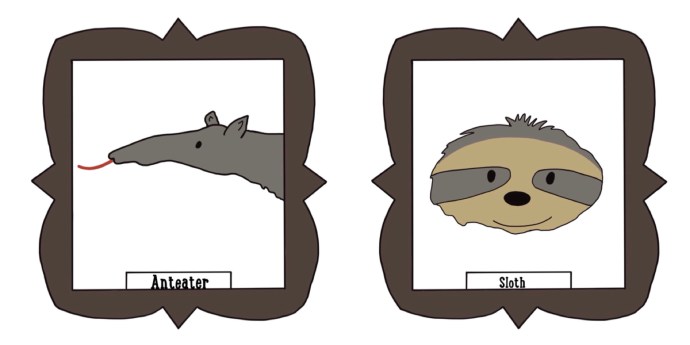
We Are Fanimaly- Anteater/Sloth

We Are Fanimaly- Anteater/Sloth

We are starting up a feature from the past this week! We’ll be post a segment we call     We Are Fanimaly once a month. This feature will spotlight animals that are related. Some of these you may know and some of them may surprise you! This month’s features our giant anteater from last week. 


390E2C3F-1EED-4EAD-A776-E0B89F714FAA


Anteaters and sloths are relatives! Can you believe it? Our Giant Armadillo from a few days ago also belongs in their Fanimaly! They look nothing alike! Hehehehe!

  • Their superorder is Xenartha.
  • These animals only live in the Americas.
  • They have been around for about 59 million years.
  • Remember the Glyploton- the giant armadillo? Well there were giant ground sloths too!
  • The name Xenarthra means “strange joints”.
  • The name was chosen because anteaters, sloths and armadillos have vertebral joints unlike any other mammals on earth.
  • Anteaters and sloths are more closely related to each other than their armadillo cousins.
  • The animals in the Xenartha surperorder are either insectivores (anteaters & armadillos) or herbivores (sloth).
  • There are 6 sloth species and four anteater species.
Categories: adventure, Animals, Children, conservation, education, endangered species, Environment, mammals, nature, science, Today's Post, wildlife | Tags: , , , , , , , , , , , , | 1 Comment

Hello Armadillos

Hello Armadillos

Aaaah the armadillo, an animal many in the southern United States associate with road kill. But there are 20 species of armadillos in the world, each one neat in their own respects. We went looking for the biggest armadillo of the them all- the giant armadillo! This species is not to be confused with the extinct Glyptodon – a car sized relative of the armadillo that lived during the Pleistocene epoch! Our giant armadillo friend is not that big- but they are cool!


BBCAFCE9-B197-4509-AC0A-247EF13A63B8

Giant Armadillo Fun Facts: 

  • The giant armadillo has 11-13 bands.
  • They can grow up to 39 inches long and weigh up to 72 lbs. There have been a few found that weigh 180 lbs.
  • They have the most teeth of any mammal- 80 to 100 per armadillo!
  • These solitary nocturnal animals live in burrows.
  • Giant armadillos are insectivores. They eat termites, ants, worms and spiders. They can consume the entire population of one termite mound.
  • They have the proportional claw of any mammal. This is their 3rd curved claw.
  • Giant armadillos can not roll up completely in to a ball.
  • Due to hunting, giant armadillos are listed as Vulnerable by the IUCN.


6898A302-A2A9-486E-8C66-732B96AEB23B

These giant armadillos are so amazing! Little is known about them in the wild. No scientists have ever seen a juvinelle giant armadillo in the wild!

Categories: adventure, Animals, Children, conservation, education, endangered species, Environment, mammals, nature, science, Today's Post, wildlife | Tags: , , , , , , , , , , , , | 2 Comments

Hello Birdie!

Hello Birdie!

We are meeting a little bird of the Pantanal today! Come join us!

AF955EF9-6FEE-4126-999A-9E09E6A57448

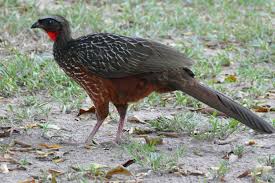
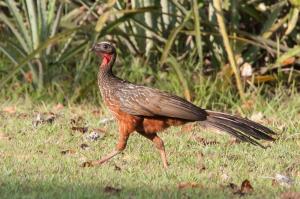
Chestnut-bellied guan fun facts: 

  • These birds prefer higher ground.
  • They resemble turkeys, but are not.
  • They have chestnut brown bellies and red waddles.
  • They have a rough crow like call.
  • They are about 21 inches long.
  • They are listed as vulnerable by the IUCN.

8A54CD86-B8E7-4FB5-B95D-1196EAC37637

These funny looking birds remind of us of a turkey and a roadrunner. They are super cool!

Categories: adventure, Animals, birds, Children, conservation, education, endangered species, Environment, nature, science, Today's Post, wildlife | Tags: , , , , , , , , , , , , | 1 Comment

Marshy Deer

Marshy Deer

We are meeting one of the iconic animals of the Pantanal today-the Marsh Deer! Woohoo- we won’t delay meeting today’s animal!

923487B8-5AFC-44E7-ACA1-803D18D81693


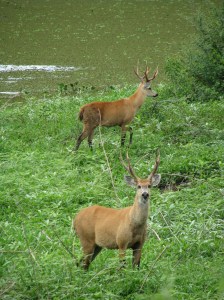
Marsh Deer Fun Facts: 

  • The deer is the largest deer species in South America.
  • They can grow up to 6 feet long and weigh up to 275 lbs.
  • Marsh deer are known to be very shy.
  • Only the males have antlers that grow up to 1 foot.
  • These marsh dwellers have wide set hooves that are covered with a stretchy membrane that gives the hoof more stability in the water filled habitat.
  • These herbivores prevere to live near areas of water.
  • They are listed as vulnerable by the IUCN.

D46F1B67-69E8-46D4-B1FA-DBFE75ABDD88

These cute deer with their giant ears are so fun. They keep to themselves and spend most of their time munching on grasses.

Categories: adventure, Animals, Children, conservation, education, endangered species, Environment, mammals, nature, science, Today's Post, wildlife | Tags: , , , , , , , , , , | 1 Comment

Giant in the Pantanal

Giant in the Pantanal

We are so excited to meet our first animal here in the Pantanal. Many of you are probably familiar with this mammal. They have long noses that are good at sniffing out ants! Are you ready to learn more about the giant anteater?

AE020AC0-26C2-4224-918F-0AC01DD14102


Giant Anteater Fun Facts: 

  • Anteaters have no teeth!
  • Their tongues are about 2 feet long! They can flick those tongues into anthills and termite mounds at the rate of 160 times per mintue!
  • They use those tongues to eat 35,000 ants and termites each day! Anyone wonder if they tickle?
  • They use their long claws to dig into an anthill. They have to must eat quickly- as the ants do start biting.
  • Giant anteaters can grow up to 7 feet long and weigh up to 90 lbs.
  • These crazy looking critters have poor eyesight! They find those ants by smell!
  • You might think they can’t fend off predators, but those 4 inch ant digging claws have a second adaptation- swiping away predators like jaguars.

544C2EFF-FB98-4E84-856E-DBE5FC5A348D


We are big giant anteater fans! They little ones right around on their mom’s backs. It is so cute! Do you know some of the anteaters relatives?

Categories: adventure, animal rescue, Children, conservation, education, endangered species, Environment, nature, science, Today's Post, wildlife | 2 Comments

Blog at WordPress.com.