endangered species

Pantanal

EPantanal

Did you guess where this month’s adventure is? We’re in Brazil in the Pantanal region! This amazing habitat is rich with plants and animals and we’re so excited to see as much as possible! Come learn more about the Pantanal today with us!

EBA86EC8-C290-41F6-B2E6-D4C42C01DCF4


Pantanal Fun Facts: 

  • The Pantanal is mostly wetlands. Those wetlands are submerged in water during the rainy season.
  • The average temperate is 77 degrees Fahrenheit (25 C).
  • Many of the species are aquatic.
  •  The word Pantanal comes from the Portogese word pantano that means wetland.
  • The average rainfall in this area is 40-55 inches.
  • There are about 3,500 plant species in this habitat.
  • This wetland is also home to almost 700 species of birds!

E77A3068-B066-4611-8BCD-9AE16B8634EB


This amazing habitat is very special. Unfornately on 2% of it is under protection. We will meet several animals that are endangered because of habitat loss. We hope you are ready to meet them with us!

Categories: adventure, Animals, Children, conservation, education, endangered species, fish, nature, science, Today's Post, wildlife | Tags: , , , , , , , , , , | 1 Comment

Where Will the Next E&E Adventure Be?

Where Will the Next E&E Adventure Be?

We are packed and ready to go on our next adventure. We are giving you clues to where we are heading as this habitat is not as well known as others for sure!

  • We’re going to South America.
  • It’s not the rainforest, but it is in Brazil.
  • There are giant areas of flood plains.
  • This habitat has a specific name.
  • It is a very biodiverse habitat.

Can you guess where we are going?

Categories: adventure, Animals, Children, conservation, education, endangered species, Environment, nature, science, Today's Post, wildlife | Tags: , , , , , , , , , , | 2 Comments

Whale Watching

Whale Watching

Today we hoped on a boat to go whale watching. There are several species of whales that call these icy waters home- at least for part of the year. We found the big marine mammals we were looking for- YAY!

4A2039B2-6445-4EC1-85F9-B864ACF4DA44

Southern Right Whale Fun Facts: 

  • These baleen whales can grow up to 59 ft and weigh up to 99 tons.
  • There baleen plates grow out of the upper jaw and are over 9 feet long.
  • They have white callusites on their heads and mouths. These are home to whale lice- which are related to shrimp.
  • These whales never leave the Southern Hemisphere.
  • They have large heads. The head makes up a 1/4 of their body length.
  • Southern right whales are also most identical to their Northern right whale cousins.
  • Southern right whales are more acrobatic. They are known to do “head stands” in the water and wave their flukes.

672E055F-377A-47E3-A3AD-94811E6FCBA0

We had fun spotting the whales. They are often seen near boats and ships. Unfortunately that can lead to run ins, so it is important for boats to watch for them.

Categories: adventure, Animals, Children, conservation, education, endangered species, Environment, mammals, nature, oceans, science, Today's Post, whales, wildlife | Tags: , , , , , , , , , , | 1 Comment

Emperors of the South Pole

Emperors of the South Pole

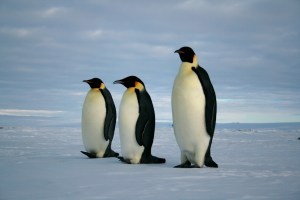
We put on our warmest coats, gloves, hats and boots and headed out to the meet one of Antarcticas most iconic animals- the Emperor Penguin. These tall flightless birds live in a harsh climate, but they are built to survive.

787B4882-1C52-4FCD-A012-F2F8B5ABE4FA


Emperor Fun Facts: 

  • These penguins can grow up to 45 inches and weigh up to 85 lbs! They are the largest penguins on earth.
  • These birds huddle together for warmth. The birds rotate from the interior of the group to the center.
  • They can dive 1,800 ft deep and stay under water for up to 20 minutes. They can dive deeper than any bird on the planet.
  • Females lay one egg. The males incubate the eggs on top of their feet. They cover the eggs with their brood pouch.
  • Females head out to the open ocean to gorge on food while the eggs are incubating.
  • When the chicks hatch, the females and males switch duties.
  • These big gorgeous birds are listed as Near Threatened by the IUCN.

04BAD5D3-74B9-42E4-9A2A-FF86B9843646

We had fun watching these birds. They are very curious. We can not imagine living in the frigid temps though or swimming so much time in that cold ocean. This horse & elephant miss the warm weather.

Categories: adventure, Animals, birds, Children, conservation, education, endangered species, Environment, nature, science, Today's Post, wildlife | Tags: , , , , , , , , , , , | 1 Comment

Where will the next E&E adventure be?

Where will the next E&E adventure be?

We heading towards the south, but not to tropical shores.

It is quiet a rugged place so it will not bore.

Get ready to put on your cold weather gear,

As we head to the place at the bottom of the sphere. 

Can you guess where we are? 

Share your answer on our social media sites! 


Categories: adventure, Animals, Children, conservation, education, endangered species, Environment, nature, science, Today's Post, wildlife | Tags: , , , , , , , , , | 1 Comment

Howling Good Time

Howling Good Time!

Today we are meeting one loud and awesome mammal today! These tree dwellers know how to make a ruckus! We love it!

Mantled Howler Monkey (Alouatta palliata) howling, in Tortuguero, Costa Rica

Mantled Howler Monkey Fun Facts: 

  • They have long guard hairs on their face. That is where they get their name.
  • These monkeys are large. Males get up to 22 lbs. ‘
  • They are folivores- leaf eaters. They also eat fruit.
  • They are important for the rainforest, as they disperse seeds when they poop.
  • Mantled howler monkeys live in groups of mostly unrelated adults.
  • They have prehensile tails.
  • These diurnal monkeys are built for life in the trees.
  • They can be heard for a few miles away.
  • Mantled howlers are listed as Least Concern by IUCN.

SONY DSC

We had a blast watching these monkeys. They are fairly lazy though. They spend most of their energy eating. Those leaves did look delicious. We were glad we had snacks, because we’re sure they wouldn’t share.

Categories: adventure, Animals, Children, conservation, education, endangered species, Environment, mammals, nature, science, Today's Post, wildlife | Tags: , , , , , , , , , , | 1 Comment

We Spy Rosettes!

We Spy Rosettes!

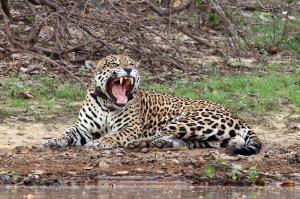
We headed to local treehouse to spot the next animal as it is the largest predator in the area. We thought it best to stay out of it’s way, but wow is it a gorgeous cat! Are you ready to learn who we saw?

250119E7-50FD-4652-A600-F8B7B917C752

Jaguar Fun Facts: 

  • Jaguars are covered in spots called rosettes. These help them blend in with the rainforest.
  • Jaguar rosettes are different than leopard spots. Jaguars have a spot in the middle!
  • They are the largest cat in the Americas, growing up to 7ft long and up to 200 lbs. Wow!
  • They are solitary and territorial.
  • These large cats are more active than other large cats, like lions. They have recently found to be most active as dusk and dawn (crespuscular).
  • They are listed as Near Threatened by the IUCN.

57213569-A7FD-4D56-99C0-E073DFEDA008

We loved watching this stealthy predator prowl the forest floor. They do spend most of their time on the ground, but the are able climbers.


Categories: adventure, Animals, Children, conservation, education, endangered species, Environment, nature, science, Today's Post, wildlife | Tags: , , , , , , , , , , | 1 Comment

One Funny Looking Animal!

One Funny Looking Animal!

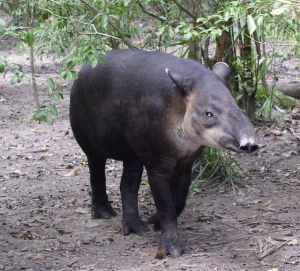
We went looking for one funny looking animal of the rainforest. Tapirs, with their long snouts look like they might be related to Ellie, but in reality they are related to Edmond! Neat! Today, we are meeting the largest of the tapir family.

OLYMPUS DIGITAL CAMERA


Baird’s Tapir Fun Facts: 

  • These large tapirs can grow up to 8 ft long and weigh over 800 lbs.
  • Their funny looking feet have four toes on the front and three on the back.
  • Tapirs use their long flexible noses for snorkels, sniffing odors in the forest and for finding food.
  • These nocturnal herbivores look for leaves and fruits during the evening hours.
  • They are excellent swimmers. They head to the water when threatened.
  • Once thought to be solitary, it is now believed they live in small family groups.
  • The young stay with their mothers for up to two years.
  • Baird’s tapirs are listed as endangered due to habitat loss and hunting.

0EF66EC7-2BB1-433E-9E1B-59C9FC579CEB

There are efforts to protect these beautiful animals. It would be a terrible thing to lose such a unique animal.

Categories: adventure, Animals, Children, conservation, education, endangered species, Environment, mammals, nature, science, Today's Post, wildlife | Tags: , , , , , , , , , | 1 Comment

Yep, That’s a Cat!

Yep, That’s a Cat!

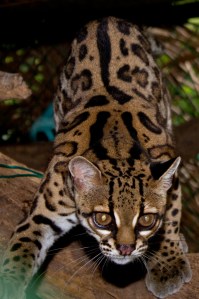
We are meeting our last animal this week here in Costa Rica and it’s a small wildcat. This place has so many interesting species. These small cats blend in quiet well, so we were super lucky to find one!

CCE5DFD9-247C-4EDF-B0FF-FC3F0ED0EA02


Margay Fun Facts:

  • Margays are built for life in the trees.
  • They have broad flexible toes and long tails that help them climb and keep their balance.
  • They can turn their hind feet 180 degrees allowing them to climb down a tree head first.
  • These solitary cats are carnivores. They eat birds, small mammals and reptiles.
  • Margays are listed as near threatened by the IUCN.
  • They are nocturnal.
  • The fur on the back of their necks grows the opposite direction of the rest of their coats.

D7F74D12-7ABD-4033-88E5-E0A97F724EFC

These gorgeous cats are often confused with the ocelot. They have longer tails and a bit smaller. They have those large round eyes to see in the dark too! We think they are just the cutest!

Categories: adventure, Animals, Children, conservation, education, endangered species, Environment, mammals, nature, science, Today's Post, wildlife | Tags: , , , , , , , , , , | 1 Comment

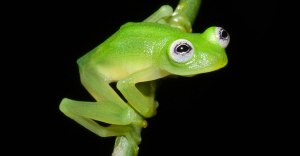
The Real Kermit

The Real Kermit

We went frogging during the evening. Costa Rica is one of the best places for spotting amphibians. We went looking for a very new species and we were not dissappointed.


C7B4F3D6-2A5D-4921-85AC-BCB8BD3ADA4A

Diane’s Bare-Hearted Glass Frog: 

  • Glass frogs have transparent skin on their bellies. You can see all of their organs!
  • These frogs are found in the mountains of Costa Rica. They are the first new glass frog species to be discovered in 40 years.
  • It has long thin fingers and toes.
  • They are nocturnal.
  • Males have an almost insect like call they use to attract females.
  • These cuties have white ping pong like eyeballs with black irises that make them look just like Kermit the frog.


We often think it is crazy that scientists are still discovering new species. It is so important to protect the wild places on earth so that all animals- known and not known have a healthy habitat to call home.

Categories: adventure, amphibians, Animals, Children, conservation, education, endangered species, Environment, nature, science, Today's Post, wildlife | Tags: , , , , , , , , , , , | 1 Comment

Blog at WordPress.com.