Posts Tagged With: adventure

HOLIDAY ANIMAL WEEK # 55

HOLIDAY WEEK DAY #2

We’re staying in the arctic today to meet one large and fat animal! What do you know, they have tusks just like Ellie! Do you have your coats on? Let’s go meet this great holiday animal!

MEET THE WALRUS!
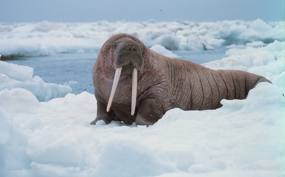
    Range/Habitat: Arctic/water, shoreline

   Diet: Carnivore: shrimp, sea-snails, fish

   Length/Weight: 9 ¾-12 ft/ 1 ¼ -2 ¼ tons

   Conservation Status: data deficient


Fun Facts:

  • Walrus are large marine mammals with flippers.
  • Walrus eat prey off the bottom of the oceans and use suction to eat.
  • They can stay underwater for up to 25 minutes and can dive down to 330ft deep.
  • They are highly social and often are seen in large groups, called herds.
  • Male walruses are twice the size of females.
  • They have rough wrinkly skin and very whiskery faces.
  • Walruses have tusks of ivory. They can grow up to 3 ft 3” long.

Walruses sure are huge and cute! How can you not like their whiskery faces? These blubbery mammals are loud, social and full of personality! They are one of our favorites!

walrus

walrus2

Categories: adventure, Animals, Children, conservation, education, Environment, mammals, nature, oceans, science, wildlife | Tags: , , , , , , , , , , | 3 Comments

HOLIDAY ANIMAL WEEK!

HOLIDAY ANIMAL WEEK

We’re celebrating animals that are featured during the holidays this week! We’ll be going all over to find animals that live in the north pole or that are part of the holiday culture (i.e. featured in a song). Our first adventure takes us to the chilly North pole to meet a VERY Famous animal, who knows the big guy driving the slay! Grab your coats and let’s do this!

e e arctic

MEET THE REINDEER!

reindeer   Range/Habitat: North America-Europe-Asia/Tundra-forest

   Diet:  Herbivore: grasses, moss, lichen

   Length/Weight: 4- 7 ¼ ft/ 260-660 lb

   Conservation Status: common


Fun Facts:

  • Reindeer are also called caribou.
  • They vary in color and size depending on where they live. Reindeer that live closest to the arctic are white in color.
  • Both female and male reindeer have antlers. Males lose their antlers in the winter.
  • Reindeer antlers are covered in a layer of fur called velvet.
  • Their noses are specialized to warm cold air before it enters their lungs.
  • Reindeers have a four chambered stomach!
  • One of their favorite foods is called reindeer moss.
  • Reindeers are the only mammal that can see ultraviolent light!
  • Some reindeer populations migrate. They can migrate up to 3,000 miles in one year! Whew, they must be tired!

Besides being really neat, reindeer are famous for pulling Santa’s sleigh! We were hoping to meet a real reindeer this year, but we weren’t able to. We are making some antlers out of pipe cleaners though! What’s your favorite thing about reindeer?

reindeer   reindeer2


We found a reindeer coloring sheet too:

http://www.edupics.com/coloring-page-reindeer-i8663.html

Categories: Animals, Children, conservation, education, Environment, holidays, mammals, nature, science, wildlife | Tags: , , , , , , , , , | Leave a comment

FEATHERY FRIDAY # 55

FEATHERY FRIDAY #55

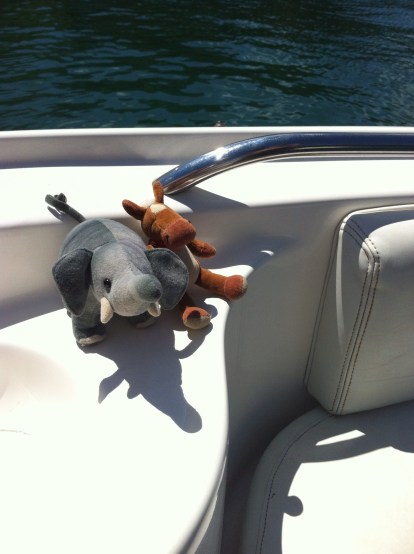
We’re off to the Galapagos Islands today on the E & E boat to meet a bird who soars in the skies over the ocean! Grab your life jacket and let’s head out on this adventure!

e e boat

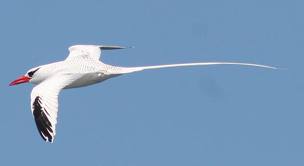
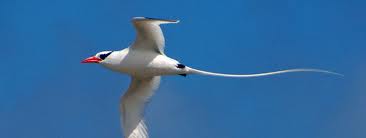
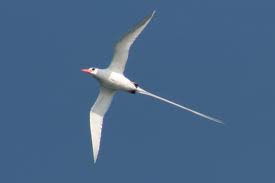
MEET THE RED BILLED TROPICBIRD!

red billed tropicbird   Range/Habitat: Eastern Pacific-Central Atlantic/ oceans-coasts

   Diet: Carnivore: squid, fish

   Length/Weight: 31-32”/ 21-29 oz

   Conservation Status: common


Fun Facts:

  • Red Billed tropicbirds are often found hundreds of miles from shore.
  • They poor swimmers!
  • Red billed tropicbirds plunge into the ocean to catch their prey.
  • They have webbed feet.
  • Red billed tropicbirds have long tail streamers.
  • Red billed tropicbirds are very awkward on land.

Red billed tropicbirds are gorgeous birds! These high fliers were built to spend their lives in the air. We sure would like to be able to fly one day! How about you?

 red billed tropicbird2red billed tropicbird3


Categories: adventure, Animals, birds, Children, conservation, education, Environment, nature, science, wildlife | Tags: , , , , , , , , , | Leave a comment

SUPER SURPRISE THURSDAY # 55

SUPER SURPRISE THURSDAY #55

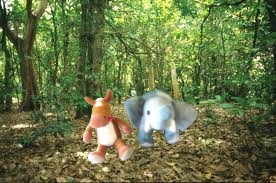
We’re heading out our own back door and into the woods to find today’s super surprise animal. As we’re hiking, be on the lookout and keep your distance, because this animal has one stinky defense!

e e woods (2)

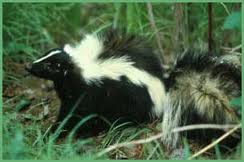
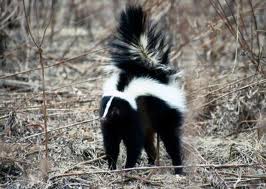
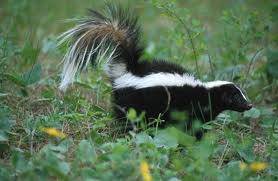
MEET THE STRIPED SKUNK!

striped skunk   Range/Habitat: Canada-North Mexico/ woodlands, suburbs

   Diet: Omnivore: fruits, seeds, fish

   Length/Weight: 22-30”/ 5 ½-14lb

   Conservation Status: common


Fun Facts:

  • Striped skunks are solitary.
  • They are known for their stinky defense system. Striped skunks will stand on their front feet and spray a predator with a very foul smelling liquid!
  • Striped skunks’ main predator is the Great Horned Owl because the owl has no sense of smell.
  • They are crepuscular (active at dawn and dusk).
  • Young striped skunks stay with their mother’s for almost a year.
  • Striped skunks winter in dens and burrows.

These stinky little mammals are really cute! It is best to watch them from a distance or from inside the house, you certainly don’t want to encounter the wrong end of these animals!

 striped skunk2striped skunk3


Categories: adventure, Animals, Children, conservation, education, Environment, mammals, nature, science, wildlife | Tags: , , , , , , , , , | 1 Comment

WATERY WEDNESDAY # 55

WATERY WEDNESDAY # 55

We’re taking the E & E submarine out today to meet one of the oceans’ predators! These cartilaginous fish have mouths full of teeth, so we’ll be on the lookout from the safety of the sub!

e e sharks

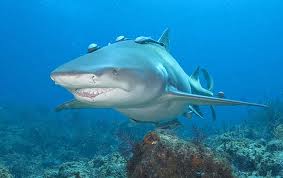
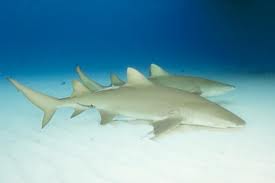
MEET THE LEMON SHARK!

lemon shark    Range/Habitat: Eastern Pacific-Western Atlantic/ oceans-near coasts

    Diet: Carnivore: stingrays, fish

    Length/Weight: up to 11 ft/over 400 lbs

    Conservation Status: common


Fun Facts:

  • Lemon sharks are also called Sharptooth sharks.
  • They are yellowish-brown in color.
  • Lemon sharks can go in brackish waters.
  • They have large blunt noses.
  • Lemon sharks have two rows of long, thin triangular shaped teeth to catch prey with; then rows of extra teeth behind those.

Lemon sharks are fierce predators, but they are also amazing animals. Ecosystems are dependent on top predators in the food chain and without them the oceans would be in big trouble. It is important that we respect sharks and help protect them!

lemon sharks2   lemon shark3

Categories: adventure, Animals, Children, conservation, education, Environment, nature, oceans, science, sharks, wildlife | Tags: , , , , , , , , , | Leave a comment

REPTILIAN TUESDAY # 55

REPTILIAN TUESDAY #55

Are you ready to meet a cute little reptile today? We’re staying on the continent of Africa but heading to the deserts of Northern Africa. So grab your sunglasses and sunscreen and let’s head out on an adventure!

e e desert

MEET THE ELEGANT SAND GECKO!

elegant sand gecko   Range/Habitat: Northern-Eastern Africa/ desert

   Diet: Insectivore: ants, beetles, moths

   Length: 3 ½-4 ¼”

  Conservation Status: common


Fun Facts:

  • Elegant sand geckos have long limbs and long tails.
  • They are sand colored to help them camouflage in with the desert.
  • Elegant sand geckos live in holes in the sand.
  • They are excellent diggers.
  • Elegant sand geckos have large eyes.
  • They are most active at dusk

Elegant sand geckos are so cute with their big eyes. They are all the better to spot bugs with my dear! Hahahaha!

elegant sand gecko2


Categories: adventure, africa, Animals, Children, conservation, education, Environment, nature, reptiles, science, wildlife | Tags: , , , , , , , , , | 2 Comments

MAMMAL MONDAY # 55

MAMMAL MONDAY #55

It’s that special day of the week when we meet a mammal and today’s adventure takes us to a small area in the West of Africa. Get ready to do some monkying around! Let’s do this!

e e savanna

MEET THE GUINEA BABOON!

guinea baboon   Range/Habitat: West Africa/ grasslands

   Diet: Omnivore: roots, grubs, eggs

   Length/Weight: 27”/ 39 lb

   Conservation Status: near threatened


Fun Facts:

  • Guinea baboons are the smallest of all baboons.
  • Male guinea baboons have large manes of fur.
  • They live in troops of around 40 individuals.
  • Guinea baboons forage for food on the ground, but sleep in the trees at night.
  • They are also called the savanna baboon.
  • Guinea baboons are highly vocal.

We love baboons and the Guinea baboons are so handsome with their large manes. These highly social and vocal primates are so fun to observe!

guinea baboon2     guinea baboon3


Categories: adventure, africa, Animals, Children, conservation, education, Environment, mammals, science, wildlife | Tags: , , , , , , , , , | Leave a comment

FEATHERY FRIDAY # 54

FEATHERY FRIDAY #54

It’s that special day of the week dedicated to our feathery friends! So are you ready to head to Central America to meet a duck who doesn’t quack? Let’s head out on today’s adventure!

e & e wetlands

MEET THE MUSCOVY DUCK!

muscovy duck   Range/Habitat: Central-South America/ wetlands, lakes, rivers

   Diet: Omnivore: roots, leaves, fish, insects

   Length/Weight: 26-33”/ 7-15 lbs

   Conservation Status: common


Fun Facts:

  • Muscovy Ducks have wild and domesticated populations.
  • They are not very vocal and only make a few noises, including hisses!

  • Muscovy ducks have black and white feathers.
  • They have wide flat tails.
  • Muscovy ducks perch in trees.
  • Muscovy ducks have claws on their feet.

Muscovy ducks are super cute! Who knew there were ducks out there that didn’t quack! Neat! Hiss! Hiss!

muscovy duck2   muscovy duck3

Categories: adventure, Animals, birds, Children, conservation, education, Environment, nature, science, wildlife | Tags: , , , , , , , , , | Leave a comment

SUPER SURPRISE THURSDAY # 54

SUPER SURPRISE THURSDAY #54

We’re going to the rainforests of South America today to meet one gorgeous and colorful bird! We’ll have to climb to the top to find them! Are you ready?

e & e rainforest2

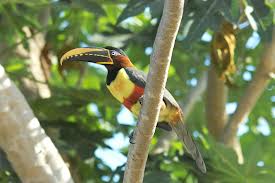
MEET THE CHESTNUT-EARED ARACARI!

chestnut eared aracari   Range/Habitat: Central- Northern South America/ rainforests

   Diet: Frugivore: fruit, insects

   Length/Weight: 13-16”/ 11 oz

   Conservation Status: common


Fun Facts:

  • Chestnut-eared aracari have black feathers with yellow bellies.
  • They live in the canopies of the rainforest.
  • Chestnut-eared aracari have large bills with yellow teeth like looking markings.
  • They are members of the toucan family.
  • Chestnut-eared aracari live in small groups.

We just love these gorgeous birds! Those beaks are just perfect for picking fruit from the trees! What do you think?

chestnut eared aracari3


Categories: adventure, Animals, birds, Children, conservation, education, Environment, nature, rainforests, science, wildlife | Tags: , , , , , , , , , | Leave a comment

WATERY WEDNESDAY #54

 WATERY WENESDAY # 52

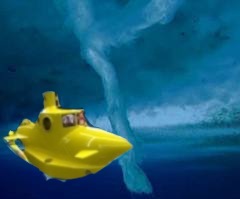
We’re taking the E & E submarine to the cold waters of the South Pole. Luckily the submarine is heated because you wouldn’t want to be caught in these cold waters unless you are one of these amazing fish! All aboard….

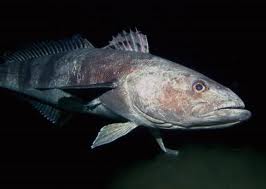
MEET THE ANTARCTIC TOOTHFISH!

   Range/Habitat: Antarctic Circle/ oceans

   Diet: Carnivore: crabs, squid, fish

   Length/Weight: up to 7 ¼ ft/ up to 260 lbs

   Conservation Status: common

Fun Facts:

  • Antarctic Toothfish live in very deep waters.
  • They are very slow growing.
  • Antarctic toothfish have a special protein in their blood that acts as an anti-freeze.
  • Antarctic toothfish have high body fat content and light bones.
  • They have a cartilaginous skull.

Wow, these fish are really cool and kind of creepy! Yet again we are fascinated by the animals that call the deep ocean their home! Those deep dark waters really are like another planet!

Categories: adventure, Animals, Children, conservation, education, Environment, fish, nature, oceans, science, wildlife | Tags: , , , , , , , , , , | Leave a comment

Blog at WordPress.com.