Posts Tagged With: animals

Monitoring a Monitor!

Monitoring a Monitor!

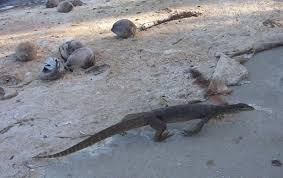
We went looking for a medium sized reptile today! We found this gorgeous animal and it was so fun to watch!

sand monitor

IMG_3689


Date: 4/19

Location: Great Victorian Desert

Sand Goanna Fun Facts:

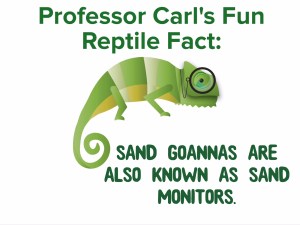
  • Sand goannas are members of the monitor family.
IMG_3690

  • Sand goannas are burrows. They dig burrows for shelter.
  • They are diurnal (active during the day).
  • They have forked tongues to help them “smell” the air.
  • Sand goannas sense of smell is so good they can find buried prey.
  • Sand goannas lay their eggs in a termite mound. The termites keep the eggs warm.
sand monitor2

These monitors are so cool to watch! Other members of the monitor family include the famous Komodo dragon!

Categories: adventure, Animals, Children, conservation, education, endangered species, nature, reptiles, science, Today's Post, wildlife | Tags: , , , , , , , , , | 1 Comment

Hello Dingo!

Hello Dingo!

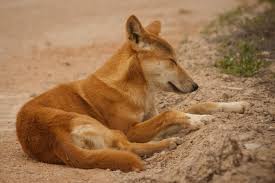
We met one of Australia’s most iconic animals- the dingo! These canines are really neat and we so enjoyed watching the ones we spotted!

dingo3

IMG_3686


Date: 4/18

Location: Great Victorian Desert

Dingo Fun Facts:

  • Dingoes are descendants of the Asian dingo. They are thought to have been introduced to Australia 3,000-4,000 years ago.
  • They can be solitary or found in packs.
  • Dingoes are the largest predator in Australia.
  • Dingoes in the desert are reddish-brown in color and are smaller than their cousin.

IMG_3687

  • Dingoes have excellent vision and can turn their heads about 180 degrees.
  • They have flexible wrist that gives them the ability to climb.
  • Dingoes do not bark, but they yodel/howl.

dingo2

dingo


Dingoes are quiet intelligent and often they are not loved by livestock farmers. They are predators you know! We think they are just the coolest!

Categories: adventure, Animals, Children, conservation, education, endangered species, mammals, nature, science, Today's Post, wildlife | Tags: , , , , , , , , | 1 Comment

Holy Marsupial Moley!

Holy Marsupial Moley!

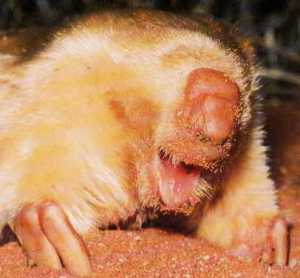
We’re back from spring break! Woohoo! We headed back to our camp at the edge of the desert and went exploring in the evening! We didn’t spot our animal today, but we did spot it’s track moving under the sand! The Southern Marsupial Mole is one neat and crazy animal!

mole

IMG_3672


Date: 4/17

Location: Great Victorian Desert

Southern Marsupial Mole:

  • Southern Marsupial moles have hard horny covering over their noses.
  • They have large claws for digging.
  • Its neck bones are fused together to protect it. 
  • They do not have working eyes, as they spend most of their time underground in the dark.
  • Southern Marsupial Moles are not related to other moles.
  • They do not dig permanent tunnels- just travel right under the sand surface. It is similar to “swimming” in sand.
  • Its silky fur keeps sand off of it. 


We had fun watching these little mysterious creatures under the sand. Can you imagine not having eyes because you live in darkness and they are not really useful?

Categories: adventure, Animals, Atlanta, Children, conservation, education, Environment, nature, Today's Post, wildlife | Tags: , , , , , , , , , | 1 Comment

Spring Break

Spring Break!

We’re off to the beach for the week! But make sure to check out our social media this week as we have some great animal friends who are taking over! Woohoo!

e e beach

Categories: adventure, Animals, Children, conservation, education, entertainment, Environment, nature, science, Today's Post, wildlife | Tags: , , , , , , , | 1 Comment

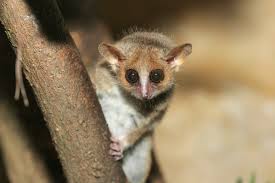
Hello Little Lemur!

Hello Little Lemur!

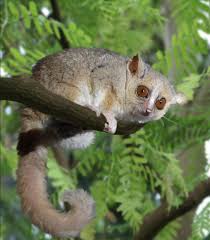
We are meeting our last animal on Madagascar! It’s a lemur of course! We are so excited! We are heading to the desert of Australia for the month of April! Woot! Woot! Let’s meet this special animal first!

mouse lemur

IMG_3206


Date: 3/30

Location: Madagascar

Grey Mouse Lemur Fun Facts:

  • Grey mouse lemurs are the largest members of the mouse lemur family. It is still one of the smallest primates in the world.
  • They are arboreal and nocturnal.
  • They forage for food alone, but sleep in groups in trees during the night.

IMG_3207

  • Those long tails help the mouse lemur navigate their treetop homes.
  • They store fat in their tails during the dry season, when food may not be as plentiful.
  • Grey mouse lemurs enter a daily state of torpor during the dry season. Their body temperatures drop and metabolism slow down to conserve energy.

mouse lemur2

mouse lemur3

We enjoyed watching these tiny lemurs forage during the night! Good thing we have night goggles! We have enjoyed our time on this magical island! We will have to come back!

Categories: adventure, Animals, Children, conservation, education, mammals, nature, science, Today's Post, wildlife | Tags: , , , , , , , , , , | 1 Comment

Howdy Gecko!

Howdy Gecko!

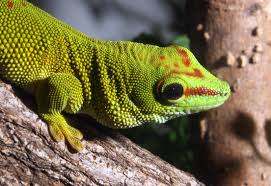
What’s more fun than meeting a new friend right in your camp? When you’re out exploring, some of the coolest animals can be found wandering around your home base! In this case, we found the Madagascar Day Gecko on the porch!

day gecko

IMG_3094

Date: 3/27

Location: Madagascar- Base Camp

Madagascar Day Gecko:

  • Madagascar day geckos do not have eyelids.
  • They have flat toe pads to help them grip when climbing.
  • Madagascar day geckos are one of the largest day gecko species.

IMG_3095

  • They can range from green to bluish-green in color.
  • Madagascar day geckos prefer a humid habitat.

day gecko2

We had the best time watching these little reptiles at camp. They are so cute and funny!

Categories: adventure, Animals, Children, conservation, education, nature, reptiles, science, Today's Post, wildlife | Tags: , , , , , , , , , | 1 Comment

One Tiny Lizard!

One Tiny Lizard!

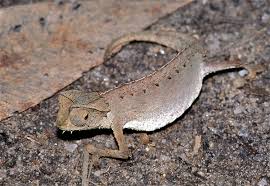
We headed into the forest to look for one of smallest lizards in the world! Madagascar is home to many species of chameleons. We wanted to find some of the smaller ones- the brown leaf chameleon. It takes a good eye, some nice binoculars and a great guide to find these cute reptiles!

chameleon2

IMG_3008


Date: 3/20

Location: Madagascar

Brown Leaf Chameleon Fun Facts:

  • Brown leaf chameleons resemble dried up leaves on the forest floor.

IMG_3011

  • When threatened, they curl up their legs and tail and roll over on their side and stay perfectly still.
  • Like other chameleons their eyes move independently of each other.
  • Male brown leaf chameleons attract a female by rocking their body and nodding their head.
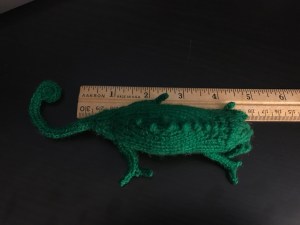
  • Professor Carl is showing us how long the brown leaf chameleon is!

IMG_3019

  • Brown leaf chameleons are not always brown! They can be olive, green, beige or red!
  • They have a stiff ridge running down their spine.
  • Brown leaf chameleons are diurnal.

chameleon

We had a lovely day exploring the forest. We had to walk carefully to watch for these small reptile predators. We love chameleons and their crazy eyeballs and funny feet!


Categories: adventure, Animals, Children, conservation, Environment, nature, reptiles, science, Today's Post, wildlife | Tags: , , , , , , , , , , | 1 Comment

Hello Little Tenrec!

Hello Little Tenrec!

We spent our last day of the week in search of a very small mammal that looks like a hedgehog, but it’s not. The tenrec is found only in Madagascar and while they are similar they are not hedgehog relatives.

common tenrec

IMG_2892


Date: 3/16

Location: Madasgascar

Common Tenrec Fun Facts:

  • They are also known as the tailess tenrec. They are the largest tenrec species.
  • Common tenrecs do have a tail- up to 1 1/2 cm in length.
  • Tenrecs are related is not related to hedgehogs. It is thought that is related to elephants, aardvarks and manatees.
  • Tenrecs roll in a ball and have spines similar to hedgehogs, but they do not have the same strong muscle structure of a hedgehog.

IMG_2893

  • Tenrecs roll in sand to help them keep clean.
  • They can have up 32 babies at at time. All of the babies are born without spines.

common tenrec2

We love hedgehogs and their non cousin the tenrec! Can you believe that they might be related to Ellie? Who doesn’t love those cute little feet and funny ears!


Categories: adventure, Animals, Children, conservation, education, Environment, mammals, nature, science, Today's Post, wildlife | Tags: , , , , , , , , , , , | 1 Comment

Don’t Buzz Off Buzzard!

Don’t Buzz Off Buzzard!

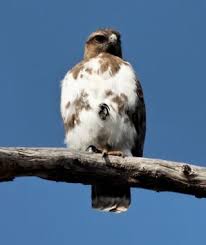
After sleeping in after our last two night adventures, we got up and did a little bird watching! We were happy to find one of Madagascar’s raptors!

madagascar buzzard2

IMG_2894


Date: 3/15

Location: Madagascar

Madagascar Fun Facts:

  • Madagascar buzzards are old world buzzards.

IMG_2895

  • They call many parts of the island home, including forests, open forest and rocky hillsides.
  • Some lemurs have alarm calls for the buzzard, so some scientists think they may prey on them.
  • Madagascar buzzards have broad wings for soaring.
  • They have yellow eyes and talons.
  • Madagascar buzzards chicks are born in September and October.

madagascar buzzard

We had a lovely time watching a few of these buzzards soar in the skies. Raptors will never cease to amaze us!

Categories: adventure, Animals, birds, Children, conservation, education, Environment, nature, science, Today's Post, wildlife | Tags: , , , , , , , , , | 1 Comment

Is That a Cat?

Is That a Cat?

We were so excited to meet today’s animal. We have seen this animal in zoos, but spotting this carnivore on Madagascar was a joy! We were jumping for joy- quietly of course!

fossa3

IMG_2774


Date: 3/8

Location: Madagascar

Fossa Fun Facts:

  • Fossas are solitary.
  • Fossas are related to mongooses and civets.
  • They are the largest predator on the island of Madagascar.
  • Fossas are excellent climbers and spent a great deal of time in the trees.

IMG_2775

  • Fossas use scent glands to mark their territory.
  • They have retractable claws.
  • Fossas have lost much of their forest home.

fossa2

fossa


It was great treat to spot this elusive and shy creature. They are gorgeous, stealthy and agile! Woohoo! We love fossas!

Categories: adventure, Animals, Children, conservation, education, endangered species, mammals, nature, science, Today's Post, wildlife | Tags: , , , , , , , , , , | 1 Comment

Blog at WordPress.com.