Posts Tagged With: birds

Red Crest

Red Crest

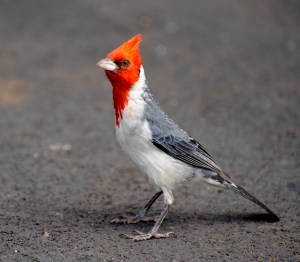
We have northern cardinals at the HQs! They are such colorful songbirds! It turns out there are cardinals here in the Pantanal. These birds don’t have a full body of red, but they are gorgeous! Let’s learn more about them.
D287A06F-67C4-4036-AF28-3AE6A8978DC2


Red-crested cardinal fun facts:

  • Red-crested cardinals have red heads, white chests and black wings and bodies.
  • These little birds grow up to 7 1/2 inches and weigh up to 1 1/2 oz.
  • They are omnivores. They eat fruit, seeds and insects.
  • A pair of cardinals is very territorial, especially during breeding season.
  • They are listed as Least Concern by the IUCN.

458D506E-A9AA-4A4B-9833-F19F87CF0BCD

We loved meeting this little bird who looks like one of our favorite backyard species! We had no idea there were other kinds of cardinals out there!
Categories: adventure, Animals, birds, camp, Children, education, Environment, nature, science, Today's Post, wildlife | Tags: , , , , , , , , , , , | 1 Comment

That is a Falcon!

That is a Falcon!

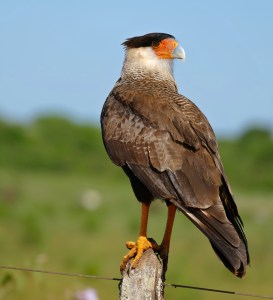
We met one gorgeous bird today! This big member of the falcon family is known to hang with vultures and look more like a hawk!

P1550106

Southern Crested Caracara Fun Facts: 

  • Crested caracaras can grow up to 22 inches and weigh up to 3 lbs.
  • Their wing span is almost 50 inches.
  • These carnivores eat incsects, small reptiles and fish. They are also known to push vultures away from carion.
  • They have long thin legs.
  • They are mostly solitary.
  • It is listed as Least Concern by the IUCN.

4EDC5F66-5C00-46DF-9D59-17EA4FDF0B10

These gorgeous birds have a northern cousin that lives in Mexico and in Arizona and Texas. We love these raptors!

Categories: adventure, Animals, birds, Children, conservation, education, Environment, nature, science, Today's Post, wildlife | Tags: , , , , , , , , , , , | 1 Comment

Hello Birdie!

Hello Birdie!

We are meeting a little bird of the Pantanal today! Come join us!

AF955EF9-6FEE-4126-999A-9E09E6A57448

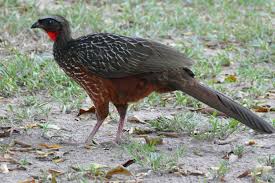
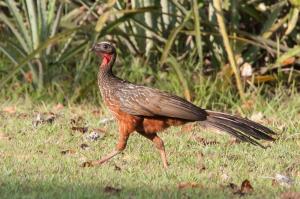
Chestnut-bellied guan fun facts: 

  • These birds prefer higher ground.
  • They resemble turkeys, but are not.
  • They have chestnut brown bellies and red waddles.
  • They have a rough crow like call.
  • They are about 21 inches long.
  • They are listed as vulnerable by the IUCN.

8A54CD86-B8E7-4FB5-B95D-1196EAC37637

These funny looking birds remind of us of a turkey and a roadrunner. They are super cool!

Categories: adventure, Animals, birds, Children, conservation, education, endangered species, Environment, nature, science, Today's Post, wildlife | Tags: , , , , , , , , , , , , | 1 Comment

Meet the King!

Meet the King!

We met the king of Antarctica today! Most people think that all penguins call the South Pole home, but only 8 species live in this harsh environment. Today though we are meeting the King penguins. Sadly they don’t wear crowns.

9AC1C665-9EC2-4BAE-8EBF-EFE050F2647A


King Penguins Fun Facts: 

  • These birds are the 2nd largest penguin species in the world. Do you remember the largest?
  • Kings are easy to spot with their oranges spots on their heads and beaks and chests.
  • Both parents incubate the egg on their feet and brooding pouch, switching the egg every few weeks.
  • These efficient carnivores can dive as deep as 950 feet. More commonly they go around to 164 feet deep.
  • The chicks look very different than the adults. They are fluffy and brown! Scientists first thought they were a separate species when they first saw them.
  • Chicks stay with their parents and the colony for almost a year. This means king penguins only have one to two chicks every two-three years.
  • They are currently listed as Least Concern by the IUCN.

2149577C-1885-4B58-87A8-A5B30BD29353


We love these gregarious birds and their bright orange colorations. They always make us and laugh and of course we always practice our waddling after seeing them.

Categories: adventure, Animals, birds, Children, conservation, education, Environment, nature, science, Today's Post, wildlife | Tags: , , , , , , , , , , , | 1 Comment

Flying Snowbird

Flying Snowbird

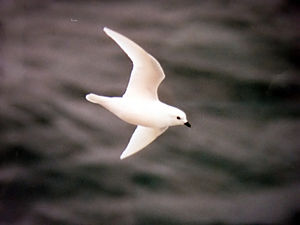
After meeting two marine loving animals, we wanted to find one that calls the air and ocean home. We were so excited to find the Snow Petrel.

15327A9D-DB94-4DC6-8ED8-D060819DF51E

Snow Petrels Fun Facts: 

  • Snow petrels can vary in size, but can grow up to 1 lb.
  • They spend most of their lives alone, they come together in early November to breed in large colonies.
  • They are carnivores. They eat krill, fish and carrion.
  • They are highly territorial during breeding season.
  • Snow petrels spit an waxy stomach oil at predators to keep them away.
  • They have small dark beaks and eyes.
  • Snow petrels prefer packed ice and icebergs when they land. They nest on rocky areas where they make their nests of small pebbles.

380652B8-233B-4117-8717-D0A807CFDBE0

These gorgeous birds are so neat. When you think of Antarctica- you usually only think of penguins, but other birds call these cold islands home too.

Categories: adventure, Animals, birds, Children, conservation, education, Environment, nature, science, Today's Post, wildlife | Tags: , , , , , , , , , , | 1 Comment

Emperors of the South Pole

Emperors of the South Pole

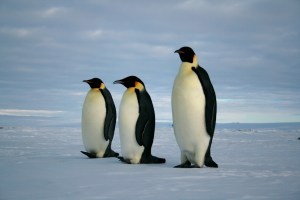
We put on our warmest coats, gloves, hats and boots and headed out to the meet one of Antarcticas most iconic animals- the Emperor Penguin. These tall flightless birds live in a harsh climate, but they are built to survive.

787B4882-1C52-4FCD-A012-F2F8B5ABE4FA


Emperor Fun Facts: 

  • These penguins can grow up to 45 inches and weigh up to 85 lbs! They are the largest penguins on earth.
  • These birds huddle together for warmth. The birds rotate from the interior of the group to the center.
  • They can dive 1,800 ft deep and stay under water for up to 20 minutes. They can dive deeper than any bird on the planet.
  • Females lay one egg. The males incubate the eggs on top of their feet. They cover the eggs with their brood pouch.
  • Females head out to the open ocean to gorge on food while the eggs are incubating.
  • When the chicks hatch, the females and males switch duties.
  • These big gorgeous birds are listed as Near Threatened by the IUCN.

04BAD5D3-74B9-42E4-9A2A-FF86B9843646

We had fun watching these birds. They are very curious. We can not imagine living in the frigid temps though or swimming so much time in that cold ocean. This horse & elephant miss the warm weather.

Categories: adventure, Animals, birds, Children, conservation, education, endangered species, Environment, nature, science, Today's Post, wildlife | Tags: , , , , , , , , , , , | 1 Comment

Toucan Toucan!

Toucan Toucan!

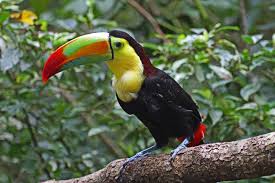
What better animal to meet in the rainforest than the iconic toucan! These bright beaked birds were on our list and we were thrilled to find a few! Come meet them with us!

6CC3517B-DBF2-4740-B832-8C9466446845


Keel-billed Toucan Fun Facts: 

  • Those large colorful bills make up a 1/3 of their body length. The bills are not heavy as they are made up of hollow bone.
  • The bills are covered in keratin- the protein that makes up your hair & nails.
  • These jazzy looking birds have blue feet! Those feet have two toes facing front and two facing backwards to help them grip on branches.
  • Keel-billed toucans are very social. They live in family groups of around 12 individuals.
  • They are omnivores. Fruit makes up most of their diet, but they occasionally eat insects and eggs.
  • Both females and males help rear the chicks. They are born with no feathers and can not see til they’re around 3 weeks old.
  • They are listed as Least Concern by the IUCN.

B34FB569-C8DA-4AE9-9160-9DF65AF019B4

It is so fun to watch the toucans eat fruit they find. They may dissect the fruit first, but often they throw it back whole! They are even known to play ball with fruit- throwing to each other. And just like those howler monkeys- they weren’t sharing! Bummer.


Categories: adventure, Animals, birds, Children, conservation, education, Environment, nature, science, Today's Post, wildlife | Tags: , , , , , , , , , , | 1 Comment

Hello Little Songbird!

Hello Little Songbird!

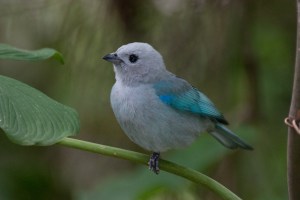
After spotting the largest predator in the area we went looking for a little song bird. This gorgeous little was so fun!

3AF64AD8-ACBC-45A6-ACC9-696BA0883862


Blue-gray tanager: 

  • Blue-gray tanagers belong in the tanager family. It is the 2nd largest family of birds on the planet. They represent about 4% of all birds.
  • All tanagers live in the new world.
  • They grow about 7 inches long.
  • They are primarily herbivores. They eat fruit and a few insects.
  • They often thrive where there are humans.
  • Blue-gray tanagers color vary by the area they live in.
  • They are listed as least concern by the IUCN.

4383E68F-71C6-494B-BDED-00197048FA84

We loved watching these little birdies in the trees! They are sooooo cute!

Categories: adventure, Animals, birds, Children, conservation, education, Environment, nature, rainforests, science, Today's Post, wildlife | Tags: , , , , , | 1 Comment

Hello Bright Colored Bird

Hello Bright Colored Bird

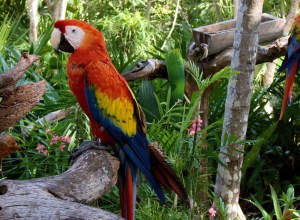
Hello! We went birding today! We were looking for one of the most brightly colored and gorgeous macaws on the planet. Come meet them with us!

6AE02071-421E-4B5E-947A-C6B0857BF41B

Scarlet Fun Facts: 

  • There are two subspecies of scarlet macaw. We met the North Central American Scarlet Macaw.
  • They have blue on their wings and not green. They are also larger than their South American cousins.
  • They weigh around 2 lbs and grow up to 32 inches long.
  • Scarlet macaws eat fruits, nuts and seeds.
  • They mate for life.
  • Chicks leave their parents after about a year.
  • They have a life span of around 40-50 years.

068001CA-5D65-4ACF-84B4-A1E27A753ABF

We enjoyed watching these beautiful birds. They are social and intelligent. They are kept as pets, which is often a bad idea. They have long life spans and are very high maintenance. They can also be very destructive.

Categories: adventure, Animals, birds, Children, conservation, education, Environment, nature, rainforests, science, Today's Post, wildlife | Tags: , , , , , , , , , , , | 1 Comment

Teeny Tiny Bird

Teeny Tiny Bird

After our all nighter looking for frogs, we stayed up a bit longer to find a little bird before napping away the day. This little fast birdie was not easy to spot as it is one of the smallest hummingbirds around.

1D20B3A2-6579-4433-A376-F52D899E757E


Scintillant Hummingbird Fun Facts: 

  • These little birds grow up to around 3 inches long. It is just a little larger than the smallest bird in the world- the bee hummingbird.
  • They have little straight black beaks.
  • Scintillant hummingbirds eat nectar.
  • Males are very territorial.
  • Females build the nests, incubate the eggs and raise the babies.

579382F7-80DA-4F8B-81C2-D3F3CAB805D3

These teeny birds are so adorable. They are Ellie and Edmond sized :)!

Categories: adventure, Animals, birds, Children, conservation, education, Environment, nature, science, Today's Post, wildlife | Tags: , , , , , , , , , , | 1 Comment

Blog at WordPress.com.