Posts Tagged With: birds

Who’s That Bird?

Who’s That Bird?

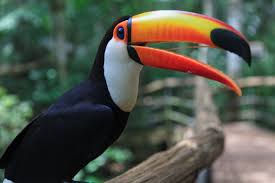
We have a fabulous Brazilian bird for you today! If you remember from the other day- Brazil is one of the richest bird habitats in the world. Nearly 2,000 species call Brazil home! Wow! Who knew? It’s a bird’s paradise! Today we’re meeting just one of those spectacular birds! Let’s get to it!


Toco Tucan Fun Facts:

  • Toco toucans live in Central and South America in woodlands, forests and groves.
  • They are omnivores. They eat insects, fruits and frogs.
  • Toco toucans can grow up to 23 inches and weigh up to 1 1/4 lbs.
  • They are listed as Least Concern by the IUCN.
  • Toco toucans are the largest of all toucan species.
toco3

  • They have large orange bills with a black spot. The bills can get up to 7 ½” long (about the length of a pencil).
  • Toco Toucan bills are serrated (like a knife) and this helps them grasp and tear fruit.
  • Their large bills also enable the toucan to get fruit from out of reach branches.
  • Toco toucans nest in trees.
  • You can see Toco toucans in small flocks of up to 6 birds.
  • Both female and male toucans incubate the eggs.

toco

Toco Toucans are really pretty birds with their shiny black feathers and large orange beaks! And man does that beak come in handy when you’re trying to get the fruit on the end of the branch! They also have a really cool call. Take a listen here!

 

Categories: adventure, Animals, birds, Children, conservation, education, Environment, nature, science, wildlife | Tags: , , , , , , , , | Leave a comment

WE’RE BANANAS- FOR SLUGS!

WE’RE BANANAS- FOR SLUGS!

IMG_0688

  • Pacific banana slugs are the 2nd largest species of terrestrial slug on earth. They grow up to 10 inches long and weigh up to 4 ounces.)
  • They can be found from Alaska to California in forests.
  • Pacific banana slugs are decomposers. They decompose plant material and animal droppings. They produce very rich soil which is essential to the habitat they live in.
  • They are mollusks.

banana slug2

  • They have teeth on their tongues.
  • Pacific banana slugs have 2 pairs of tentacles. The larger pair detect light and movement. The smaller pair detect chemicals. They can regrow tentacles.
  • Pacific banana slugs cover themselves in a layer of mucus to protect from themselves from drying out. This slick slime also helps them breathe.
  • They do lay eggs under leaves and cover.
  • Pacific banana slugs have one foot that they use to get them around the forest floor.

banana slug


Categories: adventure, Animals, Children, conservation, education, Environment, nature, science, wildlife | Tags: , , , , , , , , , , | 1 Comment

SHOREBIRDS ROCK!

SHOREBIRDS ROCK!

We’re off to meet some of the birds that live near camp! So let’s get started!

FullSizeRender(55)

Brown Pelican Facts:

They live in Coastal North America.
They are listed as threatened.
They nest in colonies.
Pelicans dive to get their fish.
They are the only pelican to dive head first for prey.

FullSizeRender(56)

Sanderling Sandpiper Fun Facts:
They breed in the Arctic.
Sanderlings spend their winter in the south.
They run back & forth with the waves.
They eat worms, mollusks & crustaceans.
They are very territorial.

FullSizeRender(57)

Herring gulls Fun Facts:
They prefer to drink freshwater- but will drink sea water because they can excrete the salt from nostrils.
Herring gulls have been seen using tools to catch fish (bread as bait).
Herring gulls eat mussels, clams, worms.
They are loud & gregarious.
They are large with pink legs.

FullSizeRender(58)

Piping Plover Fun Facts:
They are a small shorebird.
They have yellow legs.
They have orange bills with black tips.
They are listed as near threatened.
Piping plovers eat insects and small invertebrates.

These are just some of the our bird friends that live by the sea side! We have some worms to share with them at camp!

Do you have any favorite shore bird friends?

Categories: adventure, Animals, birds, Children, conservation, education, Environment, nature, science, wildlife | Tags: , , , , , , , , , , | Leave a comment

NATIONAL BIRD DAY!

NATIONAL BIRD DAY!!

Professor Baxter is sharing some fun facts about his bird friends for us today! Woohoo, we do love our feathered friends!

IMG_1405IMG_1408

IMG_1409

IMG_1410(1)IMG_1411

IMG_1412

IMG_1415IMG_1414

IMG_1413

IMG_1416IMG_1417

IMG_1418

IMG_1419IMG_1420(2)

WOW! Birds have so many fascinating adaptions! With over 9,000 species they very greatly! We love them from the tiniest bee hummingbird to the ostrich!

Categories: adventure, Animals, birds, Children, conservation, education, Environment, nature, science, wildlife | Tags: , , , , , , , | 1 Comment

A Very Helpful Bird!

A Very Helpful Bird!

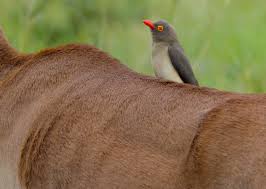
Today we meet a little bird that plenty of animals of the African Savannah know.. the Red-billed oxpecker! These little birds play a vital role out their on the plains, come learn more about them and find out why!

red billed oxpecker

  • Red-billed oxpeckers live in sub-Saharan Africa near savannas.

IMG_0261

  • They grow up to 9 inches long and weigh up to 1.75 ounces.
  • They are listed is least concern by the IUCN.
  • Red-billed oxpeckers insectivores. They eat ticks, fleas and other parasites off the skin of large mammals.
  • They will also feed off the blood of a wound on those same large mammals.
  • Red-billed oxpeckers have light brown feathers.IMG_1403
  • They use a scissor like motion to grab those insects off the animals.
  • Red-billed oxpeckers are known to digest earwax from their host animals. Scientists say it may help them with digestion.
  • Red-billed oxpeckers are social and vocal.

red billed oxpecker2 red billed oxpecker3


Red-billed oxpeckers are interesting little birds. They do share a symbiotic relationship with their host animal, even if they do take in some blood. One bird can eat hundreds of ticks in a day and we know every animal is better off without all those creepy critters!

Categories: adventure, Animals, birds, Children, conservation, education, Environment, nature, science, wildlife | Tags: , , , , , , , , , , | 1 Comment

CRAZY BIRD!

CRAZY BIRD!!

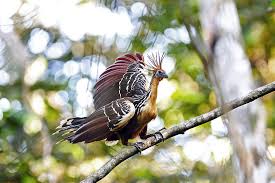
We’re meeting a bird that is a folivore today! These ancient birds are crazy looking, but they sure are cool! Let’s meet the hoatzin!

hoatzin

Hoatzin Fun Facts:

  • Hoatzin birds live in South America in swamps, marshes and mangroves.

IMG_0256(1)

  • They are folivores and eats leaves and flowers.
  • Hoatzin can grow up to 26″ long and weigh around 1 3/4 lbs.
  • They are listed as least concern by the IUCN.
  • They are the last member of an extant group of birds from 64 million years ago.
  • Hoatzin have large crests of feathers on top of their heads.
  • Hoatzin have large crops to help them digest the leaves they consume. The crops are so big they take away room for flight muscles.
  • They are not strong fliers.

IMG_0625

  • These vocal birds use a variety of calls to communicate with each other, including warning calls for predators.
  • Hoatzin live in small colonies.
  • Hoatzin chicks have claws on the end of two of their digits on their wings. Chicks use these to help them climb out of water they may go into to avoid predators.
  • They are excellent swimmers.

hoatzin2hoatzin3


Hoatzin are amazing birds. These tropical birds definitely look like dinosaurs to us! We’ll keep our distance though, no one wants to get too close to a bird’s who is called the stinkbird! Hold your trunk Ellie!

Categories: adventure, Animals, Children, conservation, education, Environment, nature, science, wildlife | Tags: , , , , , , , , , | 1 Comment

FASTEST RAPTOR IN THE WEST!

FASTEST RAPTOR IN THE WEST!

We’re off to meet the fastest raptor in the west- actually in all of the world! This falcon can reach unimaginable speeds! So let’s meet them before they fly off!

peregrin falcon3

Peregrine Falcon Fun Facts:

  • Peregrine falcons are found on every continent except Antarctica.  They can be found in varying habitats including coasts, deserts and urban areas.
  • They can grow up to 19 inches long with a 3 1/2 foot wingspan. They can up to 3 1/2 lbs.
  • Peregrine falcons are carnivores. They eat other birds like pigeons and shorebirds.
  • Peregrine falcons are known for their agile acrobatic flying skills. They can go in to steep dives called stoops to catch their prey.
  • They can reach speeds of up to 200 mph. Their average speed is 23-34 mph.

IMG_6601

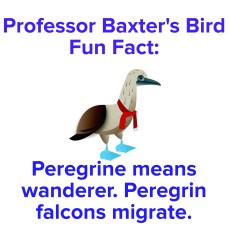
  • Some peregrine falcons migrate from the Arctic tundra all the way to South America, up to 15,500 miles in a year.
  • Peregrine falcons nest up high on cliffs, towers and skyscrapers.
  • You can even watch a peregrine falcons in their nest during season at The Peregrine Fund.

peregrin falcon2peregrin falcon


Peregrine falcons were severely threatened in the U.S. many years ago do to the DDT use and habitat loss. Like our friend the bald eagle, they are now listed as least concern after making a big come back!

Categories: adventure, Animals, birds, Children, conservation, education, Environment, nature, science, wildlife | Tags: , , , , , , , , , | 2 Comments

BALD EAGLE APPRECIATION DAY!

BALD EAGLE APPRECIATION DAY!

IMG_4395

We’re so excited to celebrate the amazing symbol of the United States. These amazing raptors are one of our favorite birds! Come learn more about the Bald Eagle!

bald eagle2

Fun Facts:

  • Bald eagles habitat range is North America in woodlands, marshes and bodies of water.
  • Bald eagles are carnivores. They eat fish, small birds and carrion.
  • They can grow up to 38″ and weigh up to 14lbs.
  • They are listed as least concern.
  • They have a wingspan of up to 8 ¼ feet.
  • Bald Eagles mate for life. They reinforce their pair bonds with spectacular flights that they do together.
  • Bonded pairs build their large nests. Both female and male eagles rear the chicks.

IMG_6600(1)

  • Bald Eagles have excellent eyesight.
  • They can live for up to 28 years!
  • Bald eagles don’t develop their white head feathers until around the age of 5!
  • Bald Eagles have been the National Bird of the U.S.  since 1782.

bald eagle3bald eagle


We just love Bald Eagles and think they make a fine national bird! They are so regal. Unfortunately we almost lost these birds to pollution and habitat loss and they were near extinction in the mid 1900s. After much human effort to save them they are now living in almost every state! YAY!!!

Categories: adventure, Animals, birds, Children, conservation, education, Environment, nature, science, wildlife | Tags: , , , , , , , , , | 1 Comment

Raptor Down Under

Raptor Down Under

e e coast

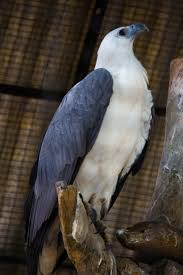
As you learned yesterday we are talking about raptors this week! Today is also Australia Day, so we decided to combine our celebrations and meet a gorgeous bird of prey from Australia!

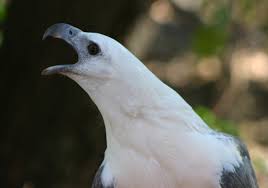
white bellied sea hawk

  • White-bellied sea eagle can be 35 inches long, weight 10 lbs with a wingspan of over 7 ft.
  • They are carnivores. They eat sea snakes, fish and turtles and carrion. They are known to steal prey from other birds.
  • White-bellied sea eagles live in coastal areas.
  • They mate for life.
  • Before mating, a pair does amazing acrobatic displays while flying together.
  • They can be territorial.
  • White-bellied sea eagles holds it wings in a v shape when flying.

IMG_6597

  • They are known for their loud honking call that sounds like a goose.
  • White-bellied sea eagles can live for up to 30 years.


white bellied sea hawk2white bellied sea hawk3

These gorgeous eagles are so fun to watch fly and catch fish! We have a special little Australia Day Bonus for you too- a koala coloring sheet!

koala coloring sheet

Categories: adventure, Animals, birds, Children, conservation, education, Environment, nature, science, wildlife | Tags: , , , , , , , , , | 1 Comment

Penguin Appreciation Day!


PENGUIN APPRECIATION DAY!


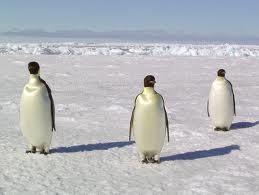
  • There are 18 species of penguins in the world.
  • All penguins live in the Southern Hemisphere.
  • Only 8 species of penguins actually live in cold climates.

penguin1

    • Fossilized penguins have been found that are 58 million years old.
    • Penguins do not have teeth. They have barbs on their tongue and throat.
    • Penguin wings are called flippers.

penguin5

    • The Emperor Penguin is the largest species.
    • The Fairy Penguin is the smallest species.
    • Penguins live in colonies.
    • Penguins are marine birds. They spend 75% of their life at sea.
    • Penguins have up to 70 feathers per square inch.
    • Penguins have excellent hearing.
    • Emperor Penguins can stay under water for up to 15 minutes.

penguin8   penguin7

penguin2

penguin4


Categories: adventure, Animals, birds, Children, conservation, education, Environment, nature, science, wildlife | Tags: , , , , , , , , , | 3 Comments

Blog at WordPress.com.