Posts Tagged With: children

The Ghost Bear Hugger – A Halloween Poem

We have a little Halloween poem for you to share tonight on this All Hallows Eve!
img_01061

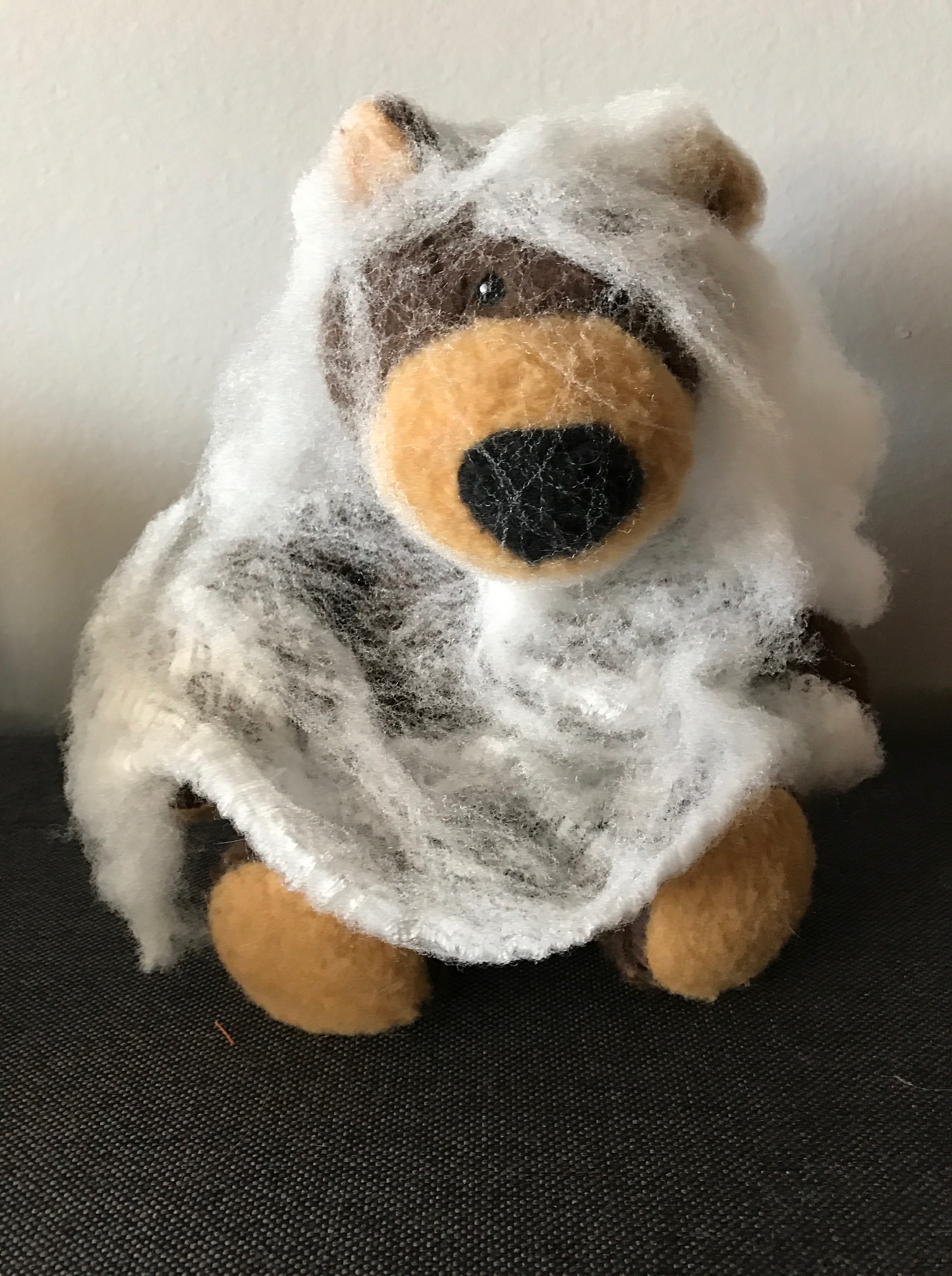
The Ghost Bear Hugger

Creeping & crawling in the dead of night,

the ghost bear hugger keeps you in his sight.

He looks for campers to hug with all his might.

He’s ghost bear hugger of the Salamander woods.
 

He dips & he dives behind the trees,

the ghost bear hugger doesn’t want to be seen.

He sneaks up behind you, but he’s not mean.

He’s the ghost bear hugger of the Salamander woods.
 

He tip toes around ever so quiet,

the ghost bear hugger won’t start a riot.

There’s no need be scared humans aren’t part of his diet.

He’s the ghost bear hugger of the Salamander woods.
 

He glides through the night without a sound,

the ghost bear hugger floats off the ground.

He just likes to hug the people he’s found.

He’s the ghost bear hugger of the Salamander woods.
 

He isn’t up for scaring you away,

the ghost bear hugger really wants you stay .

He liked you sing and dance and play.

He’s the ghost bear hugger of the Salamander woods.
 

He’s actually quite mellow;

the ghost bear hugger is just a lonely fellow 

When there is no one to hug, he lets out a great loud bellow.

He’s the ghost bear hugger of the Salamander woods.
 

So if you feel a squeeze in the middle of night;

no need to be full of a terrible fright.

You’ve just been hugged with all of his might

by the ghost bear hugger of the Salamander woods.
Categories: Animals, Children, conservation, education, nature, Today's Post | Tags: , , , , , , , | 1 Comment

SPOOOOOOKY ANIMALS!

SPOOOOOOKY ANIMALS!

8975547d-bff8-4c03-ab83-a9918370b4a0

We are meeting a few creepy crawly spooktacular animals has we get closer to Halloween! Don’t let these animals fool you though, they are more amazing than they are creepy!

fullsizerender82

Only female angler fish have the lighted lures. Males are very tiny and attach the females where they are eventually absorbed by the female, so that she can reproduce! CREEPY!

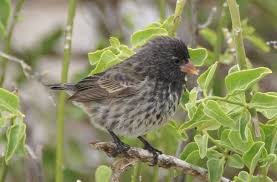
vampire-finch

The Vampire Finch lives only on two islands in the Galapagos Islands. They feed mostly on the blood of other birds, where they tear little scratches on the birds and drink a little blood. They are endangered and really cute if you ask us!


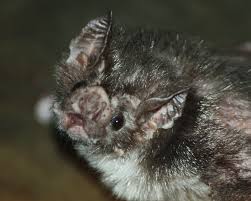
vampire-bat

These infamous flying mammals are also the only mammal that feeds exclusively on blood. These frightening animals are very good parents and have been known to be surrogates for orphaned babies.
 

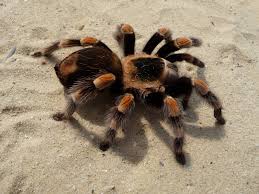
tarantula

Rose tarantulas have stiff spiny hairs on their stomachs that they can throw when they are threatened. We’ll just wave from a distance.
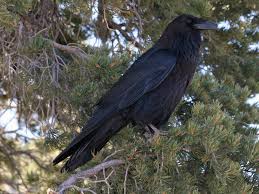
raven

Ravens are the largest member of the corvid family. Ravens can mimic other species of birds and some have been taught human speech. If one lands on your porch and says hello, say hi back :)!


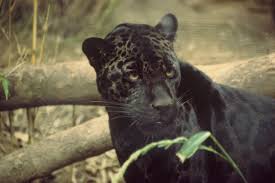
Black cats have been associated with witches and evil, but the black jaguar just has a color mutation called melanism- where their fur has more color than usual.

Black cats have been associated with witches and evil, but the black jaguar just has a color mutation called melanism- where their fur has more color than usual.


cave-salamander

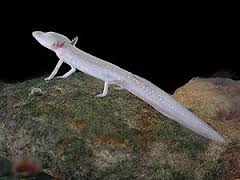
The Texas Blind Salamander calls the inside of a cave its home. This habitat has led to this amphibian having no coloration and no eyes. These alien looking creatures are amazing!

These are just a few of the animals that people are afraid of, but there is no need to be frighten of the creatures that we share this amazing planet with! Even the ones with creepy reputations are amazing once you learn more about them!

Categories: adventure, Animals, Children, conservation, education, Environment, nature, science, Today's Post, wildlife | Tags: , , , , , , , , | Leave a comment

Flying Over the Islands

Flying Over the Islands

img_2584g-hawk


ellie_edmund_professors-bfbooby


Date: 10/20

Location: Galapagos Islands

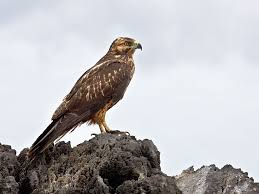
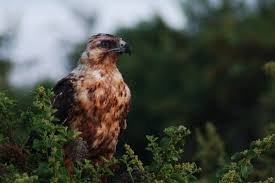
  •          Galapagos hawks are diurnal.
  •          Female Galapagos hawks are larger than the males.
  •          They have large talons.

img_2588

  •          Galapagos hawks catch their prey from the air.
  •          Both the female and male take care of the young.

g-hawk3g-hawk2

These little hawks are so amazing to watch fly over the islands. We witnessed one catch a lava lizard for breakfast.

Categories: adventure, Animals, birds, Children, conservation, education, Environment, nature, science, Today's Post, wildlife | Tags: , , , , , , , , , | Leave a comment

We Go Diving in the Galapagos

We Go Diving in the Galapagos

whitetip-shark2img_2583


ellie_edmund_professors-seahorse(1)


Date: 10/19

Location: Galapagos Islands

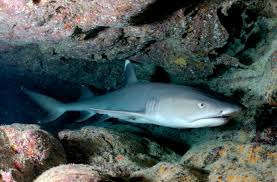
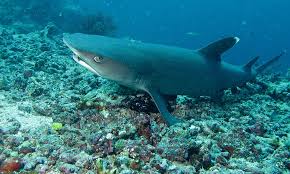
  • These smaller sharks get their names from the white tips on their dorsal fins and tail fins.

img_2587

  • Whitetip reef sharks hide out in rocks during the day.
  • The sharks will share caves during the day.
  • They often chase their prey into crevices. Their narrow snouts and rear sitting dorsal fins help them get in to tight spots to get food.
  • Whitetip reef sharks can live up to 25 years.
  • They tend to be shy sharks.

whitetip-sharkwhitetip-shark3

We did a nice dive at near dusk so we could spot these elusive and shy sharks. They didn’t want to stick around when they saw us-  but at least we caught a glimpse or two! We love the creatures you find in the oceans!

Categories: adventure, Animals, Children, conservation, education, Environment, nature, science, sharks, Today's Post, wildlife | Tags: , , , , , , , , , , | Leave a comment

Lava Lizards Not Lamps

Lava Lizards Not Lamps

img_2582lava-lizard3


ellie_edmund_professors-chameleon(1)


Date: 10/18

Location: Galapagos Islands

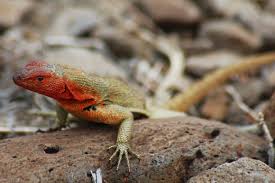
  • Lava lizards can vary in color, from bright colors to drab browns.
  • They can change their color when they are in danger or if the temperature drops.
  • These carnivores help keep insect populations down.

img_2586

  • Females lay eggs that incubate for 12 months. Baby lava lizards hatch out and are around 2″ long!
  • They are diurnal.
  • Female lava lizards mature at 9 months, but it takes a male up to 3 years to fully mature!

lava-lizard2

lava-lizard

Wow, who knew these little lizards were so interesting! They are favorite meal of the Galapagos Hawk! Thank goodness they camouflage in with their habitats!

Categories: adventure, Animals, Children, conservation, education, Environment, nature, science, Today's Post, wildlife | Tags: , , , , , , , , , | Leave a comment

One Magnificent Frigate Bird!

One Magnificent Frigate Bird!

frigateimg_2535


ellie_edmund_professors-bfbooby


Date: 10/13

Location: Galapagos Islands

  • Magnificent frigate birds feed on flying fish that catch when the fish jump out of the water.
  • They spend most of their lives at sea.

img_2536

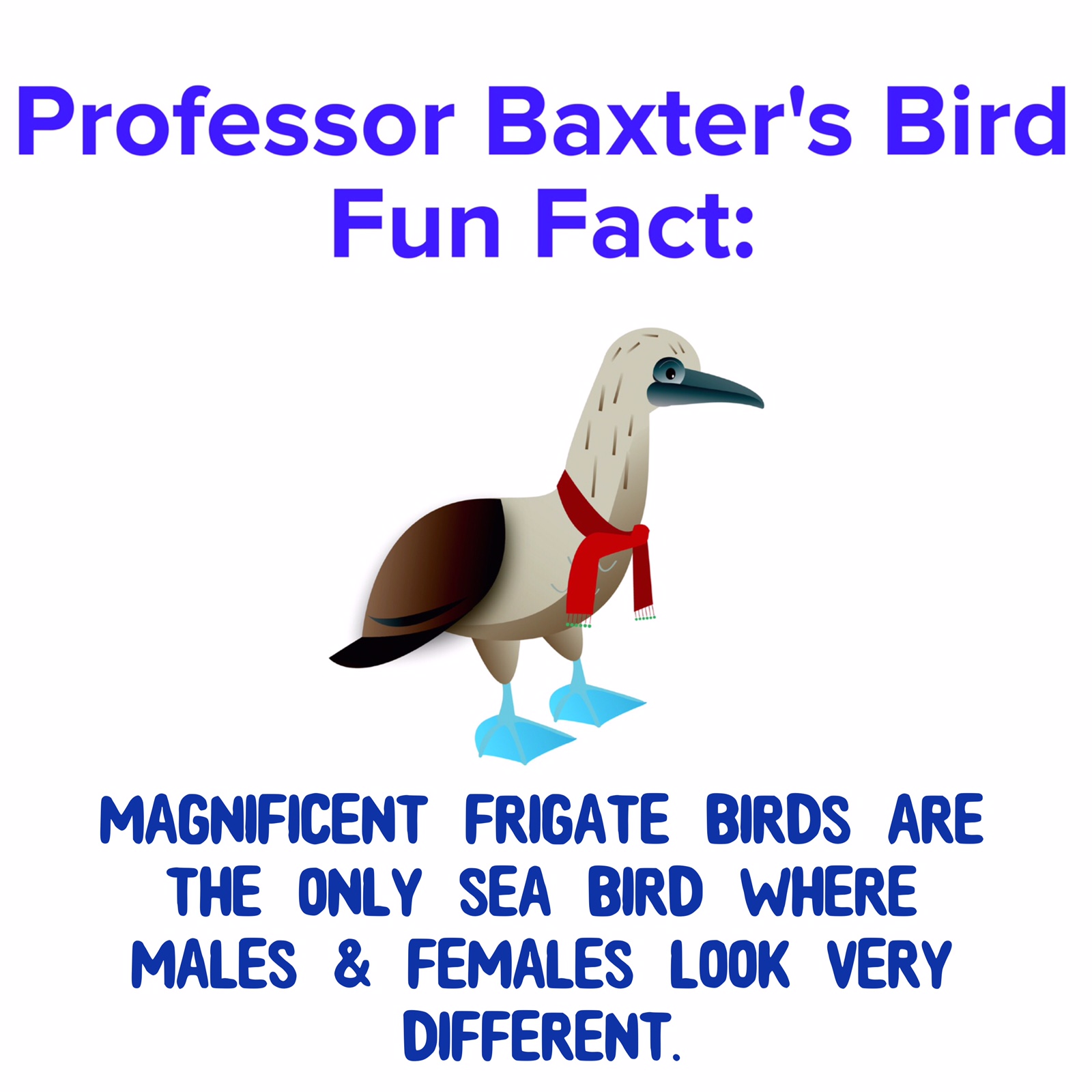
  • Male magnificent frigate birds have large red throat sacs. They use these to attract females during mating season.
  • Females are dark with white coloration. They are also large than the males.
  • They have long hooked bills.
  • You magnificent frigate birds stay with their mother for up to a year.
  • They are also known as the Man-O-War bird.

frigate3frigate2

We watched these birds soar from the boat and then as we were on land watching the Sally Lightfoot crabs. These amazing sea birds are so graceful in the air, diving down to catch their meals. Sea going birds are a favorite at the University- Professor Baxter might be a bit bias though :). Hehehehe!


Categories: adventure, Animals, birds, Children, conservation, education, Environment, nature, science, Today's Post, wildlife | Tags: , , , , , , , , , | Leave a comment

Meet Sally Lightfoot

Meet Sally Lightfoot!

sally-lightfoot2img_2533


ellie_edmund_professors-grasshopper


Date: 10/12

Location: Galapagos Islands

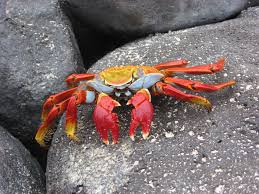
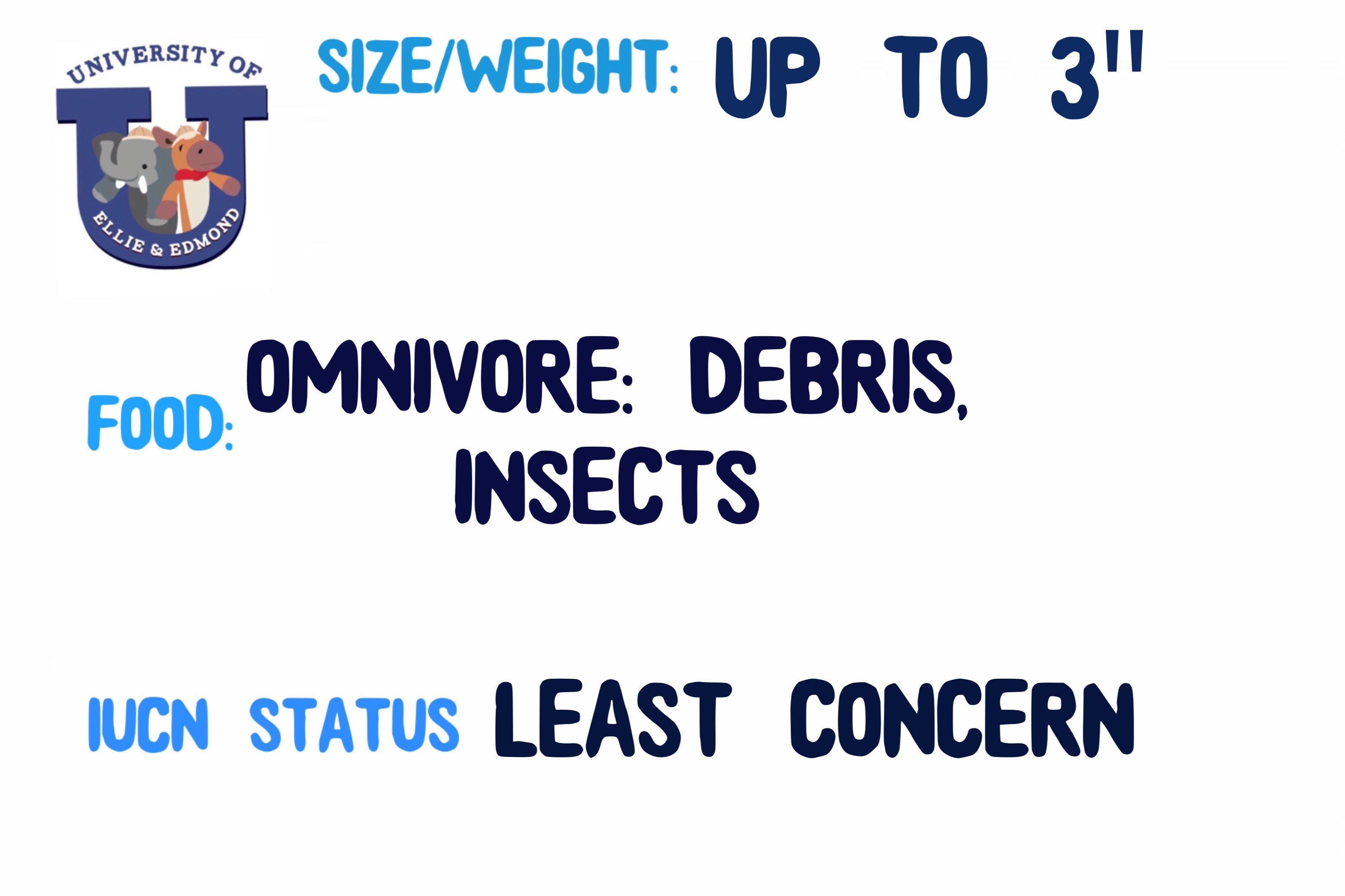
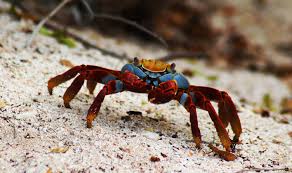
  • Sally lightfoot crabs vary in color.
  • They live on rock shores.

img_2534

  • Sally lightfoots are also known as the red rock crab.
  • Juvenile crabs are darker in coloration- brown or black. This helps them camouflage in with the volcanic rock of the islands.
  • They are fast and very agile.
  • Baby sally lightfoots hatch from eggs in the ocean, where they spend the first part of their lives growing and eating plankton.
  • Sally lightfoots can shed a leg when they are grabbed by a predator.

sally-lightfoot3sally-lightfoot


We had such a ball watching these gregarious crabs on the rocks. They jump and leap and so agile on a habitat that other animals do not do so well on. It is so cool to know each creature occupies their spot in the environment.

Categories: adventure, Animals, Children, conservation, education, Environment, nature, science, Today's Post, wildlife | Tags: , , , , , , , , | Leave a comment

Is That an Iguana in the Ocean?

Is That an Iguana in the Ocean?

iguanaimg_2531


ellie_edmund_professors-chameleon(1)


Date: 10/11

Location: Galapagos Islands

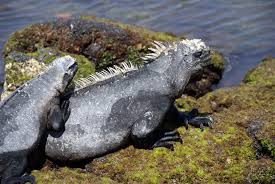
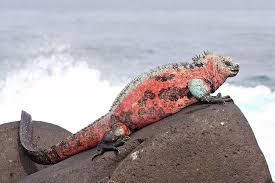
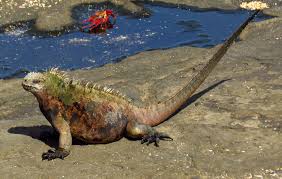
  • Marine Iguanas colors vary by the island they live on.
  • The iguanas on Espanola are nicknamed “Christmas Iguanas” because of their red coloration.
  • They have large flat tails to help them swim along the rocky coasts.
  • Only the largest iguanas swim often. They do not lose body heat as much.
  • Marine Iguanas have razor sharp teeth that they use to scrape off algae and eat seaweed.

img_2532

  • They sun themselves on lava rocks after being the cold ocean waters.
  • During years when food is in shortage, marine iguanas actually get smaller. They are the only known vertebrate to be able to shrink.
  • Marine iguanas can live up to 60 years.

iguana2iguana3


We woke up a little late after our evening excursion looking for the rice rats. Once we were up, we headed back on the island to meet it’s little dinosaur looking iguanas! Marine iguanas may not be the cutest, but they are spectacular! We love their knobby heads and spiky spines. Watching them sneeze, is so funny too!

Categories: adventure, Animals, Children, conservation, education, Environment, nature, reptiles, science, Today's Post, wildlife | Tags: , , , , , , , , , , | Leave a comment

Island Rats!

Island Rats

rice-ratimg_2529


ellie_edmund_professors-bear


Date: 10/10

Location: Galapagos Islands

  • Galapagos island rice rats were first described by Charles Darwin.
  • They are nocturnal.
  • Rice rats burrow under rocks or in the hollow of a cactus.

img_2530

  • They are the only native rat on the Galapagos Islands.
  • They now live only on one island, Santa Fe.
  • Rice rats have more babies during wet years.

We had to disembark the SS Ellie and Edmond at night to locate these tiny inhabitants. We always carry red flashlights as not to disturb the animals (many animals can not detect it). Our guide knew just where to look. We watched a few little rats chowing down on dinner and scurrying about! We’ll sleep in before heading off to meet tomorrow’s animal.

Categories: adventure, Animals, Children, conservation, education, Environment, mammals, nature, science, Today's Post, wildlife | Tags: , , , , , , , , , | Leave a comment

A Painted Bug?

A Painted Bug?

painted-locusts2img_2396


ellie_edmund_professors-grasshopper


Date: 10/5

Location: Galapagos Islands

  • Large painted locusts can be found on all the islands except one.
  • They are easy to spot due to their bright coloration.
  • These locusts are a favorite of the lava lizard and the Galapagos Hawk.

img_2397

  • The locust are bright orange and lime green in coloration.
  • Like other locusts they can fly.
  • They can also jump as high as 9 feet! WOW!

painted-locusts

Many explorers forget to look at all the inhabitants of the place they visit. While many may find these insects gross, we think they are gorgeous. They habitats of the Galapagos are fairly drab, even most of the animals here are too. They all match their surroundings. It was neat to find these bright bugs in the brush! And without them, several predators wouldn’t have any dinner.

Categories: adventure, Animals, Children, conservation, education, Environment, insects, nature, science, Today's Post, wildlife | Tags: , , , , , , , , | Leave a comment

Blog at WordPress.com.