Posts Tagged With: nature blogs

You Won’t Egret It

You Won’t Egret It

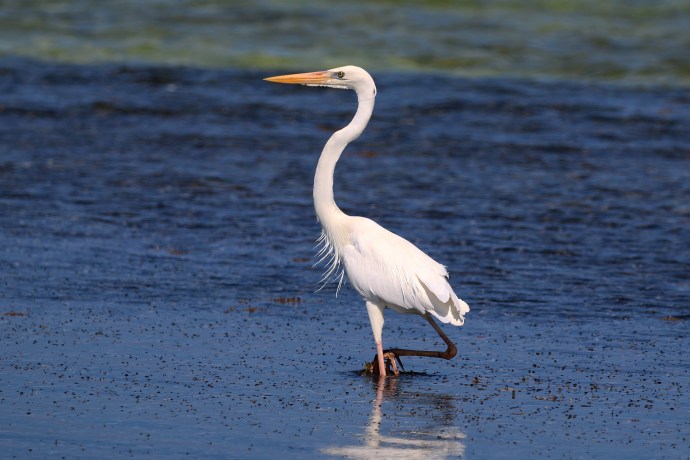
We’re meeting a wonderful shore bird today. These bright white beauties are hard to miss and one of our favorites.
D378CB8A-19D8-4BDD-989A-F76556962742

GREAT EGRET FUN FACTS:

  • These wading birds are found on coasts, lakes and rivers. Like their cousins the heron, they can be found in fresh, brackish and salt water.
  • Great egrets are carnivores. They use their big pointy beaks to grab fish, crustaceans and amphibians.
  • During mating season, egrets grow extra plums on their backs to attract mates.
  • These majestic birds have a wingspan of up to 57 inches. They are large, but slow fliers.
  • Almost hunted to extinction for their feathers, the birds have made a strong comeback due to protection efforts.
  • They are also the symbol of the National Audubon Society.

We love these birds as much as we love the Great Blue Heron. Luckily they are easy to spot with their bright white feathers.
 

Categories: adventure, Animals, birds, camp, Children, conservation, education, Environment, nature, rivers, science, Today's Post, wetlands, wildlife | Tags: , , , , , , , , , , , | Leave a comment

Hello Heron!

Hello Heron!

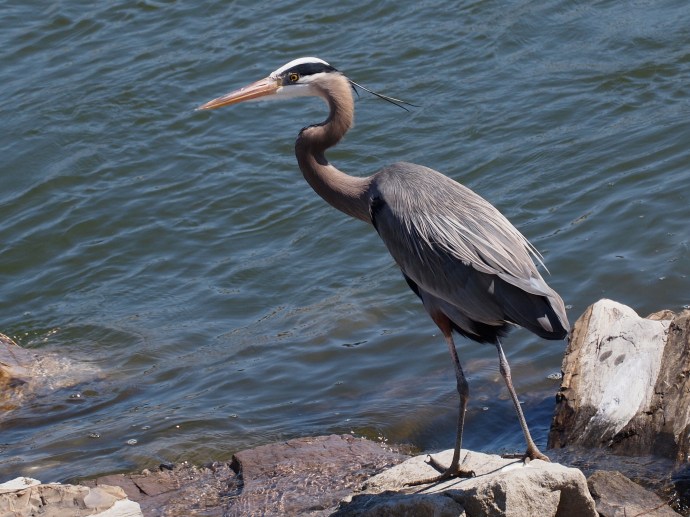
We are excited to meet some shore birds this week! There may be no better activity then to sit on the beach and watch the birds, especially the ones who run with the waves. Today we’re meeting a bird you’ll see in fresh, salt and brackish waters.

OLYMPUS DIGITAL CAMERA

MEET THE GREAT BLUE HERON:

  • Great blue herons call marshes, lakes, rivers and coast lines home.
  • These majestic birds are always fun to spot with their long necks and long legs.
  • They can stand 4 ft tall and have a 6 ft wing span.
  • They actually only weigh around 6 lbs! It sure helps to have hollow bones.
  • You can find herons hunting day or night. They have excellent night vision.
  • These carnivores wade in the water and wait for fish to grab, amphibians and crustaceans. They are surprisingly fast.
  • Their neck vertebrae are specially shaped to allow them to strike fast.


We love these amazing gorgeous birds. We never tire of seeing them whether on an hike or at the near by lake or here at Camp E&E by the Sea.

Categories: adventure, Animals, birds, camp, Children, conservation, education, Environment, nature, oceans, science, Today's Post, wildlife | Tags: , , , , , , , , , , , | Leave a comment

Stars of the Sea

Stars of the Sea

We have met sea stars before, but we wanted to learn more about these amazing echinoderms at camp today!

F74D49AE-1A5B-4570-B0AE-FBB36923AC01


SEA STAR FUN FACTS: 

  • There are around 2,000 species of sea stars.
  • Some species live up to 35 years.
  • They have no brains or blood. They use water throughout their vascular system. The water also helps them move their tube feet.
  • Sea stars do have simple eyes that see light and dark.
  • Sea stars have little plates of calcium carbonate to help protect them
  • These carnivores push their stomachs outside their mouths and digest their food before pulling the stomach back in the body.
  • Each arm of the sea star has around 15,000 tube feet. These feet secret a glue like substance to help them attach to rocks.
  • Some sea stars- like the sun star, can have up to 50 arms and weigh 11 lbs.
  • Like their relatives the brittle stars, they can regenerate arms.

B711A1A4-D19E-4482-84B4-A93C7858CE43

We love sea stars! They come in all sizes and colors- like pink, purple and blue! Do you have a favorite color sea star?

Categories: adventure, Animals, camp, Children, conservation, education, endangered species, Environment, nature, oceans, science, sea stars, Today's Post, wildlife | Tags: , , , , , , , , , , , , | Leave a comment

Brittle Star

Brittle Star

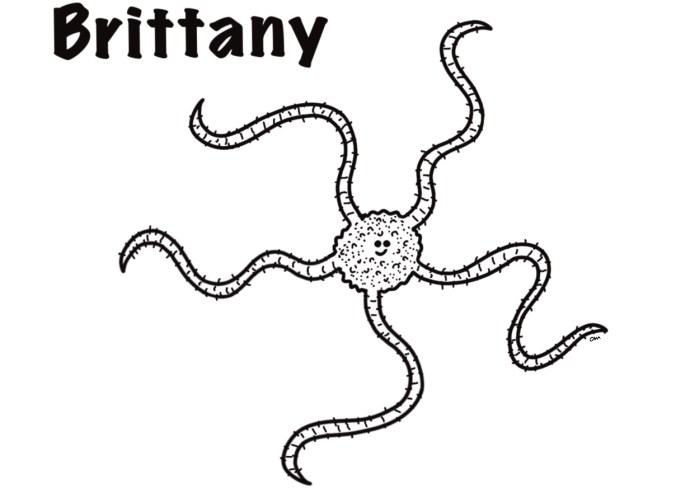
Welcome back campers! We hope everyone had a great holiday off! We’re back at Camp E&E by the Sea to meet some of our echinoderm friends. Today we are meeting Brittany the brittle star.

9F5BD36C-E50C-4816-8789-E518E58EC1C4

BRITTLE STAR FUN FACTS: 

  • These echinoderms are related to sea stars, but are not sea stars.
  • They are carnivores, that eat plankton and small crustaceans.
  • Brittle stars are found in the oceans all around the world from tide pools to the deep oceans.
  • There are 2,000 species of brittle stars in the ocean.
  • Brittle stars have a central disk that contains their mouth, which has 5 jaws.
  • Brittle stars have small spines on their arms.
  • Like their relatives, the sea stars- they can lose a limb and regenerate it.
  • They use their spiny arms and not tube feet to move.


1E9D6848-6B5F-4BA4-A159-C0D1FC3A07A6


We love brittle stars. They are so cool looking! Maybe we should make some out of clay? Anyone up for that?

Categories: adventure, Animals, camp, Children, conservation, education, Environment, nature, oceans, science, Today's Post, wildlife | Tags: , , , , , , , , , , , | Leave a comment

We Spy What Cephalopod

We Spy What Cephalopod

We are giving you some clues to see if you can guess the cephalopod we are meeting today!

  • We spy a cephalopod who calls the deep ocean its home.
  • We spy a cephalopod that is rarely seen.
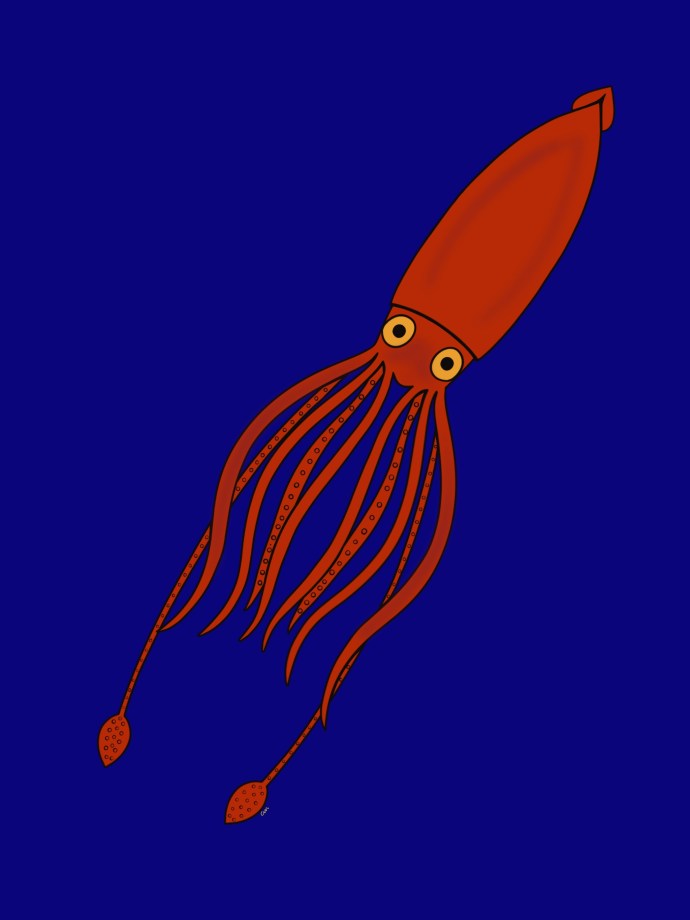
  • We spy a cephalopod with 40 ft arms.
  • We spy a cephalopod who has the longest tentacles of any cephalopod species.
  • We spy a cephalopod who has the largest eyes of any animal in the world.
  • We spy a cephalopod who is well known in stories and literature.


Can you guess who we spy?

Scroll down to see the answer.


It’s the Giant Squid!

F2ABAC2C-619F-4178-9EAE-37784C1933D1

Categories: adventure, Animals, camp, Children, conservation, education, Environment, nature, oceans, science, Today's Post, wildlife | Tags: , , , , , , , , , , , | Leave a comment

One Weird Cephalopod

One Weird Cephalopod

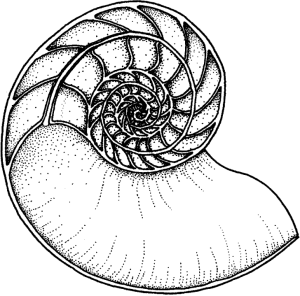
We are meeting a strange cephalopod today. It’s not an octopus or a squid or a cuttlefish! This animal actually has a hard outer shell. Any guess on who we are meeting?


78E55A3D-D820-48F0-BAD5-3B917955737F

NAUTILUS FUN FACTS: 

  • There are 6 species of nautilus.
  • Unlike their cephalopod relatives who only live 1-2 years; nautilus live up to 15 years.
  • Nautilus have chambers in their shells. They are born with 4 chambers and grow more as they get older.
  • These chambers also help them with buoyancy. They can allow water in or out to go up and down in the ocean.

B9D57501-9467-4737-A51B-EA279307450F

  • Nautiluses use a siphon tube near their eye to expel water to propel themselves in the water.
  • They do not have arms- they have cirri or cirrus (the plural form). They can have up to 90 cirrus.
  • These carnivores use those cirrus to grab prey like crab and fish.
  • They have poor eyesight, but an excellent sense of smell.


How cool are these cephalopods? They look like aliens if you ask us! What’s your favorite thing about these ocean going aliens.

Categories: adventure, Animals, camp, Children, conservation, education, Environment, nature, oceans, science, Today's Post, wildlife | Tags: , , , , , , , , , | Leave a comment

Moo?

Moo?

CEAA81EE-5045-4ACD-BC43-D3E97958443B

Hello campers! We’re heading out on a boat ride today to meet one of animals that calls the ocean just offshore from camp home.  Any guess on the elasmobranch we’re going to meet from our title clue? Could cow be in the name?


Meet the Cownose Ray

96DCEC01-8CF8-4919-93F7-E82028952893

Fun Facts: 

  • These adorable rays are named after that blunt square- cow shaped nose.
  • They are typically found near the surface of the ocean.
  • Cownose rays give birth to a live pup once a year.
  • These carnivores feed on oysters, clams and other mollusks. They have crushing plates – not teeth- to crush open shells and get to the soft bodies of their prey.
  • They do have mildly venomous barbs, but only use those when threatened. When rays are known to be in local waters, its a good idea to shuffle your feet when walking in the ocean as to not step on one accidentally.
  • These little sea flapper (hehehe) flap their fins to swim. They belong to their own group of rays.
  • These cartilaginous (skeletons made of cartilage) fish, are known for their migrations from the Gulf of Mexico to the Chesapeake Bay. They can be seen in schools with up to 10,000 individuals.

These amazing animals are one of our favorites. They are often spotted in aquariums too. Like other rays they have spiracles that pass water over their gills when they rest on the bottom of the ocean.


Categories: adventure, Animals, camp, Children, conservation, education, Environment, fish, nature, oceans, science, Today's Post, wildlife | Tags: , , , , , , , , , , , | Leave a comment

Penguins!

Penguins!

We are meeting an adorable species of flightless bird today, the chinstrap penguin! Everybody practice their waddle!


5436BF07-8A23-492E-B08D-99E4ACAF4C061D85E286-D2C8-42AA-9605-50B23E7382D67EC2F113-059F-4EF8-8516-AD7C61BCD150090F07A7-FEE4-4F65-920F-2C042D4F3E77

Categories: adventure, Animals, birds, Children, conservation, education, endangered species, Environment, nature, science, Today's Post, wildlife | Tags: , , , , , , , , , , | 1 Comment

Sluuuuuugs!!

Sluuuuuugs!!

We love all the animals, including ones that are not cute and cuddly. Come meet this really cool and bright yellow slug with us! Meet the banana slug!

D3583D7A-E2AA-41B2-8186-305604CF86CF8F17F572-C072-4E96-AE45-A9BC787CC2ABE23A116B-2CCC-41B4-BCC4-75797B4FB64493F94C5D-6E3F-47BE-B4A2-B3DE7B60313B

Categories: adventure, Animals, Children, conservation, education, endangered species, Environment, nature, science, Today's Post, wildlife | Tags: , , , , , | 2 Comments

Shark Week- Shark Basics

Shark Week- Shark Basics

Chompy the shark is hanging out with us and sharing some fun facts about shark with us! Today- he’s talking the basics.

Categories: adventure, Animals, camp, Children, conservation, education, endangered species, Environment, fish, nature, oceans, science, sharks, Today's Post, wildlife | Tags: , , , , , , , , , , , , | 1 Comment

Blog at WordPress.com.