Posts Tagged With: oceans

Professor Baxter’s Relatives

Professor Baxter’s Relatives

blue-footed3img_2398


ellie_edmund_professors-bfbooby


Date: 10/6

Location: Galapagos Island

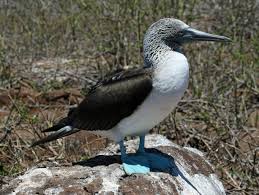
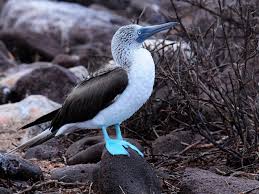
  • We blue footed boobies are excellent swimmers and divers. We can dive in to the ocean from as high as 80 feet in the air.
  • We fly over the ocean to find fish to eat. We often hunt in groups.
  • Our name booby comes from the Spanish word bobo meaning “fool or clown”. They were named that because they are so clumsy when walking on land.
blue-footed

  • We get the blue coloration in our feet from the pigments in the fish we eat!
  • We nest on land.
  • They use their bright blue webbed feet to keep their chicks warm.
  • Both parents take care of the chicks.
img_2399blue-footed2


We had a great time hanging out with Professor Baxter today. It was so fun meeting his relatives. They are quiet the funny lot. As clumsy as they are on land, watching them dive for fish is amazing! They have always been one of our favorite birds and now they are even more so!
Categories: adventure, Animals, birds, Children, conservation, education, Environment, nature, science, Today's Post, wildlife | Tags: , , , , , , , , , | Leave a comment

Gold Medal Swimmers and Divers!

Gold Medal Swimmers and Divers!

Today we’re meeting the gold medal winning animals who take water sports to a whole new level! Those humans have nothing on these amazing aquatic creatures!

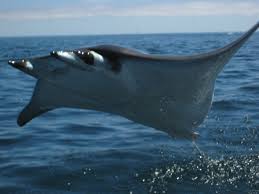
Some species of manta ray breach! Scientists aren’t sure why, but seeing them fly is amazing!

manta ray

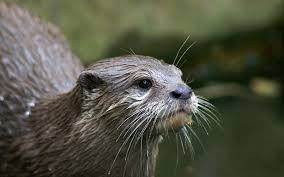
Otters close their nostrils & ears when they swim. They don’t need nose plugs or hair caps! Their fur keeps the water from their skin too!

otter

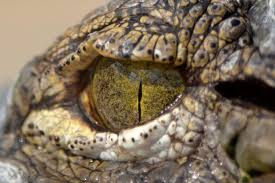
Alligators have nictitating membrane that allows them to see underwater. No goggles needed for these reptiles.

alligator

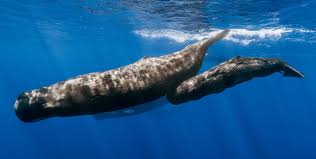
Sperm whales can make dives that can last up to 90 minutes! This beats every mammal record on earth!

sperm whale

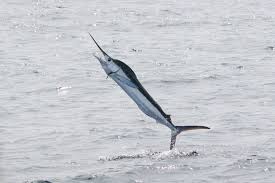
Sailfish can reach up to 70 mph. Now- that is fast!

sailfish

Emperor penguins can dive to depths of 210 feet. And they dive from icy platforms in formal wear. Hehehehe!

penguin

Cape gannets can dive into the ocean at speeds of up to 60mph. Those fish below better watch out- these birds are fast and graceful! 10s from all the judges for them!

cape gannet

The ultimate in synchronized swimmers are certain fish species that move in groups in a coordinated manner. No flashy suits, just amazing behaviors to help them survive!

school of fish
These are just a few of the awesome aquatic animals who have jaw dropping skills! We know who would win the free style swimming if they let in the sailfish though! Hehehe!
Categories: adventure, Animals, Children, conservation, education, Environment, nature, oceans, science, wildlife | Tags: , , , , , , , , , | Leave a comment

GUESS THE SHARK!

GUESS THE SHARK!

Can you guess the shark from the cartoon? Scroll down to the bottom to see if your answers are right and learn a few facts about each shark!

Shark A!

Shark A!


Shark B!

Shark B!


Shark C!

Shark C!


Shark A:

Bull shark!
They tend to head butt prey before biting.
They are known to swim in brackish & fresh water systems.
They are also known as the Zambezi shark.
They can grow to lengths of 11 feet & weigh up to 500lbs.
They are listed as near threatened.


Shark B:
Lemon shark!
They have a horizontal band in their retina that gives them ability to see color and detail.
They are crepuscular.
They rest on ocean floor- to get cleaned by other fish.
They are very social.
They are near threatened.


Shark C:
Tiger shark!

Their famous tiger stripes on a tiger shark usually disappear on adult sharks.

They can grow up to 14 feet long and weigh up to 1,400lbs!

They are called the “wastebaskets of the sea” because they are known to eat anything, including trash.

They are listed as near threatened.

They are nocturnal hunters!


Categories: adventure, Animals, Children, conservation, education, Environment, nature, oceans, science, sharks, wildlife | Tags: , , , , , , , , , , , | Leave a comment

C is for Cookie- Cookie Cutter Shark!

C is for Cookie- Cookie Cutter Shark!

Today we’re meeting a bizarre little shark today! We sure wouldn’t get to close to this crazy critter! Best to look from a distance campers!

  • Cookie cutter sharks can grow up to 22 inches.
  • They live in deep tropical waters world wide- especially near islands.
  • They are carnivores. They eat fish, marine mammals and even other sharkrs.
  • They are listed as least concern by IUCN.

cookie cutter

  • Cookie cutter sharks are members of dogfish family.
  • Cookie cutter sharks have light emitting photophores on it’s underside to blend in with moonlight.
  • They also have a bioluminescent collar that can flash & may help them attract prey.
  • They are famous for the cone shaped chunks it takes out of its prey- including larger sharks, marine mammals and fish.
  • Their famous bite marks have been seen on submarines and underwater cables.
  • Cookie cutter sharks  have lower teeth that are long, sharp and triangular shaped. There have 25-31 teeth on the bottom row of their mouth.
  • They travel in schools.
  • Cookie cutter sharks were discovered in the 1800s, but the strange bite marks were not attributed to the little sharks until the 1970s.

    cookie cutter2

    Aren’t they the craziest looking creatures ever? We think so! What’s your favorite crazy looking shark?

Categories: adventure, Animals, Children, conservation, education, Environment, nature, oceans, science, sharks, wildlife | Tags: , , , , , , , , , , | Leave a comment

Meet a Megamouth!

Meet a Megamouth!

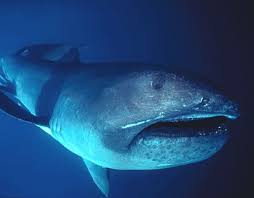
Who’s excited for our last week of Camp E&E at the beach!? We are- because it’s SHARK WEEK!! Woohoo! We’re going to meet some super cool shark friends and have a nifty shark craft this week as we wrap things up on the coast! So let’s head off to meet our first super large shark friend- megamouth!

megamouth2

Megamouth Shark Fun Facts:

  •  Megamouth sharks live in the Atlantic and Pacific oceans.
  • They are carnivores. They are filter feeders and eat krill and plankton.
  • They can grow up to 18 feet long and weigh up to 1,740 lbs.
  • Their status is listed as unknown by the IUCN.
  •  Megamouth sharks were discovered in 1976.
  •  Humans have only seen about 61 individuals.
  •  They live in deep waters!
  •   Megamouth sharks have small dorsal fins.
  •   They feed at the surface at night.
  •   They have a luminescent stripe around their mouth to attract prey.
  •   Megamouth shark mouths can reach a width of up to 4 feet across.

megamouth

Megamouth sharks are amazing! Can you imagine that we’ve only known about them in the last 30 years? The oceans are full of so many animals that we haven’t even discovered! Oceans- the last frontier!


Categories: adventure, Animals, Children, conservation, education, Environment, nature, science, sharks, wildlife | Tags: , , , , , , , , , , | Leave a comment

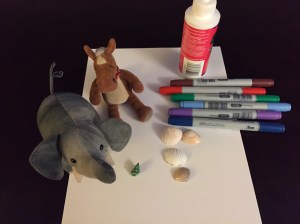
SHELL ANIMALS CRAFT!

SHELL ANIMALS CRAFT!

Happy craft day campers! We’re going to make shell animals today! Let’s get started!

IMG_0347

Materials:

Shells

Markers/paint

Glue

Cardstock

Instructions:

  • Glue your shells on the paper. You can arrange them in a pattern or put them all around.

IMG_0348

  • Draw your animal using the shells as bodies, head or feet- hehe!

IMG_0349

  • You can make a whole scene or a bunch of random animals! Use your imagination!

IMG_0351

Share your crafts with us on Facebook and Twitter!

Categories: adventure, Animals, Children, conservation, crafts, education, Environment, nature, science, wildlife | Tags: , , , , , , , , , , | 2 Comments

CAMP NUDIBRANCH!

CAMP NUDIBRANCH!

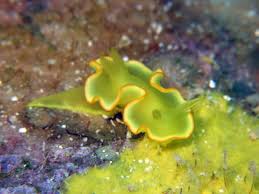
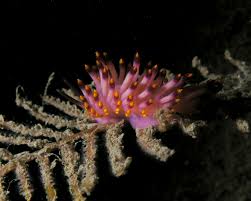
We have some colorful friends join us at camp- sea slugs! So let’s meet our nudibranch friends!

nudibranch

  • Nudibranchs are mollusks.
  • They are members of the sea slug family.
  • There are more than 3,000 species of nudibranchs.

nudibranch3

  • Nudibranchs can be anywhere from .25″ to 12″ long.
  • Nudibranchs are carnivores.
  • They get their bright warning coloration from the food they eat.

nudibranch2

  • Some nudibranchs are poisonous. They retain the toxins from their prey.
  • The tentacles on their heads are sensitive to taste, touch and smell.
  • Some nudibranchs store algae in their tissues. They live off sugar produced by that algae during photosynthesis.
  • Nudibranch can only detect light.

nudibranch4

nudibranch5


These little campers sure are bright and colorful! When you’re done meeting them- head over to the craft tent and get out the crayons and color the nudibranch coloring sheet.

IMG_0151


Categories: adventure, Animals, Children, conservation, education, Environment, nature, oceans, science, wildlife | Tags: , , , , , , , , , | Leave a comment

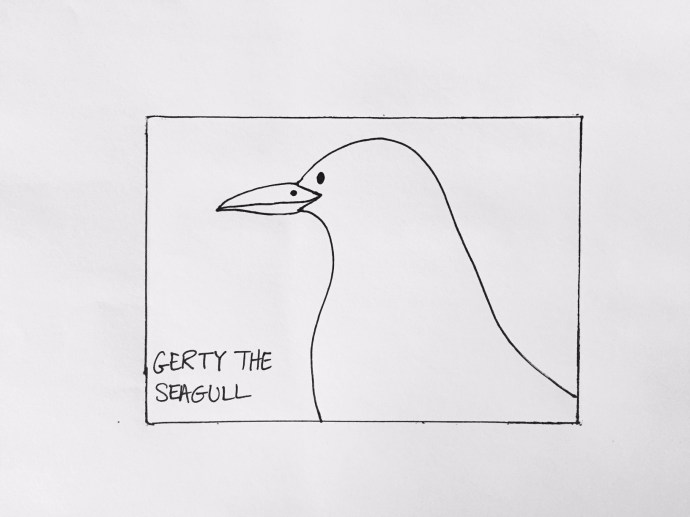
SHOREBIRDS ROCK!

SHOREBIRDS ROCK!

We’re off to meet some of the birds that live near camp! So let’s get started!

FullSizeRender(55)

Brown Pelican Facts:

They live in Coastal North America.
They are listed as threatened.
They nest in colonies.
Pelicans dive to get their fish.
They are the only pelican to dive head first for prey.

FullSizeRender(56)

Sanderling Sandpiper Fun Facts:
They breed in the Arctic.
Sanderlings spend their winter in the south.
They run back & forth with the waves.
They eat worms, mollusks & crustaceans.
They are very territorial.

FullSizeRender(57)

Herring gulls Fun Facts:
They prefer to drink freshwater- but will drink sea water because they can excrete the salt from nostrils.
Herring gulls have been seen using tools to catch fish (bread as bait).
Herring gulls eat mussels, clams, worms.
They are loud & gregarious.
They are large with pink legs.

FullSizeRender(58)

Piping Plover Fun Facts:
They are a small shorebird.
They have yellow legs.
They have orange bills with black tips.
They are listed as near threatened.
Piping plovers eat insects and small invertebrates.

These are just some of the our bird friends that live by the sea side! We have some worms to share with them at camp!

Do you have any favorite shore bird friends?

Categories: adventure, Animals, birds, Children, conservation, education, Environment, nature, science, wildlife | Tags: , , , , , , , , , , | Leave a comment

That’s Not My Horseshoe!

That’s Not My Horseshoe!

horseshoe crab

Every May and June when it’s a full moon, creatures from the ocean climb out of the waters and on to the beach to find a mate. Who are these creatures? Why it is the horseshoe crab campers! It’s the full moon in June, so we thought we might learn more about them!

  • Horseshoe crabs are found along the coast of the U.S. and along the Gulf coast.
  • They are carnivores. They eat worms, algae and mollusks.
  • Horseshoe crabs are listed as Near Threatened by the IUCN.
  • Horseshoe crabs and their relatives have been around for 450 million years ago .

IMG_0006

  • They are not true crabs. They are related to spiders.
  • Horseshoe crabs have hard carapaces that cover their bodies.
  • Horseshoe crabs have six pair of legs.
  • They have one long tail to help right themselves if they are flipped upside down.

IMG_0007(2)

  • Those eyes are extremely sensitive to light. They have the largest rods and cones of any animal on the planet.
  • Their mouths are located in the middle of their legs on the underside.


Horseshoe crabs have blue blood that is full  of copper. Their blood is used to help with medical issues with human medical research. Who knew that these ocean dwellers were living fossils?

Categories: adventure, Animals, Children, conservation, education, Environment, nature, science, Uncategorized, wildlife | Tags: , , , , , , , , , | 1 Comment

World Sea Turtle Day!


World Sea Turtle Day!

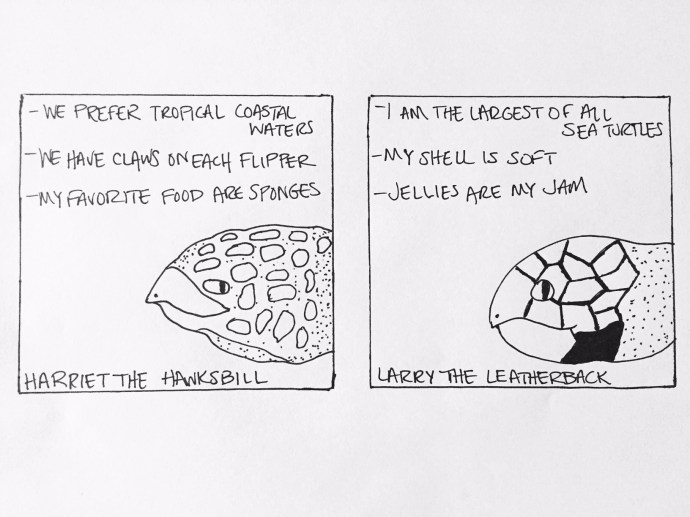
Come learn some cool facts about sea turtles and then meet four turtles! Woohoo- it’s all about the turtles at camp today!

  • Sea turtles have been around for 65 million years.
  • Most sea turtles travel many miles to lay their nest of eggs one the beach where they were born.
  • Most sea turtle species are listed as threatened or endangered.
  • Sea turtles come ashore at night to lay their eggs in nests at the edge of sand dunes.
  • Sea turtles can not pull their heads and fins in to their shells.
  • Baby sea turtles use the full moon  to guide them to the ocean after they hatch.

Keeping our beaches & oceans sea turtle friendly:

  • Keep all trash off the beach- especially plastic bags.
  • Turn off all beach lights at night so turtles are not confused.
  • Keep noise levels down at night.
  • If you are walking on the beach and need a light, use a flashlight with a red lens.

Now it’s time to meet our sea turtle friends!

image

image

Categories: adventure, Animals, Children, conservation, education, endangered species, Environment, nature, oceans, science, turtles, wildlife | Tags: , , , , , , , , , , , , | 1 Comment

Blog at WordPress.com.