Posts Tagged With: reptiles

March Craft/Activity!

Hey everyone! So this month’s craft is really more of an activity to get you outside! We’re a bit late with posting it, because we had some IT issues with our conversion :)! Anyways, we hope you enjoy BACKYARD BINGO! That’s right folks, we made you a bingo game to take outside to your backyard or your local park!  It’s PDF (our first) so please let us know if you have any trouble printing it!


Get outside and Enjoy!!!

Backyard bingo-1

Categories: Animals, backyard, birds, Children, crafts, education, Environment, insects, Local, mammals, nature, reptiles, science, wildlife | Tags: , , , , , , , , | 6 Comments

REPTILIAN TUESDAY # 27

REPTILIAN TUESDAY # 27

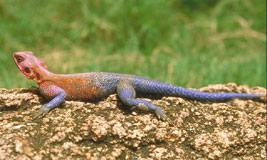
Yay it’s Reptilian Tuesday and we’re packing our bags and heading to Africa to meet a lizard who is brightly colored! Who’s hoping on board with us? Grab your passports and let’s go looking for lizards!

MEET THE RAINBOW LIZARD!

   Range/Habitat: Western to Eastern Central Africa/ grasslands, desert

   Diet: Omnivore: mainly insects with occasional vegetation

   Length: 12-16”

   Conservation Status: common


Fun Facts:

  • Male Rainbow Lizards turn bright orange and blue when they bask in the sun.
  • Female Rainbow Lizards are grey all the time.
  • Rainbow lizards have sticky tongues to help them grasp insects.
  • They live in small social groups with a dominant male and females and less dominate males.
  • Dominate males sit on the highest point to bask and the other lizards of the group bask at lower points.
  • Male Rainbow Lizards bob their heads to attract females.
  • Female Rainbow Lizards lay around 25-30 eggs in a clutch.

Aren’t these lizards gorgeous with their bright colors? It sure is cool that they live in small social groups too. We do wonder how sticky their tongues are; who wants to test it out?

Categories: Animals, Children, education, Environment, nature, reptiles, science, wildlife | Tags: , , , , , , , | 2 Comments

BACKYARD ANIMAL WEEK #2

BACKYARD ANIMAL WEEK!

(REPTILIAN TUESDAY)

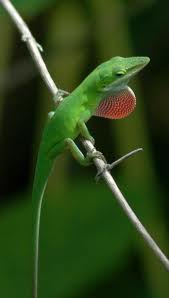
 We’re on day two of Backyard Animal Week and it’s Reptilian to say the least! This little lizard if found in backyards all around the Southeastern United States! They are small and green and we see them all the time! Who’s ready to meet this little lizard?

MEET THE GREEN ANOLE!

    Range/Habitat: Southeastern United States/ woodlands, suburbs

    Diet: Carnivore: insects

    Length: 4 ¾-8”

    Conservation Status: common


Fun Facts:

  • Green Anoles are also known as the Carolina anole.
  • They have slender bodies with long tails.
  • Like other lizards Green anoles can detach their tails when grabbed by predators.
  • Green anoles can also turn brown when stressed. This adaptation often leads people to think they are chameleons, but they are not.
  • They have pink or red throat fans (also known as dewlaps). The males use them to attract females.
  • Male green anoles are very territorial.
  • Green anoles are arboreal (spend most of their time in trees).


We just love Green anoles. It is so fun to go to a park or yard and look for them. They are very fast! We think their dewlaps are super cool! Do you have any lizards in your backyard? If so, what kind?


Categories: Animals, backyard, Children, education, Environment, nature, reptiles, science, wildlife | Tags: , , , , , , , | 7 Comments

REPTILIAN TUESDAY # 26

REPTILIAN TUESDAY # 26

It’s Tuesday and you know what that means! It’s the day of the week when we meet a reptile! Woohoo! We’re heading to the grasslands of Africa to meet a big tortoise! Who’s ready to go? Let’s do this!


MEET THE AFRICAN SPUR-THIGHED TORTOISE!
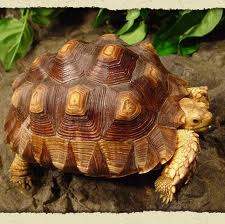
   Range/Habitat: Africa (Southern Sahara)- grasslands/sand dunes

  Diet: Herbivore: grasses, weeds, leaves

  Length/Weight: 24-36”/100-200lbs

  Conservation Status: vulnerable


Fun Facts:


  • African Spur-thighed tortoises have spurs on their hind legs.
  • They are the 3rd largest tortoise on the planet.
  • African spur-thighed tortoise males are smaller than females.
  • They live in burrows.
  • They graze on grass and weeds.
  • They have a life span from 30-50 years.


These big tortoises are awesome! They are largest tortoise that lives on the mainland, since Galapagos and Aldabra tortoises all live on islands!  These guys are often kept as pets. They need loads of special care and space, because they are so big; so it’s very, very important that you do your research before deciding to get one!

Categories: Animals, Children, education, Environment, nature, reptiles, science, wildlife | Tags: , , , , , , , | 4 Comments

REPTILIAN TUESDAY #25

REPTILIAN TUESDAY # 25

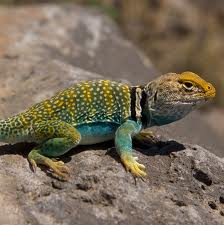
Who’s up and ready to start their day with an adorable lizard? We definitely are! Bring on Reptilian Tuesday and let’s head to the hot hot desert of the South Western United States. Bring your sunglasses, a hat and some water because this lizard likes it extra hot!

MEET THE COLLARED LIZARD!

Range/Habitat: Central-South West United States

Diet: Carnivore: insects, lizards

Length: 8-14”

Conservation Status: common


Fun Facts

  • Collared lizards get their name from the two black and one white stripe around their necks.
  • Collard lizards can run on their hind legs only (similar to Frilled Lizards).
  • They are most active on very hot days!
  • They have very strong jaws to help them crush through their favorite prey!
  • Collared lizards live in burrows or under rocks.
  • Collared lizards are the state reptile of Oklahoma!


These neat little lizards enjoy a climate that most of think is just way to hot! That’s what makes them special! And how cool is it that they can run on their hind legs? Ellie and Edmond wish they could do that!


Categories: Animals, Children, education, Environment, nature, reptiles, science, wildlife | Tags: , , , , , , , | Leave a comment

VALENTINE’S TUESDAY!

VALENTINE’S TUESDAY!

Happy Valentine’s Day everyone!! We searched high and low for a reptile that mates for life. Man, who knew this would be so hard! But we did find one- sort of J! We’re heading to the land down under, so pack your bags! Let’s go to the outback!

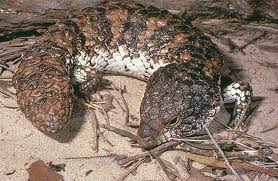
MEET THE SHINGLEBACK SKINK!

   Range/Habitat: Australia/ desert- scrub

   Diet: Omnivore: insects, snails, fruits

   Length: 12-14”

   Conservation Status: Common


Fun Facts:

  • Shingleback Skinks are also called the Stumptailed Skink.
  • Shingelback skinks have short stumpy tails.
  • Their tails store fat.
  • Shingleback skinks are covered in heavy scales that are like armor.
  • They “smell” with their tongue, just like snakes do!
  • Shingleback skinks are slow moving.
  • Mating pairs of shingleback skinks spend 8 weeks together to breed. Then come back together the next year to breed again. Even though they do not spend all year together, they do keep the same mate year after year.


Shingleback skinks are really cool looking. We think their fat tails kind of look like their heads J! We couldn’t find out how the two find each other every year, but it sure is cool that they do! Ah, lizard love!


Categories: Animals, Children, education, Environment, nature, reptiles, science, Valentines, wildlife | Tags: , , , , , , , | Leave a comment

REPTILIAN TUESDAY # 24

REPTILIAN TUESDAY # 24

We’re heading to the Caribbean to find today’s reptile! Be on the lookout for this member of the boa constrictor family! Slap on some sunscreen and put on your shades, because it’s Reptilian Tuesday!

MEET THE CUBAN WOOD SNAKE!

Range/Habitat: Cuba/rainforest-suburbs

Diet: Carnivore: frogs, lizards, rodents

Length: 32-39”

Conservation Status: common


Fun Facts

  • Cuban Wood Snakes are also known as the Cuban Black-tailed Dwarf Boa.
  • Their colorations vary from gray to brown to orange.
  • Cuban wood snakes are members of the boa family.
  • Like other boas, Cuban wood snakes kill their prey by squeezing it.
  • Cuban wood snakes ball up to protect themselves from predators. They then release a stinky slime near the base of their tail!


Phew!! What is that stinky odor? That’s our friend the Cuban Wood Snake! Animals sure have some amazing ways to protect themselves from predators. Our least favorite is being stinky ;)! If you were an animal, what adaptation would you want to protect yourself from predators? Ellie say she already has hers, it’s being huge! Edmond would like to change his color like a chameleon!


Categories: Animals, Children, education, Environment, nature, reptiles, science, wildlife | Tags: , , , , , , , | Leave a comment

REPTILIAN TUESDAY # 23

REPTILIAN TUESDAY # 23

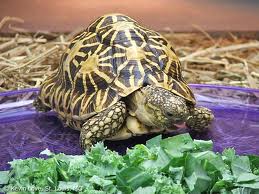
Happy Reptilian Tuesday! We’re excited for you to meet today’s reptile! This special tortoise has a spectacular shell! We have to head all the way to India to find this beauty! Do you have your board pass? Time to go!

MEET THE INDIAN STAR TORTOISE!

Range/Habitat: Southeast Asia-India/scrub-grasslands

Diet: Herbivore: grasses, fruit, flowers

Length: up to 11”

Conservation Status: common- near threatened


Fun Facts:

  • Indian Star Tortoises have raised bumps on their carapaces (top shell).
  • Each scute* is mountain shaped.
  • Each scute has star shaped markings.
  • Indian Star Tortoises’ shells are actually yellow with brown/black covering the yellow.
  • They have a life span from 30-80 years old.

Wow! Aren’t Indian Star Tortoises beautiful? We love their bumpy shells with their star patterns! These tortoises are super stars!


*Here’s a good illustration of a turtle’s shell anatomy!

http://scienceray.com/biology/marine-biology/turtle-anatomy/


Categories: Animals, Children, education, Environment, nature, reptiles | Tags: , , , , , , | 1 Comment

YEAR OF THE DRAGON THURSDAY!

YEAR OF THE DRAGON THURSDAY!

We’re on day four of Year of the Dragon theme week and we have a biiiig lizard for you today! We bet you’ve guessed who it is by now! Well, have you? We’re heading to a special place called Komodo Island! Have you guessed it yet?

MEET THE KOMODO DRAGON!

Range/Habitat: Indonesia-Komodo-W Flores islands/open woodlands-savannas

Diet: Carnivore: carrion, pigs

Length/Weight: 6 ½-9 ¾ ft/ 155-300lbs

Conservation Status: endangered


Fun Facts:

  • Komodo Dragons are the heaviest lizards in the world.
  • Komodo dragons have forked tongues like snakes! They use them to “taste” particles in the air.
  • They have an excellent sense of smell. They can smell carrion up to 3 miles away.
  • Komodo dragons are ambush predators.
  • Komodo dragons’ salvia is full of toxic bacteria. Their bite often does not cause death, but the bacteria causes an infection that kills them.
  • These large lizards are fast and can run up to 11 miles per hour!
  • Komodo dragons can eat up to 80 lbs in a single feeding!
  • They can live up to 40 years.


Komodo dragons are awesome! These large reptiles have some amazing adaptations! We were surprised to learn that they could eat up to 80lbs! WOW and Ellie thought elephants could eat loads of food! These lizards definitely earned the name dragon!


Categories: Animals, Children, dragons, education, Environment, nature, reptiles | Tags: , , , , , | Leave a comment

YEAR OF THE DRAGON TUESDAY

YEAR OF THE DRAGON TUESDAY

We’re continuing the Year of the Dragon celebration today with a lizard from down under! And yes this little guy has dragon in its name! Are you ready to board the plane and head to Australia? Let’s do this!

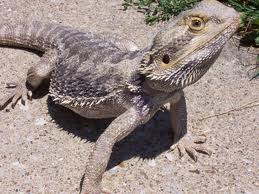
MEET THE BEARDED DRAGON!

Range/Habitat: Australia/arid woodland- desert

Diet: Omnivore: insects, vegetation

Length: 12-18”

Conservation Status: common


Fun Facts:

  • Bearded Dragons are covered in yellowish-tan scales.
  • They have spiked scales down each side of their bodies and on both sides of their heads.
  • When a bearded dragon is threatened they open their mouths and spread a flap of skin open on their neck to make themselves look bigger.
  • Bearded dragons are highly territorial.
  • Bearded dragons brumate. It is similar to hibernation but they don’t sleep. They rest during the colder months and slow their metabolisms.


Beardies as they are often called are pretty cute if you ask us! We love that they make themselves look bigger! Scary!! What adaptation would you like to have to protect yourselves from predators? Edmond said he would like to fly and Ellie said she already has all the protection she needs because elephants are soooo big!


Categories: Animals, Children, dragons, education, Environment, nature, reptiles | Tags: , , , , , | 2 Comments

Blog at WordPress.com.