Posts Tagged With: science

We go “To the Arctic”! Our interview with Florian Schultz!

Wow! Wow! Wow! On Saturday we went to catch the new IMAX movie “To the Arctic” from MacGillivray Freeman Films and narrated by Meryl Streep. It was an amazing and beautiful film all about the animals of the Arctic, in particular polar bears. The filmmakers were able to catch some amazing shots and stories on the ice and underwater.  We highly recommend seeing it as soon as possible! We don’t want to give away too much of the plot, but just be ready for excitement! You can see it Fernbank Museum of Natural History in their fantastic IMAX theater, click here for show times! After seeing the movie, we had a chance to sit down with one of the amazing photographers from the movie, Florian Schultz. Here’s our interview with this fascinating photographer and explorer!

To the Arctic movie poster! Florian took this picture!

 Us:  We just loved the movie! Thank you so much for taking time to sit down with us.             

 How long were you in the Arctic?

Florian: I spent 4 months filming with the IMAX crew and have spent a total of 18 months in the Arctic over the past 10 years on several different exhibitions. I have been to Alaska, Canada and Norway.

*It took the film crew a total of 4 years to make “To the Arctic”, which is only about 45 minutes long. Whew, making an IMAX movie is a ton of work!


Us:  Wow! That is a lot of time in the cold. What was the most amazing part of your trip with the IMAX crew?

Florian:  While we were on the research boat, we found a mother polar bear and her two cubs that we followed for 5 days. It was summer and there was 24 hours of daylight, so it was like we got 10 days with her. She completed trusted us and we all felt like we had a connection with her and the cubs.


Us: That is so cool. We loved watching her and the cubs in the movie.  What was the most difficult part of shooting the animals & scenery?

Florian:  While we were camping, one person had to stay awake to watch for polar bears. You never have a safe point when both of you can sleep for a period of time. You can never relax and between having to melt snow for water and cooking food, photographing during good light and polar bear watching you start not getting any good sleep. You get so exhausted that you don’t care if a polar bear comes or not. From the film side, filming under the ice is difficult, because the water is 29 degrees and you have to bring the big camera housing through a small hole in the ice. You only get 3 minutes to film which also makes it difficult.

*Florian told us before the movie that the IMAX film and cameras can only record up to 3 minutes at time. You must change the film after those 3 minutes. The camera housing itself also weighs around 400 lbs! We thought that was fascinating.


Us:  Wow, those conditions do make it difficult to work. How did you stay warm?

Florian: Layers are the key; you wear wool as the base, then fleece, then down and a windbreaker. If it’s really cold you wear another layer of down on top of that. You begin to feel a bit like a polar bear yourself.


Us: Haha, we bet you feel like a polar bear.  It has to be hard to move in all those    clothes.  How do you keep batteries/cameras working in the frigid temperatures?

Florian:  You have to imagine when you are out there that your cameras will freeze. But the big important part of that is that you cannot take the cameras inside the whole time, because condensation will build up on the lens and the housing and then you won’t be able to use it at all. I leave the camera outside, completely frozen the whole time. The only thing I keep near me are the batteries, so that they last longer. I use all Nikon cameras and they haven’t let me down.


Us:  That is neat! Who knew frozen cameras worked! Were there any particularly dangerous incidents while you were shooting?

Florian:  There were two times when a polar bear came close to our camp and he knew we were there. His eyes had a different expression and we had to fire a flare gun into the air. Then he came back and that was really scary. We had to shoot the flare gun again. And one of the other really scary things that happened was when I almost fell through the sea ice without a dry suit on.  I was so focused on shooting pictures of these birds that I didn’t realize it how fragile the ice was. Later on I broke out in a cold sweat after I realized what a risk I took.


Us: Whew! Good thing that ice didn’t break! So what inspired you to become a wildlife photographer?

Florian:  Nature and different environments are one of the greatest riches of this world. It’s so diverse and so wonderful and for me to be able to document it is one of the greatest gifts. There is so much to discover. When I was a teenager I started out with bird watching and with a telescope I would have best encounters with not just the birds, but other wildlife. I would tell people about it, but telling them didn’t quite describe it. So when I started taking pictures they got it. That is when I got more and more in to taking pictures.


Us:   You have tons of passion for wildlife that is great! Wild animals are known to be difficult subjects to shoot, because they aren’t on your schedule. You have to have a ton of patience. What has been one of your most difficult shoots?

Florian:  I spent 72 hours in a blind to shoot the snowy owls that are my book. (A blind is a cover or shelter that hides the photographer and his equipment.) It’s definitely a patience game because the sun wasn’t out or they weren’t turning their heads the right direction and that was really, really hard. Another thing that took a lot of patience was filming the big caribou herds, because it took 3 different expeditions to film them. On the first two trips I only saw one caribou and then on the third trip I finally saw the big herd and that was really rewarding. To be honest though I don’t get bored, because there is always something to discover, suddenly I see a bird’s nest or I hear the song of a bird and that intrigues me. And also I often have to make up the images in my mind first, so I spend time doing that. That gives that you that drive and energy to get the shot. You become more in tune and I love discovering things. The more you sit out in silence the more you learn and the more you discover.


Us: We love to sit and watch nature too, not sure that we could do it for 72 hours though. You’ve been all over the world, what has been your favorite place and where are you headed next?

Florian:  I cannot pinpoint one place alone, for me whatever place is the most natural, the most intact is special. An ecosystem where all the different animals play together is where I feel at home. It seems like the world before we influenced it. Some of those places include the arctic or the rainforest of British Columbia, Canada where I watched spirit bears and whales, or it can be a desert where there are not so many animals, but all the animals that are there play together. I will go back to the Arctic one more time and then after that I will go to Baja California to start the Freedom to Roam project. You can check out his next project here!

 Us: Your next project sounds so amazing! It is great that your images are also helping save animals and their habitats. Thank you so much for taking time to talk to us and share your great stories!

Don’t forget everyone- you can see “To the Arctic” at Fernbank now! You can also buy Florian’s book “To the Arctic”! We have it and it is full of even more amazing pictures and stories. If you like the “Welcome to the Arctic” Facebook page, you can get a discount on the book!

Here we are with Florian Schultz! He was awesome!

Of course we saw our pal Giggy! We checked out some of Florian's photos!
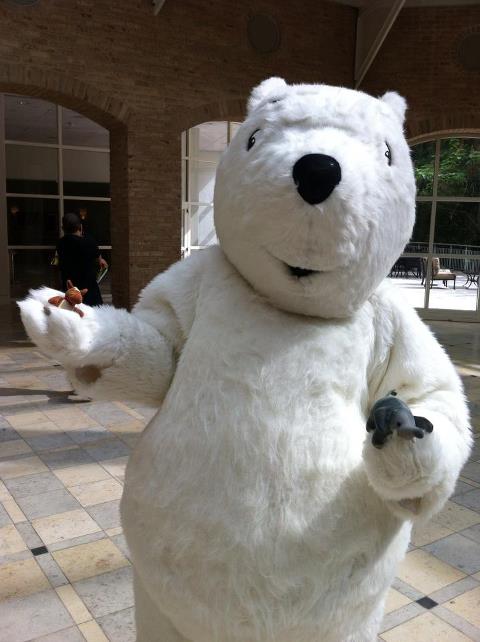
We met a polar bear! Don't worry he was very nice!
 

Categories: Animals, Atlanta, Children, education, Environment, movies, nature, science, wildlife, wildlife photography | Tags: , , , , , , , , | 1 Comment

REPTILIAN TUESDAY # 32

REPTILIAN TUESDAY # 32

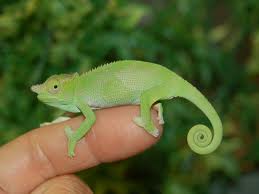
It’s time to meet another reptile friend today and we’ve found a very teeny tiny lizard for you to meet. Grab your rain slicker, because we’re going to a rainforest! Don’t forget your magnifying glass, because these dudes are little!

MEET THE WESTERN PYGMY CHAMELEON!

   Range/Habitat: Western Central Africa/ rainforest

   Diet: Insectivore: small insects

   Length: 2 ¾-4”

   Conservation Status: common


Fun Facts:

  • Western Pygmy Chameleons are one of the world’s smallest chameleons.
  • They have long sticky tongues to help them catch insects.
  • Western pygmy chameleons are primarily ground dwellers.
  • They are leaf-like in color and shape to help them camouflage in with their habitat.
  • Western pygmy chameleons have a small horn on their snout.
  • They have a limited ability to change their color.
  • Like other chameleons, Western pygmy chameleon’s eyes move independently of each other.

Ok, seriously we know we think all animals are cute, but you can’t deny that these tiny little lizards are just adorable. Chameleons have the most amazing ability to camouflage too! Animals are just amazing!!

Categories: Animals, Children, education, Environment, lizards, nature, reptiles, science, wildlife | Tags: , , , , , , , | Leave a comment

MAMMAL MONDAY # 32

MAMMAL MONDAY # 32

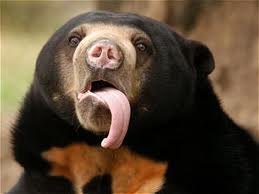
Happy Happy Monday! Monday is everyone least favorite day of the week, but it is one of our favorites, because we get to meet a new mammal! We’re traveling to Southeast Asia today to meet a very handsome bear with a funny long tongue! Grab your gear we’re heading into the rainforest!

MEET THE SUN BEAR!

    Range/Habitat: Southeast Asia/ rainforest

    Diet: Omnivore: fruit, shoots, eggs, honey, termites

    Length/Weight: 3 ½-4 ½ ft/ 110-145 lbs

    Conservation Status: endangered


Fun Facts:

  • Sun bears are also called the dog bear or honey bear.
  • They have sleek, smooth brown-black fur with a white-orangeish “sun” patch on their chest.
  • They have very loose skin around their neck.
  • Sun bears are the smallest member of the bear family.
  • They have very long claws for climbing and digging for insects and honey.
  • Sun bears have very long tongues that they can extend up to 10”. They use these tongues to get termites and honey.
  • Sun bears are nocturnal (active at night).
  • They spend most of their time in trees.


Sun bears are just so adorable. They are endangered mainly due to habitat loss. There are lots of things that we can do to ensure our rainforests are kept intact. We love The Rainforest Site, because all you have to do is click once a day and money goes to save habitat for great animals such as our Sun Bear pal!

Categories: Animals, Children, education, Environment, mammals, nature, science, wildlife | Tags: , , , , , , , | 2 Comments

EARTH DAY 2012!

EARTH DAY 2012!

Today we’re celebrating the Earth, our home and without it we would be lost! Today is a day to celebrate our precious earth and all the resources it provides us, like air, water, food and shelter! We all need to work to protect those special resources! We’ve come up with some fun activities and ideas to help you celebrate!


  • Take a Hike! Get out and enjoy nature, bring a camera and watch for animals 🙂!
  • Visit your local zoo or aquarium and join in on their activities!
  • Play our Backyard Bingo Game!
  • Make a recycled craft like this crocodile, angelfish, or milk jug bird feeder!  
  • Start a garden in your backyard.
  • Recycle at home.
  • Switch out household cleaners for vinegar based ones!
  • Play one of our Earth Day Word Searches! One for kids and one for adults!
  • Go bird watching.
  • Draw your favorite animal!
  • Make Dirt! You need chocolate pudding, cool whip, and oreo cookies! Crush the cookies and stir in with the cool whip and pudding! Put in a cup and then top with more crushed cookies! Add gummy worms to your dirt!


Categories: Animals, Children, crafts, earth day, education, Environment, nature, science, wildlife | Tags: , , , , , , , , | 2 Comments

FEATHERY FRIDAY # 31

FEATHERY FRIDAY# 31

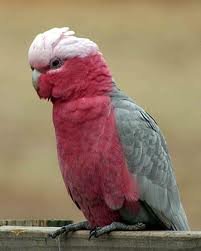
We’re going down under again to meet a very special member of the cockatoo family! These bright birds are a fun shade of pink and who doesn’t love pink? Are you ready to meet this beauty? Let’s go mate!

MEET THE GALAH!

   Range/Habitat: Australia/ desert-grasslands- parks

   Diet: Omnivore: seeds, grasses, fruits, nuts, insects

   Length/Weight: 14”/ 300-400 grams

  Conservation Status: Common


Fun Facts:

  • Galahs are the most widespread and numerous member of the cockatoo family.
  • They have a short pink crest with a pink front and gray feathers on the wings, back and rear end.
  • Galahs are intelligent.
  • They are very noisy and gregarious.
  • Galahs form loose groups or flocks.
  • Galahs eat in those loose flocks and one bird watches for predators.


Galahs are so pretty and funny! They are very noisy too! Check out their call! Their bright pink feathers are just fantastic! These birds do make good pets, but just like other birds, they require lots of attention and maintenance, so do your homework before you decided to get one J!


Categories: Animals, birds, Children, education, Environment, nature, science, wildlife | Tags: , , , , , , , | 2 Comments

SUPER SURPRISE THURSDAY # 31

SUPER SURPRISE

THURSDAY# 31

Who’s excited to meet today’s animal? You know you are! We’re heading to the waters of South America to meet a rather large reptile! We’ll have to find a good spot to watch from a distance though, because these guys have big choppers!

MEET THE SPECTACLED CAIMAN!

   Range/Habitat: Central-South America/ fresh water- wetlands

   Diet: Carnivore: fish, birds, amphibians

   Length: 6 ½-8 ft

   Conservation Status: Common


Fun Facts:

  • Spectacled caiman rarely leave the water.
  • Spectacled caiman are olive-green in color.
  • They have a bony ridge in front of their eyes.
  • Spectacled caiman are nocturnal (active at night).
  • Male spectacled caiman are very territorial.
  • They have no natural predators.
  • Female spectacled caiman build nest to lay their eggs. They are very protective of the eggs and the young.


These relatives of the crocodile and alligator are pretty cool. These reptiles have a mouth full of teeth and they aren’t afraid to show them, even with their mouths closed. J


Categories: Animals, Children, education, Environment, nature, reptiles, science, wildlife | Tags: , , , , , , , | 2 Comments

WATERY WEDNESDAY # 31

WATERY WEDNESDAY# 31

It’s Wednesday and it’s time to meet an animal who lives in a watery environment! We’re off to find a little fish with a fun name that spends part of its life in fresh water and part of its life in the ocean! Are you ready to jump in?

MEET THE COMMON JOLLYTAIL!

   Range/Habitat: South Australia-New Zealand-South America/ wetlands,

estuaries, ocean

   Diet: Carnivore: small fish

   Length: up to 8”

   Conservation Status: common


Fun Facts:

  • Common jollytails are also known as common galaxias or whitebaits.
  • They are clear and olive gray in color.
  • Common jollytails have small cylindrical shaped bodies.
  • They lay their eggs in freshwater habitats.
  • When the common jollytail hatches they head out to the ocean.
  • After about 7 months the common jollytail then heads back to a freshwater habitat, where they spend the rest of their lives.

These little fish sure are cute! We think it’s so cool they are able to live in both freshwater and salt water environments. Do you know any other fish who do that?


Categories: Animals, Children, education, Environment, fish, nature, science, wildlife | Tags: , , , , , , , | 4 Comments

REPTILIAN TUESDAY # 31

REPTILIAN TUESDAY # 31

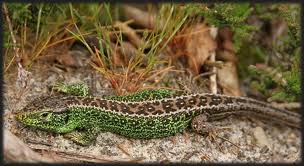
We just love Tuesdays because it is the day of the week to spotlight a reptilian friend and we know our reptile friends don’t always get love! We’re going to Europe today to find this small lizard who nests in the sand dunes! Are you ready? Let’s do this!

MEET THE SAND LIZARD!

   Range/Habitat: Europe-Central Asia/ grasslands, sand dunes

   Diet: Carnivore: insects, spiders

   Length: 7-9”

   Conservation Status: common


Fun Facts:

  • Sand lizards are colorful. Their color varies by habitat and region.
  • Male sand lizards turn bright green during mating season.
  • They have short legs.
  • Like other small lizards, they will drop their tail if caught by a predator.
  • Sand lizards hibernate in the winter.
  • Sand lizards are the only egg laying lizard in the United Kingdom.

These cute little lizards lay their eggs in sand soil, hence the name! We think it’s cool that these lizards look different depending on where they live! It’s all about camouflage baby!


Categories: Animals, Children, education, Environment, nature, reptiles, science, wildlife | Tags: , , , , , , , | 2 Comments

MAMMAL MONDAY # 31

MAMMAL MONDAY # 31

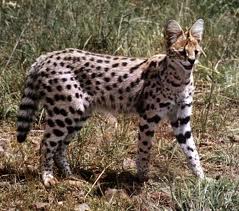
Who loves cats? We love cats! We’re heading to the grasslands of Africa to meet today’s mammal! We’ll need our night vision goggles, because these cats are active at night! Don’t worry, these cats aren’t big enough to pounce on us!

MEET THE SERVAL!

   Range/Habitat: Africa/ grasslands, wetlands

   Diet: Carnivore: rats, rodents, frogs & birds

   Length/Weight: 23-39”/ 20-40 lbs

   Conservation Status: common

Fun Facts:

  • Servals are covered in spots.
  • Servals are solitary and nocturnal (active at night).
  • They have very long legs.
  • Servals also have very large ears and excellent hearing.
  • Servals can leap up to 13 ft horizontally; we bet they’d win the long jump competition. They can also jump about 3 ½ ft high.
  • They are considered to be very intelligent.
  • Servals can purr.

Servals are beautiful and graceful predators. They are considered to be very beneficial to local farmers because they are excellent are rodent control. Servals are now part of the pet trade. These cats can be large, wild and destructive and do not make good pets, because they aren’t domestic cats. Remember, to do your homework before getting any pet :)!

Categories: Animals, Children, education, Environment, mammals, nature, science, wildlife | Tags: , , , , , , , , | 4 Comments

FEATHERY FRIDAY # 30

FEATHERY FRIDAY# 30

Woohoo, we’ve made it to Friday and you know what that means! It’s time to meet another feathery friend! We met a bird who lives by the shore yesterday and today we’re heading to the rainforests of South America! We’re going way up in the canopy again, so pull on your zipline gear and let’s go! Wheeeeeeeee…

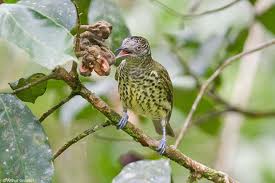
MEET THE SHARPBILL!

   Range/Habitat: South America/ rainforest

   Diet: Omnivore: insects, fruits, invertebrates

   Length: 6 ½”

   Conservation Status: Common


Fun Facts:

  • Sharpbills have long sharp pointy beaks.
  • Sharpbills are rarely seen.
  • They are a small stocky bird.
  • Sharpbills have bright orange-red eyes.
  • They have a scaly face.
  • They are known to travel in flocks of other birds.


We think Sharpbills are just so beautiful. There is not much known about these little shy birds! It’s hard for scientist to learn about animals that live in the canopy of the rainforest, because it is not easy to access. If you could spend your life way high up in the trees would you?


Categories: Animals, birds, Children, education, Environment, nature, science, wildlife | Tags: , , , , , , , | 1 Comment

Blog at WordPress.com.