About Ellie and Edmond ©
Explorers, Adventurers, Educators and Best Friends. We love all animals and love to share cool info about them! Join us and learn!
Howling Good Time!
Today we are meeting one loud and awesome mammal today! These tree dwellers know how to make a ruckus! We love it!

Mantled Howler Monkey Fun Facts:
- They have long guard hairs on their face. That is where they get their name.
- These monkeys are large. Males get up to 22 lbs. ‘
- They are folivores- leaf eaters. They also eat fruit.
- They are important for the rainforest, as they disperse seeds when they poop.
- Mantled howler monkeys live in groups of mostly unrelated adults.
- They have prehensile tails.
- These diurnal monkeys are built for life in the trees.
- They can be heard for a few miles away.
- Mantled howlers are listed as Least Concern by IUCN.

We had a blast watching these monkeys. They are fairly lazy though. They spend most of their energy eating. Those leaves did look delicious. We were glad we had snacks, because we’re sure they wouldn’t share.
Elephants & Horses love to share!
Categories: adventure, Animals, Children, conservation, education, endangered species, Environment, mammals, nature, science, Today's Post, wildlife
| Tags: adventure, animals, children, conservation, education, education blog, nature, nature blogs, science, science blog, wildlife |
Hello Caiman!
We are back from our holiday break! We flew back in to camp and settled in. The next morning we rose early to meet today’s animal! We hope you think it is a cool as we do!
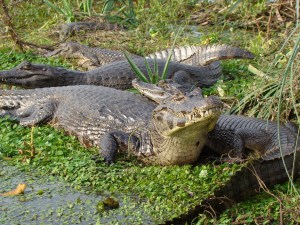
Spectacled Caiman Fun Facts:
- Spectacled caimans are members of the crocodile family.
- Females are smaller than males. Males can get up to 6ft long and females generally up to 4 ft long.
- They get their name from the ridge on their head that makes them look like they are wearing glasses or spectacles.
- They are carnivores.
- Their scales have ostoderms; bony deposits in their skin that give them an armor.
- Like other crocodilians, they are built to live in water.
- They are listed as Least Concern by the IUCN.

We think these caiman are super cool! They are not nearly as big as the American Alligator or the Nile Crocodile. Never less, we like to watch them from afar.
Elephants & Horses love to share!
Categories: adventure, Animals, Children, conservation, education, Environment, nature, reptiles, Today's Post, wildlife
| Tags: adventure, animals, children, conservation, education, education blog, envrionment, nature, nature blogs, reptiles, science blog, sciene, wildlife |
Hello Little Songbird!
After spotting the largest predator in the area we went looking for a little song bird. This gorgeous little was so fun!

Blue-gray tanager:
- Blue-gray tanagers belong in the tanager family. It is the 2nd largest family of birds on the planet. They represent about 4% of all birds.
- All tanagers live in the new world.
- They grow about 7 inches long.
- They are primarily herbivores. They eat fruit and a few insects.
- They often thrive where there are humans.
- Blue-gray tanagers color vary by the area they live in.
- They are listed as least concern by the IUCN.
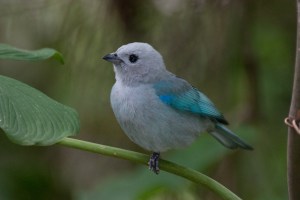
We loved watching these little birdies in the trees! They are sooooo cute!
Elephants & Horses love to share!
Categories: adventure, Animals, birds, Children, conservation, education, Environment, nature, rainforests, science, Today's Post, wildlife
| Tags: animals, birds, education, nature, science, wildlife |
We Spy Rosettes!
We headed to local treehouse to spot the next animal as it is the largest predator in the area. We thought it best to stay out of it’s way, but wow is it a gorgeous cat! Are you ready to learn who we saw?

Jaguar Fun Facts:
- Jaguars are covered in spots called rosettes. These help them blend in with the rainforest.
- Jaguar rosettes are different than leopard spots. Jaguars have a spot in the middle!
- They are the largest cat in the Americas, growing up to 7ft long and up to 200 lbs. Wow!
- They are solitary and territorial.
- These large cats are more active than other large cats, like lions. They have recently found to be most active as dusk and dawn (crespuscular).
- They are listed as Near Threatened by the IUCN.
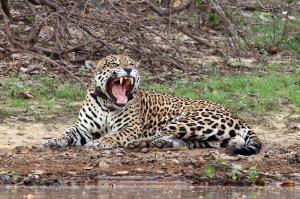
We loved watching this stealthy predator prowl the forest floor. They do spend most of their time on the ground, but the are able climbers.
Elephants & Horses love to share!
Categories: adventure, Animals, Children, conservation, education, endangered species, Environment, nature, science, Today's Post, wildlife
| Tags: adventure, animals, chidlren, conservation, education, education blog, evnrionment, nature, nature blogs, science, wildlife |
Hello Large Lizard!
We are heading to the beach for the weekend and while we were there we met a really neat reptile! Come join us!

Black spiny-tailed iguana fun facts:
- They are the largest member of the spiny tailed iguan family.
- They are also considered one of the fastest lizards on earth. They can run up to 21 mph!
- They have black scales on their long tails.
- Males are larger than females and can grow up to 4 ft long.
- These diurnal reptiles love rocky habitats. They hide in the crevices and bask in the sun on them.
- Young iguanas are insectivores. As they grow older they are most herbivorous.
- They are listed as least concern by the IUCN.

We sure are glad those lizards find the rocks to be comfortable, because they are not so easy to sit on. We prefer the sand. As fast as they are, maybe they should be renamed the flash iguana! Hehehe!
Elephants & Horses love to share!
Categories: adventure, Animals, Children, conservation, education, Environment, nature, reptiles, science, Today's Post, wildlife
| Tags: adventure, animals, children, conservation, educatioin, education blog, envrionment, nature, nature blogs, reptiles, science, wildlife |
One Funny Looking Animal!
We went looking for one funny looking animal of the rainforest. Tapirs, with their long snouts look like they might be related to Ellie, but in reality they are related to Edmond! Neat! Today, we are meeting the largest of the tapir family.
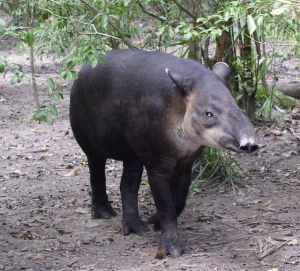
Baird’s Tapir Fun Facts:
- These large tapirs can grow up to 8 ft long and weigh over 800 lbs.
- Their funny looking feet have four toes on the front and three on the back.
- Tapirs use their long flexible noses for snorkels, sniffing odors in the forest and for finding food.
- These nocturnal herbivores look for leaves and fruits during the evening hours.
- They are excellent swimmers. They head to the water when threatened.
- Once thought to be solitary, it is now believed they live in small family groups.
- The young stay with their mothers for up to two years.
- Baird’s tapirs are listed as endangered due to habitat loss and hunting.

There are efforts to protect these beautiful animals. It would be a terrible thing to lose such a unique animal.
Elephants & Horses love to share!
Categories: adventure, Animals, Children, conservation, education, endangered species, Environment, mammals, nature, science, Today's Post, wildlife
| Tags: animal, conservation, education, education blog, endangered species, envrionment, nature, nature blogs, science, wildlife |
Those are some peepers!
After meeting the macaws yesterday, we ran into a small resident of the rainforest. These little amphibians are brightly colored with big red eyes. They also make you jump! Hehehe!

Red Eyed Tree Frog Fun Facts:
- The nocturnal species hide on the under side of leaves during the day.
- If they are found- they flash those big red eyes and startle any predators!
- They frog’s other bright colors- including orange feet and blue streaks protect them by confusing a predator’s eye with too much color.
- These carnivores eat insects they find in the trees.
- These arboreal amphibians are amazing jumpers! (Say that fast five times 🙂
- They are not poisonous.
- Red eyed tree frogs are listed as least concern.
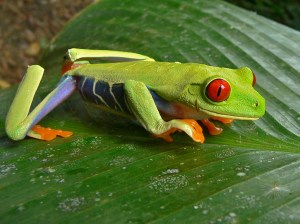
We love these little frogs. They are so beautiful with their bright green eyes. That splash of blue on their legs make them the fashionistas of the rainforest. Hahaha!
Elephants & Horses love to share!
Categories: adventure, Animals, Children, conservation, education, Environment, frogs, nature, science, Today's Post, wildlife
| Tags: adventure, animals, children, conservation, education, education blog, envrionment, frogs, nature, nature blogs, science, sciene, wildlife |
Hello Bright Colored Bird
Hello! We went birding today! We were looking for one of the most brightly colored and gorgeous macaws on the planet. Come meet them with us!

Scarlet Fun Facts:
- There are two subspecies of scarlet macaw. We met the North Central American Scarlet Macaw.
- They have blue on their wings and not green. They are also larger than their South American cousins.
- They weigh around 2 lbs and grow up to 32 inches long.
- Scarlet macaws eat fruits, nuts and seeds.
- They mate for life.
- Chicks leave their parents after about a year.
- They have a life span of around 40-50 years.
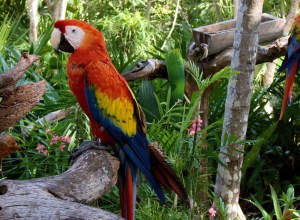
We enjoyed watching these beautiful birds. They are social and intelligent. They are kept as pets, which is often a bad idea. They have long life spans and are very high maintenance. They can also be very destructive.
Elephants & Horses love to share!
Categories: adventure, Animals, birds, Children, conservation, education, Environment, nature, rainforests, science, Today's Post, wildlife
| Tags: adventure, animal, birds, children, conservation, education, education blog, envrionment, nature, nature blogs, science, wildlife |
Yep, That’s a Cat!
We are meeting our last animal this week here in Costa Rica and it’s a small wildcat. This place has so many interesting species. These small cats blend in quiet well, so we were super lucky to find one!
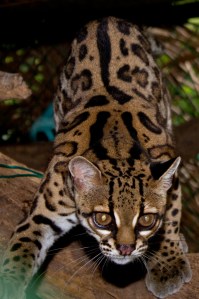
Margay Fun Facts:
- Margays are built for life in the trees.
- They have broad flexible toes and long tails that help them climb and keep their balance.
- They can turn their hind feet 180 degrees allowing them to climb down a tree head first.
- These solitary cats are carnivores. They eat birds, small mammals and reptiles.
- Margays are listed as near threatened by the IUCN.
- They are nocturnal.
- The fur on the back of their necks grows the opposite direction of the rest of their coats.

These gorgeous cats are often confused with the ocelot. They have longer tails and a bit smaller. They have those large round eyes to see in the dark too! We think they are just the cutest!
Elephants & Horses love to share!
Categories: adventure, Animals, Children, conservation, education, endangered species, Environment, mammals, nature, science, Today's Post, wildlife
| Tags: adventure, animals, cats, children, conservation, envrionment, nature, nature blogs, science, science blog, wildlife |




 The Adventures of Ellie and Edmond