adventure

HAPPY THANKSGIVING!!

HAPPY THANKSGIVING!!!!

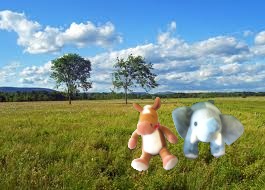
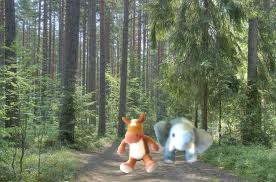
We hear at Ellie and Edmond headquarters want to wish you and yours a very Happy Thanksgiving!

We want to give thanks to all those working around the world to save wild animals and their habitats!

Now we shall stuff our faces with with apple pie!

Categories: adventure, Animals, Thanksgiving | Tags: , , | Leave a comment

WATERY WEDNESDAY # 53

 WATERY WENESDAY # 53

We’re going scuba diving today to meet a cartilaginous fish who lives on the bottom of the ocean floor! So grab your fins and wet suit and let’s take a dive to meet…

MEET THE THORNBACK RAY!

   Range/Habitat: Eastern Atlantic-Mediterranean oceans

   Diet: Carnivore: shrimp, crustaceans

   Length/Weight: up to 35”/ 4 ½-8 ¾ lb

   Conservation Status: near threatened


Fun Facts:

  • Thornback Rays are dark brown with cream spots.
  • They are also known as Thornback skates.
  • Thornback Rays have spines on their backs and undersides.
  • They live on the ocean floor.
  • Female Thornback rays lay eggs on the ocean floor.


Thornback rays not only have the typical venomous spine but they have those sharp thorns all over their backs. We sure think they are neat, but we’ll look but not touch!


Categories: adventure, Animals, Children, conservation, education, Environment, fish, nature, oceans, science, wildlife | Tags: , , , , , , , , , | Leave a comment

REPTILIAN TUESDAY # 53

REPTILIAN TUESDAY #53

Today’s reptile can be found in Eastern Australia, so let’s head to the land down under! Grab your hiking boots and walking stick and let’s head out to meet…

MEET THE LACE MONITOR!

   Range/Habitat: Australia/ forests

   Diet: Carnivore: birds, eggs, reptiles

   Length: 5-6 ft

   Conservation Status: common


Fun Facts:

  • Lace monitors are gray-bluish with yellow spots.
  • They have long claws for climbing.
  • Lace monitors have long necks.
  • Lace monitors are solitary.
  • They are Australia’s second largest lizard.
  • Female lace monitors lay their eggs in a termite mound.

Lace monitors are super cool lizards. We were wondering if they would make tree climbing buddies. What do you think?


Categories: adventure, Animals, Children, conservation, education, Environment, lizards, nature, reptiles, science, wildlife | Tags: , , , , , , , , , , | 6 Comments

MAMMAL MONDAY # 53

MAMMAL MONDAY #53

Today we’re going to Southwest America today to meet a teeny tiny mammal! So grab your gear and let’s head out to make a new friend!

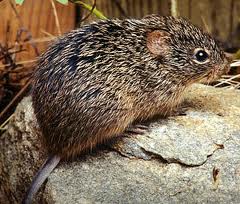
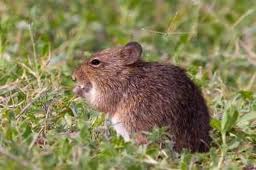
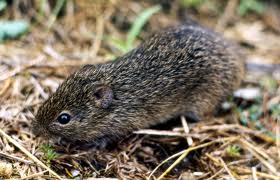
MEET THE HISPID COTTON RAT!

   Range/Habitat: Southwest United States-North South America/ mountains,

grassy

    Diet: Omnivore: grub, plants

    Length/Weight: 5-8”/ 3 5/8- 8 oz

    Conservation Status: common


Fun Facts:

  • Hispid Cotton Rats are active day and night
  • They have stiff, coarse fur.
  • Hispid Cotton Rats are solitary.
  • They dig burrows.
  • Hispid Cotton Rats make nests of grass and plants.
  • They are excellent swimmers.

Hispid cotton rats are adorable little members of the rodent family. What do you think? Are you a rodent fan?


Categories: adventure, Animals, Children, conservation, education, Environment, mammals, nature, science, wildlife | Tags: , , , , , , , , , | 1 Comment

FEATHERY FRIDAY # 52

FEATHERY FRIDAY #52

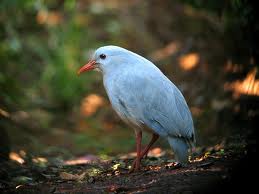
It’s Feathery Friday and we’re going to another tiny island today, this one is the southwest Pacific Ocean! So let’s hop aboard a boat and set sail to this tiny island and explore their rainforest to find…

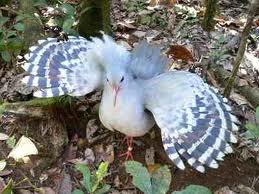
MEET THE KAGU!

   Range/Habitat: New Caledonia/ rainforest

   Diet: Carnivore: insects, lizards, beetles

   Length/Weight: 22”/ 32 oz

   Conservation Status: endangered


Fun Facts:

  • Kagus are flightless birds that live on the ground.
  • They have large crests on their heads.
  • Kagus dig for prey in the ground.
  • They have long legs and can run fast.
  • Kagus are bluish-grey in coloration.
  • Kagus have special feathers that make a powder that cleans and waterproof them.
  • They have excellent vision.

Kagus are such beautiful birds! We love their crests! Who knew there were so many flightless birds in the world?


Categories: adventure, Animals, birds, Children, conservation, education, Environment, nature, science, wildlife | Tags: , , , , , , , , , | 1 Comment

SUPER SURPRISE THURSDAY # 52

SUPER SURPRISE THURSDAY #52

We are so happy to be back on dry land today! We’re going to the Wild West of North America to meet a handsome ungulate. Let’s grab our hiking gear and walking sticks and set out on today’s adventure!

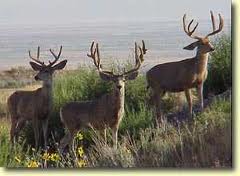
MEET THE MULE DEER!

   Range/Habitat: West North America/ mountains, forests, grasslands

   Diet: Herbivore: plants

   Length/Weight: 2 ¾-7 ft/ 120- 460 ft

   Conservation Status: common


Fun Facts:

  • Mule deer are gray-brown in winter and rusty brown in the summer.
  • Male mule deer have antlers that they shed once a year.
  • Mule deer have black tips on their tales.
  • They are also called the Black Tailed Deer.
  • They have very large ears.
  • Mule deer are related to White tailed deer.

We just love Mule deer! They are majestic looking, especially the males with their large antlers! Do you love deer? What’s your favorite species?


Categories: adventure, Animals, Children, conservation, education, Environment, mammals, nature, science, wildlife | Tags: , , , , , , , , , | Leave a comment

ORANGUTAN AWARENESS DAY!

ORANGUTAN AWARENESS DAY!

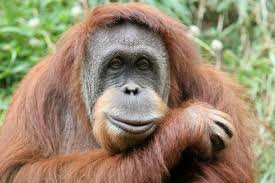
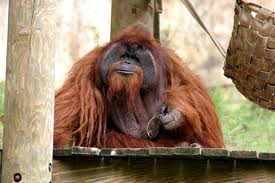
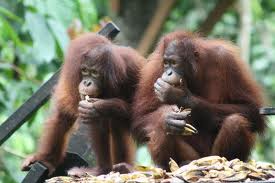
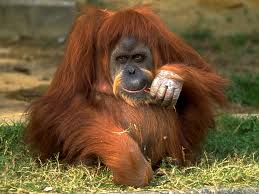
We are sporting orange today and going to the rainforests of Southeast Asia to celebrate one of the most special mammals and great apes on the planet! These amazing apes are gorgeous, intelligent and unfortunately endangered. So today we are going to share some fun facts, photos and resources and how you can help protect these special creatures!


  • Orangutans are great apes.
  • There are two species, the Bornean and the Sumantran.
  • Orangutans are solitary in the wild.
  • Orangutans are arboreal (spend most of their lives in trees.)
  • They are frugivores.
  • Orangutans are highly intelligent.
  • Baby orangutans stay with their mothers for around 8 years, the longest of any primate.
  • Orangutans have extremely long arm spans, up to 7 feet from finger tips to finger tips.
  • Orangutans’ feet are built just like hands and help them climb in the trees.

There are several organizations that are working very hard to ensure that orangutans have a future in the wild. Their rainforest home is rapidly disappearing mainly due to palm oil plantations. Cheyenne Mountain Zoo is one of the leading institutions working to solve this issue. Check out their website!


Categories: adventure, Animals, apes, Children, conservation, education, Environment, mammals, nature, orangutans, rainforests, science, wildlife | Tags: , , , , , , , , , | Leave a comment

REPTILIAN TUESDAY # 52

REPTILIAN TUESDAY #52

We’re going to a tiny island off the east coast of Africa to meet today’s reptile. These rare reptiles are gorgeous. Let’s go on a hike to meet…

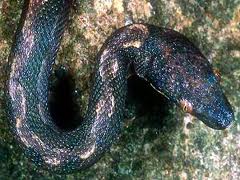
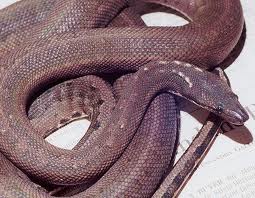
MEET THE ROUND ISLAND BOA!

   Range/Habitat: Round Island

   Diet: Carnivore: lizards

   Length: 3- 5 ft

   Conservation Status: endangered

Fun Facts:

  • Round Island Boas are one of the world’s rarest snakes.
  • They have keeled shaped scales.
  • Round Island boas have long slender bodies and narrow heads.
  • Female Round Island boas lay eggs.
  • Young Round Island boas are bright orange when they are born.

Round Island Boas are so cool. Luckily, these endangered snakes have people working to help increase their numbers. We sure hope they are successful!


Categories: adventure, Animals, Children, conservation, education, Environment, nature, reptiles, science, wildlife | Tags: , , , , , , , | Leave a comment

MAMMAL MONDAY # 52

MAMMAL MONDAY #52

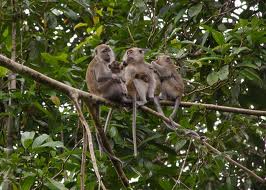
We’re off to Southeast Asia today to meet a monkey who lives amongst people and in the wild! Are you ready to head out and see who we meet today? Let’s do this!
MEET THE LONG TAILED MACAQUE!

   Range/Habitat: Southeast Asia/ rainforests, urban, coasts

   Diet: Omnivore: fruit, seeds, aquatic animals

   Length/Weight: 14 ½-23”/ 7 ¾- 26 lbs

   Conservation Status: common


Fun Facts:

  • Long tailed Macaques are one of the most common monkeys in Southeast Asia.
  • They live in troops of 5-60 individuals.
  • Long tailed Macaques are also known as the Crab-Eating Macaques.
  • Their tails are as long as their bodies.
  • Long tailed macaques often live in areas that are populated with people.
  • They use tools such as stones to open nuts and oysters.

Long tailed Macaques are so cool. People and monkeys often live together, but the monkeys can be a nuisance. It is important that we remember; feeding wild animals can be bad for them as they learn that humans are not dangerous or that human food is better than their natural diet.

Categories: adventure, Animals, Children, conservation, education, entertainment, mammals, nature, science, wildlife | Tags: , , , , , , , , , | Leave a comment

FEATHERY FRIDAY # 51

FEATHERY FRIDAY #51

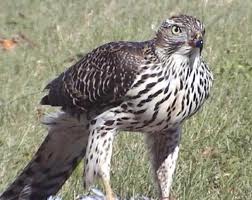
We’re off to the forests of Canada today to meet a member of the raptor family! These gorgeous birds can be hard to spot, so you’ll need your best observation skills! Are you ready? Let’s meet…

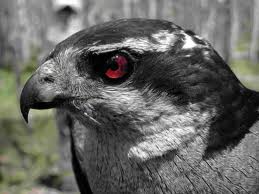
MEET THE NORTHERN GOSHAWK!

    Range/Habitat: Northern Hemisphere/ forests-mainly old growth

    Diet: Carnivore: birds, small mammals

    Length/Weight: 19-28”/ 2 ¼-3 ¼ lbs

    Conservation Status: common


Fun Facts:

  • Northern Goshawks are raptors.
  • They have long tails.
  • Northern Goshawks coloration varies by the region that they live in.
  • Female Northern Goshawks are larger than males.
  • They are very territorial.
  • Northern Goshawks are shy and secretive.
  • They can reach high speeds when flying.

Northern Goshawks are very majestic birds. They are often used in falconry too. We love raptors as a group, because they are so awesome!
 

Categories: adventure, Animals, birds, Children, conservation, education, Environment, nature, science, wildlife | Tags: , , , , , , , , , | Leave a comment

Blog at WordPress.com.