adventure

SAVE THE FROGS DAY!

SAVE THE FROGS DAY!

The pond behind us is full of bullfrog tadpoles! YAY!!

The pond behind us is full of bullfrog tadpoles! YAY!!

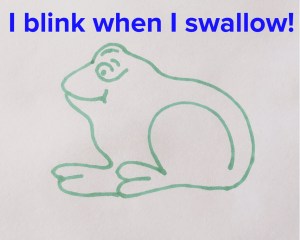
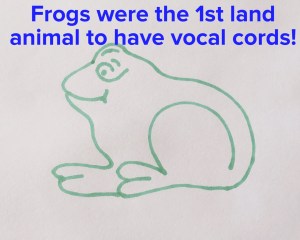
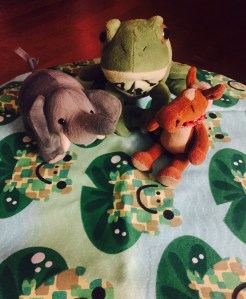
Today is Save the Frogs Day! One-third of all amphibians are in danger of becoming extinct! So we thought we’d share 7 reasons why frogs are so awesome and therefore in need of protection!

IMG_1326

IMG_1332

IMG_1331

IMG_1329

IMG_1330(1)

IMG_1328

IMG_1327(1)

Now if those aren’t reasons enough to want to protect our frog friends! We don’t know what will convince you!

Categories: adventure, amphibians, Animals, Children, conservation, education, Environment, frogs, nature, science, wildlife | Tags: , , , , , , , , , , , | 1 Comment

EARTH DAY 2016!!

EARTH DAY 2016!!

Image

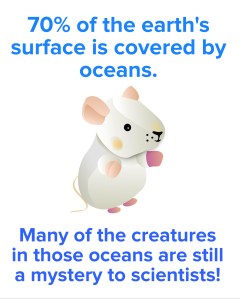
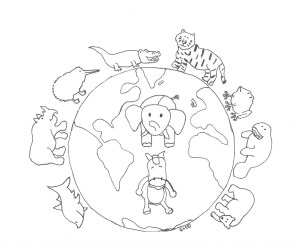
We’re celebrating Earth Day this year by having each professor share some great facts about the earth and inhabitants! Woohoo!
IMG_1174IMG_1175

IMG_1176 

IMG_1177IMG_1178

IMG_1179

IMG_1180IMG_1181

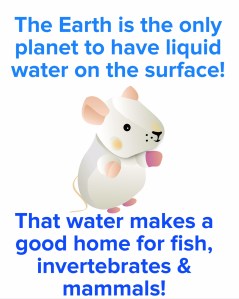
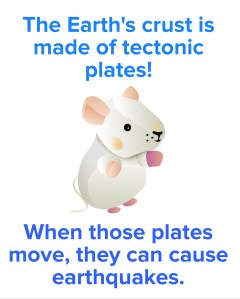
WOW! Professor Rita the Rat, our professor of Geography & culture sure knows her stuff! Let’s see what the head of each animal department has to share!
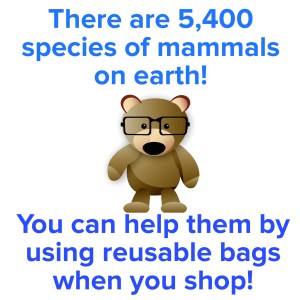
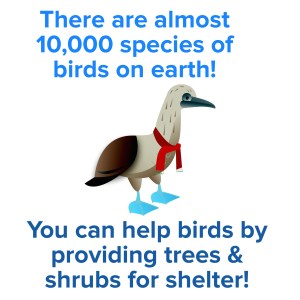
IMG_1173IMG_1171

IMG_1170

IMG_1169IMG_1168

We can all do our part to protect the one home we all share! Take the Ellie and Edmond pledge and help us care for this great big planet! Copy, paste and print out and sign! If you show us a picture, we’ll send you a button or stickers or bookmarks- your choice!

I ________ promise to take the Ellie & Edmond Earth Day pledge and follow the principals below.

1) I will respect the earth and all of its inhabitants- even the insects.
2) I will recycle all the materials I possibly can.
3) I will use reusable bags when I shop.
4) I will turn off the water while I brush my teeth.
5) I will turn off the lights when I am not in the room or at home.
6) I will be use a reusable water bottle instead of plastic ones.
7) I will donate or recycle my old cell phones.
8) I will unplug my computer & appliances when not in use.
9) I will eat sustainable seafood. 
10) I will share my love of the earth & the animals with others.

______________________________

Your signature!
Categories: adventure, Animals, Children, conservation, earth day, education, Environment, nature, science, wildlife | Tags: , , , , , , , , , | 1 Comment

FUN WITH FROGS- GLASS FROG!

FUN WITH FROGS- GLASS FROGS!

We’re meeting our last frog today- Seymour the Glass Frog!  Make sure to play I Spy with us tomorrow on Instagram or Facebook or Twitter! We’ll give you a hint- it’s a frog!

IMG_1157

  • I get my name because the skin on my belly is translucent (see through).
  • You can see a glass frog’s organs through their skin! You can even see my beating heart!
  • Like many of my other frog friends, I am nocturnal.
  • We glass frogs are arboreal and like to call humid rainforests our home. You can find me and many of my cousins in Central and South America.
  • We glass frogs have a claim to fame- one of our species looks like the famous Kermit the frog! It is a honor to represent such a celebrity in the wild!
  • We glass frogs are not very big! We range from 1 inch to 3 inches long!
  • Male glass frogs are territorial. We like our own space.
  • Our big eyes face forward and not to the side like tree frogs!

glass frogglass frog2


We sure do love glass frogs! Who knew their were species in the world who like to show off their insides? It’s their cute faces that get us the most though!

Categories: adventure, amphibians, Animals, Children, conservation, education, Environment, frogs, nature, science, wildlife | Tags: , , , , , , , , , , | 1 Comment

FUN WITH FROGS- GOLDEN POISON DART FROGS!

FUN WITH FROGS- GOLDEN POISON DART FROGS!

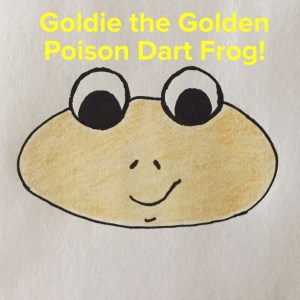
Today we’re meeting Goldie the Golden Poison Dart Frog!

IMG_1155

  • I live in a small area of rainforest in South America.
  • I am considered to be the most toxic frog on the planet!
  • Just one frog has enough toxins to kill 10 grown human men.
  • The native people in my rainforest have used my toxin for centuries as poison for their darts! That’s how we poison dart frogs got our name!
  • Due to habitat destruction, I am an endangered species.
  • My bright coloration is called warning coloration. It is an adaptation to ward off predators.
  • Scientists have developed a compound similar to my toxin that is a painkiller used for humans!

golden poison dart frog

Goldie sure is a cool little frog. These small amphibians are brilliant to see, but from a distance! Haha!

Categories: adventure, amphibians, Animals, Children, conservation, education, Environment, frogs, nature, science, wildlife | Tags: , , , , , , , , , , | 1 Comment

FUN WITH FROGS- SPRING PEEPERS!

FUN WITH FROGS-SPRING PEEPERS!

FullSizeRender(15)

April is frog month! Woohoo! This week we’re meeting three frogs and then we’re rounding out the week with a great Earth Day celebration!

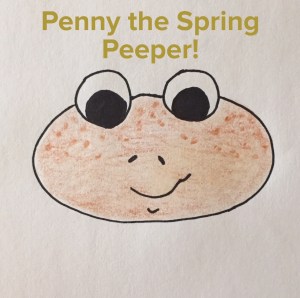
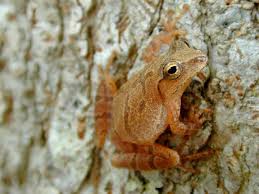
Today we’re meeting Penny the Peeper!

FullSizeRender(42)

  • My calls usher in spring across the Eastern United States.
  • I am a member of a group of frogs known as chorus frogs.
  • I have pads on my toes that help me grip to surfaces.
  • Those pads help make me an excellent climber!
  • Like all frogs, I am a carnivore.
  • I like to winter in Florida, hahaha! Just kidding, I hide under piles of leaves and logs.
  • In the winter, I allow my body to freeze! Yep, bet you can’t do that!
  • I have a lovely X shaped pattern on my back.
  • You can hear our lovely chorus here!

I am one shy frog and you won’t see me out during the day! But if you’re sitting outside listen for us and our lovely songs of spring!

spring peeper


Categories: adventure, amphibians, Animals, Children, conservation, education, Environment, frogs, nature, science, wildlife | Tags: , , , , , , , , , , | 1 Comment

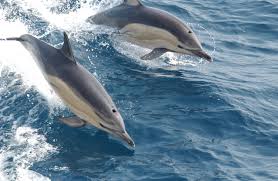
NATIONAL DOLPHIN DAY!

NATIONAL DOLPHIN DAY!

dolphin2

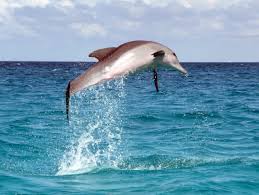
It’s National Dolphin Day! We’ve got some fun facts and pictures for you to celebrate!

dolphin7

Dolphin Fun Facts:

  • There are 42 species of dolphins in the world; 38 live in oceans and 4 live in freshwater rivers.
  • All dolphins are carnivores. Some species can eat up 30 lbs of fish a day.
  • They have a two to three chambered stomachs. Most of the chambers store food and one digests their food.
  • Dolphins use echolocation to locate prey and communication with each other. The melon is a fatty rich structure on their heads that help them with echolocation.

dolphin5

  • Their communication includes clicks and whistles.
  • Dolphin communication can be very complicated and scientists know that dolphins even name each other.
  • Like all mammals, dolphins have hair. They are born with a few chin hairs that fall out as they grow older.
  • Dolphins can swim up 25 miles per hour.

dolphin3

  • Dolphins are highly social and live in groups called pods.
  • They are considered to be highly intelligent too.
  • Dolphins are obligate breathers. They must think to breathe. They use their blowholes to breathe.
  • Dolphins sleep with one 1/2 of their brain asleep, so they can continue to breathe.

dolphindolphin2


Dolphins are fascinating creatures. There is much that scientists don’t know about their complex behavior and groups! We think they are just fantastic! Learn how to draw a dolphin here in our video!

Categories: adventure, Animals, Children, conservation, education, Environment, mammals, nature, oceans, science, wildlife | Tags: , , , , , , , , , , | 1 Comment

THAT IS ONE BIG DOLPHIN!

THAT IS ONE BIG DOLPHIN!

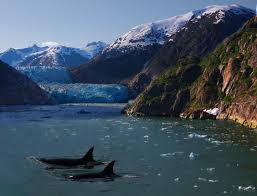
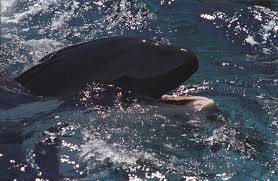
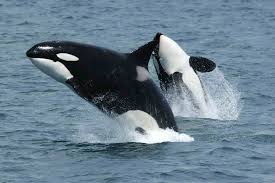
It’s time to meet one of the oceans most iconic animals! These black and white predators are known around the world and today you are going to learn more about them along with us!

orca3

  • Orcas live in oceans all around the world.

IMG_0217

  • They can grow up to 32 ft long and weigh up to 6 tons. That is the average weight of an adult male elephant!
  • Orcas are carnivores. They eat fish, seals, squid and even other whales.
  • They are listed as data deficient by the IUCN.
  • Orcas are also known as killer whales.

orca2orca

  • Scientists believe that orcas will eventually be split in to either subspecies or different species. There are orcas that stay in one location all year round (resident). There are orcas that live in smaller groups that travel where the food is abundant (transient). And there are orcas that hunt mainly very far from shore (offshore).
  • These carnivores live in pods and often hunt together as a group.

IMG_1025

  • Orcas have earned the nickname wolves of the sea, because of their group hunting techniques.
  • They can swim up to 33 mph!
  • Orcas have up to a 4″ layer of blubber to help keep them warm in cold waters.
  • Their teeth are 4″ long! Watch out for those chompers!
  • Orcas, like other toothed dolphins and whales, use echolocation to detect prey.
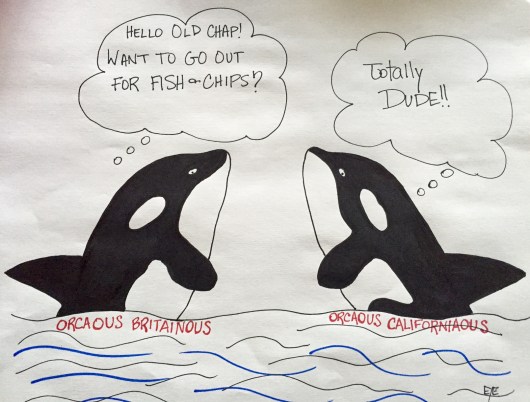
  • They are highly vocal. Pods are known to have their own unique language, dialect and culture. Scientists say the orcas’ dialects are very distinctive, like humans from the United Kingdom vs humans from Scotland.

FullSizeRender(41)

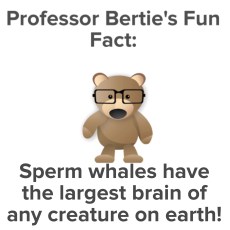
  • They have the 2nd heaviest brain of any marine mammal- our friend the sperm whale has the heaviest!

IMG_1024

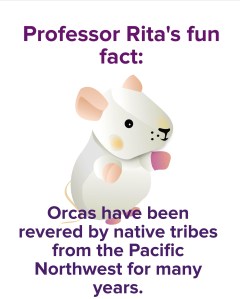
Orcas are super cool! They are highly social and intelligent! Cultures around the world have told myths and stories of the killer whales for centuries. The Kwakwaka’wakw people believed that orcas were the rulers of the seas and sea lions were their slaves! Wow!


Categories: adventure, Animals, Children, conservation, education, Environment, mammals, nature, oceans, science, wildlife | Tags: , , , , , , , , , , | 1 Comment

LITERARY WHALE!

LITERARY WHALE!

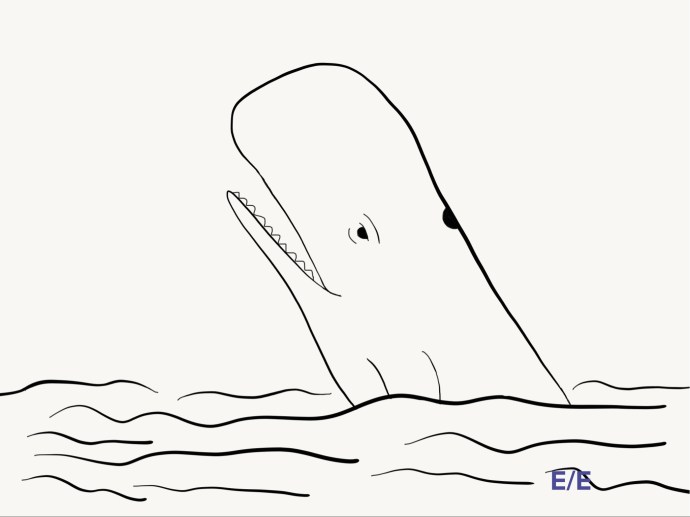
We’re super excited to meet some cetaceans this week! Edmond even put on his snorkel gear to get closer to these great animals! Today we meet a whale made famous in the book Moby Dick!

8D17BA1A-2624-4D14-8492-BD259C8D83D9

  • Sperm whales are found in oceans all around the world. IMG_0217
  • Sperm whales are toothed whales and carnivores. They eat fish and squid!
  • Sperm whales are listed as vulnerable by the IUCN.
  • Sperm whales can grow up to 59 feet long and weigh up to 45 tons. They are longer than a school bus!  IMG_1019(1)
  • Sperm whales are in fact the largest of the toothed whales!
  • Sperm whales are known to battle and sometimes eat giant squid. Scientists have even observed squid suction cup wounds and scares.
  • Sperm whales are very vocal and they use echolocation to help them find prey.

IMG_0998

  • Sperm whales are known to dive to very deep depths- as deep as 3,200 feet down.
  • Their large squarish shaped heads are filled with a substance called spermaceti. Scientists are still unsure of it’s exact use, but they think it helps the whale maintain its buoyancy when it dives to deep depths.
  • These amazing whales can hold their breath for up to 90 minutes.
  • Female sperm whales live in pods in warmer waters all year round. They raise their young together.

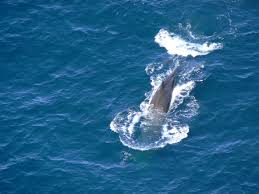
sperm whalesperm whale2

whales8

  • Sperm whales may be one of the best known species of whales on earth. The book “Moby Dick” is the story of the struggle with a famed white sperm whale and a whaler. IMG_1020

We love these giants of the deep! They are such amazing creatures. Many cultures in the South Pacific revere their teeth as sacred. We have a sperm whale coloring sheet for you too!IMG_1021


Categories: adventure, Animals, Children, conservation, education, Environment, mammals, nature, oceans, science, wildlife | Tags: , , , , , , , , , , | 1 Comment

SCIENCE WORD OF THE WEEK!

SCIENCE WORD OF THE WEEK!

swow cetacean

Hello class and happy Monday! Things are really buzzing around the University this week and it all starts here with our science word of the week!

Today’s word is Cetacean: a marine mammal from the order of Cetacea. Cetaceans include whales, dolphins and porpoises. 

I know Ellie and Edmond and professor Bertie are so excited to meet some of these awesome creatures this week! I hope you’re excited too!

Categories: adventure, Animals, Children, conservation, education, Environment, nature, science, vocabulary, wildlife | Tags: , , , , , , , , , , | 2 Comments

We’re chatting about chimps!

We’re chatting about chimps!

We’re continuing our APE-ril celebrations today with another great ape! We’re off to Africa again to find the Bonobo chimp. Once called the pygmy chimp, these relatives of the common chimpanzee do not get the press that their relatives do. They have some interesting differences! Let’s learn more about them!

bonobo

  • Bonobos live in Central Africa in humid forests.
  • They are omnivores. Most of their diet is fruit, but they also eat bugs, eggs and honey.
  • Bonobos are listed by the IUCN as endangered.
  • Bonobos and their cousin the common chimpanzee are the closest living relative to humans on earth. They share about 98% of their DNA with humans.
  • Bonobos are highly intelligent. They are bonobos that have learned sign language and language using a board with symbols.
  • They are known to walk on two legs and can do so for farther distances than the common chimpanzee.

IMG_0925

  • Bonobos are also known for their emotional expression and vocalizations.
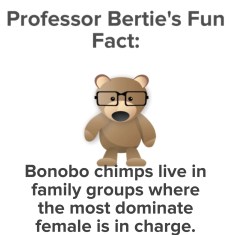
  • They are highly social animals that bond with each other in their family groups.
  • Bonobos have red lips. This is one way to identify them from their cousins the chimpanzee.

bonobo3bonobo2


Bonobos are amazing apes! They are fascinating! We highly recommend checking out the Bonobo Conservation Initiative and the writings Frans De Waal to learn more about these relatives of you human apes!

Categories: adventure, Animals, Children, conservation, education, Environment, nature, science, Uncategorized, wildlife | Tags: , , , , , , , , , | 1 Comment

Blog at WordPress.com.