Animals

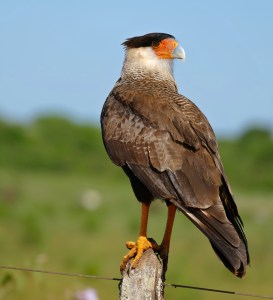
That is a Falcon!

That is a Falcon!

We met one gorgeous bird today! This big member of the falcon family is known to hang with vultures and look more like a hawk!

P1550106

Southern Crested Caracara Fun Facts: 

  • Crested caracaras can grow up to 22 inches and weigh up to 3 lbs.
  • Their wing span is almost 50 inches.
  • These carnivores eat incsects, small reptiles and fish. They are also known to push vultures away from carion.
  • They have long thin legs.
  • They are mostly solitary.
  • It is listed as Least Concern by the IUCN.

4EDC5F66-5C00-46DF-9D59-17EA4FDF0B10

These gorgeous birds have a northern cousin that lives in Mexico and in Arizona and Texas. We love these raptors!

Categories: adventure, Animals, birds, Children, conservation, education, Environment, nature, science, Today's Post, wildlife | Tags: , , , , , , , , , , , | 1 Comment

Otter Otter

Otter Otter

We set out to meet one of the rarer animals of the Pantanal today! We located a few having a snack. These amazing members of the mustelid family are soooo cool!

12F8B7B6-41B6-47DF-B029-8742CDB04E23

Giant Otter Fun Facts: 

  • These large carnivores can get up to 6 ft long and weigh up to 75 lbs.
  • They have powerful tails and webbed feet for a life in the water.
  • These territorial giants live in small family groups.
  • Giant otters can eat up to 9lbs of fish a day.
  • They live in dens in the banks of the rivers they call home.
  • Giant otters are very vocal and use a variety of squeaks and screams. They are considered to be the most vocal otter species on earth.
  • They are often called the river wolf.
  • They are diurnal.
  • Giant river otters are listed as Endangered by the IUCN.

C9E6BD45-B421-4DC5-85BE-4F5B39DBF54E


We enjoyed seeing these amazing animals. They are now protected from the poaching that led to their decline. They are becoming important for tourism in the areas they call home.


Categories: adventure, Animals, Children, conservation, education, endangered species, Environment, nature, science, Today's Post, wildlife | Tags: , , , , , , , , , , , | 1 Comment

We Are Fanimaly- Anteater/Sloth

We Are Fanimaly- Anteater/Sloth

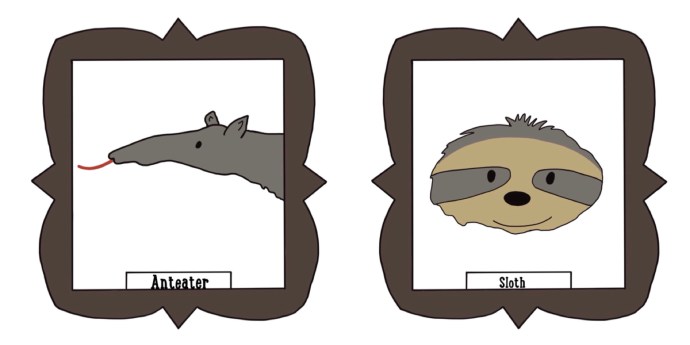
We are starting up a feature from the past this week! We’ll be post a segment we call     We Are Fanimaly once a month. This feature will spotlight animals that are related. Some of these you may know and some of them may surprise you! This month’s features our giant anteater from last week. 


390E2C3F-1EED-4EAD-A776-E0B89F714FAA


Anteaters and sloths are relatives! Can you believe it? Our Giant Armadillo from a few days ago also belongs in their Fanimaly! They look nothing alike! Hehehehe!

  • Their superorder is Xenartha.
  • These animals only live in the Americas.
  • They have been around for about 59 million years.
  • Remember the Glyploton- the giant armadillo? Well there were giant ground sloths too!
  • The name Xenarthra means “strange joints”.
  • The name was chosen because anteaters, sloths and armadillos have vertebral joints unlike any other mammals on earth.
  • Anteaters and sloths are more closely related to each other than their armadillo cousins.
  • The animals in the Xenartha surperorder are either insectivores (anteaters & armadillos) or herbivores (sloth).
  • There are 6 sloth species and four anteater species.
Categories: adventure, Animals, Children, conservation, education, endangered species, Environment, mammals, nature, science, Today's Post, wildlife | Tags: , , , , , , , , , , , , | 1 Comment

That is One Big Snake

That is One Big Snake

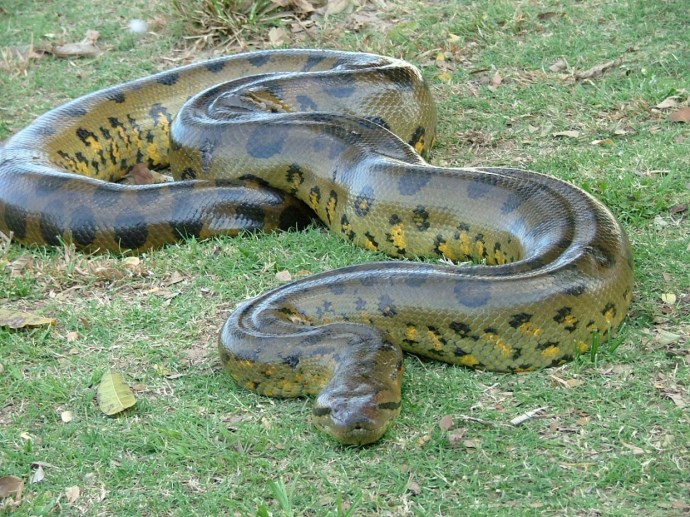
We are meeting another amazing animal of the Pantanal today! This reptile is largest snake by weight in the world. That’s why we are glad we saw it from a boat!


2DDABB86-6AFC-4AC0-853E-1CACD50D6317

Green anaconda fun facts: 

  • Green anacondas are giants! They can get up to 29 ft long and weigh over 500 lbs. Just to give you an idea of how long that is- a school bus is 45 ft- so they would take up 2/3 of it.
  • Females are larger than males!
  • The constrictors are carnivores. They eat small mammals, caiman and some reptiles.
  • Like other snakes, they have stretchy ligaments in their jaw that allow them to open wide and swallow large prey whole.
  • These reptiles can go weeks after eating a big meal.
  • They are mostly nocturnal!
  • Female anacondas give birth to live young, that hatch in her body! They are independent of their mothers immediately after being born.

These giants are amazing! We know people fear snakes, but we think they are awesome! These predators have been around for 100 million years, so maybe it’s time to take a new look at our legless friends and start appreciating how truly great they are!


Categories: adventure, Animals, Children, conservation, education, Environment, nature, reptiles, science, Today's Post, wetlands, wildlife | Tags: , , , , , , , , , , , | 1 Comment

Hello Armadillos

Hello Armadillos

Aaaah the armadillo, an animal many in the southern United States associate with road kill. But there are 20 species of armadillos in the world, each one neat in their own respects. We went looking for the biggest armadillo of the them all- the giant armadillo! This species is not to be confused with the extinct Glyptodon – a car sized relative of the armadillo that lived during the Pleistocene epoch! Our giant armadillo friend is not that big- but they are cool!


BBCAFCE9-B197-4509-AC0A-247EF13A63B8

Giant Armadillo Fun Facts: 

  • The giant armadillo has 11-13 bands.
  • They can grow up to 39 inches long and weigh up to 72 lbs. There have been a few found that weigh 180 lbs.
  • They have the most teeth of any mammal- 80 to 100 per armadillo!
  • These solitary nocturnal animals live in burrows.
  • Giant armadillos are insectivores. They eat termites, ants, worms and spiders. They can consume the entire population of one termite mound.
  • They have the proportional claw of any mammal. This is their 3rd curved claw.
  • Giant armadillos can not roll up completely in to a ball.
  • Due to hunting, giant armadillos are listed as Vulnerable by the IUCN.


6898A302-A2A9-486E-8C66-732B96AEB23B

These giant armadillos are so amazing! Little is known about them in the wild. No scientists have ever seen a juvinelle giant armadillo in the wild!

Categories: adventure, Animals, Children, conservation, education, endangered species, Environment, mammals, nature, science, Today's Post, wildlife | Tags: , , , , , , , , , , , , | 2 Comments

Hello Birdie!

Hello Birdie!

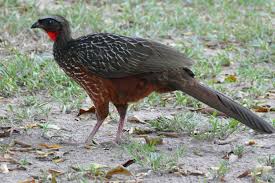
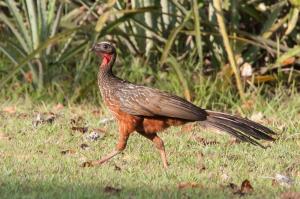
We are meeting a little bird of the Pantanal today! Come join us!

AF955EF9-6FEE-4126-999A-9E09E6A57448

Chestnut-bellied guan fun facts: 

  • These birds prefer higher ground.
  • They resemble turkeys, but are not.
  • They have chestnut brown bellies and red waddles.
  • They have a rough crow like call.
  • They are about 21 inches long.
  • They are listed as vulnerable by the IUCN.

8A54CD86-B8E7-4FB5-B95D-1196EAC37637

These funny looking birds remind of us of a turkey and a roadrunner. They are super cool!

Categories: adventure, Animals, birds, Children, conservation, education, endangered species, Environment, nature, science, Today's Post, wildlife | Tags: , , , , , , , , , , , , | 1 Comment

Marshy Deer

Marshy Deer

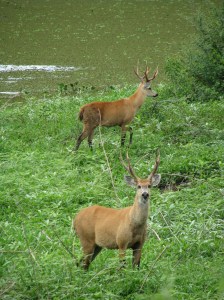
We are meeting one of the iconic animals of the Pantanal today-the Marsh Deer! Woohoo- we won’t delay meeting today’s animal!

923487B8-5AFC-44E7-ACA1-803D18D81693


Marsh Deer Fun Facts: 

  • The deer is the largest deer species in South America.
  • They can grow up to 6 feet long and weigh up to 275 lbs.
  • Marsh deer are known to be very shy.
  • Only the males have antlers that grow up to 1 foot.
  • These marsh dwellers have wide set hooves that are covered with a stretchy membrane that gives the hoof more stability in the water filled habitat.
  • These herbivores prevere to live near areas of water.
  • They are listed as vulnerable by the IUCN.

D46F1B67-69E8-46D4-B1FA-DBFE75ABDD88

These cute deer with their giant ears are so fun. They keep to themselves and spend most of their time munching on grasses.

Categories: adventure, Animals, Children, conservation, education, endangered species, Environment, mammals, nature, science, Today's Post, wildlife | Tags: , , , , , , , , , , | 1 Comment

Pantanal

EPantanal

Did you guess where this month’s adventure is? We’re in Brazil in the Pantanal region! This amazing habitat is rich with plants and animals and we’re so excited to see as much as possible! Come learn more about the Pantanal today with us!

EBA86EC8-C290-41F6-B2E6-D4C42C01DCF4


Pantanal Fun Facts: 

  • The Pantanal is mostly wetlands. Those wetlands are submerged in water during the rainy season.
  • The average temperate is 77 degrees Fahrenheit (25 C).
  • Many of the species are aquatic.
  •  The word Pantanal comes from the Portogese word pantano that means wetland.
  • The average rainfall in this area is 40-55 inches.
  • There are about 3,500 plant species in this habitat.
  • This wetland is also home to almost 700 species of birds!

E77A3068-B066-4611-8BCD-9AE16B8634EB


This amazing habitat is very special. Unfornately on 2% of it is under protection. We will meet several animals that are endangered because of habitat loss. We hope you are ready to meet them with us!

Categories: adventure, Animals, Children, conservation, education, endangered species, fish, nature, science, Today's Post, wildlife | Tags: , , , , , , , , , , | 1 Comment

Where Will the Next E&E Adventure Be?

Where Will the Next E&E Adventure Be?

We are packed and ready to go on our next adventure. We are giving you clues to where we are heading as this habitat is not as well known as others for sure!

  • We’re going to South America.
  • It’s not the rainforest, but it is in Brazil.
  • There are giant areas of flood plains.
  • This habitat has a specific name.
  • It is a very biodiverse habitat.

Can you guess where we are going?

Categories: adventure, Animals, Children, conservation, education, endangered species, Environment, nature, science, Today's Post, wildlife | Tags: , , , , , , , , , , | 2 Comments

Meet the King!

Meet the King!

We met the king of Antarctica today! Most people think that all penguins call the South Pole home, but only 8 species live in this harsh environment. Today though we are meeting the King penguins. Sadly they don’t wear crowns.

9AC1C665-9EC2-4BAE-8EBF-EFE050F2647A


King Penguins Fun Facts: 

  • These birds are the 2nd largest penguin species in the world. Do you remember the largest?
  • Kings are easy to spot with their oranges spots on their heads and beaks and chests.
  • Both parents incubate the egg on their feet and brooding pouch, switching the egg every few weeks.
  • These efficient carnivores can dive as deep as 950 feet. More commonly they go around to 164 feet deep.
  • The chicks look very different than the adults. They are fluffy and brown! Scientists first thought they were a separate species when they first saw them.
  • Chicks stay with their parents and the colony for almost a year. This means king penguins only have one to two chicks every two-three years.
  • They are currently listed as Least Concern by the IUCN.

2149577C-1885-4B58-87A8-A5B30BD29353


We love these gregarious birds and their bright orange colorations. They always make us and laugh and of course we always practice our waddling after seeing them.

Categories: adventure, Animals, birds, Children, conservation, education, Environment, nature, science, Today's Post, wildlife | Tags: , , , , , , , , , , , | 1 Comment

Blog at WordPress.com.