Animals

Back to Basics- Birds

Back to Basics- Birds

Our professor of birds is Professor Baxter and he is a Blue footed Booby! He’s going to share some basics about about birds!

ellie_edmund_professors-bfbooby

There are around 9,000 species of birds in the world. We are in every habitat on earth. Because we are so adaptable, we are considered the most successful animal on the planet. The earliest birds were descendants of the dinosaurs. Fossils of my long lost relatives have been found that are 150 million years old.

 first bird

What makes a bird a bird?

  • We have feathers. Our feathers are made from keratin.
  • We are endothermic (warm blooded).
  • We lay eggs.
  • We are vertebrates.
  • We have hollow bones. This helps us fly.
  • We have no teeth.

Feathers are our most distinctive feature. Feathers are made of keratin (the same protein that makes up human hair and nails). We have flight feathers on our wings. We have down feathers close to our body to keep us warm. Our tail feathers are made to help us fly. We must preen (clean) our feathers to keep them healthy. There are some birds who cannot fly including; kiwi, kakapo (the heaviest parrot on earth), penguins and ostrich.

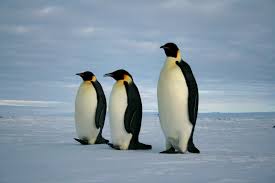
kakapo

peguin

Our beaks/bills are also covered in keratin and they are shaped for what type of food we eat.

Instead of paws, we have feet. Our feet have 2 to 4 toes. Most of us have 4 toes, 3 that face forward and one that faces backward. This is perfect for sitting on tree branches. Those birds that spend time in water have webbed feet.
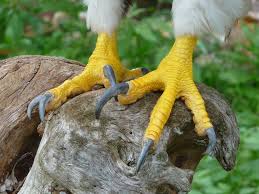
bird feet

We must keep our body temperature at 104 degrees. It is important that we control our heat loss.

Lastly, we lay eggs. Our mating rituals include dancing, songs and plumage displays. Our eggs are made of calcium carbonate. We lay eggs in nests, on rocks, on the beach and even on the ground. Some of us are born without feathers and our eyes closed. Some of us are, like ducks, are born with down feathers and our eyes open.


duck


Categories: adventure, Animals, birds, Children, conservation, education, Environment, nature, science, Today's Post, wildlife | Tags: , , , , , , , , , , | 1 Comment

Back to School 2017

Back to School 2017

ellie_edmund_professors-U-logo

Hellooooo! Welcome back everyone! We trust you had a wonderful summer, we know we enjoyed camp! It’s time to get back to the books and adventure though! This month we are kicking off school with a Back to Basics month! We’ll be go over some things you know and hopefully some things you don’t!

Come October we are heading off on our trip around the world just like last year, except where we go will be a secret. On the first day of each month, we’ll describe where we will be going and you will have to guess. We’ll have a prize each month for the first person to guess where we will be going!

As usual we’ll be meeting all kinds of new animal friends along the way! We hope you are excited for this wonderful new school year! Tomorrow we start with the bird basics!

Categories: adventure, Animals, Children, conservation, education, Environment, nature, science, Today's Post, wildlife | Tags: , , , , , , , , , | 1 Comment

Last Day of Camp

Last Day of Camp

686ED16E-4D0A-4357-B118-C7877422A3BC

Well pals it is the last day of Camp Ellie & Edmond. It’s always sad to say goodbye to summer and our pals. We will be taking the next three weeks off to move our site and work on a few improvements!

Then we’ll be back for a whole new year at the University of Ellie & Edmond! We will be getting back to basics for a month and then a we have an exciting year.

We are introducing Where Will The Next E&E Adventure Be? Each month we will be going to a new place. On the first day you will get a chance to guess where we are and there will be a prize for the person who guesses it correctly first! We know we are excited for all that is coming!

Let’s end this amazing summer with the Camp E&E song:

On the shores of Lake Salamander, among the old live oak…

We enjoy Camp Ellie and Edmond and the frogs that croak.

We salute you Camp E & E and all your animal friends…

All our days are each a gem.

While we sit next to the campfire, telling stories of old…

We laugh and sing and watch the stars of gold.

We love you Camp E &E and all our memories of our days…

We hold Camp E & E close to our hearts and we’ll never stray!


We will see all our campers during the school year!

FullSizeRender

Categories: A, Animals, camp, Children, conservation, education, Environment, nature, science, Today's Post, wildlife | Tags: , , , , , , , , , | 1 Comment

Pelican! Pelican!

Pelican! Pelican!

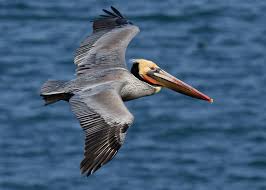
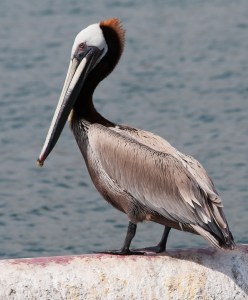
We are meeting one last animal at Camp E&E! The summer has flown by hasn’t it? We can hardly believe it! We could spend hours and hours watching the brown pelican take diving in the ocean scooping up eats! Let’s mee them today!

IMG_0337


Brown Pelcian Fun Facts: 

  • The Brown Pelican is the smallest of all pelican species.
  • They are plunge divers. They fly above the surface of the water and then drop or plunge into the sea to catch their prey.
  • Brown pelicans have a greenish skin on their face that is brighter during mating season.
  • Brown pelicans like to nest in trees, shrubs and mangroves.
  • Both parents incubate eggs. They usually have 2-3 chicks. One chick can eat up to 150 lbs of food by the time they are 10 months old! That’s a bunch of fish for little guys
  • Their pouch can hold up to 3 gallons and the stomach can hold around 1 gallon.
  • Brown pelicans are the state bird of Louisiana.

IMG_0339

We love pelicans! Love them! They are one of the coolest birds around! Do you love them as much as us? Stick around for the last craft day of camp tomorrow!

Categories: adventure, Animals, birds, camp, Children, conservation, education, Environment, nature, oceans, science, Today's Post, wildlife | Tags: , , , , , , , , , , , | 1 Comment

Catching Oysters with an Oystercatcher

Catching Oysters with an Oystercatcher

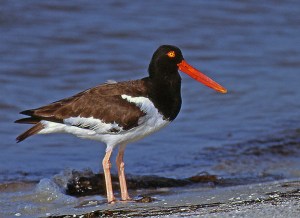
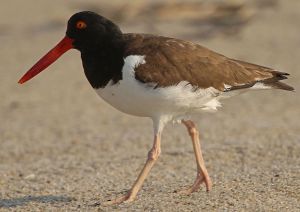
It’s the last week of Camp E&E by the Sea! Can you believe it? This week we’re hanging by the beach to meet shore birds. First up is the American Oystercatcher! This neat bird is easy to spot with its bright orange beak. So let’s head out to spot some campers!

IMG_0334

American Oystercatcher Fun Facts: 

  • These brightly colored birds call salt marshes and shores their home.
  • They feed on shellfish, mussels, clams, oysters and sea stars.
  • American oystercatchers tend to spend more time on the ground than flying.
  • They often grab the shellfish inside the shell before it can close. They severe the muscle and swallow the meat whole.
  • They nest in higher areas away from the high tide line.

IMG_0335

We could sit on the beach and watch shore birds all day! These funny birds with their long legs are one of our favorites. What’s your favorite shorebird?

Categories: adventure, Animals, birds, camp, Children, conservation, education, Environment, nature, oceans, science, Today's Post, wildlife | Tags: , , , , , , , , , , | 3 Comments

Wear Your Bonnet

Wear Your Bonnet

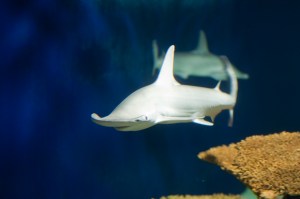
Can you imagine a shark wearing a bonnet? That would be funny looking- not to mention hard to swim with- hahaha! Today we are meeting a relative of the hammerhead- the bonnethead shark!!

IMG_0317

Bonnethead Shark Fun Facts: 

  • Bonnetheads are smaller sharks- they can grow up to 59 inches- about the length of a refrigerator.
  • They call estuaries, bays and sandy bottoms their home.
  • Their heads are more rounded than that of the larger hammerhead species.
  • Like all other sharks they are carnivores.
  • Bonnethead sharks live in small groups.
  • They can live up to 15 years.


IMG_0324

These smaller hammerheads are so cool. A recent study by scientists may suggest that they eat sea grass, which would make them omnivores! Wow! That would be super cool!

Categories: adventure, aliens, Animals, camp, Children, conservation, education, endangered species, Environment, fish, oceans, science, Today's Post, wildlife | Tags: , , , , , , , , , , , | 1 Comment

Know Your Sharks

Know Your Sharks

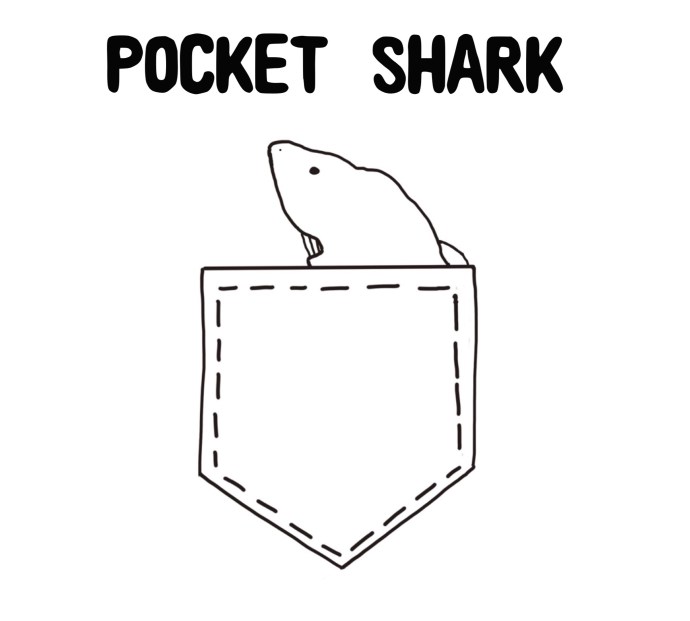
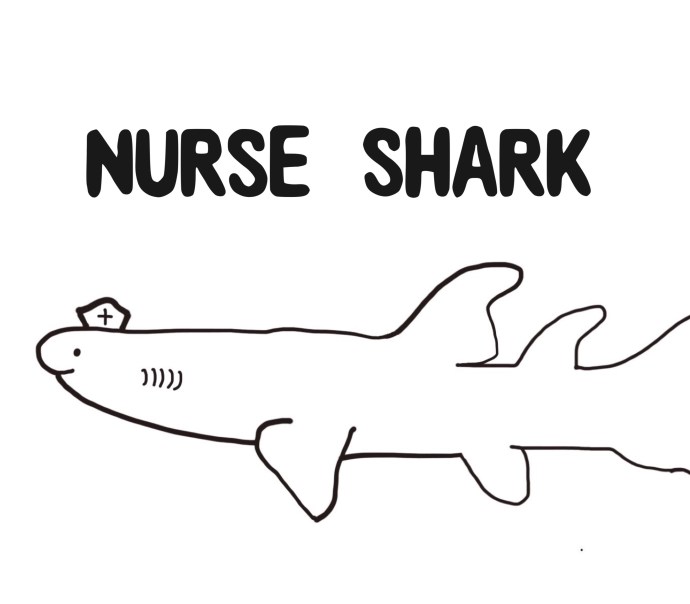
Today we have four coloring sheets for you in our continued series- know your sharks! So head on over to the craft cabin and grab something to color with and get to know your sharks!

FullSizeRender

Pocket Sharks have two pouches or pockets, one on each side of their body in front of their fins. Scientists are unsure of their purpose.


FullSizeRender

Bamboo Sharks are mostly nocturnal and only grow up to 37 inches long. 


FullSizeRender

Zebra sharks lose their stripes as they grow. Adults are actually covered in spots!

FullSizeRender


These large sharks (up to 14 ft) often rest on the ocean floor. They pump water over their gills using spiracles to pull in water. 


FullSizeRenderFullSizeRender


Categories: adventure, Animals, camp, Children, conservation, education, endangered species, Environment, fish, nature, oceans, science, Today's Post, wildlife | Tags: , , , , , , , , , , , , , | 1 Comment

Finding the Sandbar

Finding the Sandbar

We are heading out on the S.S E&E to meet a shark today! Often when you are at the beach, you’ll see where more sand has accumulated and even sticks out of the water- this is called sandbar! Well today we are meeting the sandbar shark! They are found around bays, estuaries and sandy bottoms.

IMG_0314

Sandbar Shark Fun Facts: 

  • These streamline sharks can grow up to 8 feet long.
  • Sandbar sharks have large dorsal fins.
  • These carnivores eat mollusks, crustaceans and fish.
  • Sandbar sharks are also called brown sharks.
  • They are listed as Vulnerable by the IUCN.
  • Sandbar sharks give birth to live young!


IMG_0323

These relatives of the bull shark are not aggressive like their cousins. Like other sharks, they are threatened by humans- due to shark finning, pollution and over fishing.

Categories: adventure, Animals, Children, conservation, education, endangered species, Environment, fish, nature, oceans, science, sharks, Today's Post, wildlife | Tags: , , , , , , , , , , , , | 1 Comment

Rocking with the Guitar

HRocking with the Guitar

It’s SHARK WEEK here at Camp E&E by the Sea! We love our cartilaginous friends and we are so excited for our campers to meet a few sharks and one of their relatives in the ray family. These creatures have been calling the world’s oceans home for over 400 million years. Today we’re going to meet a member of the ray family- the shovelnose guitarfish.

IMG_0316


Shovelnose Guitarfish Fun Facts: 

  • Shovelnose guitarfish are members of the ray family.
  • They look like you combined a ray and shark all in one.
  • They range in color from olive to grey to tan.
  • Females are larger than males.
  • These bottom dwellers eat mollusks, crustaceans and fish.
  • Shovelnose guitarfish are listed as Near Threatened by the IUCN.
  • They have a row of spines along their back near the tail.


IMG_0318

These amazing fish are so neat! Can you guess why they are called guitarfish? They are shaped like a guitar, but they have no strings attached! Hahaha!!

Categories: adventure, Animals, Children, conservation, education, endangered species, Environment, fish, nature, oceans, science, Today's Post, wildlife | Tags: , , , , , , , , , , , | 1 Comment

Eel Bookmarks

Eel Bookmark!

IMG_5033

The Crafty Crab has come up with a great craft for us today! Woohoo!

IMG_0311

Materials: 

  • Cardstock
  • Crayons, markers or colored pencils
  • scissors
  • eel pattern

Instructions: 

  • Print out pattern on card stock
  • Color to your hearts desire
  • Cut out eels

IMG_0312


Today’s craft is an easy one- but these little guys sure are cute! Pattern below!


IMG_0310

Categories: adventure, Animals, camp, Children, conservation, crafts, education, Environment, fish, nature, science, Today's Post, wildlife | Tags: , , , , , , , , , | 2 Comments

Blog at WordPress.com.