mammals

HOLIDAY ANIMAL WEEK # 55

HOLIDAY WEEK DAY #2

We’re staying in the arctic today to meet one large and fat animal! What do you know, they have tusks just like Ellie! Do you have your coats on? Let’s go meet this great holiday animal!

MEET THE WALRUS!
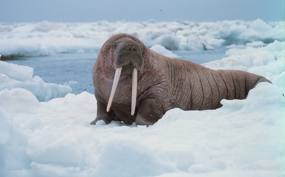
    Range/Habitat: Arctic/water, shoreline

   Diet: Carnivore: shrimp, sea-snails, fish

   Length/Weight: 9 ¾-12 ft/ 1 ¼ -2 ¼ tons

   Conservation Status: data deficient


Fun Facts:

  • Walrus are large marine mammals with flippers.
  • Walrus eat prey off the bottom of the oceans and use suction to eat.
  • They can stay underwater for up to 25 minutes and can dive down to 330ft deep.
  • They are highly social and often are seen in large groups, called herds.
  • Male walruses are twice the size of females.
  • They have rough wrinkly skin and very whiskery faces.
  • Walruses have tusks of ivory. They can grow up to 3 ft 3” long.

Walruses sure are huge and cute! How can you not like their whiskery faces? These blubbery mammals are loud, social and full of personality! They are one of our favorites!

walrus

walrus2

Categories: adventure, Animals, Children, conservation, education, Environment, mammals, nature, oceans, science, wildlife | Tags: , , , , , , , , , , | 3 Comments

HOLIDAY ANIMAL WEEK!

HOLIDAY ANIMAL WEEK

We’re celebrating animals that are featured during the holidays this week! We’ll be going all over to find animals that live in the north pole or that are part of the holiday culture (i.e. featured in a song). Our first adventure takes us to the chilly North pole to meet a VERY Famous animal, who knows the big guy driving the slay! Grab your coats and let’s do this!

e e arctic

MEET THE REINDEER!

reindeer   Range/Habitat: North America-Europe-Asia/Tundra-forest

   Diet:  Herbivore: grasses, moss, lichen

   Length/Weight: 4- 7 ¼ ft/ 260-660 lb

   Conservation Status: common


Fun Facts:

  • Reindeer are also called caribou.
  • They vary in color and size depending on where they live. Reindeer that live closest to the arctic are white in color.
  • Both female and male reindeer have antlers. Males lose their antlers in the winter.
  • Reindeer antlers are covered in a layer of fur called velvet.
  • Their noses are specialized to warm cold air before it enters their lungs.
  • Reindeers have a four chambered stomach!
  • One of their favorite foods is called reindeer moss.
  • Reindeers are the only mammal that can see ultraviolent light!
  • Some reindeer populations migrate. They can migrate up to 3,000 miles in one year! Whew, they must be tired!

Besides being really neat, reindeer are famous for pulling Santa’s sleigh! We were hoping to meet a real reindeer this year, but we weren’t able to. We are making some antlers out of pipe cleaners though! What’s your favorite thing about reindeer?

reindeer   reindeer2


We found a reindeer coloring sheet too:

http://www.edupics.com/coloring-page-reindeer-i8663.html

Categories: Animals, Children, conservation, education, Environment, holidays, mammals, nature, science, wildlife | Tags: , , , , , , , , , | Leave a comment

SUPER SURPRISE THURSDAY # 55

SUPER SURPRISE THURSDAY #55

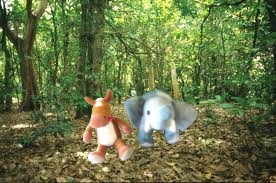
We’re heading out our own back door and into the woods to find today’s super surprise animal. As we’re hiking, be on the lookout and keep your distance, because this animal has one stinky defense!

e e woods (2)

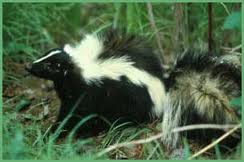
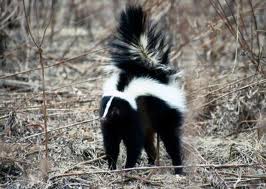
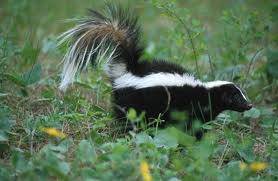
MEET THE STRIPED SKUNK!

striped skunk   Range/Habitat: Canada-North Mexico/ woodlands, suburbs

   Diet: Omnivore: fruits, seeds, fish

   Length/Weight: 22-30”/ 5 ½-14lb

   Conservation Status: common


Fun Facts:

  • Striped skunks are solitary.
  • They are known for their stinky defense system. Striped skunks will stand on their front feet and spray a predator with a very foul smelling liquid!
  • Striped skunks’ main predator is the Great Horned Owl because the owl has no sense of smell.
  • They are crepuscular (active at dawn and dusk).
  • Young striped skunks stay with their mother’s for almost a year.
  • Striped skunks winter in dens and burrows.

These stinky little mammals are really cute! It is best to watch them from a distance or from inside the house, you certainly don’t want to encounter the wrong end of these animals!

 striped skunk2striped skunk3


Categories: adventure, Animals, Children, conservation, education, Environment, mammals, nature, science, wildlife | Tags: , , , , , , , , , | 1 Comment

MAMMAL MONDAY # 55

MAMMAL MONDAY #55

It’s that special day of the week when we meet a mammal and today’s adventure takes us to a small area in the West of Africa. Get ready to do some monkying around! Let’s do this!

e e savanna

MEET THE GUINEA BABOON!

guinea baboon   Range/Habitat: West Africa/ grasslands

   Diet: Omnivore: roots, grubs, eggs

   Length/Weight: 27”/ 39 lb

   Conservation Status: near threatened


Fun Facts:

  • Guinea baboons are the smallest of all baboons.
  • Male guinea baboons have large manes of fur.
  • They live in troops of around 40 individuals.
  • Guinea baboons forage for food on the ground, but sleep in the trees at night.
  • They are also called the savanna baboon.
  • Guinea baboons are highly vocal.

We love baboons and the Guinea baboons are so handsome with their large manes. These highly social and vocal primates are so fun to observe!

guinea baboon2     guinea baboon3


Categories: adventure, africa, Animals, Children, conservation, education, Environment, mammals, science, wildlife | Tags: , , , , , , , , , | Leave a comment

MAMMAL MONDAY # 54

MAMMAL MONDAY #54

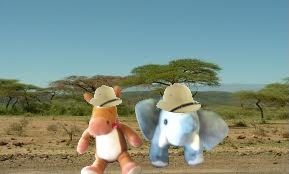
We’re back from vacation and it’s time to head off to the deserts of North Africa to meet a special little member of the feline family! Let’s grab the mud SPF 30 sunscreen & our favorite hats and head out on a new adventure across the sands!

e e desert

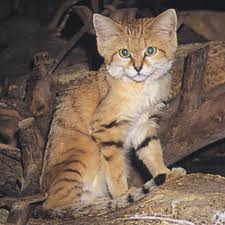
MEET THE SAND CAT!

sand cat   Range/Habitat: Northern Africa-Western Asia/ desert

   Diet: Carnivore: gerbils, rodents

   Length/Weight: 18-22 ½”/ 3 ½-7 ¾ lb

   Conservation Status: near threatened


Fun Facts:

  • Sand cats are solitary and nocturnal.
  • They have yellow-sandy fur with stripes.
  • Sand cats are the smallest cat species in Arabia.
  • They live in burrows or dens during harsh conditions.
  • Sand cats have fur on the pads of their feet to protect them.
  • Sand cats get their water from the good they eat.

Sand cats are super cute. They have great adaptations for living in the harsh desert habitat! We just love how animals have such different adaptations to survive all over the world.

sand cat2   sand cat3


Categories: adventure, africa, Animals, Children, conservation, education, Environment, mammals, nature, science, wildlife | Tags: , , , , , , , , , | Leave a comment

MAMMAL MONDAY GREATEST HITS!

MAMMAL MONDAY GREATEST HITS! 

We’re on vacation this week, but we’ve left you with a week of our greatest hits and the first stop is the chilly north! Enjoy!

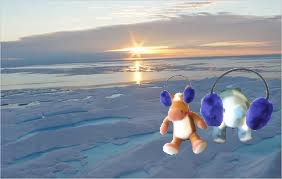
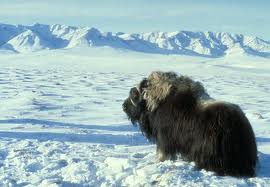
Is it chilly outside or is it just us? We’ve traveled up into the cold arctic to find today’s animal! So put on your coats, gloves, scarves and hats and let’s meet this very furry mammal! Snow shoes ready? Come meet…

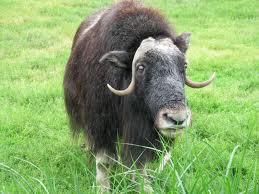
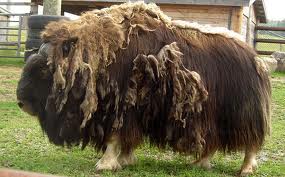
MEET THE MUSK OX!

   Range/Habitat: Northern Canada-Greenland (Arctic)/tundra

   Diet: Herbivore: grasses

   Length/Weight: 6 ¼-7 ½ ft/450-900lbs

   Conservation Status: common


Fun Facts:

  • Musk Ox get their names from their strong odor.
  • They have double coats to keep them warm in the cold arctic. The outer coat protects them from snow and rain. The soft undercoat provides insulation.
  • Musk Ox look larger than they are, because of their thick fur coats.
  • Both female and male musk ox have large, broad, curved horns.
  • Musk Ox are more closely related to goats and sheep than other oxen.
  • They live in herds that are led by a dominant female.
  • Musk ox form circles around their calves when threatened by predators.

Musk ox are large extra furry mammals! You need all that fur to stay warm in the cold arctic winters! They are not animals you want to challenge either, being charged by a musk ox does not look like fun!

Categories: adventure, Animals, Children, conservation, education, Environment, mammals, nature, science, wildlife | Tags: , , , , , , , , , | Leave a comment

MAMMAL MONDAY # 53

MAMMAL MONDAY #53

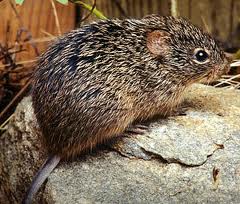
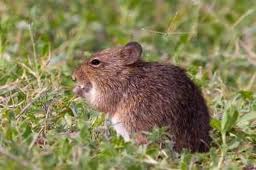
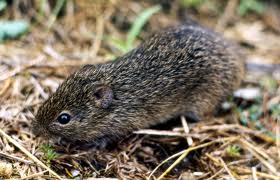
Today we’re going to Southwest America today to meet a teeny tiny mammal! So grab your gear and let’s head out to make a new friend!

MEET THE HISPID COTTON RAT!

   Range/Habitat: Southwest United States-North South America/ mountains,

grassy

    Diet: Omnivore: grub, plants

    Length/Weight: 5-8”/ 3 5/8- 8 oz

    Conservation Status: common


Fun Facts:

  • Hispid Cotton Rats are active day and night
  • They have stiff, coarse fur.
  • Hispid Cotton Rats are solitary.
  • They dig burrows.
  • Hispid Cotton Rats make nests of grass and plants.
  • They are excellent swimmers.

Hispid cotton rats are adorable little members of the rodent family. What do you think? Are you a rodent fan?


Categories: adventure, Animals, Children, conservation, education, Environment, mammals, nature, science, wildlife | Tags: , , , , , , , , , | 1 Comment

SUPER SURPRISE THURSDAY # 52

SUPER SURPRISE THURSDAY #52

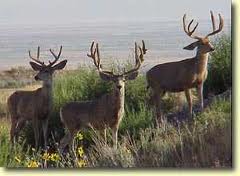
We are so happy to be back on dry land today! We’re going to the Wild West of North America to meet a handsome ungulate. Let’s grab our hiking gear and walking sticks and set out on today’s adventure!

MEET THE MULE DEER!

   Range/Habitat: West North America/ mountains, forests, grasslands

   Diet: Herbivore: plants

   Length/Weight: 2 ¾-7 ft/ 120- 460 ft

   Conservation Status: common


Fun Facts:

  • Mule deer are gray-brown in winter and rusty brown in the summer.
  • Male mule deer have antlers that they shed once a year.
  • Mule deer have black tips on their tales.
  • They are also called the Black Tailed Deer.
  • They have very large ears.
  • Mule deer are related to White tailed deer.

We just love Mule deer! They are majestic looking, especially the males with their large antlers! Do you love deer? What’s your favorite species?


Categories: adventure, Animals, Children, conservation, education, Environment, mammals, nature, science, wildlife | Tags: , , , , , , , , , | Leave a comment

ORANGUTAN AWARENESS DAY!

ORANGUTAN AWARENESS DAY!

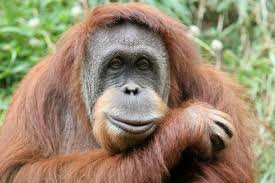
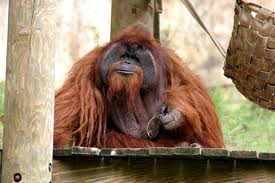
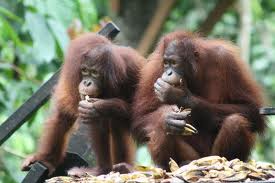
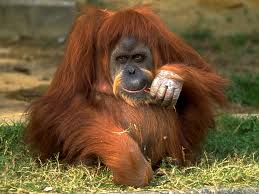
We are sporting orange today and going to the rainforests of Southeast Asia to celebrate one of the most special mammals and great apes on the planet! These amazing apes are gorgeous, intelligent and unfortunately endangered. So today we are going to share some fun facts, photos and resources and how you can help protect these special creatures!


  • Orangutans are great apes.
  • There are two species, the Bornean and the Sumantran.
  • Orangutans are solitary in the wild.
  • Orangutans are arboreal (spend most of their lives in trees.)
  • They are frugivores.
  • Orangutans are highly intelligent.
  • Baby orangutans stay with their mothers for around 8 years, the longest of any primate.
  • Orangutans have extremely long arm spans, up to 7 feet from finger tips to finger tips.
  • Orangutans’ feet are built just like hands and help them climb in the trees.

There are several organizations that are working very hard to ensure that orangutans have a future in the wild. Their rainforest home is rapidly disappearing mainly due to palm oil plantations. Cheyenne Mountain Zoo is one of the leading institutions working to solve this issue. Check out their website!


Categories: adventure, Animals, apes, Children, conservation, education, Environment, mammals, nature, orangutans, rainforests, science, wildlife | Tags: , , , , , , , , , | Leave a comment

MAMMAL MONDAY # 52

MAMMAL MONDAY #52

We’re off to Southeast Asia today to meet a monkey who lives amongst people and in the wild! Are you ready to head out and see who we meet today? Let’s do this!

MEET THE LONG TAILED MACAQUE!

   Range/Habitat: Southeast Asia/ rainforests, urban, coasts

   Diet: Omnivore: fruit, seeds, aquatic animals

   Length/Weight: 14 ½-23”/ 7 ¾- 26 lbs

   Conservation Status: common


Fun Facts:

  • Long tailed Macaques are one of the most common monkeys in Southeast Asia.
  • They live in troops of 5-60 individuals.
  • Long tailed Macaques are also known as the Crab-Eating Macaques.
  • Their tails are as long as their bodies.
  • Long tailed macaques often live in areas that are populated with people.
  • They use tools such as stones to open nuts and oysters.

Long tailed Macaques are so cool. People and monkeys often live together, but the monkeys can be a nuisance. It is important that we remember; feeding wild animals can be bad for them as they learn that humans are not dangerous or that human food is better than their natural diet.

Categories: adventure, Animals, Children, conservation, education, entertainment, mammals, nature, science, wildlife | Tags: , , , , , , , , , | Leave a comment

Blog at WordPress.com.