oceans

Stars of the Sea

Stars of the Sea

We have met sea stars before, but we wanted to learn more about these amazing echinoderms at camp today!

F74D49AE-1A5B-4570-B0AE-FBB36923AC01


SEA STAR FUN FACTS: 

  • There are around 2,000 species of sea stars.
  • Some species live up to 35 years.
  • They have no brains or blood. They use water throughout their vascular system. The water also helps them move their tube feet.
  • Sea stars do have simple eyes that see light and dark.
  • Sea stars have little plates of calcium carbonate to help protect them
  • These carnivores push their stomachs outside their mouths and digest their food before pulling the stomach back in the body.
  • Each arm of the sea star has around 15,000 tube feet. These feet secret a glue like substance to help them attach to rocks.
  • Some sea stars- like the sun star, can have up to 50 arms and weigh 11 lbs.
  • Like their relatives the brittle stars, they can regenerate arms.

B711A1A4-D19E-4482-84B4-A93C7858CE43

We love sea stars! They come in all sizes and colors- like pink, purple and blue! Do you have a favorite color sea star?

Categories: adventure, Animals, camp, Children, conservation, education, endangered species, Environment, nature, oceans, science, sea stars, Today's Post, wildlife | Tags: , , , , , , , , , , , , | Leave a comment

Don’t Eat that Cucumber

Don’t Eat that Cucumber

Who’s excited to meet today’s echinoderm? It’s a pretty crazy looking one! Let’s meet the sea cucumber!

A68F45B2-4AAA-4D9C-ACEA-F2F7493CDBBB


SEA CUCUMBER FUN FACTS:

  • Sea cucumbers have tentacles around their mouths. They use those to grab small waste materials or tiny animals in the oceans.
  •  Sea cucumbers can discharge a sticky substance to ward off predators. They can also expel their internal organs to deter a predator. Don’t worry They regenerate those.
  • They have no faces or eyes.
  • Sea cucumbers take in water through their bum to extract oxygen using respiratory trees.
  • They also poop calcium carbonate, a building material for coral.
  • These not too exciting animals are important for breaking down too much organic material in the ocean floor. They are often called nature’s vacuum cleaners.

CE98EA8F-B34F-4812-9350-83A4F28FA4DC

While they don’t look like much and really they aren’t much more that a tubular eating & pooping machine, they are one of the oceans’ under appreciated animals.


Categories: adventure, Animals, camp, Children, conservation, education, endangered species, Environment, nature, oceans, science, Today's Post, wildlife | Tags: , , , , , , , , , , , | Leave a comment

Brittle Star

Brittle Star

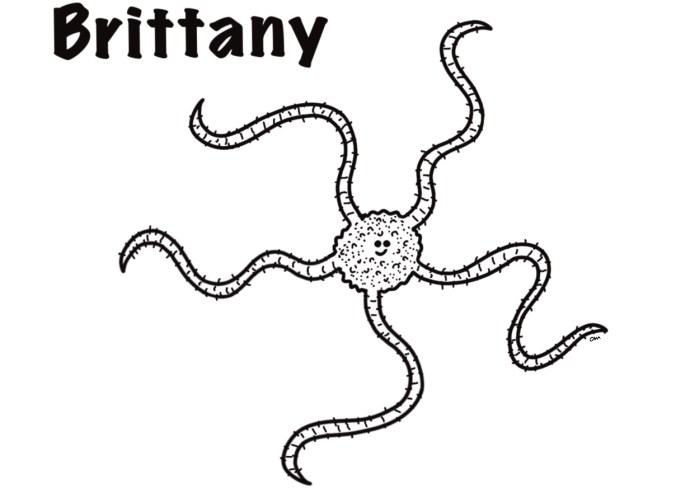
Welcome back campers! We hope everyone had a great holiday off! We’re back at Camp E&E by the Sea to meet some of our echinoderm friends. Today we are meeting Brittany the brittle star.

9F5BD36C-E50C-4816-8789-E518E58EC1C4

BRITTLE STAR FUN FACTS: 

  • These echinoderms are related to sea stars, but are not sea stars.
  • They are carnivores, that eat plankton and small crustaceans.
  • Brittle stars are found in the oceans all around the world from tide pools to the deep oceans.
  • There are 2,000 species of brittle stars in the ocean.
  • Brittle stars have a central disk that contains their mouth, which has 5 jaws.
  • Brittle stars have small spines on their arms.
  • Like their relatives, the sea stars- they can lose a limb and regenerate it.
  • They use their spiny arms and not tube feet to move.


1E9D6848-6B5F-4BA4-A159-C0D1FC3A07A6


We love brittle stars. They are so cool looking! Maybe we should make some out of clay? Anyone up for that?

Categories: adventure, Animals, camp, Children, conservation, education, Environment, nature, oceans, science, Today's Post, wildlife | Tags: , , , , , , , , , , , | Leave a comment

Happy Holidays!

Happy Holidays!

BAA46BAE-A8EC-431A-8E4E-2C1F370CE955


We’re taking the week off for the holiday! We’ll be back next week to meet some echinoderm friends! See you then!

Categories: adventure, Animals, camp, Children, conservation, Environment, nature, oceans, science, Today's Post, wildlife | Tags: , , , , , , | Leave a comment

We Spy What Cephalopod

We Spy What Cephalopod

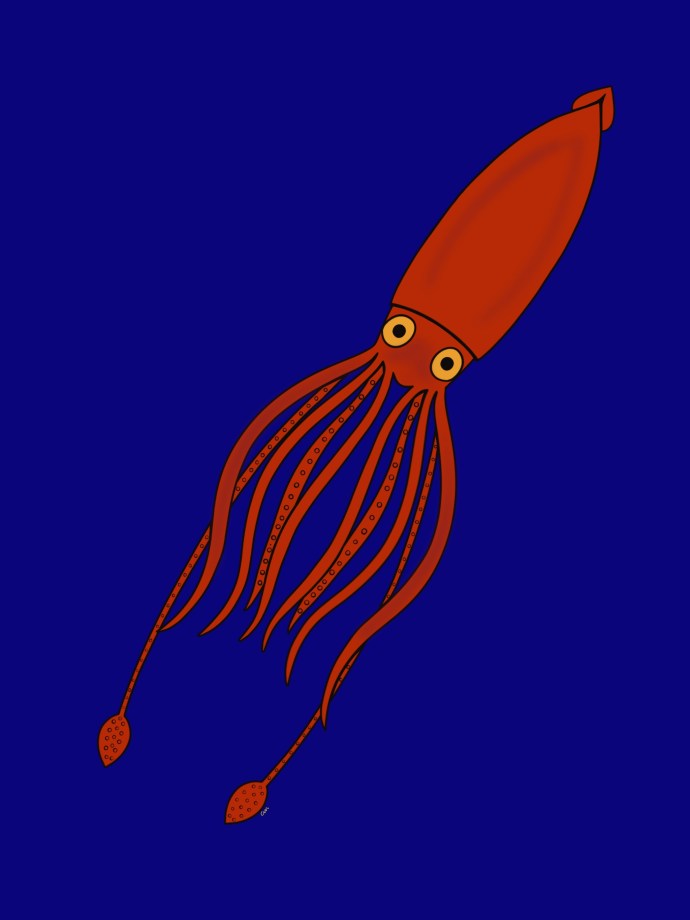
We are giving you some clues to see if you can guess the cephalopod we are meeting today!

  • We spy a cephalopod who calls the deep ocean its home.
  • We spy a cephalopod that is rarely seen.
  • We spy a cephalopod with 40 ft arms.
  • We spy a cephalopod who has the longest tentacles of any cephalopod species.
  • We spy a cephalopod who has the largest eyes of any animal in the world.
  • We spy a cephalopod who is well known in stories and literature.


Can you guess who we spy?

Scroll down to see the answer.


It’s the Giant Squid!

F2ABAC2C-619F-4178-9EAE-37784C1933D1

Categories: adventure, Animals, camp, Children, conservation, education, Environment, nature, oceans, science, Today's Post, wildlife | Tags: , , , , , , , , , , , | Leave a comment

One Weird Cephalopod

One Weird Cephalopod

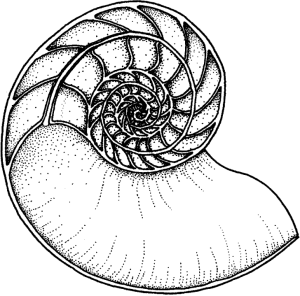
We are meeting a strange cephalopod today. It’s not an octopus or a squid or a cuttlefish! This animal actually has a hard outer shell. Any guess on who we are meeting?


78E55A3D-D820-48F0-BAD5-3B917955737F

NAUTILUS FUN FACTS: 

  • There are 6 species of nautilus.
  • Unlike their cephalopod relatives who only live 1-2 years; nautilus live up to 15 years.
  • Nautilus have chambers in their shells. They are born with 4 chambers and grow more as they get older.
  • These chambers also help them with buoyancy. They can allow water in or out to go up and down in the ocean.

B9D57501-9467-4737-A51B-EA279307450F

  • Nautiluses use a siphon tube near their eye to expel water to propel themselves in the water.
  • They do not have arms- they have cirri or cirrus (the plural form). They can have up to 90 cirrus.
  • These carnivores use those cirrus to grab prey like crab and fish.
  • They have poor eyesight, but an excellent sense of smell.


How cool are these cephalopods? They look like aliens if you ask us! What’s your favorite thing about these ocean going aliens.

Categories: adventure, Animals, camp, Children, conservation, education, Environment, nature, oceans, science, Today's Post, wildlife | Tags: , , , , , , , , , | Leave a comment

There’s an Octopus in Your Coconut

There’s an Octopus in Your Coconut

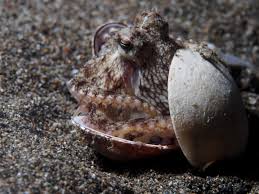
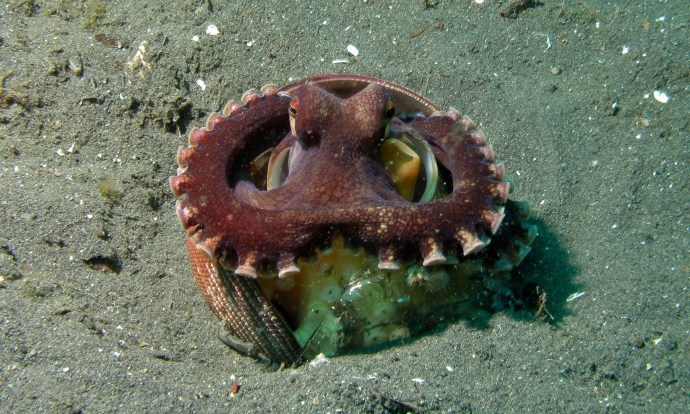
We’re meeting a neat little octopus today during Cephalopod Week! These little invertebrates are called the Coconut Octopus- can you guess why?


FFBE0B86-7D50-46EF-9336-14A4137F23D5


COCONUT FUN FACTS: 

  • These octopus are not very big- usually around 6 inches long.
  • They are known to find coconuts and shells and use them to hide in.
  • They are also 1 of 2 species of octopus known to walk (yes- walk on the ocean floor) with 2 arms (bipedal). This happens when the octopus uses their other arms to carry their preferred hiding mechanism.
  • Scientists also consider their use of shells and coconuts tool use. They are using them to protect themselves.
  •  These carnivores eat clams, shrimp and crabs.
  • They are listed as Least Concern by the IUCN.

9518E236-1B43-4641-95F3-331E21E985AC


We love these amazing animals. Octopus are known for their intelligence and to learn that some of them are tool users is even cooler.

Categories: adventure, Animals, camp, Children, conservation, education, Environment, nature, oceans, octopus, science, Today's Post, wildlife | Tags: , , , , , , , , , , , , | Leave a comment

Know Your Cephalopods

KNOW YOUR CEPHALOPODS

2E228B4E-3BE1-4D83-B31E-5DAB81E42171

It’s Cephalopod Week here at Camp E&E and all over! We’ll be learning more about our mollusk friends, don’t worry we’ll get back to our Echinoderm friends soon.

CEPHALOPOD FUN FACTS:  

  • Cephalopods are marine mollusks. This means they are related snails and nudibranchs (distantly).
  • Cephalopods include octopus, cuttlefish, nautilus and squid.
  • All cephalopods have a head with eyes, a mantle that holds their organs and beak like mouth. Cephalopods are invertebrates- meaning they have no bones.
  • Cephalopod limbs are attached to their heads.
  • Octopus have 8 arms – yep they are called arms. Their arms are covered in suckers.
  • Cuttlefish and squid have 8 arms and 2 tentacles.
  • Nautilus have many tentacles and have no suckers. They unlike other cephalopods, have an outer shell.
  • Cephalopods only live a year or two, except nautilus who live around 15 years.
  • Cephalopods can change the color and texture of their skin to camouflage with their environment.
  • Cephalopods have been around for about 500 million years.
Categories: adventure, Animals, Children, conservation, education, Environment, nature, oceans, science, Today's Post, wildlife | Tags: , , , , , , , , , , | Leave a comment

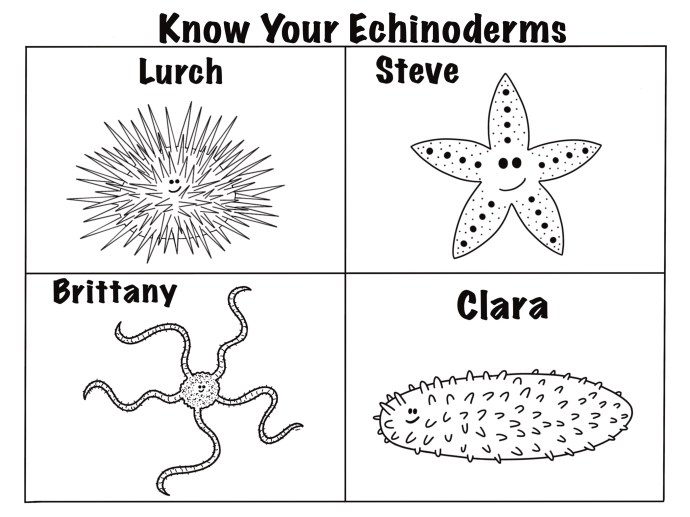
Know Your Echinoderms

CB62F432-51CF-4AF6-971D-028E41135961

Echinoderm Fun Facts: 

  • Echinoderms include sea stars, brittle and basket stars, sea urchins and sand dollars and sea cucumbers. 
  • They have been around for around 500 million years.
  • Their name comes from Greek and means urchin and skin. They all have spines- some larger and sharper than others.
  • Most Echinoderms have radial symmetry- body parts are arranged around a central point. 
  • Echinoderms do not have blood- they use water to circulate throughout their body. Water also helps them move their tube feet which they use for locomotion. 
  • Some Echinoderms can regenerate their body parts. Sea stars are known for regrowing arms. 

We’ll meet some neat Echinoderms this summer at camp? Do you have a favorite? We love sea stars and sand dollars in particular. 

Categories: adventure, Animals, camp, Children, conservation, education, Environment, nature, oceans, science, sea stars, Today's Post, wildlife | Tags: , , , , , , , , , , , , , | Leave a comment

Meet a Hog?

Meet a Hog?

We’re back on the Camp E&E boat today to meet some other fish! We may even done our snorkeling gear tomorrow! Today we’re saying hello to a species that is named after another farm animal- but this time they are named after a hog!


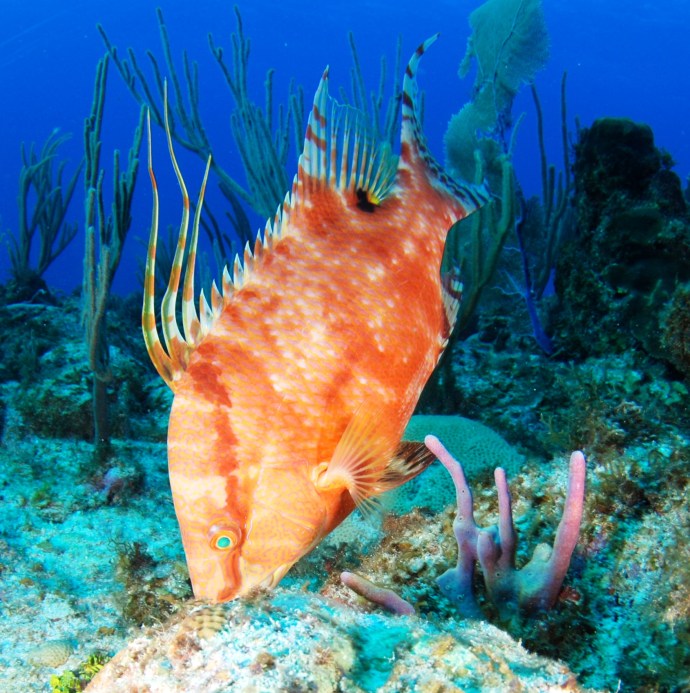
Meet the Hogfish

60F7ADB7-3CC5-405D-AA1C-AB33112E4B9F

FUN FACTS:

  • Hogfish have long snouts that they use to root around the ocean floor looking for prey.
  • They often make a grunting noise when looking for food too. This is where they get their famous name- the hogfish.
  • These carnivores are big fans of crustaceans.
  • Hogfish are Sequential hermaphrodites. That means they change their sex during their lifetime. All hogfish start off as female and change to male as they mature.
  • Males have a large black spot on their behind their pectoral fin and are a bright orange or red. Females are grey or brown.
  • They are members of the wrasse family, but are closely related to parrotfish.
  • These popular recreational fish are listed as Vulnerable by the IUCN. The number of individuals that are fished is controlled to avoid overfishing.


Categories: adventure, Animals, camp, Children, conservation, education, endangered species, Environment, nature, oceans, science, Today's Post, wildlife | Tags: , , , , , , , , , , , | Leave a comment

Blog at WordPress.com.