Posts Tagged With: conservation

SCARY SURPRISE THURSDAY!!

HALLOWEEN WEEK!
SCARY SURPRISE THURSDAY!

This Scary Surprise Thursday takes us Central America to meet an usually large amphibian! These big guys have a very yucky defensive system! Put on your wellies on and let’s in to the wetlands!

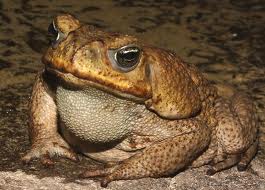
MEET THE MARINE TOAD!
   Range/Habitat: Central-South America/ wetlands, rivers, lakes

   Diet: Carnivore: ants, beetles, invertebrates

   Length: 4-6”

  Conservation Status: common

Fun Facts:

  • Marine toads are also known as cane toads.
  • Marine toads are world’s largest toads.
  • They have a tough warty skin.
  • Marine toads are nocturnal (active at night).
  • They are very hardy and can survive in many different habitats.
  • Marine toads have large glands that secret a very toxic poison.

Marine toads are big bad dudes! They will eat almost anything too! We do think it’s best if we just let them hang out by themselves, you know with their toxic skin and all!

Categories: adventure, amphibians, Animals, Children, conservation, education, Environment, nature, science, wildlife | Tags: , , , , , , , , , | Leave a comment

WEIRD WATERY WEDNESDAY!!!

HALLOWEEN WEEK!

WEIRD WATERY WEDNESDAY!

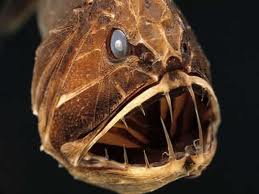
We’re taking the E & E sub down to the deep depths of the ocean for this Weird Watery Wednesday! We’re on the lookout for a fish with fangs! Don’t worry they don’t bite and suck blood; they use their large teeth for eating prey! Is everyone ready?

MEET THE FANGTOOTH FISH!

   Range/Habitat: Tropical-temperate Ocean waters worldwide

   Diet: Carnivore: fish

   Length: up to 7”

   Conservation Status: common


Fun Facts:

  • Fangtooth fish are also named the orgefish.
  • Fangtooth live in the deep depths of the ocean.
  • They have large heads and small bodies.
  • Fangtooth fish can eat prey that is almost as large as they are.
  • Fangtooth have the largest teeth of any fish in proportion to their body.
  • Their lower teeth fit into specialized pockets in their skulls when their mouths are closed.


Wow! Fangtooth fish are crazy weird looking! The deep, deep ocean is full of alien looking creatures! Would you love to be a deep sea explorer?


Categories: adventure, Animals, Children, conservation, education, entertainment, fish, nature, oceans, science, wildlife | Tags: , , , , , , , , , | 2 Comments

REALLY SCARY REPTILIAN TUESDAY!

HALLOWEEN WEEK!

REALLY SCARY REPTILIAN TUESDAY!

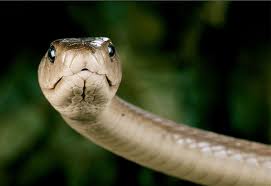
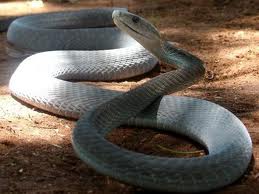
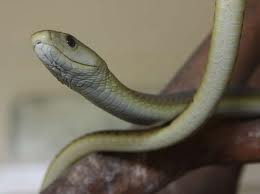
We’re staying in the grasslands of Africa on this Really Scary Reptilian Tuesday to meet one of the most deadly snakes in the world. We’ll be looking for this reptile from the safari truck so everyone stays safe! Are you ready?


MEET THE BLACK MAMBA!

   Range/Habitat: East-South Africa/ forests-grasslands

   Diet: Carnivore: birds, small mammals

   Length: 8 ¼-11 ft

   Conservation Status: common


Fun Facts:

  • Black Mambas are very fast, they can reach speeds of 12 ½ mph.
  • Black mambas are extremely venomous.
  • They are a brown/gray color. They get their name from the color of the inside of their mouths.
  • Black mambas are very territorial.
  • They are diurnal (active during the day).
  • Black mambas can be fatal to humans.

Black mambas are very dangerous and should be watched from a distance for sure! These fast snakes are definitely best left alone!


Categories: adventure, africa, Animals, Children, conservation, education, entertainment, nature, reptiles, science, wildlife | Tags: , , , , , , , , , | 2 Comments

HALLOWEEN WEEK! MONSTOROUS MAMMAL MONDAY!

HALLOWEEN WEEK!

MONSTROUS  MAMMAL MONDAY!

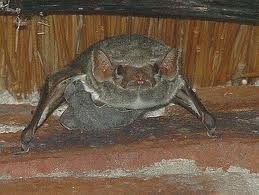
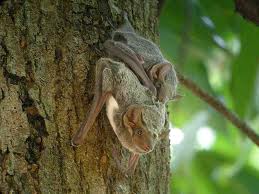
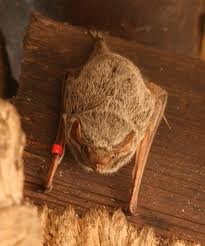
We’re celebrating weird, creepy and feared animals this week as Halloween approaches! These animals haunt your dreams and make you have goose bumps! Ok, these animals are not that bad, but they often have bad reputations! First up we’re off to meet a flying mammal that comes out at night! Grab your night vision goggles and let’s do this!

MEET THE MAURITIAN TOMB BAT!

   Range/Habitat: Central- South Africa/ scrub-savannas

   Diet: Insectivore: insects

   Length/Weight: 2 ¾-3 ½”/ 1 1/16 oz

  Conservation Status: common


Fun Facts:

  • Mauritian Tomb Bats make a variety of vocalizations (not all audible are to humans).
  • They use echolocation to find prey.
  • Mauritian Tomb Bats roosts in trees and buildings.
  • They roost in small groups instead of large colonies.
  • Mauritian Tomb Bats have good eyesight.
  • They are nocturnal (active at night).

Mauritian Tomb Bats are really cool. Well, all bats are really cool if you ask us. Most bats eat insects, some eat fruit and yes there are a few who drink blood! Wow! What’s your favorite thing about bats?

Categories: adventure, Animals, bats, Children, conservation, education, Environment, mammals, nature, rainforests, science, wildlife | Tags: , , , , , , , , , , | Leave a comment

FEATHERY FRIDAY # 49

FEATHERY FRIDAY #49

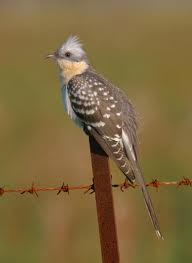
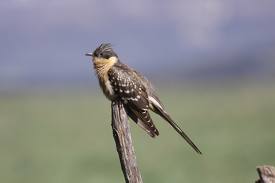
This Friday is full of feathers as usual and we’re going to meet our bird friend in Europe! These birds are very colorful. Let’s get our binoculars and practice our bird watching skills.


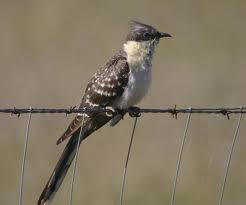
MEET THE GREATER SPOTTED CUCKOO!

   Range/Habitat: Europe-West Asia-Africa/ woodlands

   Diet: Insectivore: insects, caterpillars

   Length/Weight: 14-15 ½”

   Conservation Status: common


Fun Facts:

  • Greater spotted cuckoos are related to roadrunners.
  • They have a small crest of gray feathers on their head.
  • Greater spotted cuckoos will remove the venomous hairs off caterpillars before they eat them.
  • They lay their eggs in other bird’s nests, like crows, with the crow’s eggs.
  • The crows then raise the Greater Spotted Cuckoo’s chicks.

These interesting birds use a very unusual method of raising their offspring. Instead of raising themselves they have another bird do it for them! Wow! Pretty crazy!


Categories: adventure, Animals, birds, Children, conservation, education, Environment, nature, rivers, wildlife | Tags: , , , , , , , , , | Leave a comment

SUPER SURPRISE THURSDAY # 49

SUPER SURPRISE THURSDAY #49

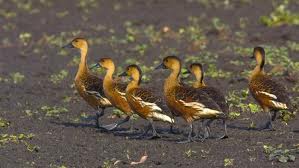
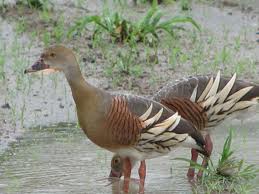
It’s off to the land down under today to find a gorgeous bird who lives near water.  Do you have your hiking shoes and a snack? All right, then let’s head out!

MEET THE PLUMED WHISTLING DUCK!

   Range/Habitat: Northeast Australia/ wetlands, lakes

   Diet: Herbivore: grasses

   Length/Weight: 16-23”/ 1-3 ¼ lb

   Conservation Status: common

Fun Facts:

  • Plumed Whistling Ducks have long legs and large webbed feet.
  • They mate for life.
  • Plumed Whistling Ducks mostly feed on grass on land.
  • They have upward pointed feathers on their sides.
  • Plumed Whistling Ducks have orange and black mottled beaks.
  • Both male and female plumed whistling ducks raise the chicks.

We really love these ducks fancy feathers! It makes them look so funny! Edmond would love to share a nice field of grass with these cute little fowl!

Categories: adventure, Animals, birds, Children, conservation, education, Environment, nature, science, wildlife | Tags: , , , , , , , , , | 2 Comments

WATERY WEDNESDAY # 49

WATERY WENESDAY # 49

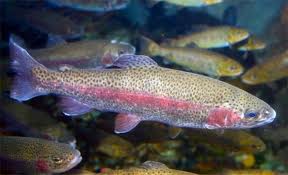
We’re going to the Northwest U.S. today to meet a freshwater and ocean going fish! That’s right folks; there are fish who spend part of their lives in both habitats! You ready?

MEET THE RAINBOW TROUT!


   Range/Habitat: Northern Pacific/ North America

   Diet: Carnivore: insects, fish, snails

   Length/Weight: up to 4 ft/ up to 53 lbs

  Conservation Status: common


Fun Facts:

  • Rainbow trout are members of the salmon family.
  • Some rainbow trout are called steelheads.
  • Steelhead rainbow trout live their adult lives in the ocean, but spawn in freshwater habitats.
  • Some rainbow trout spend their whole lives in freshwater habitats.
  • Rainbow trout are blue green with yellow and a pink streak down their side.

Rainbow trout are really colorful fish! They have been introduced around the U.S. and now are a popular sporting fish.


Categories: adventure, Animals, Children, conservation, education, Environment, fish, nature, oceans, rivers, science, wildlife | Tags: , , , , , , , , , , | Leave a comment

MYSTERY FISH EYEBALL!

MYSTERY EYEBALL!

Last week beachcombers found a giant eyeball in Florida! Scientists have figured out that it belong to a swordfish! We met those guys a few weeks ago! Come check out the eyeball story and our SUPER SURPRISE THURSDAY adventure where we met these magnificent fish! Woohoo!

Categories: adventure, Animals, education, Environment, fish, nature, oceans, wildlife | Tags: , , , , , , , , | Leave a comment

REPTILIAN TUESDAY # 49

REPTILIAN TUESDAY #49

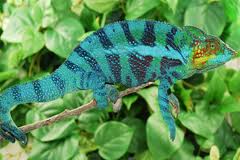
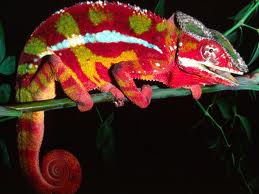
We’re jetting off to the island of Madagascar today to find one of their many species of chameleons! They may be using their camouflage super powers, so we will have to use our expert observation skills! You ready? Let’s do this!

MEET THE PANTHER CHAMELEONS!


   Range/Habitat: Madagascar/ rainforests

   Diet: Carnivore: insects, small animals

   Length: 16-20”

  Conservation Status: common


Fun Facts:

  • Male Panther Chameleons are the most colorful of all chameleons.
  • They can change color to blend in with their habitat.
  • Male Panther Chameleons also change their colors to attract females.
  • Each Panther Chameleon eye moves independently of each other. They can point them in two different directions at the same time!
  • They have long sticky tongues that they use to capture their prey!
  • Panther Chameleon tongues can be longer than their bodies!
  • They are slow movers.

Panther Chameleons are gorgeous with their bright colors. Did you know that even a blind chameleon could still blend in with its habitat? Cool, huh? We just love chameleons; how about you?


Categories: adventure, Animals, Children, conservation, education, Environment, rainforests, reptiles, science, wildlife | Tags: , , , , , , , , , | Leave a comment

MAMMAL MONDAY # 49

MAMMAL MONDAY #49

Pack your bags, because we’re going to South America today to find a resident of the rainforest! Keep your binoculars and tree climbing gear ready because this primate lives in the trees. Let’s head out on today’s animal adventure!

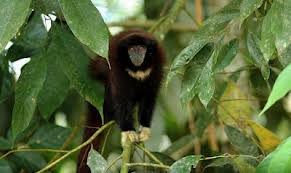
MEET THE YELLOW-HANDED TITI MONKEY!

   Range/Habitat: Northwest South America/ rainforest

   Diet: Omnivore: fruit, seeds, insects

   Length/Weight: 12-18”/ 2 ¼- 3 ¼ lbs

   Conservation Status: common


Fun Facts:

  • Yellow-handed titi monkeys have stocky bodies covered with thick black fur.
  • They have a white fur collar around their neck and bright yellow hands.
  • Yellow-handed titi monkeys have long bushy tails.
  • They are arboreal.
  • They live in small family groups.
  • Yellow-handed titi monkeys pair bond for life.
  • Male yellow-handed titi monkeys help carry the young.

These fluffy little glove wearing monkeys are so cute! Ok, they don’t really wear gloves, but their little yellow hands are great!

Categories: adventure, Animals, Children, conservation, education, Environment, mammals, nature, rainforests, science, wildlife | Tags: , , , , , , , , , | 1 Comment

Blog at WordPress.com.