Posts Tagged With: education blog

Walking Fish

Walking Fish

We are so excited to be back snorkeling with our campers after shark week! Chompy will be back later next week! Today we are meeting a strange but super cool fish today. And yes is it known to walk and not swim!

Longnose batfish on Bari Reef, Bonaire


Longnosed Batfish Fun Facts: 

  • Longnosed batfish can grow up to 12 inches long.
  • These crazy looking creatures use their side fins to “walk” along the sand floor.
  • They lay in wait for prey to swim by. They can can detect prey with the small antennae on their head.
  • They can range in color from yellowish to purple with small spots. They have red-orange lips.’
  • They are carnivores that eat fish, crustaceans and shellfish.
  • They are in the same family as of the anglerfish.
  • They are listed as Least Concern by the IUCN.

2D766DAB-EDB7-477B-96A5-2C56234121A3

These strange and amazing creatures have filled a nook in the environment that other fish have not. They prey on animals at the bottom. While most fish swim higher in the water column, batfish “walk” along the floor. It’s an amazing adaptation if you ask us! Think batfish celebrate Halloween?
Categories: adventure, Animals, camp, Children, conservation, education, Environment, fish, nature, oceans, science, Today's Post, wildlife | Tags: , , , , , , , , , , , | 1 Comment

Chompy on Chompers!

Chompy on Chompers!

Chompy is back to talk about shark teeth! Shark teeth are one cool adaptation these fish have!

Categories: adventure, Animals, Children, conservation, education, Environment, fish, nature, oceans, science, sharks, Today's Post, wildlife | Tags: , , , , , , , , , , , | 1 Comment

Eight is Great!

Eight is Great!

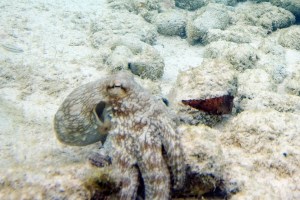
We were so excited to spot today’s animal at camp while on a snorkeling trip! It’s always amazing to see new species (new to us) and today we are meeting the commons octopus.

27DDF23D-92F3-42D6-BEE7-BF83B546A214

Common Octopus Fun Facts: 

  • Common octopus can grow up to 4 feet long and weigh around 22 lbs.
  • These carnivores eat mollusks, crabs and other shellfish.
  • They have venomous saliva to help subdue any prey.
  • They have some of the most amazing camouflage techniques in the animal world. They can change their color and texture instantly to blend in with their surroundings. They have special cells in their skin and muscles that help them do so.
  • The common octopus can also release ink to avoid predators.
  • They are most active at dusk and dawn.
  • Common octopus are highly intelligent and are known to raid lobster traps and open jars in aquariums.
  • Octopus are able to absorb water through their gills and their skin!

We looooove all cephalopods and it is always fun to share more about them with our campers! Do you love them as much as us?

Categories: adventure, Animals, camp, Children, conservation, education, Environment, nature, oceans, octopus, science, Today's Post, wildlife | Tags: , , , , , , , , , , , , | 1 Comment

Playing the Fiddle with a Crab

Playing the Fiddle with a Crab

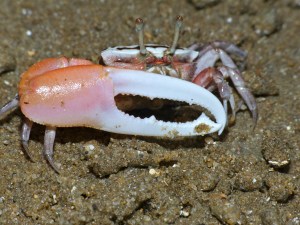
We met a funny creature while looking for shells on the beach. We met the fiddler crab. And disappointling he was not playing a fiddle. They are cool either way!

P1300707

Fiddler Crab Fun Facts: 

  • These little crabs are related to ghost crabs.
  • Fiddler crabs change color, the are darker in the day and lighter at night.
  • Male fiddler crabs have one large claw.
  • They use that large claw to communicate with other crabs. They also use it for mating rituals.
  • They molt their exoskeleton when they grow. If they lose a limb, it will regrow during the molt.
  • They eat decomposing animal and plant matter.

P1300720

We love meeting new friends. These funny little crabs with their one large claw crack us up. They look like they are waving. Now if they could only really play the fiddle.


Categories: adventure, Animals, camp, Children, conservation, education, Environment, nature, oceans, science, Today's Post, wildlife | Tags: , , , , , , , , , | 1 Comment

Pelican Pelican!

Pelican Pelican!

While bird watching on the beach, we spotted some pelicans. This large billed birds were not the brown pelicans we are use to seeing, but the American White Pelican. They were so fun to watch and we couldn’t wait to learn more about them.

index

American White Pelican Fun Facts:

  • White pelicans live near marshes and lakes.
  • These large birds can grow up to 70 inches long and weigh up to 14 lbs. Those famous bills can be 15 inches long.
  • Their wingspan is only 2nd to the California Condor.  Those wings can be 120 long when in flight! That is longer than a queen sized mattress, which measures 80 inches!
  • Males are larger than females.
  • These carnivores eat not only fish, but also bottom dwellers like salamanders and crayfish.
  • They are usually found in large flocks.
  • White pelicans do not dive for their food, but instead scoop it out of the water and drain the water out of their bills.
  • These big birds eat around 4 lbs of food a day!

pelican


We love pelicans! They are so funny and kind of derpy, but graceful too! It was fun to watch some swimming and catching their food that way instead of diving.


Categories: adventure, Animals, birds, camp, Children, conservation, education, Environment, nature, science, Today's Post, wildlife | Tags: , , , , , , , , , , , , | Leave a comment

Strawberry Moon

Strawberry Moon

We have a special post today for you! We made a little video about how the moon affects animal behavior in collaboration with our science partner- Science With My Cat!

Learn some fun animal facts with us and then head on over to their site to find a fun activity about moon phases! YAY for science!

Categories: adventure, Animals, camp, Children, conservation, education, Environment, nature, oceans, science, space, Today's Post, wildlife | Tags: , , , , , , , , , , , , , | 1 Comment

Otters!

Otters!

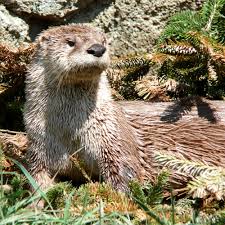
We hanging out on the dock today, ready to meet some otters! Come join us campers as we say to some super cute residents of Lake Salamander!

C720932E-C565-4F78-A4D3-B7125118467C

North American River Otter Fun Facts: 

  • These members of the weasel family can grow up to 31 inches long and weigh up to 30 lbs.
  • Otters love burrows. They live in burrows near the body of water they call home. Often the burrow allows them to directly enter the water too.
  • Otters are predators and carnivores. They eat fish, amphibians and shellfish.
  • They are known for their playful behavior. They love to slide and interact with each other.
  • Even though they play with each other, otters prefer to live in their burrow alone or with offspring while they are young.
  • They have long powerful tails that make up about 40% of their body length. Those tails help propel them through the water.
  • Otters are known to be very vocal.
  • They are listed as Least Concern by the IUCN.


AE632F5C-DF99-487B-92D6-468591AA60D6

We love the otters that call this area home! They often visit us while we are out canoeing on the lake. They are quiet chatty and so much fun!


Categories: adventure, Animals, camp, Children, conservation, education, elephants, Environment, marsupial, nature, science, Today's Post, wildlife | Tags: , , , , , , , , , | 1 Comment

Meet Penny

0BA9430F-15CE-4F37-B4A3-40E2642BFBB8Meet Penny

Hi campers! We are meeting one of our favorite residents of the woods here at Lake Salamander, Penny the Porcupine! She hangs out with us around the campfire at night! She’s great at roasting load of marshmallows at once.


Hi Penny! We are so glad you have joined us at camp this year! Can you tell all the campers a little bit about yourself!

I’m happy to tell you all about porcupines!

  • We porcupines are rodents! That’s right, I’m related to squirrels and mice.
  • My back is covered in quills. I can not throw my quills, but if a predator like a wolf tries to attack me- I can release my quills.
  • I have around 30,000 quills!
  • My quills are made of keratin, the protein that make up human nails & hair.
  • I am a good climber and a good swimmer.
  • I like to eat a variety of plants, bark, berries and roots.
  • When I was a baby, I was called a porcupette! When we are born our quills are soft. They grow harder in just a few days.

Wow! You porcupines sure are neat! We just love your quills, especially that they are good for roasting marshmallows- hehehe! Thanks for coming!


Categories: adventure, Animals, camp, Children, conservation, education, Environment, mammals, nature, science, Today's Post, wildlife | Tags: , , , , , , , , , | 1 Comment

Not Really Made of Wood

Not Really Made of Wood

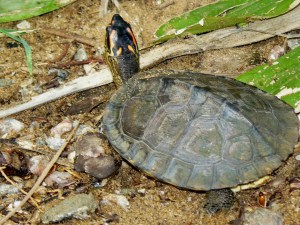
We are meeting a creature that you often find sunning themselves on branches along the shore of Lake Salamander. These reptiles are called Wood Turtles- but guess what, they aren’t made of wood- hehehe.

IMG_5189

Wood Turtle Fun Facts:

  • These little turtles grow up to about 8 inches long.
  • There scutes are slightly domed shaped.
  • These omnivores eat fruit, leaves, insects and worms.
  • Wood turtles thump on the ground with their feet to make earth worms come out of the ground. They then snatch up the worms.
  • They are listed as Endangered by the IUCN.
  • It is thought that their lifespan is over 60 years old.

IMG_5190

These neat little turtles are losing their habitats. That’s why intact and clean habitats like our lake here at camp are so important.


Categories: adventure, Animals, camp, Children, conservation, education, endangered species, Environment, nature, reptiles, science, Today's Post, wildlife | Tags: , , , , , , , , , , , | 2 Comments

We Hear Howling

We Hear Howling

We were sitting around the camp fire last night when heard a howling! We knew immediately that it was the coyotes that call these woods home. We hoped it would be our friend Carla. Sure enough Carla met came down to the camp fire to meet the campers and tell us more about coyotes.

62F70B36-C4C1-4F30-9F2C-85BB39EAF3AD


Hello everyone! We coyotes are so glad to see you hear at camp. I’m going to tell you more about myself and my relatives.

  • We coyotes are members of the canine family.
  • We once roamed only the western plains, but we now call much of the North America our home.
  • The early human settlers of this place, the Native Americans told many legends of my kind. They said we were clever and mischievous.
  • No one ever called us dumb, that’s for sure.
  • We are predators and omnivores. We’ll eat most prey animals including snakes. Don’t worry campers, our diets don’t include you.
  • We coyotes have excellent senses of smell and sight.
  • And man are we fast! We can reach up to 40 mph!
  • I have a litter of cubs who were born this spring. My partner is watching over them. We take care them and protect our territory together.
  • You may think we are nocturnal, but in fact we are active all times of day depending on what animals are in our area. So you may see us during the day or you may hear us howling at night.

We coyotes are often misunderstood, like most predators. We all play our part in the ecosystems of North America. So next time you hear one of us howling, smile and howl back!


Categories: adventure, Animals, camp, Children, conservation, education, Environment, mammals, nature, science, Today's Post, wildlife | Tags: , , , , , , , , , , | 1 Comment

Blog at WordPress.com.