Posts Tagged With: environment

2 o’clock trivia!

Hey everyone! We’re starting a new feature today! We’ll be posting a trivia question everyday at 2 PM EST to our Facebook page: http://www.facebook.com/pages/Ellie-and-Edmond/254090144618348 and our twitter account @ellieandedmond ! Check it out!

Ellie & Edmond

Categories: Animals, Children, education, Environment, nature, science, wildlife | Tags: , , , , , | Leave a comment

MAMMAL MONDAY # 24

MAMMAL MONDAY# 24

Woohoo, it’s Mammal Monday again and we have a little animal with a BIG head! No, they don’t think that they’re the best rodent in the world, the really do have large heads. We’ve got our safari hats on because we’re heading to the grasslands of East Africa! Are you ready?

MEET THE BIG HEADED MOLE RAT!

Range/Habitat: East Africa/ grasslands

Diet: Herbivore: roots, plants

Length/Weight: 12”/ 13-36 oz

Conservation Status: Endangered


Fun Facts:

  • Big Headed Mole Rats have blunt round heads.
  • They have small eyes and ears.
  • Big headed mole rats burrow underground.
  • They dig burrows that can be up to 165 ft long and they often share it with at least one other mole rat.
  • Big headed mole rats have large orange yellow teeth.
  • They forage for food above ground.


These rodents are kind of funny looking with their large heads and little eyes and ears! They are excellent home builders! Did you know that other animals such as snakes rely on burrowing animals? No, not for food! When an animal such as the Big headed mole rat leaves their burrow for good, other animals will use that burrow for their home! Pretty neat!


Categories: Animals, Children, education, Environment, mammals, nature, science, wildlife | Tags: , , , , , , , | Leave a comment

Our adventure to “Wildlife Rescue”

We’re so glad you could join us for tonight’s episode! We’re heading to Fernbank Museum of Natural History to see their new exhibit “Wildlife Rescue”! That’s right everyone, we learn what it takes to rescue, care for and return animals to their wild habitats! Follow us as we lead you through this wondrous journey!
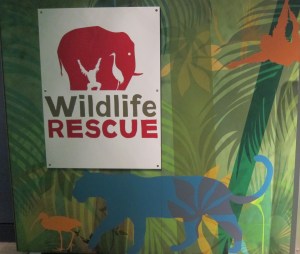
Entrance to Wildlife Rescue

As we first enter the exhibit there are all kinds of amazing things to see. Fun lights, a giant globe and touch screens to learn! Isn’t this place quiet the party?
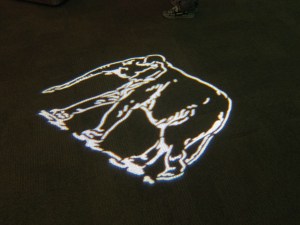
Elephant lights on the floor! Woohoo!
Learn all about endangered animals on this touch screen
Edmond tries out the touch screen

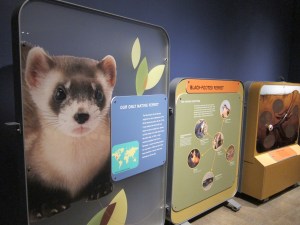
There are several stations where you can learn about animals that are endangered and how people are helping increase their populations.

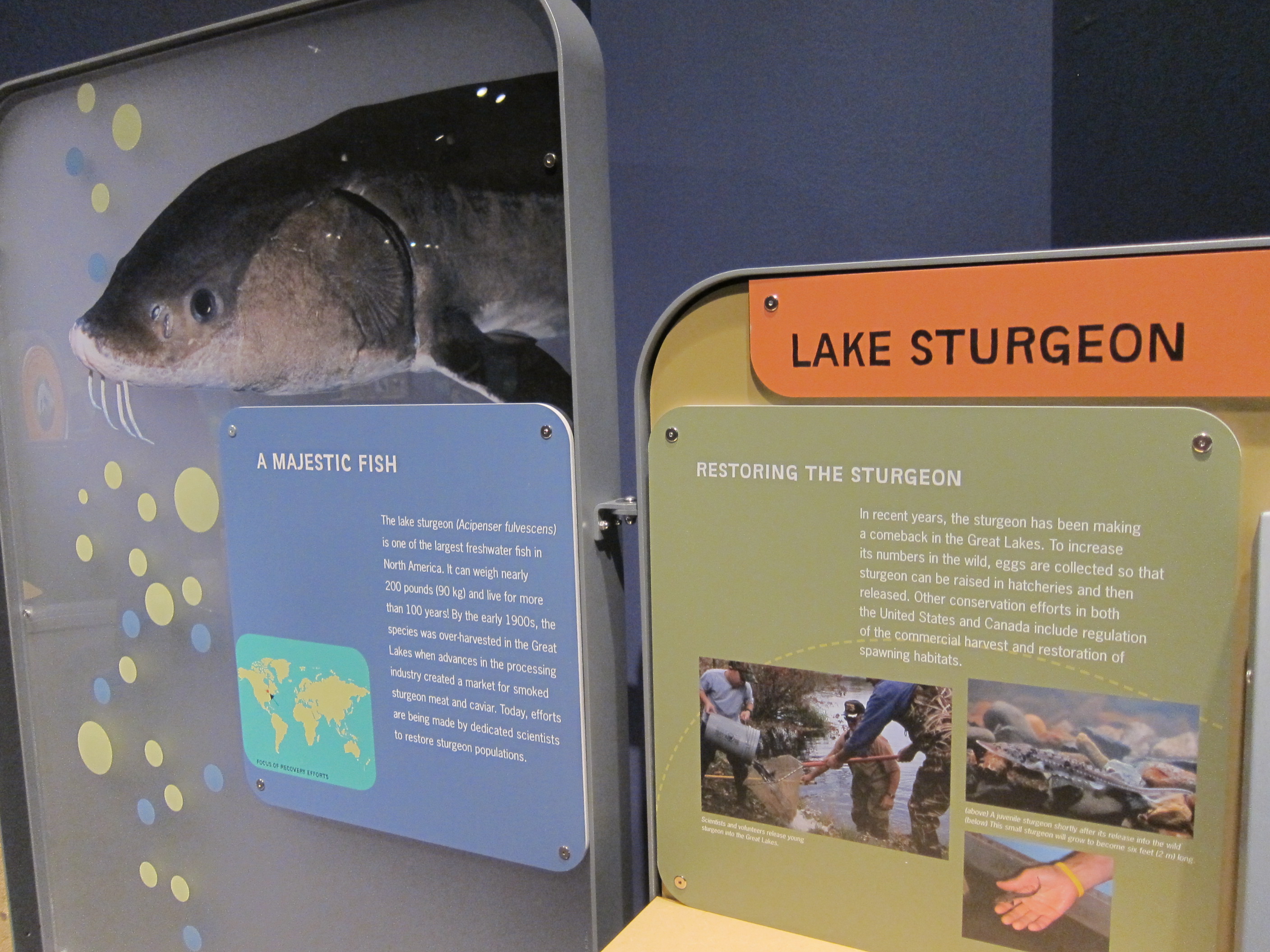
Lake Sturgeon get help from people!
You can learn to track Iberian Lynx!
Black footed ferrets numbers on their way up!

Wow, these people are doing some great things to help animals. Look here, they have a whole station about the California Condor.
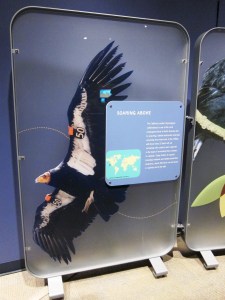
We love California Condors!

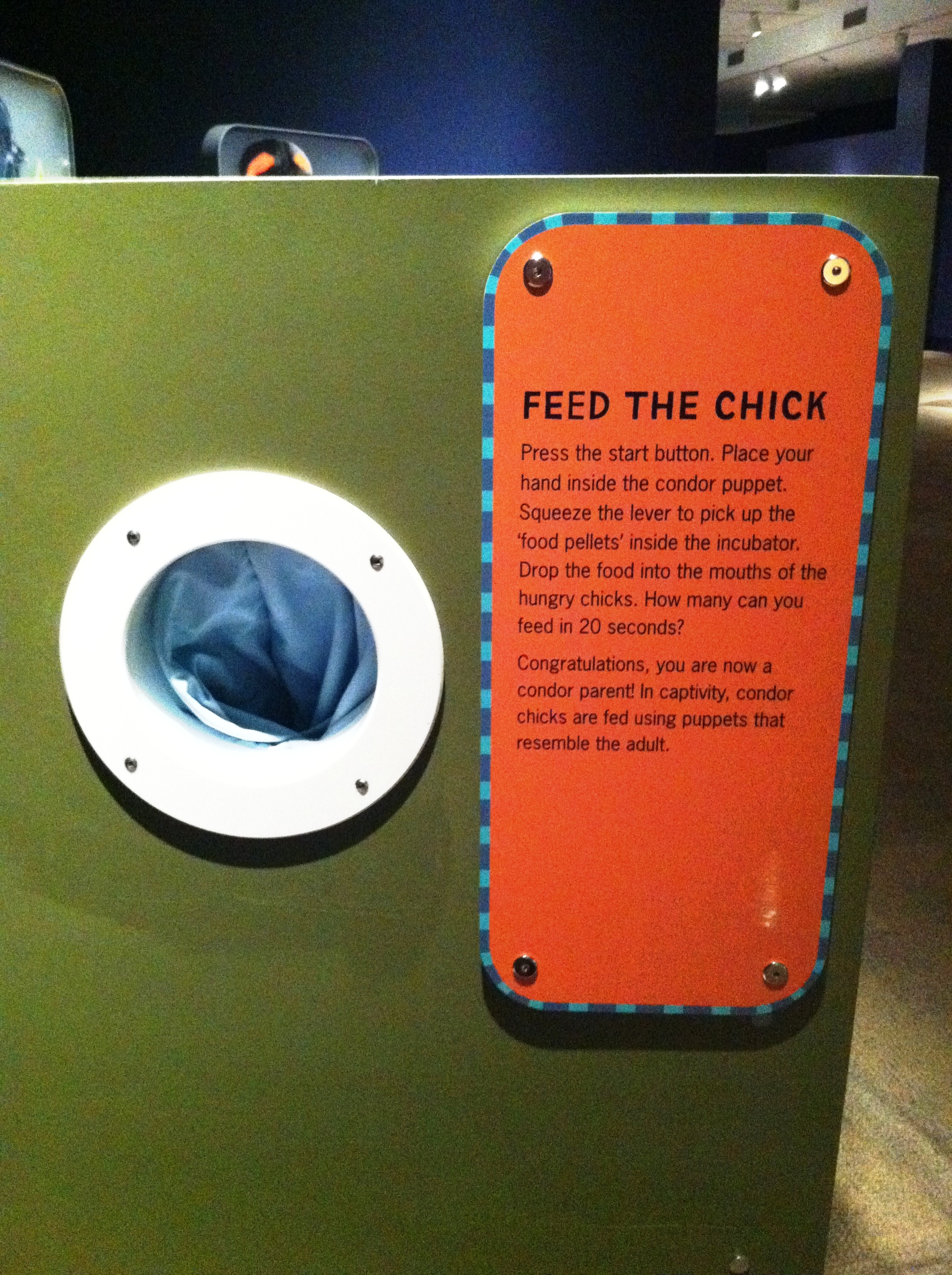
In the 1980s there were only 25 of these birds left and with the help of breading programs there are now 400 Condors. That is great news, but they still need help. Captive breeders feed condor chicks with mom puppets and look here; you can try and feed a chick too!
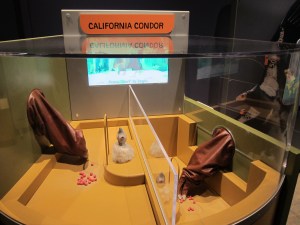
You can use a condor mom puppet and feed the chick!
Feed the condor c

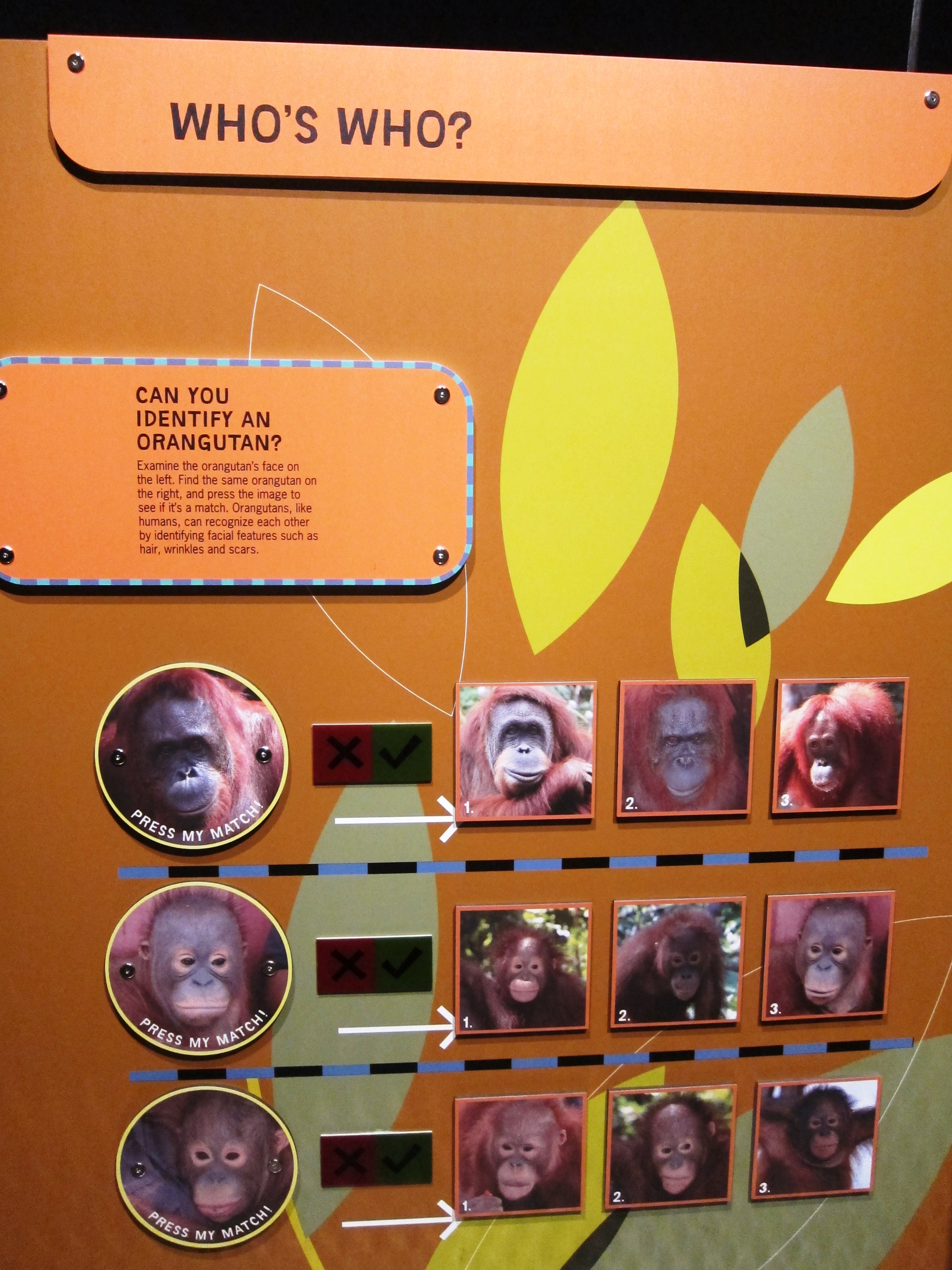
We’re moving on to a fun game called I.D. the orangutan!
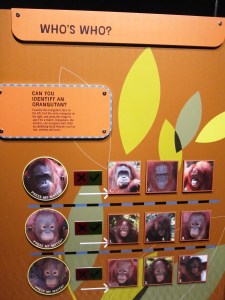
Which orangutan is which?

Make sure you look closely before choosing!

What is this wonderful station we’ve found? It’s all about elephants! Ellie is so excited!
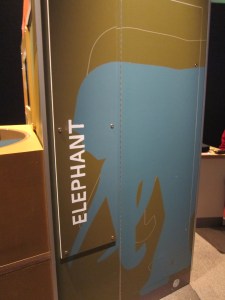
ELEPHANTS!!
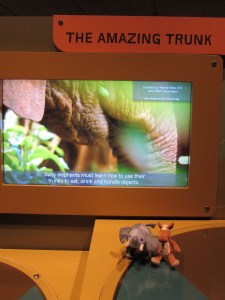
Time to learn all about The Amazing Trunk!

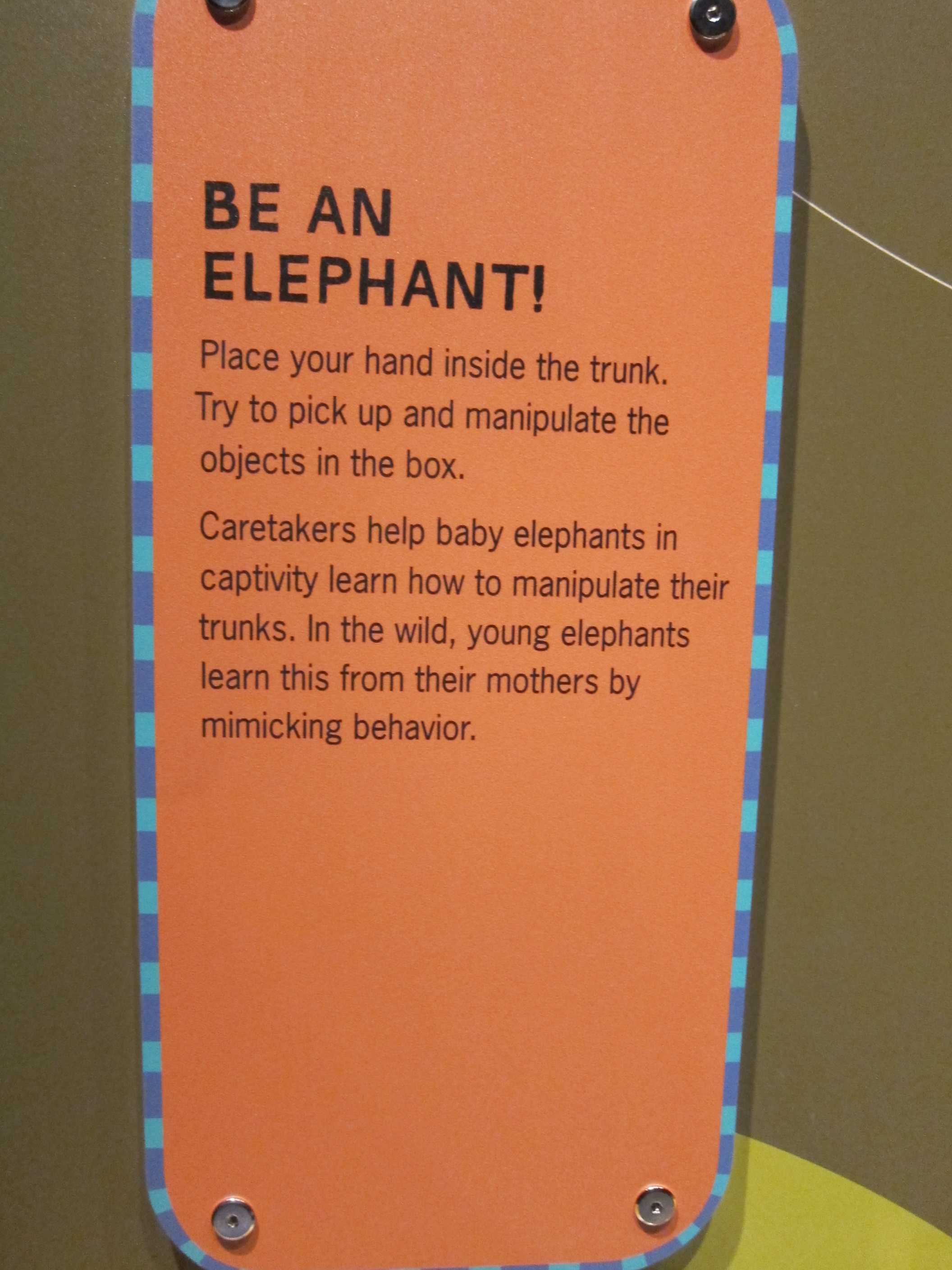
Let’s all learn all about the amazing elephant trunk! Did you know that an elephant trunk has up to 150,000 muscles? Pretty neat! Baby elephants must learn to use their trunks to drink, eat and pick up objects! And did you know that an elephant can pick up a single blade of grass with their trunk? Wow, Ellie never tires of talking trunks! What’s this? YOU CAN BE AN ELEPHANT!! Woohoo!
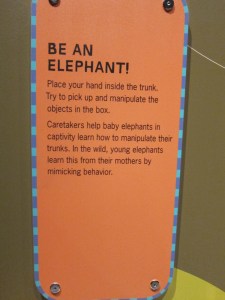
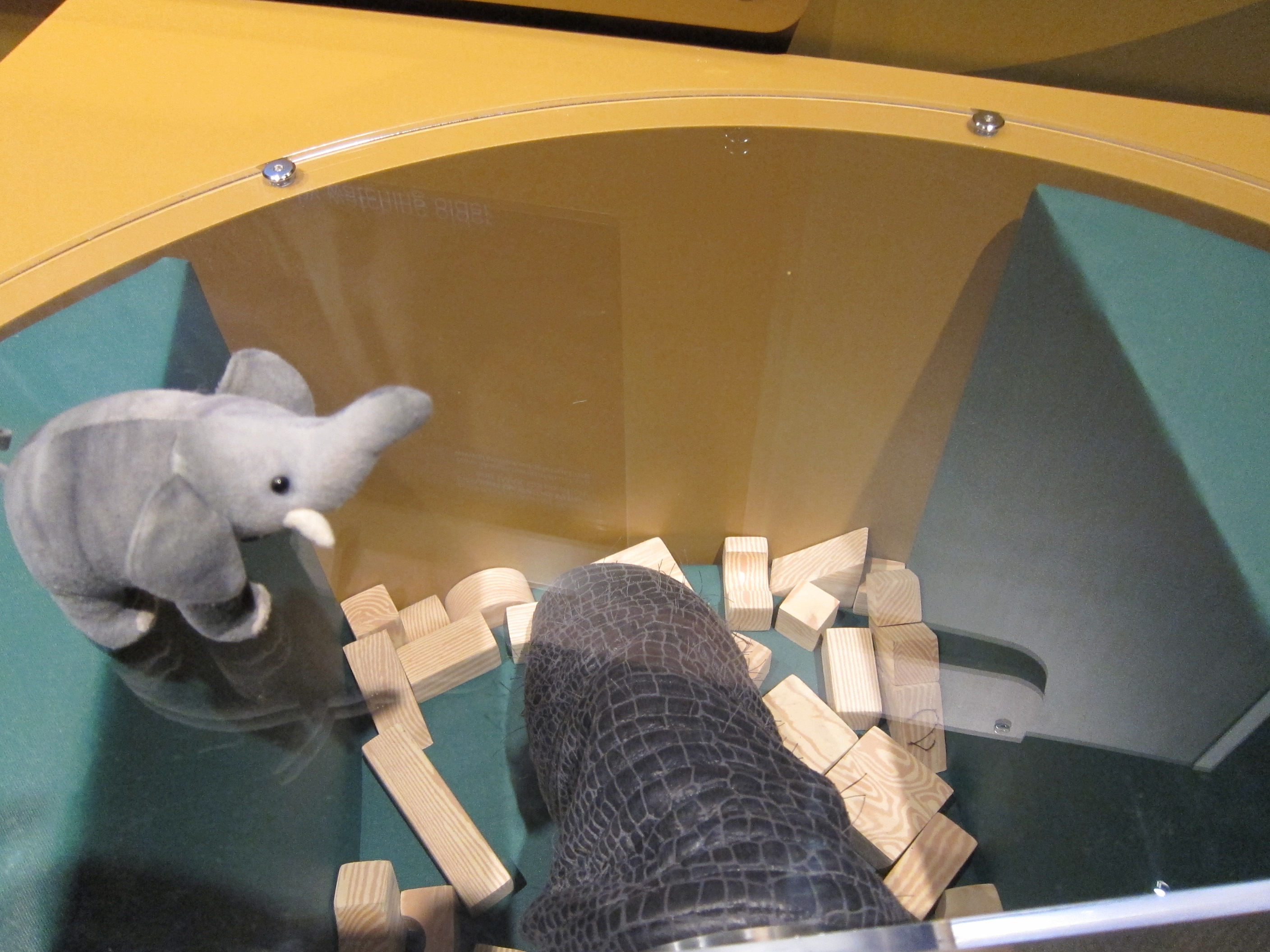
You too can be an elephant! It totally rocks!
Here’s Ellie checking out the trunk game! You can pretend you have a trunk and pick objects up! FUN!

You can play a round of elephant trivia, too! Edmond won!

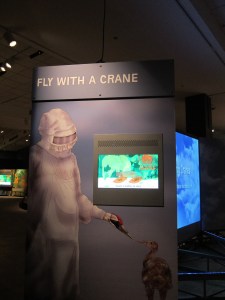
Who’s up for a little flight with whooping cranes? We are! That’s right they have a life sized aircraft right here! Operation Migration is a program that helps whooping cranes learn their migration path. They actually fly these open air planes with the cranes! How cool is that! Check us out in the plane! You can “fly” with the birds!

Here we are on the plane!
Dedicated volunteers teach these birds to fly!
They have a life sized replica of a plane!
Here we are in the pilot’s seat! We’re ready for take off!

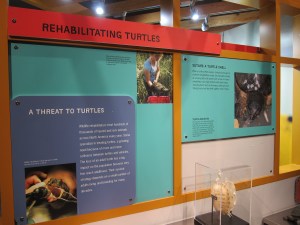
We’ve covered the big animals, but did you know that plenty of small animals get injured and need human help too! We share our habitats with turtles, birds, snakes and mammals. These animals often come across human dangers such as roads.

Here we are at the turtle crossing!

People helping turtles!

Thank goodness there are people who help these animals when they are injured. Fernbank will have some local rehabilitation centers with their animal ambassadors! You’ll get to meet some live animals and here their stories!

This video about orangutan and elephant rehab facilities is fascinating!

Here we are watching people help orphan orangutans and elephants!

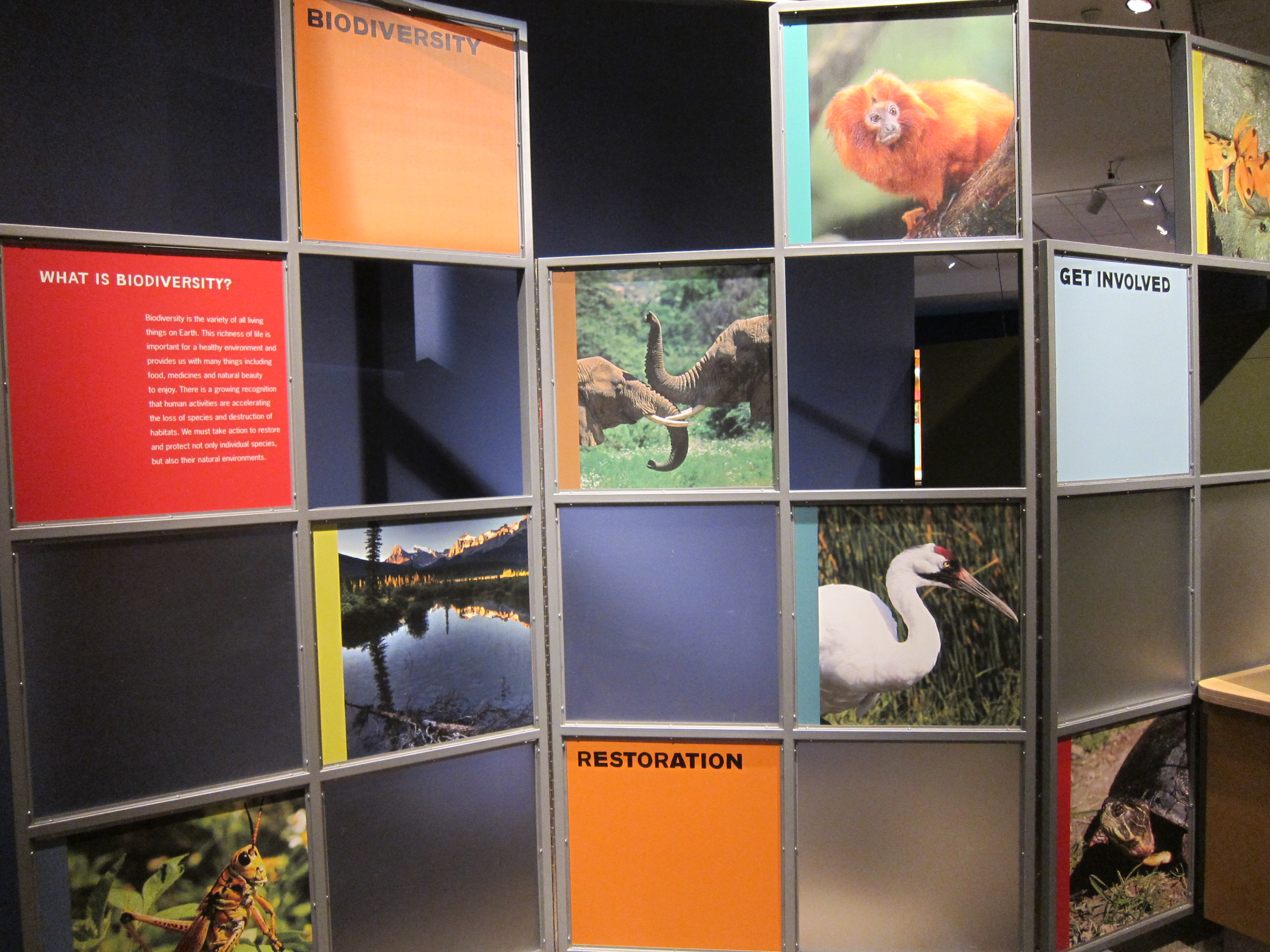
As we head out of the exhibit we get the chance to learn about biodiversity
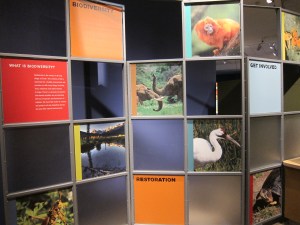
Biodiversity is key!

Biodiversity is the number of different species in a habitat. Biodiversity is very important, because when you have many different types of species in a habitat it means it is healthy.

Biodiversity rocks!

Wow! That was one amazing exhibit and we didn’t even show it all to you! We wanted to save some surprises for you! We’re coming to thr end of tonight’s episode, but not without stopping by the last station where you can learn how to help us and the rest of our animal friends!

Learn how you can help!

In fact, the famous and intelligent chimp researcher Jane Goodall  gave us some great tips; you can volunteer in a habitat clean up, plant a tree or plant a butterfly garden.

They give you a great list of organiztions that you can get involved in!

We hoped you have enjoyed tonight’s episode of Ellie and Edmond to the Rescue!
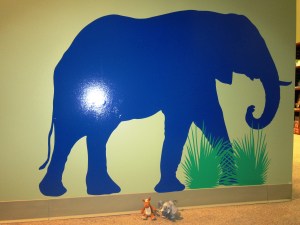
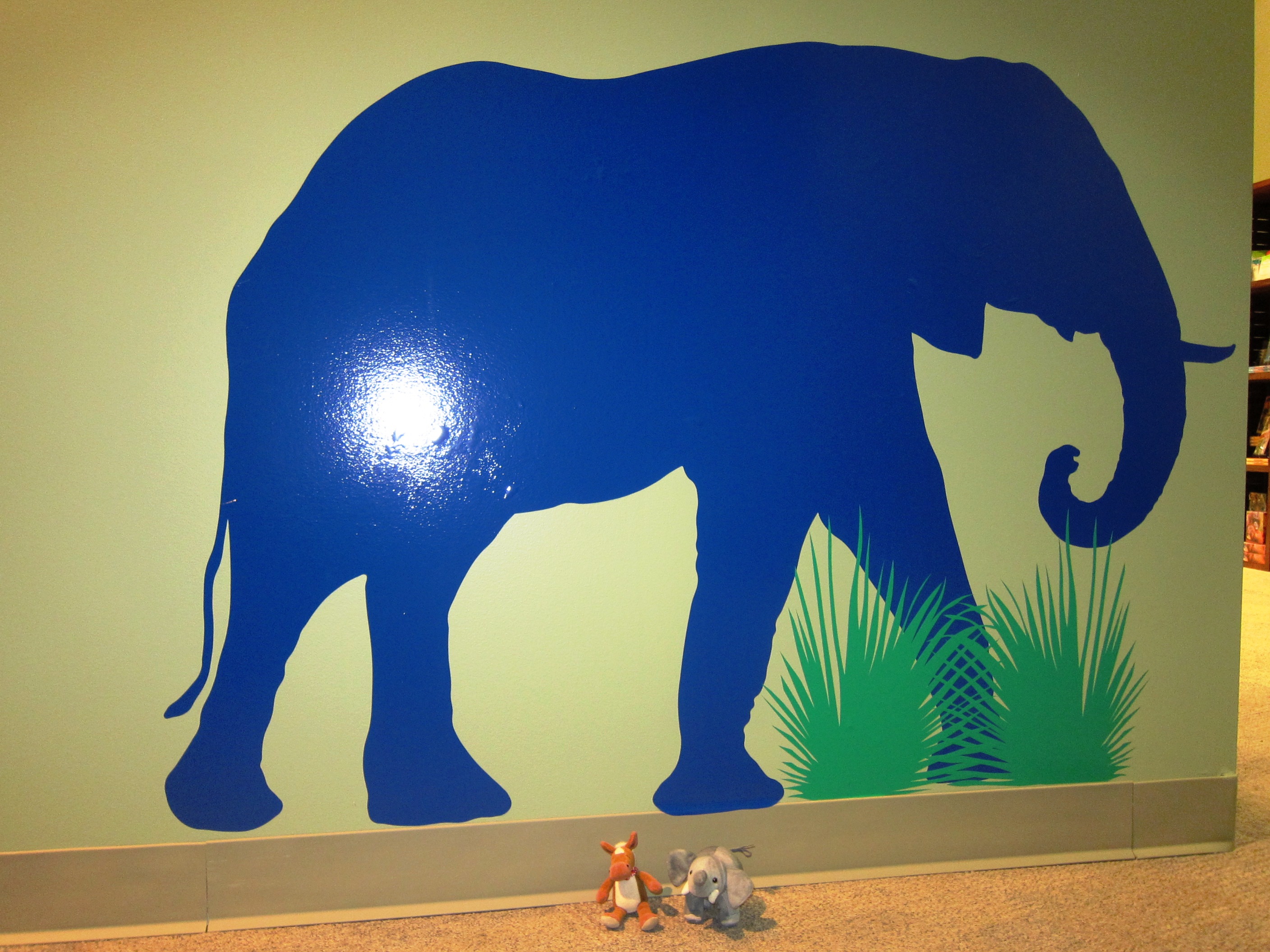
We stopped to pose with this elephant at the end!

The story doesn’t end here; you can continue your adventure by going to see “Wildlife Rescue” at Fernbank Museum of Natural History yourself! It is a GREAT exhibit full of fascinating information, fun activities and animals!

For hours, tickets and more information check out the Fernbank website:

http://www.fernbankmuseum.org/calendar-of-events/wildlife-rescue-opening-weekend-celebration-feb-4/

Fernbank also has an IMAX movie called “Born to Be Wild” that is all about orphan elephants and orangutans! Make sure you check it out while you’re there!

Categories: Animals, Atlanta, Children, education, Environment, Local, nature, science | Tags: , , , , , , , , | 4 Comments

FEATHERY FRIDAY # 23

FEATHERY FRIDAY# 23

Whew! We are exhausted from celebrating Groundhog Day yesterday! But we have enough energy to head to South Africa to meet the cute little insect eating bird that we found for today’s Feathery Friday bird! Are you ready to go? Let’s do this!

MEET THE WHITE FRONTED BEE EATER!

Range/Habitat: Southern Africa/ grasslands

Diet: Insectivore: bees, insects

Length/Weight: 9”/ 1 ¼ oz

Conservation Status: Common


Fun Facts:

  • White Fronted Bee Eaters nest in cliffs or banks.
  • They live in groups known as clans that can have up to 16 birds.
  • Clans of White fronted bee eaters live among a colony of birds that can have up to 500 birds.
  • Each clan of White fronted bee eaters has several breeding pairs of adult birds and related “helper” birds.
  • Helper birds help with the rearing of the chicks.
  • Each clan of White fronted bee eaters is very territorial.

We love these beautiful little birds. How cool is that they live in families and help each other out! That’s why family’s are so great!


Categories: Animals, birds, Children, education, Environment, nature, science | Tags: , , , , , , | Leave a comment

SUPER SURPRISE THURSDAY # 23

SUPER SURPRISE

THURSDAY# 23

We have a special Super Surprise Thursday for you today because it’s holiday! That’s right folks, today it is an animal holiday! HAPPY GROUNDHOG DAY! Every year on February 2nd legend has it that if a groundhog comes out of his burrow and sees his shadow then there will be six more weeks of winter. If he doesn’t see his shadow then spring will come early! Neat! These rodents are pretty cool the rest of year too- so let’s meet them!

MEET THE GROUNDHOG!

Range/Habitat: Alaska-Canada-United States/ grassland-woodland

Diet: Herbivore: seeds, fruits, grasses, occasional insect

Length/Weight: 12-20”/ 6 ½-11lb

Conservation Status: Common


Fun Facts:

  • Groundhogs are also known as the Woodchuck.
  • Groundhogs are rodents and are the largest member of the ground squirrel or marmot family.
  • They are excellent at climbing and swimming.
  • Groundhogs burrow in the ground.
  • They gorge all summer on food to fatten up!
  • Groundhogs hibernate in the winter.
  • They are known to whistle when threatened.

We love groundhogs and not just for their ability to predict the weather! These cool rodents get to hibernate all winter! Who wouldn’t love a long winter’s nap? Groundhogs are also pretty cute if you ask us!

Here’s some more history on Groundhog Day:

http://www.groundhog.org/groundhog-day/history/

We found this fun coloring sheet:

http://0.tqn.com/d/homeschooling/1/0/b/o/groundhogcolor.png

Categories: Animals, Children, education, Environment, groundhog day, mammals, nature | Tags: , , , , , , | Leave a comment

WATERY WEDNESDAY # 23

WATERY WEDNESDAY# 23

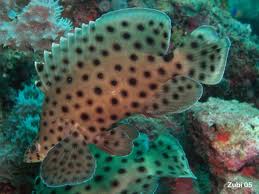
Animals come with so many fun patterns! Yesterday’s tortoise had stars on its shell, and today’s fish has spots! Yep, we found a fish with spots for this Watery Wednesday! Let’s get our snorkel gear on and dive in to the coral reefs of the Indo-Pacific oceans!

MEET THE PANTHER FISH!

Range/Habitat: Indo-Pacific Oceans/ coral reefs

Diet: Carnivore: small fish and crustaceans

Length/Weight: up to 28”/ up to 7 lbs

Conservation Status: Vulnerable


Fun Facts:

  • Panther fish are also known as humpback grouper or panther grouper.
  • Panther fish are cream with black spots.
  • They have small heads with a large hump on their backs.
  • Their spots help them camouflage into their surroundings.
  • Panther fish are ambush predators.
  • They are solitary and territorial.


These fish sure are fancy pants with their polka dots! And those dots aren’t just for show, they help them blend in, so predators won’t see them! Ellie wants to know if she gets a polka dot outfit if it will help her camouflage. Edmond says no way!

Categories: Animals, Children, education, Environment, fish, nature | Tags: , , , , , | Leave a comment

REPTILIAN TUESDAY # 23

REPTILIAN TUESDAY # 23

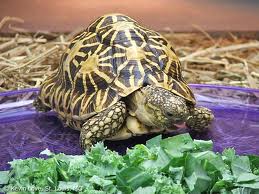
Happy Reptilian Tuesday! We’re excited for you to meet today’s reptile! This special tortoise has a spectacular shell! We have to head all the way to India to find this beauty! Do you have your board pass? Time to go!


MEET THE INDIAN STAR TORTOISE!

Range/Habitat: Southeast Asia-India/scrub-grasslands

Diet: Herbivore: grasses, fruit, flowers

Length: up to 11”

Conservation Status: common- near threatened


Fun Facts:

  • Indian Star Tortoises have raised bumps on their carapaces (top shell).
  • Each scute* is mountain shaped.
  • Each scute has star shaped markings.
  • Indian Star Tortoises’ shells are actually yellow with brown/black covering the yellow.
  • They have a life span from 30-80 years old.

Wow! Aren’t Indian Star Tortoises beautiful? We love their bumpy shells with their star patterns! These tortoises are super stars!


*Here’s a good illustration of a turtle’s shell anatomy!

http://scienceray.com/biology/marine-biology/turtle-anatomy/


Categories: Animals, Children, education, Environment, nature, reptiles | Tags: , , , , , , | 1 Comment

MAMMAL MONDAY # 23

MAMMAL MONDAY# 23

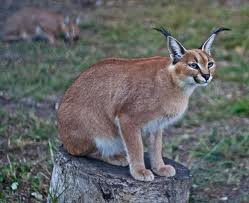
We’re back on our regularly scheduled program today! Happy Mammal Monday and man do we have a neat one today! This mammal lives in the desert, has very large ears and can JUMP! Do you have on your safari outfit, because we’re heading to Africa! Let’s gooooo!

MEET THE CARACAL!

Range/Habitat: Western Central Africa-Middle East/desert-grasslands

Diet: Carnivore: rodents, hares, birds

Length/Weight: 22-36”/13-42lb

Conservation Status: Common


Fun Facts:

  • Caracals are also called the desert lynx.
  • Caracals have large ears with tufts of fur on them.
  • They are the heaviest and fastest cat of all the small cats!
  • Caracals are excellent jumpers! They can jump up to 10ft vertically in the air!
  • Caracals can jump in the air and catch birds in flight! WOW!
  • They are mostly nocturnal (active at night).


Caracals are beautiful small cats! These excellent predators are quiet skilled! Ellie would like to have one on her basketball team, because they obviously can slam dunk!


Categories: Animals, Children, education, Environment, mammals, nature | Tags: , , , , , , | Leave a comment

YEAR OF THE DRAGON FRIDAY!

YEAR OF THE DRAGON FRIDAY!

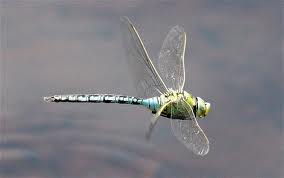
Well folks, we’ve reached the end of our dragon theme week! We hope you have enjoyed our first theme week! We sure had fun searching the world for real dragons! Today we went searching into the fascinating insect world to find a dragon that flies! We bet you guessed our animal! Let’s meet…

MEET THE EMPEROR DRAGONFLY!

Range/Habitat: Europe-Asia/ near ponds, lakes

Diet: carnivore: tadpoles, butterflies

Length: up to 4” wingspan

Conservation Status: common


Fun Facts:

  • Emperor Dragonflies are the largest species of dragonfly in the UK and one of the largest in Europe.
  • Male emperor dragonflies have a large blue body and a green thorax.
  • Female emperor dragonflies have all green bodies and thorax.
  • Emperor dragonflies catch their prey while in flight.
  • Emperor dragonflies are born underwater. They live in the nymph stage and take up to 2 years to reach adulthood.
  • Emperor dragonflies are one of the fastest flying insects on the planet!


Emperor dragonflies are beautiful bugs! We love their iridescent colors! They can fly up to 25-30 miles per hour! WOW! Edmond wants to race some Emperor dragonflies! Who wants to join us?


Categories: Animals, Children, dragons, education, Environment, insects, nature | Tags: , , , , , | 1 Comment

YEAR OF THE DRAGON THURSDAY!

YEAR OF THE DRAGON THURSDAY!

We’re on day four of Year of the Dragon theme week and we have a biiiig lizard for you today! We bet you’ve guessed who it is by now! Well, have you? We’re heading to a special place called Komodo Island! Have you guessed it yet?

MEET THE KOMODO DRAGON!

Range/Habitat: Indonesia-Komodo-W Flores islands/open woodlands-savannas

Diet: Carnivore: carrion, pigs

Length/Weight: 6 ½-9 ¾ ft/ 155-300lbs

Conservation Status: endangered


Fun Facts:

  • Komodo Dragons are the heaviest lizards in the world.
  • Komodo dragons have forked tongues like snakes! They use them to “taste” particles in the air.
  • They have an excellent sense of smell. They can smell carrion up to 3 miles away.
  • Komodo dragons are ambush predators.
  • Komodo dragons’ salvia is full of toxic bacteria. Their bite often does not cause death, but the bacteria causes an infection that kills them.
  • These large lizards are fast and can run up to 11 miles per hour!
  • Komodo dragons can eat up to 80 lbs in a single feeding!
  • They can live up to 40 years.


Komodo dragons are awesome! These large reptiles have some amazing adaptations! We were surprised to learn that they could eat up to 80lbs! WOW and Ellie thought elephants could eat loads of food! These lizards definitely earned the name dragon!


Categories: Animals, Children, dragons, education, Environment, nature, reptiles | Tags: , , , , , | Leave a comment

Blog at WordPress.com.