Posts Tagged With: environment

BLUBBER WEEK DAY 2

BLUBBER WEEK- DAY #2

We’ve staying in the E&E sub in the cold Arctic waters for day 2 of blubber week! Today’s marine mammal has quiet the melon!!  Are you ready to meet the white whale? Let’s go…

MEET THE BELUGA WHALE!

   Range/Habitat: Arctic Ocean

   Diet: Carnivore: fish, mollusks, crustaceans

   Length/Weight: 13-18ft/ 1-1 ½ tons

   Conservation Status: Threatened


Fun Facts:

  • Beluga whales are white to ivory in color. This helps them blend in with the arctic ice.
  • Beluga whales are highly social and can be seen in groups called pods.
  • They are very vocal too. They make all kinds of sounds, including clicks, whistles, and squeaks.
  • They are often called the sea canary because they are so vocal.
  • Beluga whales use echolocation to find prey. Echolocation is when an animal sends out a sound wave and it come back (echoes) to the animal giving them the distance and size of the object.
  • Beluga whales have large melons on top of their head that is full of oils, tissue and fats. It is thought that the melons help them with echolocation and sound production.
  • Baby beluga whales are gray when they are born and turn white by the age of 5.
  • Beluga whales can swim backwards and turn their heads, unlike most other whales.
  • They have a mouth full of teeth used to eat their prey, but they also use suction to suck up their prey.

Beluga whales are a very special member of the whale family! Their closest relative is the narwhal. Want to hear some of the sounds they can make? You should try out your Beluga whale impression after you watch the video! Edmond will be trying his all day, much to the dismay of Ellie J!

Listen here.
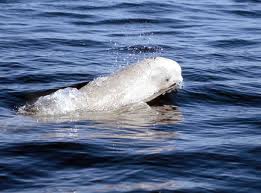
beluga whalebeluga whale2

Categories: adventure, Animals, Children, conservation, education, Environment, mammals, nature, science, wildlife | Tags: , , , , , , , , , | 2 Comments

BLUBBER WEEK!!

BLUBBER WEEK!!

For the past two years in December we’ve featured animals who live in the North Pole! This year we’ve decided to feature animals who have blubber! Blubber is found in marine mammals. This layer of fat between the skin and muscle keeps the animal warm in cold waters. Since we don’t have blubber, we’ll be taking the E & E sub out on today’s adventure! Are you read to meet the unicorn of the sea! A unicorn you say, but unicorns aren’t real! You’re right, unicorns aren’t real, but this wild looking whale is real! Come find out more about…

MEET THE NARWHAL!

   Range/Habitat: Arctic/Arctic Ocean

   Diet:  Carnivore: cod, mollusks, crustaceans

   Length/Weight: 13-20 ft/ 2000-3,500 lbs

   Conservation Status: Near Threatened


Fun facts:

  • The Narwhal is often called the unicorn of the sea.
  • They have the most northerly range of any mammal on the planet.
  • Narwhals have a modified upper incisor tooth that grows up to 9ft long.
  • This tooth looks like a horn. It grows through the upper mouth and is seen mostly in male Narwhals, but females can have small tusks.  Scientists aren’t completely sure what the purpose of the tusk is, but think it might be for attracting females.
  • The long tusk is made of ivory, just like an elephants tusks! Tusks are spiraled.
  • Narwhals have a thick layer of blubber, like other arctic animals that help keep them warm in the cold water.
  • Narwhals swim in groups called pods. Pods can include as many as 1000 individuals.
  • Narwhals are very communicative and use a wide range sounds, including clicks and whistles.
  • They suck food through their powerful lips and tongue.

Narwhals are amazing animals! They survive in very cold waters and grow this awesome long tusk that makes them look unique!  If you could pick a crazy adaptation like tusks what would it be? We’re still deciding on what we would like! Look for our narwhal Christmas ornament craft later this week too!

narwhal  narwhal2

Categories: adventure, Animals, Children, conservation, education, Environment, mammals, nature, science, wildlife | Tags: , , , , , , , , , , | 1 Comment

FEATHERY FRIDAY #88

FEATHERY FRIDAY #88

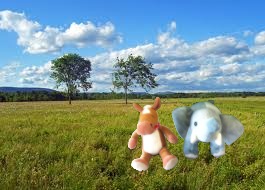
 It’s Feathery Friday and we’re going to Central America to meet a bird who is great flier! Let’s grab our binoculars and our backpacks and go to find these flocks!

e e grasslands

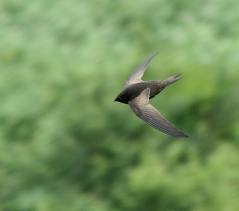
MEET THE BLACK SWIFT!

black swift   Range/Habitat: Western North America-Central America/forest-

   woodland

   Diet: carnivore: insects

   Length/Weight: 7-8”/ 1 5/8 oz

   Conservation Status: common


Fun Facts:

  •          Black swifts have long pointed wings.
  •          They spend most of their time flying.
  •          Black swifts are fast fliers.
  •          Black swifts often fly in large flocks.
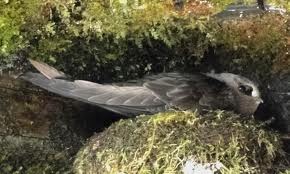
  •          They have sooty black feathers.

Black swifts are so fun to watch when they fly in their large flocks. They are amazing aerial acrobats!  

black swift3 black swift2


Categories: adventure, Animals, birds, Children, conservation, education, Environment, nature, science, wildlife | Tags: , , , , , , , , , | Leave a comment

SUPER SURPRISE THURSDAY #88

SUPER SURPRISE THURSDAY #88

It’s time to looks at the picture, read the clues and tell us who you think it is!

red eyed tree frog

  • I live in the rainforests of Central America.
  • I am an Amphibian.
  • I have brightly colored eyes.

WHO AM I?

Categories: adventure, Animals, Children, conservation, education, Environment, nature, science, wildlife | Tags: , , , , , , , , | 1 Comment

BIG CHANGES!


Dear Ellie and Edmond Fans,

We’re making some big changes to Ellie and Edmond.com! Coming in January you will see a whole new look and style! While the changes are taking place the site will be down off and on! We’ll post as much as possible! We are super excited about this big change and how you’ll meet our animal friends in the upcoming year! We appreciate your patience and even more we appreciate your support! We thank our readers and fans and hope that you will enjoy the brand new adventures of Ellie and Edmond coming in 2014!!!


Many thanks,

Ellie and Edmond

e e park

Categories: adventure, Animals, Children, conservation, education, Environment, nature, science, wildlife | Tags: , , , , , , , , | 2 Comments

AMPHIBIAN TUESDAY #88

AMPHIBIAN TUESDAY # 88

We’re celebrating amphibians today! Our adventures are taking us the northwestern corner of the United States to find a salamander! You know we love our amphibian friends! Grab your gear and your wellies and let’s head out!  

e e woods (2)

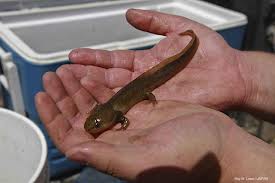
MEET THE PACIFIC GIANT SALAMANDER!

pacific giant salamander   Range/Habitat: Northwestern U.S.A.-South west Canada

   Diet: Carnivore: invertebrates and small aquatic vertebrates

   Length: 6 ½-13”

   Conservation Status: unconfirmed


Fun Facts:

  •          Giant Pacific Salamanders are nocturnal.
  •          They are usually found by streams.
  •          Giant pacific salamanders excrete mucus from their tail when threatened.
  •          Giant pacific salamanders stay in their juvenile aquatic stage their whole life.
  •          They either become terrestrial or they stay aquatic with gills.
  •          Giant pacific salamanders are the largest terrestrial salamander in the world.

These gorgeous salamanders can be over a foot long. How weird is that some of these salamanders stay in their aquatic stage their whole lives?

 pacific giant salamander2  pacific giant salamander3

Categories: adventure, amphibians, Animals, Children, conservation, education, Environment, nature, science, wildlife | Tags: , , , , , , , , , | Leave a comment

MAMMAL MONDAY # 88

MAMMAL MONDAY #88

We’re hitting the road to Central America on this fine Mammal Monday! We’re on the lookout for a raccoon who likes to eat shellfish! Pack you backpacks and let’s head in to the forests for an adventure!

e & e night rainforest

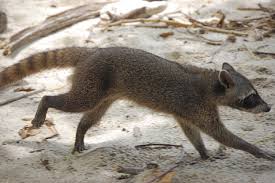
MEET THE CRAB EATING RACCOON!

crab eating raccoon   Range/Habitat: Central-South America/ forest, mountains,

   mangroves

   Diet: Carnivore: shellfish, fish, insects

   Length/Weight: 18-35”/ 4 ½-26 lbs

   Conservation Status: common


Fun Facts:

  •          Crab eating raccoons are also called mapache.
  •          They are nocturnal.
  •          Crab eating raccoons have long, slender bodies.
  •          Crab eating raccoons have nimble paws.
  •          They have bushy ringed tails and black masks on their faces.

Crab eating raccoons look similar to their cousins the common raccoon (we know those guys)!  There long snouts and brown fur make them stand out. These raccoons aren’t as adapted to urban environments as their common cousins!

 crab eating raccoon2   crab eating raccoon3

Categories: adventure, Animals, Children, conservation, education, Environment, mammals, nature, science, wildlife | Tags: , , , , , , , , , | Leave a comment

GUESS THE ANIMAL!

GUESS THE ANIMAL!!

We’re finishing off this holiday week with a guess the animal! Check out the picture, read the clues and tell us who you think it is!

turkey

  • I am a large bird.
  • Benjamin Franklin called me a noble bird.
  • I have a red waddle on my neck.

WHO AM I?

Categories: adventure, Animals, Children, conservation, education, Environment, nature, science, wildlife | Tags: , , , , , , , , | Leave a comment

HAPPY THANKSGIVING!!

HAPPY THANKSGIVING!!!

We want to wish everyone a very Happy Thanksgiving! And if you aren’t celebrating today- Happy Thursday!!

We have a coloring sheet for you to entertain yourself as the food is cooking!

Image

Categories: adventure, Animals, Children, crafts, education, Environment, nature, wildlife | Tags: , , , , , , , , | Leave a comment

GIVE THANKS TO THE ANIMALS WEEK- DAY 3

GIVE THANKS TO THE ANIMALS WEEK- DAY 3

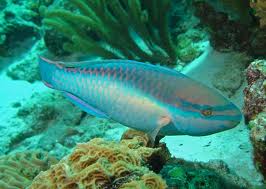
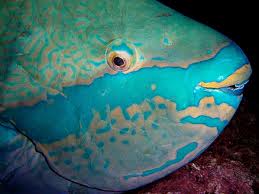
It’s Day 3 of our Give Thanks to the Animals Week and we’re celebrating a really cool fish! If you have traveled to the Caribbean then you have this fish to thank for the white sand beaches there!

parrotfishparrotfish2

  • Parrotfish live in the Caribbean ocean, around coral reefs.
  • They crush coral with their teeth.
  • Parrotfish eat algae in coral.
  • They crush the coral to get the algae out.
  • The waste that the parrotfish produce makes up a great deal of the sand in the Caribbean.
  • You can hear these amazing fish when snorkeling or diving. They making a clicking sound while eating!
  • Parrotfish vary in color.
  • Some species of parrotfish coat themselves in a mucus every night.
  • Scientists think this mucus coating helps mask the parrotfish’s smell.

WOW!! Who knew that the sand on those beautiful beaches in the Caribbean was actually fish poop!? We have been on several trips to the area and we met some parrotfish! It is so fun to hear their clicking in the water. Thanks for the sand parrotfish!!

Categories: adventure, Animals, Children, conservation, education, Environment, nature, science, wildlife | Tags: , , , , , , , , , | 1 Comment

Blog at WordPress.com.