Posts Tagged With: envrionment

Hello Bright Colored Bird

Hello Bright Colored Bird

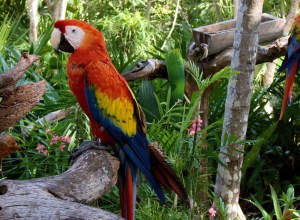
Hello! We went birding today! We were looking for one of the most brightly colored and gorgeous macaws on the planet. Come meet them with us!

6AE02071-421E-4B5E-947A-C6B0857BF41B

Scarlet Fun Facts: 

  • There are two subspecies of scarlet macaw. We met the North Central American Scarlet Macaw.
  • They have blue on their wings and not green. They are also larger than their South American cousins.
  • They weigh around 2 lbs and grow up to 32 inches long.
  • Scarlet macaws eat fruits, nuts and seeds.
  • They mate for life.
  • Chicks leave their parents after about a year.
  • They have a life span of around 40-50 years.

068001CA-5D65-4ACF-84B4-A1E27A753ABF

We enjoyed watching these beautiful birds. They are social and intelligent. They are kept as pets, which is often a bad idea. They have long life spans and are very high maintenance. They can also be very destructive.

Categories: adventure, Animals, birds, Children, conservation, education, Environment, nature, rainforests, science, Today's Post, wildlife | Tags: , , , , , , , , , , , | 1 Comment

Yep, That’s a Cat!

Yep, That’s a Cat!

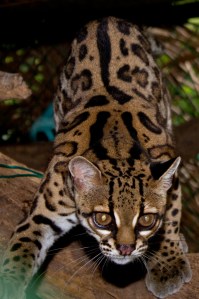
We are meeting our last animal this week here in Costa Rica and it’s a small wildcat. This place has so many interesting species. These small cats blend in quiet well, so we were super lucky to find one!

CCE5DFD9-247C-4EDF-B0FF-FC3F0ED0EA02


Margay Fun Facts:

  • Margays are built for life in the trees.
  • They have broad flexible toes and long tails that help them climb and keep their balance.
  • They can turn their hind feet 180 degrees allowing them to climb down a tree head first.
  • These solitary cats are carnivores. They eat birds, small mammals and reptiles.
  • Margays are listed as near threatened by the IUCN.
  • They are nocturnal.
  • The fur on the back of their necks grows the opposite direction of the rest of their coats.

D7F74D12-7ABD-4033-88E5-E0A97F724EFC

These gorgeous cats are often confused with the ocelot. They have longer tails and a bit smaller. They have those large round eyes to see in the dark too! We think they are just the cutest!

Categories: adventure, Animals, Children, conservation, education, endangered species, Environment, mammals, nature, science, Today's Post, wildlife | Tags: , , , , , , , , , , | 1 Comment

The Real Kermit

The Real Kermit

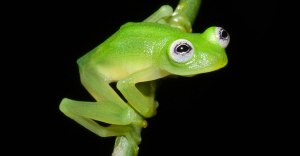
We went frogging during the evening. Costa Rica is one of the best places for spotting amphibians. We went looking for a very new species and we were not dissappointed.


C7B4F3D6-2A5D-4921-85AC-BCB8BD3ADA4A

Diane’s Bare-Hearted Glass Frog: 

  • Glass frogs have transparent skin on their bellies. You can see all of their organs!
  • These frogs are found in the mountains of Costa Rica. They are the first new glass frog species to be discovered in 40 years.
  • It has long thin fingers and toes.
  • They are nocturnal.
  • Males have an almost insect like call they use to attract females.
  • These cuties have white ping pong like eyeballs with black irises that make them look just like Kermit the frog.


We often think it is crazy that scientists are still discovering new species. It is so important to protect the wild places on earth so that all animals- known and not known have a healthy habitat to call home.

Categories: adventure, amphibians, Animals, Children, conservation, education, endangered species, Environment, nature, science, Today's Post, wildlife | Tags: , , , , , , , , , , , | 1 Comment

Halloween Week- Mole Rats

Halloween Week- Mole Rats

16B00976-9D1D-4FD4-BE9A-79B21F28B077


Today we are meeting one cool rodent! It is super cute and creepy!

Demon Mole Rat Fun Facts: 

  • They use their teeth to dig burrows underground.
  • Demon mole rats are solitary and territorial.
  • They bang their heads on their burrows to communicate with other mole rats.
  • They are related to naked mole rats.
  • They live in East Africa and call savanas their home.
  • They have orange teeth.


Categories: adventure, Animals, Children, conservation, education, Environment, Halloween, nature, science, Today's Post, wildlife | Tags: , , , , , , , | 1 Comment

Slow Mover

Slow Mover

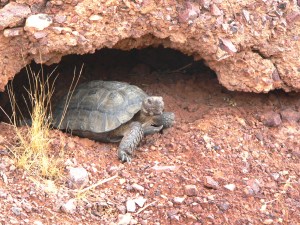
We headed to the heart of the Mojave Desert in search of one of two species of tortoises! These desert tortoises call this their home and we were thrilled to learn more about them!

7C6942F8-76AB-4ED6-867E-F9624A0E245C

Desert Tortoise Fun Facts:

  • These tortoises spend most of their time in burrows and shelters. They are inactive most of the year. They stay in cool areas to avoid losing water during the heat and they hibernate during the winter.
  • You’ll find them mostly after a rain.
  • They can live up to 80 years.
  • Desert tortoises have sharp claws that help them dig burrows. They can spend 95% of their lives in burrows.
  • Desert tortoises are slow growing. They still are only around 8 inches at 16 years old. They can reach up to 30 inches total.
  • These herbivores are listed as threatened and vulnerable- depending on the population.
  • Their biggest threat is habitat loss.

Desert Tortoise

These amazing creatures are made for the desert. They can survive a year without direct access to water! WOW!!

Categories: adventure, Animals, Children, conservation, education, endangered species, Environment, nature, reptiles, science, Today's Post, wildlife | Tags: , , , , , , , , , , | 1 Comment

Around the World

Around the World

FullSizeRender(80)

Well, we hope everyone enjoyed our back to basics month here at the University. We are packing up our trunks, the box not Ellie’s nose – hehehe – and we are getting ready to head around the world to learn more animals and nature.

We did this last year and it was a blast. We are changing up a few things this year. This year, we want you to guess where we are going on the first day of the month! If you are the first to guess it correctly on here on our social media accounts, will receive a special Ellie and Edmond gift!

We are going to learn, not just about the animals- but about the area too. So do you have your backpacks and travel gear ready? We’ll see you Monday for a new adventure!

Where will the next Ellie & Edmond adventure be?

Categories: adventure, Animals, Children, conservation, education, Environment, nature, science, Today's Post, Uncategorized, wildlife | Tags: , , , , , , , , | 1 Comment

Back to Basics- Adaptations

Back to Basics- Adaptations

We’re talking about adaptations today! All animals have adaptations to survive in their environment.

Adaptations are mutations or genetic changes that help the organism survive.

Adaptations can be physical, like a giraffe’s neck has grown longer to reach the leaves no other animal can.

giraffe

Adaptations can be behavioral. Simang’s mate for life and each pair have their own song they sing to find their mate while they are foraging for food in the trees.

simang

Exaptations are adaptations that developed for one reason and then was used for another. It is believed that dinosaurs developed feathers to keep themselves warm. Those feathers were later used to help their ancestors fly.

dino

Vestigial adaptations are adaptations that are still remain but are useless. Whales still have leg bones on their skeleton. Those won’t help now :)!

whale

Coadaptation is when species adapt together. Certain plants have adapted to appeal to hummingbirds. Those hummingbirds have adapted long beaks to reach that pollen. These adaptations help both organisms, the hummingbird gets food and it helps pollinate those plants!

Adaptations can be simple or crazy! All of our adaptations make us great! What is your favorite animal adaptation?


Categories: adventure, Animals, Children, conservation, education, Environment, nature, science, Today's Post, Uncategorized, wildlife | Tags: , , , , , , , | 1 Comment

Back to Basics- Producers/Consumers

Back to Basics- Producers/Consumers

We learned all the vocabulary for what animals are called by what they eat! Today we are talking a bit more about the food web with producers and consumers!

IMG_3257

Plants/Producers: Plants produce their own food. They convert energy from the sun, carbon dioxide and water from the soil to make glucose/sugar. This is called photosynthesis.

Animals/Consumers: Animals get their energy/food from other sources since they can not produce it themselves. They consumer either plants, other animals or both to live.

Consumers are broken down in to three categories:

Primary: animals that are herbivores.

Secondary: animals that are omnivores and carnivores.

Tertiary: animals are often called apex predators. They are at the top of the of the food chain. They are either carnivores or omnivores.

Fungus/Bacteria/Decomposers: Decomposers break down decaying organic (plant/animal) material and return it to the soil! Some insects do this also.


As you can begin to imagine, the food web is a delicate balance! If you remove one animal/plant from a the ecosystem then you can put the whole system out of whack and endanger certain animals. If a apex predator disappears, then a primary consumer can overpopulate and their resources can reach capacity!

sea otter

At one time the southern sea otter was hunted to very low numbers. These carnivores eat urchins and keep their populations in check. The urchins eat kelp. When there are no sea otters to eat the urchins, the urchins begin to eat the kelp forest at alarming rates. Without the kelp forest, many other fish and invertebrates would lose their habitat. As the otters populations have grown after being protected, the balance of the kelp forest has been restored!


Categories: adventure, Animals, Children, conservation, education, Environment, nature, science, Today's Post, vocabulary, wildlife | Tags: , , , , , , , , , | 1 Comment

Back to Basics- Reptiles & Amphibians

Back to Basics- Reptiles & Amphibians

We are on our last day of learning the basics on the groups! We have much more to learn! Today Professor Carl the Chameleon is catching everyone up on reptiles and amphibians.

ellie_edmund_professors-chameleon


Let’s learn some reptile basics first and then more about our amphibian friends.

There are around 7,984 reptile species on earth. Reptiles first appeared on earth around 340 million years ago. The largest group of reptiles is lizards. You can find us on most continents except Antarctica. You can even find some of us in the worlds’ oceans.

What makes a reptile a reptile?

  • We are covered in scales.
  • We lay eggs.
  • We are ectothermic.
  • We have lungs for breathing.
  • We are vertebrates.

 reptile

Our scales cover our epidermis and they are made of keratin. When we grow we shed our scales. Some of us do this in pieces and some of us, like snakes- shed their whole layer at once.

Turtles, tortoises, crocodiles and most lizards have movable eyelids. Snakes have a fixed clear eye covering that they shed when they grow too.

Most reptiles have poor hearing and none of us can taste.

Snakes and some lizards have a forked tongue that they “smell” with. They pick up scent molecules with their tongue and use an organ in their brain called the Jacobson’s organ to analyze those molecules.

sea turtle

Most reptiles lay their eggs and leave them. They provide no parental care for their young.  There are some reptiles that incubate their eggs inside their body and give birth to live young.  The crocodilian family and a few lizards to protect their eggs and young.


Amphibians
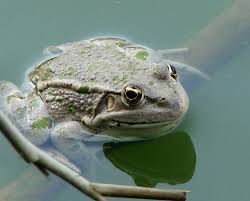
 frog


Now let’s talk some about our amphibian friends.

There are around 5,000 species of amphibians. They have been around for 370 million years.  There are three groups of amphibians; newts/salamander, frogs/toads and caecilians.

The word amphibian means dual life. They live a life in the water (usually as young) and then on land (usually as adults).

What makes an amphibian an amphibian?

  • We are ectothermic.
  • We are vertebrates.
  • We breathe through our skin.
  • We go through metamorphosis. We do not look the same as young as we do as adults.

Amphibian young use gills to breathe. Young frogs and toads are called tadpoles and they have tails and no legs.

We have no scales and no hair. Our skin can absorb water and we need water to keep it moist, this helps us breathe. We all have poison glands in our skin!

Adult amphibians have lungs, but we do not have rib cages. We can also absorb oxygen through our skin and through the lining of our mouth.

Most amphibians deposit eggs in water. We can lay anywhere from 2 to 50,000 eggs.


Categories: adventure, amphibians, Animals, Children, conservation, education, Environment, nature, reptiles, science, Today's Post, wildlife | Tags: , , , , , , , , , | 1 Comment

Last Day of Camp

Last Day of Camp

686ED16E-4D0A-4357-B118-C7877422A3BC

Well pals it is the last day of Camp Ellie & Edmond. It’s always sad to say goodbye to summer and our pals. We will be taking the next three weeks off to move our site and work on a few improvements!

Then we’ll be back for a whole new year at the University of Ellie & Edmond! We will be getting back to basics for a month and then a we have an exciting year.

We are introducing Where Will The Next E&E Adventure Be? Each month we will be going to a new place. On the first day you will get a chance to guess where we are and there will be a prize for the person who guesses it correctly first! We know we are excited for all that is coming!

Let’s end this amazing summer with the Camp E&E song:

On the shores of Lake Salamander, among the old live oak…

We enjoy Camp Ellie and Edmond and the frogs that croak.

We salute you Camp E & E and all your animal friends…

All our days are each a gem.

While we sit next to the campfire, telling stories of old…

We laugh and sing and watch the stars of gold.

We love you Camp E &E and all our memories of our days…

We hold Camp E & E close to our hearts and we’ll never stray!


We will see all our campers during the school year!

FullSizeRender

Categories: A, Animals, camp, Children, conservation, education, Environment, nature, science, Today's Post, wildlife | Tags: , , , , , , , , , | 1 Comment

Blog at WordPress.com.