Posts Tagged With: envrionment

Pantanal

EPantanal

Did you guess where this month’s adventure is? We’re in Brazil in the Pantanal region! This amazing habitat is rich with plants and animals and we’re so excited to see as much as possible! Come learn more about the Pantanal today with us!

EBA86EC8-C290-41F6-B2E6-D4C42C01DCF4


Pantanal Fun Facts: 

  • The Pantanal is mostly wetlands. Those wetlands are submerged in water during the rainy season.
  • The average temperate is 77 degrees Fahrenheit (25 C).
  • Many of the species are aquatic.
  •  The word Pantanal comes from the Portogese word pantano that means wetland.
  • The average rainfall in this area is 40-55 inches.
  • There are about 3,500 plant species in this habitat.
  • This wetland is also home to almost 700 species of birds!

E77A3068-B066-4611-8BCD-9AE16B8634EB


This amazing habitat is very special. Unfornately on 2% of it is under protection. We will meet several animals that are endangered because of habitat loss. We hope you are ready to meet them with us!

Categories: adventure, Animals, Children, conservation, education, endangered species, fish, nature, science, Today's Post, wildlife | Tags: , , , , , , , , , , | 1 Comment

Meet the King!

Meet the King!

We met the king of Antarctica today! Most people think that all penguins call the South Pole home, but only 8 species live in this harsh environment. Today though we are meeting the King penguins. Sadly they don’t wear crowns.

9AC1C665-9EC2-4BAE-8EBF-EFE050F2647A


King Penguins Fun Facts: 

  • These birds are the 2nd largest penguin species in the world. Do you remember the largest?
  • Kings are easy to spot with their oranges spots on their heads and beaks and chests.
  • Both parents incubate the egg on their feet and brooding pouch, switching the egg every few weeks.
  • These efficient carnivores can dive as deep as 950 feet. More commonly they go around to 164 feet deep.
  • The chicks look very different than the adults. They are fluffy and brown! Scientists first thought they were a separate species when they first saw them.
  • Chicks stay with their parents and the colony for almost a year. This means king penguins only have one to two chicks every two-three years.
  • They are currently listed as Least Concern by the IUCN.

2149577C-1885-4B58-87A8-A5B30BD29353


We love these gregarious birds and their bright orange colorations. They always make us and laugh and of course we always practice our waddling after seeing them.

Categories: adventure, Animals, birds, Children, conservation, education, Environment, nature, science, Today's Post, wildlife | Tags: , , , , , , , , , , , | 1 Comment

Flying Snowbird

Flying Snowbird

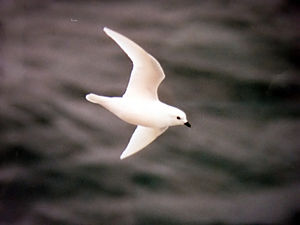
After meeting two marine loving animals, we wanted to find one that calls the air and ocean home. We were so excited to find the Snow Petrel.

15327A9D-DB94-4DC6-8ED8-D060819DF51E

Snow Petrels Fun Facts: 

  • Snow petrels can vary in size, but can grow up to 1 lb.
  • They spend most of their lives alone, they come together in early November to breed in large colonies.
  • They are carnivores. They eat krill, fish and carrion.
  • They are highly territorial during breeding season.
  • Snow petrels spit an waxy stomach oil at predators to keep them away.
  • They have small dark beaks and eyes.
  • Snow petrels prefer packed ice and icebergs when they land. They nest on rocky areas where they make their nests of small pebbles.

380652B8-233B-4117-8717-D0A807CFDBE0

These gorgeous birds are so neat. When you think of Antarctica- you usually only think of penguins, but other birds call these cold islands home too.

Categories: adventure, Animals, birds, Children, conservation, education, Environment, nature, science, Today's Post, wildlife | Tags: , , , , , , , , , , | 1 Comment

Seal of Fur

Seal of Fur

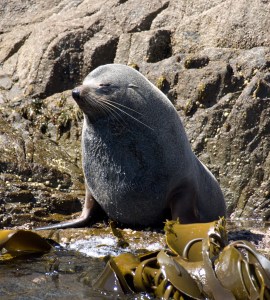
We are meeting another wonderful inhabitant of Antarctica today- a large and in charge mammal- the fur seal. Good thing they have blubber because it is cold! Bbbbbrrr…

7CF6A83A-8C95-474B-A781-80F01F8C3364

Antarctic Fur Seal Fun Facts: 

  • These seals can grow up to 6 1/2 feet and weigh up to 475 lbs. Males are larger than females.
  • These carnivores eat up to a ton of food in a year! That is a lot of krill and fish.
  • The seals that call South Georgia Island home are the most dense population of marine mammals on earth.
  • Females spend most of their lives at sea. They come ashore to breed and raise their pups. Juvinelles will also spend most of their time at sea until they are mature enough to breed.
  • They can dive around 590 ft deep and remain underwater for about 10 minutes.
  • Males are very territorial of their breeding females. They are known for their fights between each other.
  • These seals are listed as Least Concern by the IUCN.

B160A4C7-E71E-4EC9-9951-8DA09596608A

We loved seeing these seals. This is their summer, so they are pups out and about. They begin to spend their time at sea at around 4 months! Wow- you grow up fast when you are an Antarctica Fur Seal.

Categories: adventure, Animals, Children, conservation, education, Environment, mammals, nature, science, Today's Post, wildlife | Tags: , , , , , , , , , | 1 Comment

Emperors of the South Pole

Emperors of the South Pole

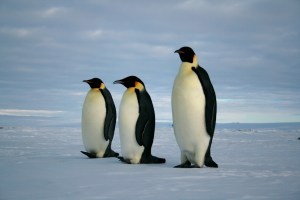
We put on our warmest coats, gloves, hats and boots and headed out to the meet one of Antarcticas most iconic animals- the Emperor Penguin. These tall flightless birds live in a harsh climate, but they are built to survive.

787B4882-1C52-4FCD-A012-F2F8B5ABE4FA


Emperor Fun Facts: 

  • These penguins can grow up to 45 inches and weigh up to 85 lbs! They are the largest penguins on earth.
  • These birds huddle together for warmth. The birds rotate from the interior of the group to the center.
  • They can dive 1,800 ft deep and stay under water for up to 20 minutes. They can dive deeper than any bird on the planet.
  • Females lay one egg. The males incubate the eggs on top of their feet. They cover the eggs with their brood pouch.
  • Females head out to the open ocean to gorge on food while the eggs are incubating.
  • When the chicks hatch, the females and males switch duties.
  • These big gorgeous birds are listed as Near Threatened by the IUCN.

04BAD5D3-74B9-42E4-9A2A-FF86B9843646

We had fun watching these birds. They are very curious. We can not imagine living in the frigid temps though or swimming so much time in that cold ocean. This horse & elephant miss the warm weather.

Categories: adventure, Animals, birds, Children, conservation, education, endangered species, Environment, nature, science, Today's Post, wildlife | Tags: , , , , , , , , , , , | 1 Comment

Toucan Toucan!

Toucan Toucan!

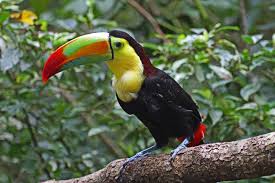
What better animal to meet in the rainforest than the iconic toucan! These bright beaked birds were on our list and we were thrilled to find a few! Come meet them with us!

6CC3517B-DBF2-4740-B832-8C9466446845


Keel-billed Toucan Fun Facts: 

  • Those large colorful bills make up a 1/3 of their body length. The bills are not heavy as they are made up of hollow bone.
  • The bills are covered in keratin- the protein that makes up your hair & nails.
  • These jazzy looking birds have blue feet! Those feet have two toes facing front and two facing backwards to help them grip on branches.
  • Keel-billed toucans are very social. They live in family groups of around 12 individuals.
  • They are omnivores. Fruit makes up most of their diet, but they occasionally eat insects and eggs.
  • Both females and males help rear the chicks. They are born with no feathers and can not see til they’re around 3 weeks old.
  • They are listed as Least Concern by the IUCN.

B34FB569-C8DA-4AE9-9160-9DF65AF019B4

It is so fun to watch the toucans eat fruit they find. They may dissect the fruit first, but often they throw it back whole! They are even known to play ball with fruit- throwing to each other. And just like those howler monkeys- they weren’t sharing! Bummer.


Categories: adventure, Animals, birds, Children, conservation, education, Environment, nature, science, Today's Post, wildlife | Tags: , , , , , , , , , , | 1 Comment

Hello Caiman

Hello Caiman!

We are back from our holiday break! We flew back in to camp and settled in. The next morning we rose early to meet today’s animal! We hope you think it is a cool as we do!

A40C6523-0315-4797-B83F-7731C91C7D74


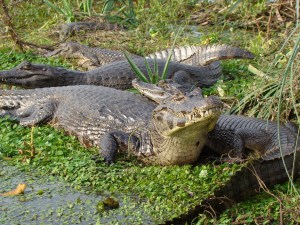
Spectacled Caiman Fun Facts: 

  • Spectacled caimans are members of the crocodile family.
  • Females are smaller than males. Males can get up to 6ft long and females generally up to 4 ft long.
  • They get their name from the ridge on their head that makes them look like they are wearing glasses or spectacles.
  • They are carnivores.
  • Their scales have ostoderms; bony deposits in their skin that give them an armor.
  • Like other crocodilians, they are built to live in water.
  • They are listed as Least Concern by the IUCN.

CCD6E0D5-EBD5-49CE-A340-EFF249BE797F

We think these caiman are super cool! They are not nearly as big as the American Alligator or the Nile Crocodile. Never less, we like to watch them from afar.

Categories: adventure, Animals, Children, conservation, education, Environment, nature, reptiles, Today's Post, wildlife | Tags: , , , , , , , , , , , , | 1 Comment

Hello Large Lizard!

Hello Large Lizard!

We are heading to the beach for the weekend and while we were there we met a really neat reptile! Come join us!

956DB379-533C-4F52-B99B-1FCE6CCFE5E2


Black spiny-tailed iguana fun facts:

  • They are the largest member of the spiny tailed iguan family.
  • They are also considered one of the fastest lizards on earth. They can run up to 21 mph!
  • They have black scales on their long tails.
  • Males are larger than females and can grow up to 4 ft long.
  • These diurnal reptiles love rocky habitats. They hide in the crevices and bask in the sun on them.
  • Young iguanas are insectivores. As they grow older they are most herbivorous.
  • They are listed as least concern by the IUCN.

8D7EC7DF-9D37-4375-9D25-1EBC4C60AE30

We sure are glad those lizards find the rocks to be comfortable, because they are not so easy to sit on. We prefer the sand. As fast as they are, maybe they should be renamed the flash iguana! Hehehe!

Categories: adventure, Animals, Children, conservation, education, Environment, nature, reptiles, science, Today's Post, wildlife | Tags: , , , , , , , , , , , | 1 Comment

One Funny Looking Animal!

One Funny Looking Animal!

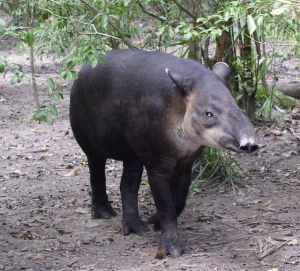
We went looking for one funny looking animal of the rainforest. Tapirs, with their long snouts look like they might be related to Ellie, but in reality they are related to Edmond! Neat! Today, we are meeting the largest of the tapir family.

OLYMPUS DIGITAL CAMERA


Baird’s Tapir Fun Facts: 

  • These large tapirs can grow up to 8 ft long and weigh over 800 lbs.
  • Their funny looking feet have four toes on the front and three on the back.
  • Tapirs use their long flexible noses for snorkels, sniffing odors in the forest and for finding food.
  • These nocturnal herbivores look for leaves and fruits during the evening hours.
  • They are excellent swimmers. They head to the water when threatened.
  • Once thought to be solitary, it is now believed they live in small family groups.
  • The young stay with their mothers for up to two years.
  • Baird’s tapirs are listed as endangered due to habitat loss and hunting.

0EF66EC7-2BB1-433E-9E1B-59C9FC579CEB

There are efforts to protect these beautiful animals. It would be a terrible thing to lose such a unique animal.

Categories: adventure, Animals, Children, conservation, education, endangered species, Environment, mammals, nature, science, Today's Post, wildlife | Tags: , , , , , , , , , | 1 Comment

Those are some peepers!

Those are some peepers!

After meeting the macaws yesterday, we ran into a small resident of the rainforest. These little amphibians are brightly colored with big red eyes. They also make you jump! Hehehe!

B80D11A1-2C69-4EBB-97B2-28976AC6B835

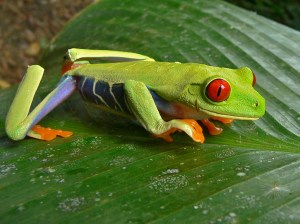
Red Eyed Tree Frog Fun Facts: 

  • The nocturnal species hide on the under side of leaves during the day.
  • If they are found- they flash those big red eyes and startle any predators!
  • They frog’s other bright colors- including orange feet and blue streaks protect them by confusing a predator’s eye with too much color.
  • These carnivores eat insects they find in the trees.
  • These arboreal amphibians are amazing jumpers! (Say that fast five times 🙂
  • They are not poisonous.
  • Red eyed tree frogs are listed as least concern.

P1090418

We love these little frogs. They are so beautiful with their bright green eyes. That splash of blue on their legs make them the fashionistas of the rainforest. Hahaha!

Categories: adventure, Animals, Children, conservation, education, Environment, frogs, nature, science, Today's Post, wildlife | Tags: , , , , , , , , , , , , | 1 Comment

Blog at WordPress.com.