Posts Tagged With: nature blog

Knot Bird

Knot Bird

We are so happy to finish our first week at Camp E&E at the Beach with more fun bird species! These little funny shore birds have an even funnier name- the red knot!

EED191CB-2B6C-4B72-B912-9EE6A844A50D

Red Knot Fun Facts: 

  • These gorgeous little birds have one of the longest migration routes on any bird. They travel from places like Alaska to Southern America.
  • They are carnivores. They eat larva and Arthropoda.
  • They grow up to 10 inches long.
  • Red knots can double their weight before they migrate.
  • One cool fact is like most migrating birds, they reduce the size of their digestive organs before they migrate.
  • They are listed as Near Threatened by the IUCN.

ABEB6AE7-E45C-4126-8F91-B9F35B8B3A80

We love these little birds. How cool is that they migrate soooooo far! That trip must be exhausting- hehehe!

Categories: adventure, Animals, birds, camp, Children, conservation, education, endangered species, Environment, nature, science, Today's Post, wildlife | Tags: , , , , , , , , , , | 1 Comment

Pelican Pelican!

Pelican Pelican!

While bird watching on the beach, we spotted some pelicans. This large billed birds were not the brown pelicans we are use to seeing, but the American White Pelican. They were so fun to watch and we couldn’t wait to learn more about them.

index

American White Pelican Fun Facts:

  • White pelicans live near marshes and lakes.
  • These large birds can grow up to 70 inches long and weigh up to 14 lbs. Those famous bills can be 15 inches long.
  • Their wingspan is only 2nd to the California Condor.  Those wings can be 120 long when in flight! That is longer than a queen sized mattress, which measures 80 inches!
  • Males are larger than females.
  • These carnivores eat not only fish, but also bottom dwellers like salamanders and crayfish.
  • They are usually found in large flocks.
  • White pelicans do not dive for their food, but instead scoop it out of the water and drain the water out of their bills.
  • These big birds eat around 4 lbs of food a day!

pelican


We love pelicans! They are so funny and kind of derpy, but graceful too! It was fun to watch some swimming and catching their food that way instead of diving.


Categories: adventure, Animals, birds, camp, Children, conservation, education, Environment, nature, science, Today's Post, wildlife | Tags: , , , , , , , , , , , , | Leave a comment

Goodbye Lake Salamander

Goodbye Lake Salamander

Time to pack up, it’s the last day of camp! We are off next week. Beach Camp E&E starts on July 9th! As we back up our trunks, we are a little sad to say goodbye to this special place. Come sit down with us and sing the camp song with us one more time. We are excited to see you at the beach.

87953750-6BCF-4035-920A-EDFEA746F4A0


On the shores of Lake Salamander, among the old live oak…

We enjoy Camp Ellie and Edmond and the frogs that croak.

We salute you Camp E & E and all your animal friends…

All our days are each a gem.

While we sit next to the campfire, telling stories of old…

We laugh and sing and watch the stars of gold.

We love you Camp E &E and all our memories of our days…

We hold Camp E & E close to our hearts and we’ll never stray!

9E868E12-699E-4A5B-AD8E-C39FD283CA4A

Categories: A, Animals, camp, Children, conservation, education, Environment, mammals, nature, science, Today's Post, wildlife | Tags: , , , , , , , , | 1 Comment

Otters!

Otters!

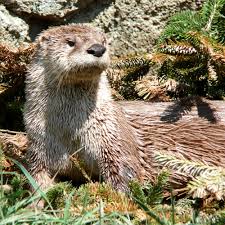
We hanging out on the dock today, ready to meet some otters! Come join us campers as we say to some super cute residents of Lake Salamander!

C720932E-C565-4F78-A4D3-B7125118467C

North American River Otter Fun Facts: 

  • These members of the weasel family can grow up to 31 inches long and weigh up to 30 lbs.
  • Otters love burrows. They live in burrows near the body of water they call home. Often the burrow allows them to directly enter the water too.
  • Otters are predators and carnivores. They eat fish, amphibians and shellfish.
  • They are known for their playful behavior. They love to slide and interact with each other.
  • Even though they play with each other, otters prefer to live in their burrow alone or with offspring while they are young.
  • They have long powerful tails that make up about 40% of their body length. Those tails help propel them through the water.
  • Otters are known to be very vocal.
  • They are listed as Least Concern by the IUCN.


AE632F5C-DF99-487B-92D6-468591AA60D6

We love the otters that call this area home! They often visit us while we are out canoeing on the lake. They are quiet chatty and so much fun!


Categories: adventure, Animals, camp, Children, conservation, education, elephants, Environment, marsupial, nature, science, Today's Post, wildlife | Tags: , , , , , , , , , | 1 Comment

Meet Penny

0BA9430F-15CE-4F37-B4A3-40E2642BFBB8Meet Penny

Hi campers! We are meeting one of our favorite residents of the woods here at Lake Salamander, Penny the Porcupine! She hangs out with us around the campfire at night! She’s great at roasting load of marshmallows at once.


Hi Penny! We are so glad you have joined us at camp this year! Can you tell all the campers a little bit about yourself!

I’m happy to tell you all about porcupines!

  • We porcupines are rodents! That’s right, I’m related to squirrels and mice.
  • My back is covered in quills. I can not throw my quills, but if a predator like a wolf tries to attack me- I can release my quills.
  • I have around 30,000 quills!
  • My quills are made of keratin, the protein that make up human nails & hair.
  • I am a good climber and a good swimmer.
  • I like to eat a variety of plants, bark, berries and roots.
  • When I was a baby, I was called a porcupette! When we are born our quills are soft. They grow harder in just a few days.

Wow! You porcupines sure are neat! We just love your quills, especially that they are good for roasting marshmallows- hehehe! Thanks for coming!


Categories: adventure, Animals, camp, Children, conservation, education, Environment, mammals, nature, science, Today's Post, wildlife | Tags: , , , , , , , , , | 1 Comment

One Big Weasel

One Big Weasel

We are meeting a local here of the woods at Lake Salamander- the largest member of the weasel family- the wolverine. We are lucky to know one too, there aren’t many in these parts.

3B1F72C2-C741-4EEF-AFBD-C4D71882B286


Wolverine Fun Facts:

  • Wolverines are solitary. They live in a large territory. A male shares his territory with several females.
  • These predators are known to eat some vegetation and berries in the summer, but they are carnivores.
  • They can grow up to 42 inches long and weigh up to 55lbs. Males are larger than females.
  • Wolverines have thick fur coats that are water and frost resitant.
  • They are sometimes called the skunk bear because of the musky scent these use to mark their territory with.
  • The wolverine’s main predator is the grey wolf.
  • They are listed as Least Concern by the IUCN.

B613269F-3283-47F2-AA9C-7816505166A3

These animals are known for their tenacity. They have been known to steal carrion from larger animals than themselves.

Categories: adventure, Animals, camp, Children, conservation, education, Environment, mammals, nature, science, Today's Post, wildlife | Tags: , , , , , , , , , , | 1 Comment

Foxy

Foxy

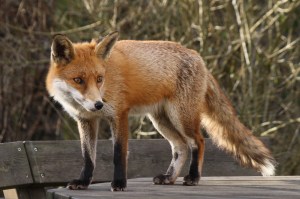
We met another resident of the woods around camp- the red fox. These canines are known for being clever and sneaky. We just think they are cool.

15F99CEF-B79E-4AE6-876C-FA8AB86F7309

Red Fox Fun Facts: 

  • Red fox can grow up to 21 inches long and weigh up to 24 lbs.
  • They are the largest member of the true fox family.
  • These graceful mammals walk on their toes!
  • They are mostly solitary.
  • These omnivores eat small mammals, fish and frogs, but also eat fruit and vegetation.
  • While the red fox is mostly nocturnal, they are known to come out during the day.
  • They are very vocal and can produce 28 different sounds. Does anyone here speak fox?
  • Those large fluffy tails are called brushes. Foxes use them for balance and to wrap themselves up in during colder months.

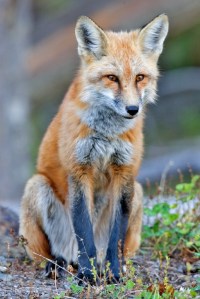
Red Fox (Male), Horsefly Peninsula, Quesnel Lake, British Columbia

You can hear the fox around Lake Salamander chatter. These gorgeous animals often get a bad wrap, but that is very much undeserved. They are one of the most successful members of the canine family and can be found on 5 continents.

Categories: adventure, Animals, camp, Children, conservation, education, Environment, mammals, nature, science, Today's Post, wildlife | Tags: , , , , , , , , , , | 1 Comment

Lighting Up the Night

Lighting Up the Night

One of the best parts of being at camp is watching the fireflies at night while we sit around the camp fire. We’re going to learn about these amazing beetles! That’s right- fireflies are beetles!

firefly2

Firefly fun facts:

  • Most fireflies have wings.
  • They on every continent except the Antarctica and the Arctic circle.
  • There are around 2,000 species of fireflies in the world.
  • Fireflies get that famous glow from a special organ under their abdomen. They take oxygen in to that organ and  it produces the glow with no heat!
  • Each species of firefly has their own pattern of flashes.
  • These lights are used to find potential mates.
  • These bioluminescent beetles can glow with yellow, red or green.
  • Scientist think that fireflies use their glow to help warn predators that they taste bad.
  • Fireflies are omnivores, eating worms as larva and nectar as adults.

firefly

We here at Camp E & E call fireflies, lightening bugs! It’s fun to gather them in a jar with holes poked in the lid to watch them glow for a bit and return them to the skies to find a mate. What do you call fireflies in your neck of the woods?

Categories: adventure, Animals, camp, Children, conservation, education, Environment, insects, nature, science, Today's Post, wildlife | Tags: , , , , , , , , , , | 1 Comment

Craft Day – clay salamanders!

Craft Day- clay salamanders!

We are ready for craft day and we are so excited! Our crafty opossum friend is in charge of crafts at Lake Salamander! Let’s get crafty!

Materials:
IMG_4878
Craft knife (adults please help small children)
Polymer clay in various colors
Oven
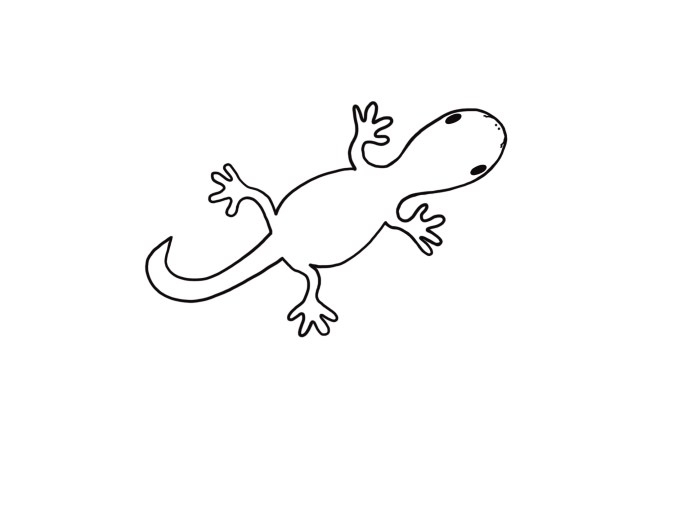
Salamander pattern
Magnets
Glue
 540B4BA4-99BD-47D8-A1E1-193A072EF611

Instructions:

  • Print and cut out salamander pattern
  • Choose the color you want to use for your salamander.
  • Roll out clay according to manufacture instructions.
  • Using the pattern, cut the salamander shape out of the clay.

IMG_4880

  • Use the other colors to decorate your salamander.

IMG_4881

  • Bake clay according to manufacture instructions.

IMG_4882

  • Once it cool, glue on magnet.

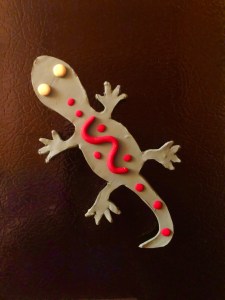
And there you have it! One adorable salamander magnet!

D5EBFCB0-94B2-4924-B2CC-D6D3AC82827B

Hanging on the fridge in the food hall!

Categories: adventure, amphibians, Animals, camp, crafts, education, Environment, nature, science, Today's Post, wildlife | Tags: , , , , , , , , | 1 Comment

We Hear Howling

We Hear Howling

We were sitting around the camp fire last night when heard a howling! We knew immediately that it was the coyotes that call these woods home. We hoped it would be our friend Carla. Sure enough Carla met came down to the camp fire to meet the campers and tell us more about coyotes.

62F70B36-C4C1-4F30-9F2C-85BB39EAF3AD


Hello everyone! We coyotes are so glad to see you hear at camp. I’m going to tell you more about myself and my relatives.

  • We coyotes are members of the canine family.
  • We once roamed only the western plains, but we now call much of the North America our home.
  • The early human settlers of this place, the Native Americans told many legends of my kind. They said we were clever and mischievous.
  • No one ever called us dumb, that’s for sure.
  • We are predators and omnivores. We’ll eat most prey animals including snakes. Don’t worry campers, our diets don’t include you.
  • We coyotes have excellent senses of smell and sight.
  • And man are we fast! We can reach up to 40 mph!
  • I have a litter of cubs who were born this spring. My partner is watching over them. We take care them and protect our territory together.
  • You may think we are nocturnal, but in fact we are active all times of day depending on what animals are in our area. So you may see us during the day or you may hear us howling at night.

We coyotes are often misunderstood, like most predators. We all play our part in the ecosystems of North America. So next time you hear one of us howling, smile and howl back!


Categories: adventure, Animals, camp, Children, conservation, education, Environment, mammals, nature, science, Today's Post, wildlife | Tags: , , , , , , , , , , | 1 Comment

Blog at WordPress.com.