Posts Tagged With: oceans

WE ARE FANIMALY!!

WE ARE FANIMALY!!!

It’s another installment of We Are Fanimaly! Come learn who’s related to who!

ImageThat’s right everyone- hippos and whales are related to each other. This is recent discovery thanks to DNA. Scientist don’t have a full understanding of this relationship and it’s evolutionary timeline, but we think it is super cool! 

HIPPO FUN FACTS!

  • Hippopotamus means river horse.
  • Hippos have clear membranes that help them see under water.
  • Hippos can not swim. They actually walk along riverbeds.
  • Hippos “sweat” a red/pink mucus that helps keep their skin moist.
  • Hippos spend most of their day in water and their nights on land grazing.
  • Hippos are social animals and live in herds.
  • Hippos have large canine and incisor teeth.
  • Scientist have discovered in recent years that hippos sing songs underwater.

WHALE FUN FACTS!

  • Whales are marine mammals.
  • Blue whales are the largest mammal on earth.
  • Orcas or Killer whales are actually the largest member of the dolphin family.
  • Whales are carnivores.
  • There are toothed whales and baleen whales.
  • Toothed whales are smaller than baleen whales.
  • Some whales, like the humpback sing songs to communicate with each other.
  • Some whales use echolocation to find food.
  • Many whales and dolphins are social animals.
Categories: adventure, Animals, Children, conservation, education, endangered species, Environment, mammals, nature, science, wildlife | Tags: , , , , , , , , , , | 2 Comments

SUPER SURPRISE THURSDAY # 71

SUPER SURPRISE THURSDAY # 71

It’s time to guess the animal. Check out the photo, read the clues and tell us your answer!

great white shark

  • I am a cartilaginous fish.
  • I am a predator.
  • I have a bad reputation, but I am an essential part of the ocean!

WHO AM I?

Categories: adventure, Animals, Children, conservation, education, Environment, fish, science, sharks, wildlife | Tags: , , , , , , , , , | 3 Comments

WATERY WEDNESDAY # 71

WATERY WEDNESDAY # 71

 We’re taking the E & E sub down to the ocean’s floor to find a member of the shark family! These beauties rest on the bottom during the day and look for food at night! We have plenty of room in the sub for everyone! Let’s do this…

e e deep sea

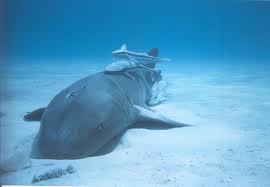
MEET THE NURSE SHARK!

nurse shark   Range/Habitat: East Pacific-Atlantic/ reefs, coastlines

   Diet: Carnivore: invertebrates, crustaceans

   Length/Weight:  9-14 ft/ over 300 lbs

   Conservation Status: common


Fun Facts:

  •          Nurse sharks have barbells on the bottom of their mouth to find food.
  •          They suck prey of the ocean floor.
  •          Nurse sharks are nocturnal.
  •          Nurse sharks rest on the bottom in caves and crevices during the day. They often rest in groups.
  •          They pump water through their mouth and over their gills when they rest.

Nurse sharks are really cool. Not all sharks have the ability to rest like these guys do; most have to swim to keep the water passing over their gills. Too bad we can’t have a nurse shark in our bathtub here at headquarters.

nurse shark2   nurse shark3


Categories: adventure, Animals, Children, conservation, education, Environment, fish, nature, oceans, science, sharks, wildlife | Tags: , , , , , , , , , , , , | Leave a comment

WATERY WEDNESDAY # 70

WATERY WEDNESDAY # 70

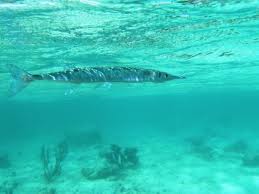
 We’re taking the E & E sub out today to meet one cool and amazing fish! These fish can fly, but beware of that mouth full of teeth! We’re starting the engines and getting ready to dive down and head out on today’s adventure!

e e deep sea

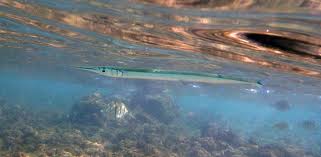
MEET THE GIANT NEEDLEFISH!

needlefish2   Range/Habitat: Tropical-temperate oceans worldwide

   Diet: Carnivore: fish, squid

   Length/Weight:  3-5ft/ up to 7 lbs

   Conservation Status: common


Fun Facts:

  •          Giant needlefish are the largest species member of the needle fish family.
  •          They have long slender bodies.
  •          Giant needlefish have a mouth full of sharp teeth.
  •          Giant needlefish can leap out of water.

Needlefish are crazy looking with their long snouts and large pointy teeth. They can harm people when they leap out of the water to escape predators and land in boats. So watch for flying fish!

needlefish


Categories: adventure, Animals, Children, conservation, education, Environment, fish, nature, oceans, science, wildlife | Tags: , , , , , , , , , , | Leave a comment

ENDANGERED SPECIES WEEK DAY #2

ENDANGERED SPECIES WEEK

DAY #2

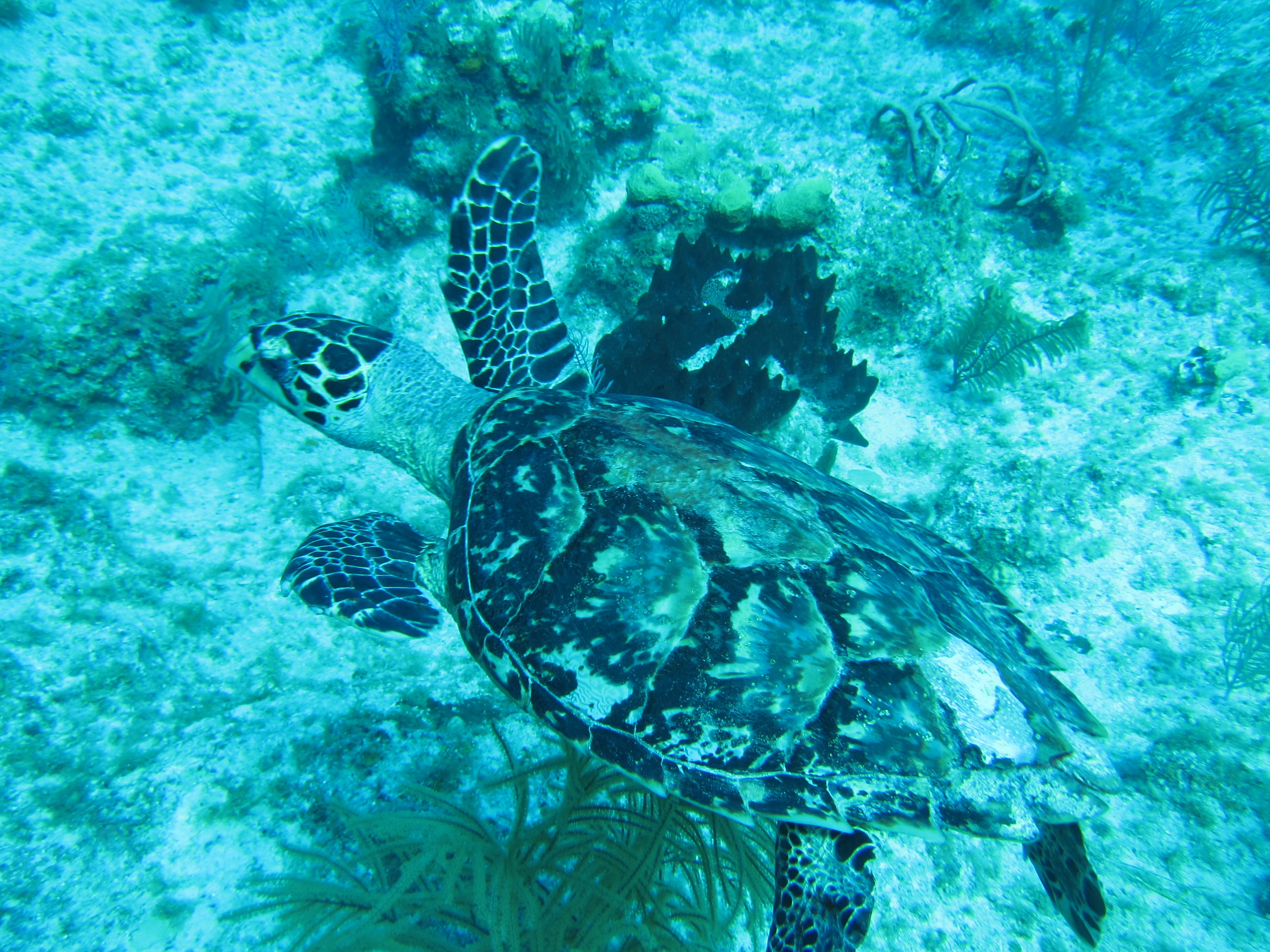
Day two of Endangered Species Week takes us to the Caribbean to meet a large swimming reptile. We’ve met these turtles before, but are happy to go and find them again! Let’s hop aboard the E & E boat and grab our snorkeling gear to meet today’s endangered species.

e e boat

MEET THE GREEN SEA TURTLE!

???????????????????????????????   Range/Habitat: tropical-subtropical-temperate oceans worldwide

   Diet: Herbivore: sea grass, roots, jellies

   Length/Weight: 3 ¼-4 ft/145-600 lbs

   Conservation Status: endangered


Fun Facts:

  •          Green Sea Turtles have a smooth carapace.
  •          The carapace (top shell) is a brown-olive color.
  •          Green sea turtles have small heads.
  •          Green sea turtles have strong flippers.
  •          They are the only sea turtle that can be seen occasionally sunbathing on the beach.
  •          Green sea turtles lay eggs on the beach.

Green sea turtles are beautiful reptiles. They have been on the planet for about 65 million years and we sure hope they stick around. One great way to help sea turtles is pick up your trash! Turtles often mistake trash for food. If we make sure our oceans our clean, then the turtles only have their food to eat!  

IMG_4816   IMG_4820

Categories: adventure, Animals, Children, conservation, education, endangered species, Environment, nature, reptiles, science, turtles, wildlife | Tags: , , , , , , , , , | 1 Comment

WORLD PENGUIN DAY!!

WORLD PENGUIN DAY!!!

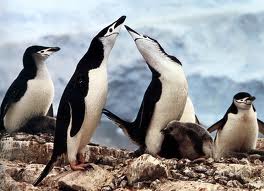
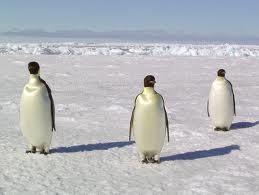
We’re celebrating World Penguin Day with some fun facts and picture about the fabulous flightless birds! We’re wearing our orange tufts to look like Macaroni Penguins, our favorites!

e e macaroni hair

  • There are 18 species of penguins in the world.
  • All penguins live in the Southern Hemisphere.
  • Only 8 species of penguins actually live in cold climates.

penguin8   penguin7


  • The Emperor Penguin is the largest species.
  • The Fairy Penguin is the smallest species.
  • Penguins live in colonies.
  • Penguins are marine birds. They spend 75% of their life at sea.

penguin6    penguin2


  • Penguins have up to 70 feathers per square inch.
  • Penguins have excellent hearing.
  • Emperor Penguins can stay under water for up to 15 minutes.

penguin3   penguin4


  • Fossilized penguins have been found that are 58 million years old.
  • Penguins do not have teeth. They have barbs on their tongue and throat.
  • Penguin wings are called flippers.

penguin5   penguin1


Tell us why you love penguins!!

Categories: adventure, Animals, birds, Children, conservation, nature, oceans, penguins, science, wildlife | Tags: , , , , , , , , , , , | 4 Comments

WATERY WEDNESDAY # 67

WATERY WEDNESDAY # 67

 We’re taking the E &E boat to New Zealand today to meet a fast and fabulous mammal on the Watery Wednesday! So practice your bad accent and let’s get moving on today’s adventure!  

e e coast

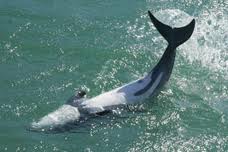
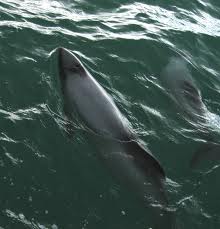
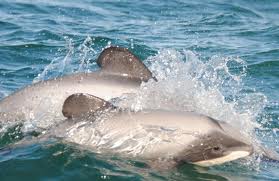
MEET THE HECTOR’S DOLPHIN!

hector's dolphin   Range/Habitat: New Zealand/ ocean

   Diet: Carnivore: fish, squid

   Length/Weight: 4-5 ft/ up to 125 lbs

   Conservation Status: endangered


Fun Facts:

  •          Hector’s Dolphins are one of the smallest dolphins on earth.
  •          They live in small schools.
  •          Hector’s dolphins are grey with black fins, tails and flippers.
  •          Hector’s dolphins are very social.
  •          They have short beaks.
  •          Hector’s dolphins are the only dolphin native to New Zealand.


Hector’s dolphins are gorgeous! The look like small orcas to us! What do you think?

hector's dolphin3   hector's dolphin2

Categories: adventure, Animals, Children, conservation, education, Environment, mammals, nature, oceans, science, wildlife | Tags: , , , , , , , , , , | Leave a comment

REPTILIAN TUESDAY # 67

REPTILIAN TUESDAY # 67

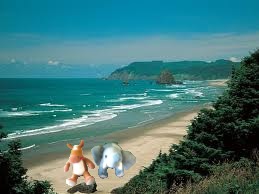
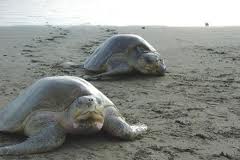
We’re going to the coast of Central America to find one cool sea reptile! So let’s grab our beach towels and our quiet voices because we do not want to disturb these majestic creatures as they come ashore!
e & e coast

MEET THE OLIVE RIDLEY SEA TURTLE!

olive ridley sea turtle   Range/Habitat: Tropical oceans/ Atlantic-Indian-Pacific oceans

   Diet: Carnivores: fish, crustaceans, squid

   Length/Weight: 20-30”/ up to 100 lbs

   Conservation Status: vulnerable


Fun Facts:

  •        Olive Ridley Sea Turtles are one of the smallest members of the sea turtle family.
  •        They have a smooth, olive colored carapace.
  •        Olive Ridley Sea turtles nest all over the world.
  •        Olive Ridley sea turtles are closely related to the Kemp’s Ridley Sea Turtle.
  •      You can tell the difference between a male and female, by looking at the tail.  The males’ tail sticks out.

We looooove sea turtles and the Olive Ridley’s are no exception. Like all other sea turtles they vulnerable and there are easy ways to help! One big tip: Pick Up Trash! Sea turtles mistake ocean trash for food and eat it. Let’s all pledge to pick up our trash!

olive ridley sea turtle2   olive ridley sea turtle3

Categories: adventure, Animals, Children, conservation, education, Environment, nature, reptiles, science, turtles, wildlife | Tags: , , , , , , , , , | 1 Comment

SUPER SURPRISE THURSDAY #66

SUPER SURPRISE THURSDAY #66

Check out the picture, read the clues and give it a guess on what animal it is!

weedy sea dragon-g

  • I live in the ocean.
  • I can only be found in the waters off Australia.
  • I can not breathe fire.

WHO AM I?

Categories: adventure, Animals, Children, conservation, dragons, education, Environment, oceans, science, wildlife | Tags: , , , , , , , , , | 2 Comments

WATERY WEDNESDAY # 66

WATERY WEDNESDAY # 66

 We’re going to the coasts of Southern California to meet a small fish with a big reputation! Grab your beach towel and let’s head off on today’s adventure!

e e beach

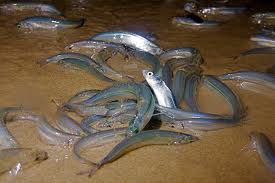
MEET THE CALIFORNIA GRUNION!

grunion   Range/Habitat: Eastern North Pacific/ oceans, coasts

   Diet: Carnivore: plankton

   Length/Weight: up to 7 ½”/ up to 3 5/8 oz

   Conservation Status: common


Fun Facts:

  • California grunions are members of the silverside family.
  • California grunions live close to the shore.
  • They swim in large schools.
  • California grunions strand themselves on beaches at night during mating season.
  • They have a blue-silver stripe down each side.

These little fish cause quiet the splash during their mating season! People come from all over to see this spectacular feat of nature! Would you make the trip to see them?

grunion2


Categories: adventure, Animals, Children, conservation, education, Environment, fish, nature, oceans, science, wildlife | Tags: , , , , , , , , , , | Leave a comment

Blog at WordPress.com.