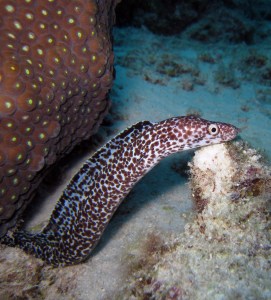
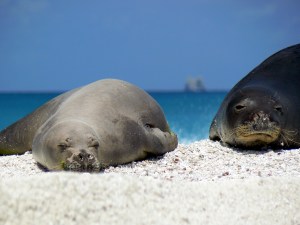
Posts Tagged With: wildlife

A Dragon in the Water

A Dragon in the Water

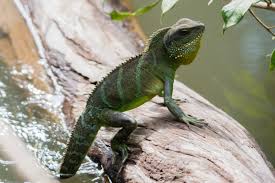
We are off to meet a little reptile who is called a dragon! They don’t look like dragons, but they are neat!
A5602AC0-66DD-44AA-8296-CB5B37FE4935

Chinese Water Dragon Fun Facts: 

  • Chinese water dragons grow to around 3 ft long. Their tail is about 2/3 of their body length.
  • Those tails can aide in balance, swimming and protecting themselves from predators.
  • Males are slightly larger and have larger crests on their heads.
  • The crests under their throats can be all kinds of colors, including purple, peach and blue.
  • These arboreal lizards are diurnal.
  • They are omnivores that eat insects, small fish and some vegetation.

F2B3D231-69D2-4357-BC45-CA6DFDA90054

We love spotting small animals as much as we love seeing the big, famous ones. For habitats and ecosystems to be healthy, all the animals that live there must have healthy populations.

Categories: adventure, Animals, Children, conservation, education, Environment, nature, reptiles, science, Today's Post, wildlife | Tags: , , , , , , , , , , , | 1 Comment

Happy Frogs!

Happy Frogs!

It’s World Frog Day and we are so happy to share some amazing amphibians we met at The Ampbian Foundation right down the road from headquarters! This amazing organization is working to protect frogs and other amphibians and reptiles from around the world! We met some amazing frogs the day we visited, including the gopher frog who the foundation raises and reintroduces in to the wild. Make sure you check out The Amphibian Foundations website & help them out! We’re all here for the frogs!

489C1B60-2AE7-4DC3-8EFC-AD188B6D34DE

Good luck in the wild gopher frog!


B40E75ED-7483-422D-A700-FC410986218E

BA68A59D-2C75-4834-89FA-CE1CA4756AD0

A3A7AA56-72AD-43C2-97DD-7C187FD7B2CD

E61204BE-9209-4DA4-9378-D404C143AF0D

Categories: adventure, amphibians, Animals, Children, conservation, education, endangered species, Environment, frogs, nature, science, Today's Post, wildlife | Tags: , , , , , , , , , , | 1 Comment

Watch Out for Flying Frogs

Watch Out for Flying Frogs

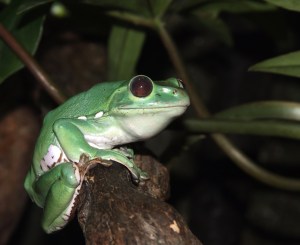
We headed off to meet an adorable amphibian today! They may be known to fly. We wonder if they wear capes? Hehehe! Let’s find out.

0108F82B-7D6B-48BC-A9E4-6D261D0BC3E9

Chinese Flying Frog Fun Facts: 

  • These little 4 inch frogs call tropical and subtropical forests their homes.
  • They are arboreal.
  • They are also called Chinese Gliding Frogs.
  • They have webbing between their toes. That webbing allows them to glide from tree branch to tree branch.
  • They can glide up to 50 feet.
  • Females create foam nests for their eggs and attach to those on leaves above water.
  • They are listed as Least Concern by the IUCN.

5876E700-E492-4C2C-84BF-A240C8A128A8

We enjoyed spotting this little frog with the funny little feet! It makes us want to go hang gliding!

Categories: adventure, amphibians, Animals, Children, conservation, education, Environment, frogs, nature, science, Today's Post, wildlife | Tags: , , , , , , , , , , , | 1 Comment

Golden Bird

Golden Bird

We went on an excursion today to look for a native bird of China. These birds are hard to miss with their bright colors and golden heads.

Golden Pheasant, Tangjiahe Nature Reserve, Sichuan, China


Golden Pheasant Fun Facts: 

  • Golden pheasants can grow up to 41” long. Two-thirds of that length is tail.
  • The males are much more colorful than the females. Females are typically more brown in color.
  • These diurnal birds are omnivores. They eat leaves, grains and insects.
  • Golden pheasants spend most of their time on the ground.
  • They will roost in trees at night.
  • While they can fly, they only do so in short bursts.
  • They are listed as Least Concern by the IUCN.

6776D9B1-DAD6-436F-AD22-2AA3FFD70D95

We enjoyed seeing this bird in the wild. You often spot them in zoos too!

Categories: adventure, Animals, birds, Children, conservation, education, Environment, nature, science, Today's Post, wildlife | Tags: , , , , , , , , | 1 Comment

One Neat Monkey

One Neat Monkey

Our first day here in China we head to the mountainous forests in the Southwest of the country to meet a really neat monkey! We’re not sure we’d call them cute, but they are awesome! Come meet the Golden snub-nosed monkey with us!

878CD3F2-ADAB-4041-A0AA-E07EAB3CD0E8


Golden Snub-nosed Monkey Fun Facts: 

  • These monkeys live where it can snow. They tolerate colder temperatures than most non-human primates.
  • Males are larger than females (about 1/2 the size of males). They have longer hair on their backs.
  • The have flattened pushed back noses that are open nostrils.
  • They live in groups of 20-30 individuals during the cold winter. The smaller groups come together in the summer and you may fine groups of 200 individuals.
  • These herbivores eat pine needles, lichen, bamboo shoots and fruit.
  • They are highly vocal.
  • Golden snub-nosed monkeys are listed as Endangered by the IUCN.

6B6B9960-77B7-4343-8D2B-4EA0DB0B0E96


We enjoyed viewing these monkeys in the trees. It is amazing that these primates can tolerate such cold. Most primates live in tropical climates. Do you think they have sweaters stashed somewhere?

Categories: adventure, Animals, Children, conservation, education, endangered species, Environment, mammals, nature, science, Today's Post, wildlife | Tags: , , , , , , , , , | 1 Comment

Our Next Adventure

Our Next Adventure

Did you guess where we are heading on Monday from the clues yesterday? If you guessed China- you are right!

Here are some Fun Facts About China:

  • China is a large land space. It 3,100 across from east to west and 3,400 across from north to south.
  • It has mountains, plateaus, desserts and forests.
  • Those mountain habitats cover a 1/3 of the country.
  • The Yangtze River is 3,915 miles long and it is the 3rd longest river in the world.
  • There are 3,800 species of fish that call China’s rivers home.
  • The giant panda and the red panda call the bamboo forests of China home.
  • The bactrian camel also calls China home, but in its desserts.
  • Mandarin is the most widespread language in China.

These are just a few of the amazing things we learned about China. Are you ready to meet our first animal next week? Woohoo! Pack your gear!

Categories: adventure, Animals, Children, conservation, education, Environment, nature, science, Today's Post, wildlife | Tags: , , , , , , , | 1 Comment

Where Will the Next E&E Adventure Be?

Where Will the Next E&E Adventure Be?


51F1B905-6346-4DAC-B184-3A911F47CB8E

We are off on another adventure tomorrow. Can you guess where we are going from the clues?

  • We are off to a large continent in the East.
  • This land is large with many types of habitats – from mountains, to sandy desserts to dense forests.
  • The national animal is black & white.
  • There were many dynasties in this great land.
  • The border of this country has the tallest mountain on land in the world! 


Can you guess where we are going? 


Categories: adventure, Animals, Children, conservation, education, endangered species, Environment, nature, science, Today's Post, wildlife | Tags: , , , , , , , , | 1 Comment

Raccoon + Butterfly= Fish

Raccoon + Butterfly= Fish

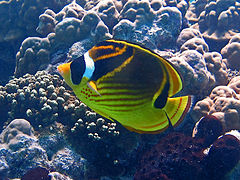
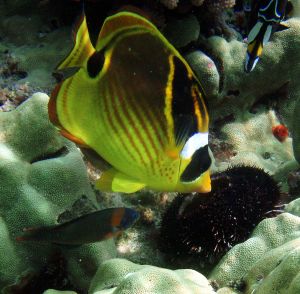
We met another great animal during our snorkel trips- this time a wonderful reef fish- the raccoon butterflyfish! Meet them with us!

B0E55D71-9A77-4EFF-A7DB-326A6CAB640D

Raccoon Butterflyfish Fun Facts: 

  • These Butterflyfish average 8 inches long.
  • They are nocturnal.
  • These carnivores each small invertebrates and nudibranch.
  • They have large eyes.
  • They prefer shallow reefs.
  • They have a false eyespot to fool predators.

49D64616-0953-4737-A019-DBD5BF7D925C

These little fish are fun! They are popular in aquariums too. We love their bright coloration!

Categories: adventure, Animals, Children, conservation, education, Environment, fish, nature, oceans, science, Today's Post, wildlife | Tags: , , , , , , , , , , | 1 Comment

Hi Spot!

Hi Spot!

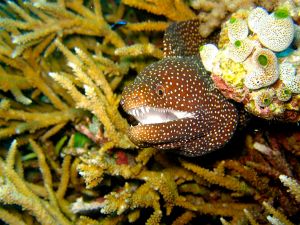
We spent the last few days snorkeling in and around the reefs around these magically islands. We met so many spectacular animals and we are sharing one with you today!

70A39A3B-1C2A-41D0-84BF-592D209771DE

Spotted Moray Eel: 

  • Spotted morays can grow up to 6 ft long and weigh up to 5 1/2 lbs.
  • These carnivores eat fish, mollusks and crustaceans.
  • Spotted morays have two sets of jaws. The first set is in the front of their mouths. The second set is in the esophagus. The second set of jaws grabs the prey and pushes it down the throat.
  • They have poor eyesight. They use their excellent sense of smell to locate prey.
  • They are nocturnal.
  • Typically spotted morays are nocturnal.
  • They are listed as Threatened by the ICUN.

A480DCC3-50C6-4F56-A822-60F48B2FC1F1

We had a blast snorkeling and it was even more special to meet the shy and elusive eels. They love to hide among the coral and in crevices in the rocks!


Categories: adventure, Animals, Children, conservation, education, elephants, Environment, fish, nature, oceans, science, Today's Post, wildlife | Tags: , , , , , , , , , , , , | 1 Comment

Monk Seal

Monk Seal

We hung out on the beach to meet one of Hawaii’s most endangered animals- the Hawaiian Monk Seal.  We took the SS Ellie and Edmond up to the northern islands for the week to spend some time in the reefs and among areas where there are few humans. This is where we met these special marine mammals.

48FC030E-0B88-4D81-9F93-CF2B9E5959D4

Hawaiian Monk Seal Fun Facts: 

  • These tropical seals can grow up to 7 ft long and weigh up to 600 lbs.
  • They are carnivores. They eat fish, lobsters, octopus and eels.
  • Monk seals got their name from the fold of skin that resembles a monk’s robe’s cowl. Their Hawaiian name -Ilio holo I ka uaua- means dog that runs in rough water.
  • Females are slightly larger than males.
  • They shed their hair and outer layer of skin once a year. This is called a catrostrophic molt. During this molt, they spend their days on the beach.
  • Hawaiian monk seals are the state mammal of Hawaii.
  • They are listed as Endangered by the IUCN. There around 1,500 individuals.

FD9E9BDB-A107-4DFD-80A2-DB66120DA4BD

We had a blast seeing these seals sunning themselves on the beach. They are just the cutest. They have some great organizations working to save them too! Check out Save Monk Seals website for more info!

Categories: adventure, Animals, Children, conservation, education, endangered species, entertainment, Environment, mammals, oceans, science, Today's Post, wildlife | Tags: , , , , , , , , | 1 Comment

Blog at WordPress.com.