birds

Hello Little Songbird!

Hello Little Songbird!

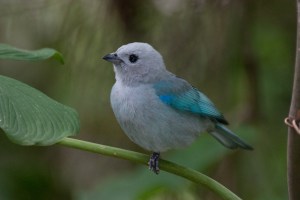
After spotting the largest predator in the area we went looking for a little song bird. This gorgeous little was so fun!

3AF64AD8-ACBC-45A6-ACC9-696BA0883862


Blue-gray tanager: 

  • Blue-gray tanagers belong in the tanager family. It is the 2nd largest family of birds on the planet. They represent about 4% of all birds.
  • All tanagers live in the new world.
  • They grow about 7 inches long.
  • They are primarily herbivores. They eat fruit and a few insects.
  • They often thrive where there are humans.
  • Blue-gray tanagers color vary by the area they live in.
  • They are listed as least concern by the IUCN.

4383E68F-71C6-494B-BDED-00197048FA84

We loved watching these little birdies in the trees! They are sooooo cute!

Categories: adventure, Animals, birds, Children, conservation, education, Environment, nature, rainforests, science, Today's Post, wildlife | Tags: , , , , , | 1 Comment

Hello Bright Colored Bird

Hello Bright Colored Bird

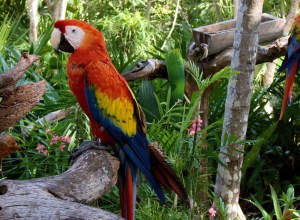
Hello! We went birding today! We were looking for one of the most brightly colored and gorgeous macaws on the planet. Come meet them with us!

6AE02071-421E-4B5E-947A-C6B0857BF41B

Scarlet Fun Facts: 

  • There are two subspecies of scarlet macaw. We met the North Central American Scarlet Macaw.
  • They have blue on their wings and not green. They are also larger than their South American cousins.
  • They weigh around 2 lbs and grow up to 32 inches long.
  • Scarlet macaws eat fruits, nuts and seeds.
  • They mate for life.
  • Chicks leave their parents after about a year.
  • They have a life span of around 40-50 years.

068001CA-5D65-4ACF-84B4-A1E27A753ABF

We enjoyed watching these beautiful birds. They are social and intelligent. They are kept as pets, which is often a bad idea. They have long life spans and are very high maintenance. They can also be very destructive.

Categories: adventure, Animals, birds, Children, conservation, education, Environment, nature, rainforests, science, Today's Post, wildlife | Tags: , , , , , , , , , , , | 1 Comment

Teeny Tiny Bird

Teeny Tiny Bird

After our all nighter looking for frogs, we stayed up a bit longer to find a little bird before napping away the day. This little fast birdie was not easy to spot as it is one of the smallest hummingbirds around.

1D20B3A2-6579-4433-A376-F52D899E757E


Scintillant Hummingbird Fun Facts: 

  • These little birds grow up to around 3 inches long. It is just a little larger than the smallest bird in the world- the bee hummingbird.
  • They have little straight black beaks.
  • Scintillant hummingbirds eat nectar.
  • Males are very territorial.
  • Females build the nests, incubate the eggs and raise the babies.

579382F7-80DA-4F8B-81C2-D3F3CAB805D3

These teeny birds are so adorable. They are Ellie and Edmond sized :)!

Categories: adventure, Animals, birds, Children, conservation, education, Environment, nature, science, Today's Post, wildlife | Tags: , , , , , , , , , , | 1 Comment

What the Quail?

What the Quail?

We are so excited to meet today’s bird! We have never met a quail before and of course we have to find the ones with the cutest feathers around!

F17CCC68-D345-426E-AD8B-FE99BFF65F33

Gambel’s Quail Fun Facts: 

  • Both males and females have the topknot of feathers on their head. Males have a black patch on their bellies.
  • They are about the size of a basketball.
  • Gambel’s quails are ground dwellers. You can see them running around the ground.
  • They live in groups called coveys.
  • They are omnivores. They eat insects as chicks and graduate to mostly plant material as adults.
  • Females chirp to their eggs before they  hatch and the chicks cheep back to her.

02BDE3D4-FA25-4777-90B8-D5C1B9656A60

These funny little quails can fly, but they mostly run around looking for food! They are so neat to watch in their little family groups.

Categories: adventure, Animals, birds, Children, conservation, education, Environment, nature, science, Today's Post, wildlife | Tags: , , , , , , , , | 1 Comment

Bird in the Burrow

Bird in the Burrow

We had a great adventure looking for an unusual bird today. This owl doesn’t live in trees it lives in burrows underground. Neat!

E280C23C-AA84-4FCC-B2E3-F12BAE3E311D

Burrowing Owl Fun Facts: 

  • Burrowing owls live in burrows they dig themselves or ones that other animals have made, like prairie dogs.
  • Burrowing owls are carnivores. They eat small mammals, insects, lizards and birds.
  • They hunt day or night.
  • Burrowing owls line their burrow entrances with animal poop. This marks their territory and it attracts insects that the owls eat.
  • They stow food to have during the incubation period of their eggs.
  • Burrowing owls spend most of their time near the ground.

B73E42DF-566F-4792-BADA-C7C1AD64586A

Burrowing owls are so gorgeous. They are more tolerant of Co2 because they live underground where the gas can be more concentrated. This bird’s adaptations are so cool.

Categories: adventure, Animals, birds, Children, conservation, education, Environment, nature, science, Today's Post, wildlife | Tags: , , , , , , , , , , , | 1 Comment

Run Bird Run!

EepRun Bird Run!

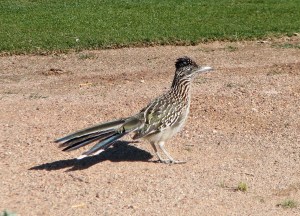
We are meeting one of the coolest birds in the southwest today- the greater roadrunner! Luckily this one didn’t have a coyote chasing it!

897872ED-5657-4BBD-B6CB-685B1DCAEBE3

Greater Roadrunner Fun Facts: 

  • Roadrunners have X shaped feet. The Pueblo people consider this shape sacred as it is thought to ward off evil spirits.
  • They are carnivores. They spent most of our time on the ground hunting small mammals, reptiles and toads.
  • These fierce predators slam their prey against rocks. They are also known for their ability to kill rattlesnakes, scorpions and venomous lizards.
  • Roadrunners can reach speeds of up to 20 mph.
  • They have a special gland by their eye to help excrete excess salt!
  • Roadrunners are territorial.
  • They are not good fliers.

8A15DF21-A884-42D4-B84A-9ABE0C9B87FA

These funny looking birds are suited for the terrestrial habitat. Those fast feet give them an advantage in finding food and staying away from predators. Once only found in the southwest, these birds are moving east can be found as far as Louisiana now.

Categories: adventure, Animals, birds, Children, conservation, education, Environment, nature, science, Today's Post, wildlife | Tags: , , , , , , , , , , , | 1 Comment

Adventure Calls in the Southwest

Adventure Calls in the Southwest

Helloooooo! Did you guess our location? We are in the American Southwest! We are going around the area to meet some of its local inhabitants. We’ll be meeting birds, mammals, reptiles and amphibians. We may even need to stop and talk to a cactus or two! Hehehe!

Today we are going to cover some fun facts about this amazing area and then tomorrow we will start to meet some animal friends!

Southwest Fun Facts:

  • The American Southwest is compromised mainly of New Mexico and Arizona, encompassing parts of Texas, Nevada, California, Colorado and the Northern parts of Mexico.
  • This area is considered to an arid to semi-arid habitat. They get little moisture.
  • The mountains do get snow fall.
  • There are three desert regions here- the Mojave, the Sonoran and the Chihuahuan desert.
  • The Chihuahuan desert is considered to be the most biological diverse deserts in the world.
  • The Sonoran desert has the most diverse plant life of any desert in the world.
  • The Mojave desert gets less than 6 inches of rain a year. It is home to the Joshua tree, a tree that is thought to live up to a 1,000 years.
  • The southwest has been to home to humans since around 900 BC, starting with the Clovis people. Many other Native Americans have called the region home for thousands of years.
  • There are more than 400 bird species that call this area home! Wowzers.
  • The area also is home to many snakes species.


We are excited to meet some of the inhabitants tomorrow! Who are you hoping to meet?

Categories: adventure, Animals, birds, Children, conservation, education, Environment, nature, science, Today's Post, wildlife | Tags: , , , , , , , , | 1 Comment

Back to Basics- Birds

Back to Basics- Birds

Our professor of birds is Professor Baxter and he is a Blue footed Booby! He’s going to share some basics about about birds!

ellie_edmund_professors-bfbooby

There are around 9,000 species of birds in the world. We are in every habitat on earth. Because we are so adaptable, we are considered the most successful animal on the planet. The earliest birds were descendants of the dinosaurs. Fossils of my long lost relatives have been found that are 150 million years old.

 first bird

What makes a bird a bird?

  • We have feathers. Our feathers are made from keratin.
  • We are endothermic (warm blooded).
  • We lay eggs.
  • We are vertebrates.
  • We have hollow bones. This helps us fly.
  • We have no teeth.

Feathers are our most distinctive feature. Feathers are made of keratin (the same protein that makes up human hair and nails). We have flight feathers on our wings. We have down feathers close to our body to keep us warm. Our tail feathers are made to help us fly. We must preen (clean) our feathers to keep them healthy. There are some birds who cannot fly including; kiwi, kakapo (the heaviest parrot on earth), penguins and ostrich.

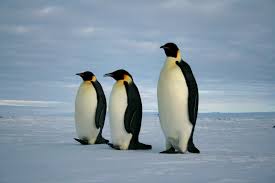
kakapo

peguin

Our beaks/bills are also covered in keratin and they are shaped for what type of food we eat.

Instead of paws, we have feet. Our feet have 2 to 4 toes. Most of us have 4 toes, 3 that face forward and one that faces backward. This is perfect for sitting on tree branches. Those birds that spend time in water have webbed feet.
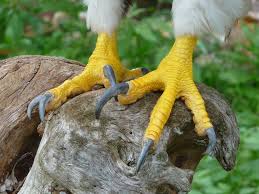
bird feet

We must keep our body temperature at 104 degrees. It is important that we control our heat loss.

Lastly, we lay eggs. Our mating rituals include dancing, songs and plumage displays. Our eggs are made of calcium carbonate. We lay eggs in nests, on rocks, on the beach and even on the ground. Some of us are born without feathers and our eyes closed. Some of us are, like ducks, are born with down feathers and our eyes open.

duck


Categories: adventure, Animals, birds, Children, conservation, education, Environment, nature, science, Today's Post, wildlife | Tags: , , , , , , , , , , | 1 Comment

Pelican! Pelican!

Pelican! Pelican!

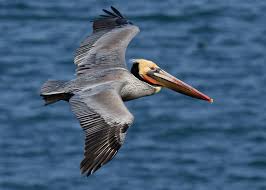
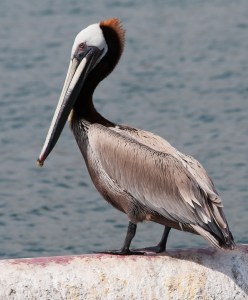
We are meeting one last animal at Camp E&E! The summer has flown by hasn’t it? We can hardly believe it! We could spend hours and hours watching the brown pelican take diving in the ocean scooping up eats! Let’s mee them today!

IMG_0337


Brown Pelcian Fun Facts: 

  • The Brown Pelican is the smallest of all pelican species.
  • They are plunge divers. They fly above the surface of the water and then drop or plunge into the sea to catch their prey.
  • Brown pelicans have a greenish skin on their face that is brighter during mating season.
  • Brown pelicans like to nest in trees, shrubs and mangroves.
  • Both parents incubate eggs. They usually have 2-3 chicks. One chick can eat up to 150 lbs of food by the time they are 10 months old! That’s a bunch of fish for little guys
  • Their pouch can hold up to 3 gallons and the stomach can hold around 1 gallon.
  • Brown pelicans are the state bird of Louisiana.

IMG_0339

We love pelicans! Love them! They are one of the coolest birds around! Do you love them as much as us? Stick around for the last craft day of camp tomorrow!

Categories: adventure, Animals, birds, camp, Children, conservation, education, Environment, nature, oceans, science, Today's Post, wildlife | Tags: , , , , , , , , , , , | 1 Comment

Catching Oysters with an Oystercatcher

Catching Oysters with an Oystercatcher

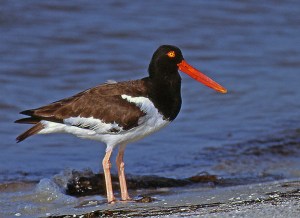
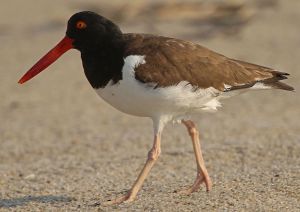
It’s the last week of Camp E&E by the Sea! Can you believe it? This week we’re hanging by the beach to meet shore birds. First up is the American Oystercatcher! This neat bird is easy to spot with its bright orange beak. So let’s head out to spot some campers!

IMG_0334

American Oystercatcher Fun Facts: 

  • These brightly colored birds call salt marshes and shores their home.
  • They feed on shellfish, mussels, clams, oysters and sea stars.
  • American oystercatchers tend to spend more time on the ground than flying.
  • They often grab the shellfish inside the shell before it can close. They severe the muscle and swallow the meat whole.
  • They nest in higher areas away from the high tide line.

IMG_0335

We could sit on the beach and watch shore birds all day! These funny birds with their long legs are one of our favorites. What’s your favorite shorebird?

Categories: adventure, Animals, birds, camp, Children, conservation, education, Environment, nature, oceans, science, Today's Post, wildlife | Tags: , , , , , , , , , , | 3 Comments

Blog at WordPress.com.