camp

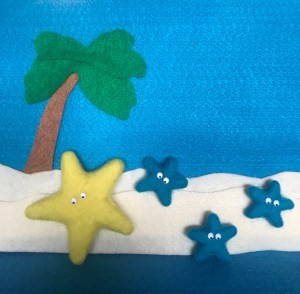
Thorny Sea Star

Thorny Sea Star

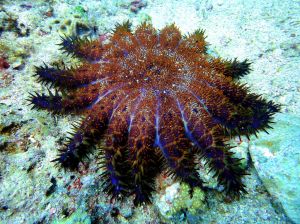
We are meeting our last sea star of the week!  This one is best to be observed but not to touch! Ouch- watch out for the crown-of-thorns sea star.

Crown of Thorns

Crown-of-thorn sea star fun facts: 

  • The thorns on this sea star are venomous.
  • These indimidating looking sea stars predate on coral!
  • They have only one predator- giant triton sea snail.
  • As you can see they have more than five arms.
  • They do have tube feet to move them along the reefs.
  • Unfortunately these predators have grown in numbers. Too many of them and that can mean trouble for a reef. They can destroy large areas.
  • Scientists and conservationists now will actively remove them when there is population boom.
IMG_0302

We love sea stars of all kinds, but this one might have gone to the dark side. Keeping a balance in habitats is crucial for all the animals that live there.

Categories: adventure, Animals, camp, Children, conservation, education, Environment, nature, oceans, sea stars, Today's Post, wildlife | Tags: , , , , , , , , , , , , | 1 Comment

Craft Time- Sea Star Bean Bags


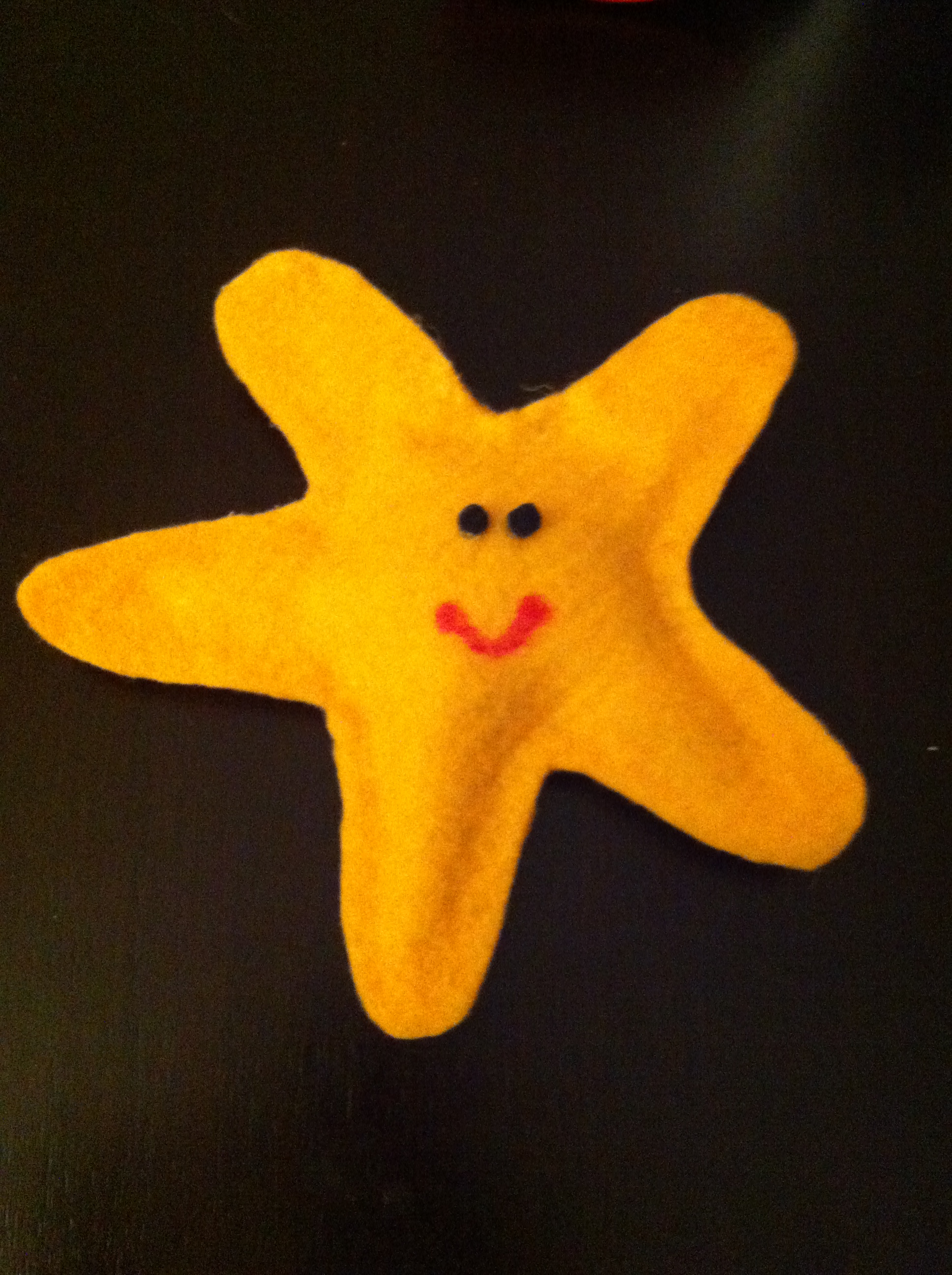
SEA STAR BEAN BAG

IMG_5033

We are in the craft cabin here at Camp E&E by the Sea and our dear friend Crafty Crab is going to help us with craft time! Today we’re making sea star bean bags for our sea star week! Woot! Woot!


MATERIALS:


  • Sea Star Pattern
  • Scissors
  • Felt (any color)
  • Hot glue gun (used by an adult)
  • Flax seed or stuffing
  • Funnel
  • Sharpie
  • Pom poms or googly eyes

Directions:

1)   Cut out pattern.

2)   Cut out two sea stars on felt.

3)   Hot glue the two pieces together, leaving a small opening.

4)   Put the flax seed in the sea star. If you don’t have a funnel, you can easily make one with paper, by rolling it in a cone shape. If you don’t have flax seed or stuffing or small dry beans will work too.

5)   Make sure you don’t overstuff it. Then glue the opening shut.

6)   Glue on the eyes and draw on the mouth.


You’re done! Toss your sea star, use him as a paper weight, or just give him a hug!


Categories: adventure, Animals, camp, Children, conservation, crafts, education, Environment, nature, science, Today's Post | Tags: , , , , , , , , , , | 1 Comment

Here Comes the Sun!

To Here Comes the Sun!

We are meeting another sea star family member here at camp! We are meeting the sunflowers sea star today! They may not have the crazy arms like a basket star, but they do have more than five!

OLYMPUS DIGITAL CAMERA


Sunflower sea star Fun Facts:

  • They have a large central disc.
  • Sunflowers sea stars have can numerous arms. One species has 24 arms.
  • They can reach 3 feet across.
  • They have up to 15,000 tube feet on the bottom of their bodies.
  • Sunflower sea stars can move over 40 inches per minute- a record speed for sea stars.
  • They are voracious predators! They eat snails, clams and sea cucumbers.
  • Sunflower sea stars star out with 5 arms and quickly grow the others.
  • They can shed their arms and grow them back.

IMG_0300


Who doesn’t love a sea star? And now there is more to love with the sunflower sea star and all those arms!

Categories: adventure, Animals, camp, Children, conservation, education, Environment, nature, sea stars, Today's Post, wildlife | Tags: , , , , , , , , , | 1 Comment

Bring Your Basket- Star!

Bring Your Basket – Star!

We are so excited to see everyone here! It’s Sea Star week here at camp! You may know these amazing echinoderms as starfish, but scientists are now using sea star as these animals are not fish! We bet you’d like to know what an echinoderm is though– it’s an animal that has radial symmetry (arms radiating from a central body) and a hard covering. Other echinoderms include sea urchins, sea cucumbers and sand dollars.

Today, we are meeting one of the craziest enchinoderms around the basket star. Woohoo!

IMG_0297

Basket Star Fun Facts: 

  • Basket stars belong to the brittle star family.
  • Most Basket stars are found in deep waters.
  • They can reach up to 28 inches across. The central disk is around 5 1/2 inches across.
  • They have 5 arms. Those 5 arms then have many many branches.
  • They have calcium carbonate structures called ossicles. These give all those arms flexibility and stability.
  • Some basket stars feed on plankton or small crustaceans.
  • They use spines and hooks to move food up their mouths on the central disk.
  • Basket stars also have tube feet to move them around.

OLYMPUS DIGITAL CAMERA

These amazing creatures have no brain, but they do have a complex nervous system. The oceans house the craziest critters on the planet!

Categories: adventure, Animals, camp, Children, conservation, education, Environment, nature, oceans, science, sea stars, Today's Post, wildlife | Tags: , , , , , , , , , , , | 1 Comment

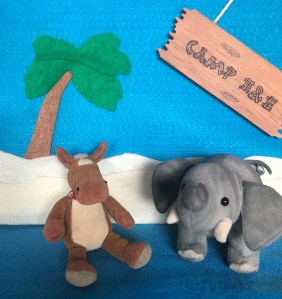
Camp E&E by the Sea

Camp E&E by the Sea

FullSizeRender

Welcome back to camp everyone! We trust that you had a lovely holiday! We know we did! We have set up Camp E&E by the sea for the month of July and in to August! The cabins are ready and this year they are spiffy! We will also have some great tents for those that want to sleep by the ocean and hear the waves at night.

We will be meeting the animals that call the shore and ocean home! We have set up the craft cabin and here at the shore it’s run by Carl the Crafty Crab! We’ll also be enjoy a whole we dedicated to our cartilaginous friends- sharks and rays!

So back up your trunks (the box not the elephant nose) and get your cabin assisngment and let’s get ready to enjoy all the Camp E&E by the Sea brings us!

Dont’ forget your water shoes, surfboards, stand up boards, extra sunsuncreen, bug repellant (the gnats can be terrible), a flashlight with a red lens (must not disturb sea turtles) and your beach towels!


We will see you on Monday for Sea Star Week!

EA012875-DEEE-4FB5-8E0F-6B9F24E96EA1


Categories: adventure, Animals, camp, Children, conservation, education, Environment, nature, oceans, science, sea stars, Today's Post, wildlife | Tags: , , , , , , , , , | 1 Comment

Whooooo is that in the Woods?

Whooooo is that in the Woods?

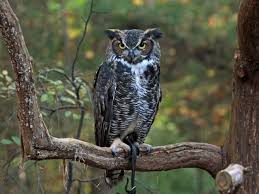
We are meeting one last animal here at camp at Lake Salamander. Next month we head to Camp E&E by the Sea! This month has just flown by way too fast too! Maybe we’ll come back for a few weeks in August before school starts! The animals we are meeting tonight, is a big bird and one of course that prefers the night! Let’s hope the Great Horned Owl sings tonight!

gho2

Great Horned Owl Fun Facts:

  • Great horned owls have those two fabulous tufts on their heads. Those are not its ears. They are thought to help with camouflage or identify individuals.
  • Their ears are actually on their facial disk and are not symmetrical. The right one is higher than the left. This gives them super hearing and enables them to locate prey that is moving and not in sight!
  • They can catch prey that is larger than themselves, as well as prey as small as scorpions.
  • Great horned owls have powerful talons. They use them to snap the spine of their prey.
  • Females are larger than males.
  • Crows are not the great horned owl’s friend. The owl’s are their top predator, so crows are known to harass them.

gho

We could sit out here all night and listen to these great and powerful predators call to each other. Just give a listen here!

Categories: adventure, Animals, birds, camp, Children, conservation, education, Environment, nature, science, Today's Post, wildlife | Tags: , , , , , , , , , | 1 Comment

Whoooooo’s Crafty?

Whoooooo’s Crafty?

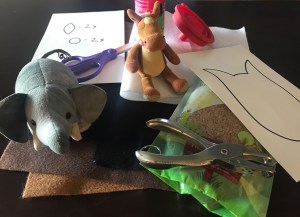
We’re in the craft cabin today to make stuffed owls! Whooooo is excited as we are? Woohoot! Hehehe! Let’s get started!

Materials:

FullSizeRender(1)

  • Felt in browns, black, white & yellow (color not shown)
  • Scissors
  • Felt glue or hot glue (not shown)
  • Hole punch
  • Whole flax seed or stuffing (not shown)
  • Funnel
  • Pattern

Instructions:

  • Cut out all your pieces. Make sure to cut two owls!IMG_4811
  • Use a hole punch to make the irises for your owl’s eye.

IMG_4812(1)

  • Place all the pieces together. We free hand cut a beak.
  • Glue to body parts to the one piece of your owl.

IMG_4813

  • Glue the two bodies together- leaving a small opening at the bottom. If you are using felt glue, let your owl dry before filling it.

IMG_4814

  • Use the funnel to fill your with flax seed. If you do not have a funnel- you can make a cone from paper that will work! If you are using stuffing- just stuff it in with a chopstick.

FullSizeRender(2)

  • Glue the bottom opening together! Don’t want your owl to lose stuffing.
  • Then enjoy hanging out with your stuffed owl!

IMG_4820

Categories: adventure, Animals, birds, camp, Children, conservation, crafts, education, Environment, nature, owls, science, Today's Post, wildlife | Tags: , , , , , , , , , , | 1 Comment

Say Hello to Our Stinky Friend

Say Hello to Our Stinky Friend

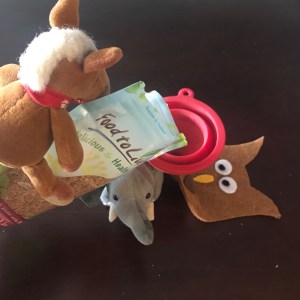
IMG_0163

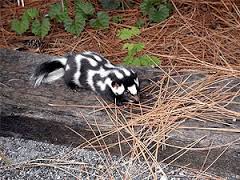
The Salamander Woods are home to another night time creature- the spotted skunk! You heard it here folks, not all skunks are striped- some are spotty! We’re going to learn more about them this evening as we roast marshmallows at the campfire!

spotted skunk

Spotted Skunk Fun Facts:

  • These skunks are not very big, only about 21 inches long with tail. They only weigh around 1 1/2 pounds!
  • They are part of the mustelid family, which include weasels, otters and badgers.
  • Spotted skunks are considered to be the most active of all the skunks.
  • They live underground or in trees.
  • These little stinkers stomp their feet before spraying a predator. They then do a handstand to get the best shot at shooting their prey with extra stinky spray.
  • They are omnivores.

spotted skunk2

We sure are glad the family of skunks here at camp are friendly. We would hate it if one of our campers was sprayed. Luckily we have a solitary tent for those who make get it! Hahahaha!

Categories: adventure, Animals, camp, Children, conservation, education, Environment, mammals, nature, science, Today's Post, wildlife | Tags: , , , , , , , , , | 1 Comment

Awesome Opossum!

Awesome Opossum!

This week- we are staying up late and meeting the critters who are nocturnal and one of our favorite camp nocturnal residents is the opossum! These marsupials get a bad rap, but they are truly amazing! We invited our friend Ophelia Opossum to come and share some neat facts with us here at camp!

IMG_4724

Hi everyone! I’m here to share with you more about me! Yay!!!

  • I am the only marsupial in North America! That’s right- I have a pouch where my babies grow as they develop!
  • The name is Opossum- true possums live all the way around the other side of the world in Australia and New Guinea! So- remember the O!
  • We are mostly immune to venomous snakes! That’s right- we ain’t afraid of those legless reptiles!
  • I love to eat snails, slugs, beetles and most importantly – ticks! Yep- I can eat around 4,000 ticks a week! That’s good because those nasty bugs can transmit some dangerous diseases.
  • You primates think you are the only ones with opposable toes, well I am here to tell you- I have them too! They help me climb!
  • I also have a prehensile tail! I can hang from it, but only for short periods. I can also carry things like grass with it.
  • I have 50 teeth in my mouth! Say cheese!
  • Finally- I do play dead when I am threatened. It is an involuntary response- I can not control it. I can stay in this state for up to 4 hours!


opossum

People say we aren’t cute, but I totally disagree! Look at that pink nose and cute ears! We are much more helpful than you realized! Let’s all give the opossums out there some love and respect! Now, who wants to go play opossum with me down by Lake Salamander?

Categories: adventure, Animals, camp, Children, conservation, education, Environment, mammals, marsupial, nature, science, Today's Post, wildlife | Tags: , , , , , , , , , | 1 Comment

Night Night

Night Night

FullSizeRender

Next week we are meeting the animals who are out at night at camp. We wrote a little poem to get us in the mood!

Nature at Night

Just sit and listen to the sounds,

All around us animals are talking.

They tell their stories, sing their songs,

Just sit and listen to the sounds.


Just sit and listen to the sounds,

The crickets go chirp chirp chirp.

They can tell you the temperature,

Just sit and listen to the sounds.


Just sit and listen to the sounds

The owl goes hoooo, hoooo.

They sing in pairs through the woods,

Just sit and listen to the sounds.


Just sit and listen to the sounds.

The coyotes go hoooooooowl.

They howl at the moon,

Just sit and listen to the sounds.


Just sit and listen to the sounds.

The bullfrog go bellow, bellow.

They sing to the lady frogs all night long,

Just sit and listen to the sounds.


Just sit and listen to the sounds.

The bats go squeak, squeak.

They squeak while looking for eats.

Just sit and listen to the sounds.


Just sit and listen to the sounds.

The whip-poor-will goes whip-poor-will.

They sing all night long,

Just sit and listen to the sounds.


Just sit and listen to the sounds.

The animals make a beautiful chorus.

They sing us all to sleep,

Just lay and listen to the sounds.


Categories: adventure, Animals, birds, camp, Children, conservation, Environment, nature, poetry, science, Today's Post, wildlife | Tags: , , , , , , , , | 1 Comment

Blog at WordPress.com.