conservation

NATURE JOURNAL!

NATURE JOURNAL!

We’re super excited for today’s craft, as it is the start of another fun activity! Today we’re making nature journals! We have some prompts for you to follow on some of the pages and then free pages to do whatever you like on! Just go to the PDF link at the bottom of the post (Nature Journal 2) and print the pages out! Once you’ve done that- we’ll be ready for you in the craft cabin!


MATERIALS:

  • Your printed journal sheets
  • markers
  • hole punch
  • string or ribbon
  • one sheet of card stock or construction paper
  • stickers or stamps

IMG_0744


Instructions:

  • Punch holes in the top and bottom of all your sheets

IMG_0745

  • Take your string and put through both holes.

IMG_0746

  • Tie it on the outside- watch to not get your trunk tangled in the string!
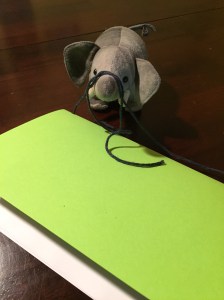
IMG_0747

  • Use your markers to write your name on the front!
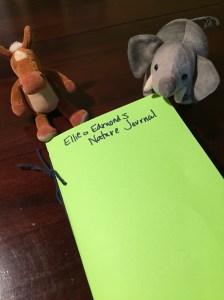
IMG_0748

  • Add drawings, stickers and stamps to the front to decorate! You can decorate the back too!
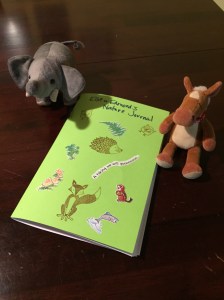
IMG_0749           IMG_0750


Now- get outside and start recording in your nature journal! It’s all yours! Woohoo! Share your pics with us of your finished journals on Facebook and Twitter or you can tag on Instagram @ellieandedmond


Nature Journal2


Categories: adventure, Animals, Children, conservation, crafts, education, Environment, nature, science, wildlife | Tags: , , , , , , , , , | Leave a comment

There’s a Tiger in the Woods!

There’s a Tiger in the Woods!

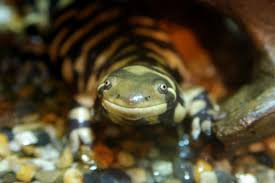
Did you ever wonder how Lake Salamander got its name? Well it was named after one of its most famous inhabitants! Tiger salamanders live all over the area. Because of their beauty and abundance, it was decided that the lake would be named Lake Salamander!

tiger salamander3

Let’s meet these cute little critters!

Tiger Salamander Fun Facts:

  • Tiger salamanders are found in the middle of North America; from Canada to Mexico.
  • They can grow up to 14″ long (most are around 8″) and weigh up to 4 oz (about the weight of a deck of cards).
  • Tiger salamanders are carnivores! They eat frogs, insects and worms.
  • They are listed as least concern by the IUCN.
  • Tiger salamanders get their name from the stripes on their bodies that resemble the stripes of a tiger.
  • Not all tiger salamanders have stripes though. Some have spots or no markings at all.

tiger salamander

  • They live in deep burrows. Most never leave the burrows except to mate or feed.
  • Tiger salamanders are nocturnal.
  • They lay their eggs in water and in the area where they were born. Sometimes they must travel to reach their birthplace.
  • They are related to the axololt! Their larval stage (not full adult) looks like the axololt- with outside gills.
  • Tiger salamanders can live up to 16 years in the wild.
  • They can regenerate their limbs if lost.

tiger salamander2


Tiger salamanders are amazing creatures. Some never reach full adult stage and live their whole lives as larva! Amphibians are so awesome! We’ll be sure to have a class on amphibian live phases at the University in the fall- there is so much to learn! Woohoo!

Categories: adventure, amphibians, Animals, Children, conservation, education, Environment, nature, science, wildlife | Tags: , , , , , , , , , , | Leave a comment

WE’RE BANANAS- FOR SLUGS!

WE’RE BANANAS- FOR SLUGS!

IMG_0688

  • Pacific banana slugs are the 2nd largest species of terrestrial slug on earth. They grow up to 10 inches long and weigh up to 4 ounces.)
  • They can be found from Alaska to California in forests.
  • Pacific banana slugs are decomposers. They decompose plant material and animal droppings. They produce very rich soil which is essential to the habitat they live in.
  • They are mollusks.

banana slug2

  • They have teeth on their tongues.
  • Pacific banana slugs have 2 pairs of tentacles. The larger pair detect light and movement. The smaller pair detect chemicals. They can regrow tentacles.
  • Pacific banana slugs cover themselves in a layer of mucus to protect from themselves from drying out. This slick slime also helps them breathe.
  • They do lay eggs under leaves and cover.
  • Pacific banana slugs have one foot that they use to get them around the forest floor.

banana slug


Categories: adventure, Animals, Children, conservation, education, Environment, nature, science, wildlife | Tags: , , , , , , , , , , | 1 Comment

WHOOOO’S MADE OUT OF CLAY!

WHOOOO’S MADE OUT OF CLAY!

YAY!!! It’s craft day at camp! It’s our favorite day of the week! Let’s get started with some great crafty fun!

Materials:

Clay- grey, white, blue and brown

toothpick

IMG_0602

Instructions:

Roll the brown clay into a large ball

IMG_0604

Flatten your ball and indent the top. Then sculpt into points!

IMG_0605

Take your toothpick and add feathering.

IMG_0606

Roll two smaller balls of the brown clay.

IMG_0607

Press the balls flat and make into a tear drop shape.

IMG_0608

Add the teardrops to your bird for wings.

IMG_0609

Add feathering to the wings with your toothpick.

IMG_0610

Make two small balls out of the grey and white. Make the grey ones slightly bigger than the white.

IMG_0611

Flatten the balls into dots and place on your owl. Add two black balls of clay on the white.

IMG_0612

Roll three log shapes of the black clay and attach them together. Make two of these for beaks.

IMG_0613

Add the beak and your owl is done!

FullSizeRender(67)

Make sure to share your pics of your owl when you finish!

Categories: adventure, Animals, Children, conservation, crafts, education, Environment, nature, owls, science, wildlife | Tags: , , , , , , , , , , | Leave a comment

SLIDERS!!!

SLIDERS!!!

We’re meeting an awesome reptile today at camp! These turtles live in Lake Salamander, we see them when we go canoeing or hang out on the dock! They are friendly,  but never wave back- maybe that’s because turtles are not good at waving! Hahaha! Let’s meet the red-eared slider!

IMG_0166

RED EARED SLIDER FUN FACTS:

  • Red eared sliders live in the Southern United States to Mexico in wetlands, ponds and rivers.
  • They are omnivores. They eat fish, tadpoles and plants.
  • They grow up to 13 inches.
  • Red eared sliders are listed as common by the IUCN.
  • Red eared sliders have red dashes around their ears.
  •  They bask in the sun during the day.

red eared3

  • Red eared sliders don’t have saliva and must eat their food under water.
  • Red eared sliders have claws on their front feet. Their feet are also webbed.
  • They brumate (become less active and hang out on the bottom of rivers/ponds during the fall and winter).

Red eared sliders are super cute. They unfortunately are listed as one of the most invasive species by the IUCN. They are popular pets, but once they grow to large or their owners get bored with them, they release them in to the wild, whether it is the proper habitat or not.

Having pet turtles is great, but you must do your homework and know how big they will grow and how long they will live. Releasing pets in to the wild is not good for them or for local wildlife that is native to the area.

Categories: adventure, Animals, Children, conservation, education, Environment, nature, science, turtles, wildlife | Tags: , , , , , , , , , , , | 1 Comment

A Prickly Camper

A Prickly Camper

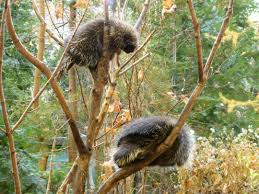
We are meeting our first animal friend at Lake Salamander Camp E&E! She’s a prickly lady, but very friendly! Come meet the Penny, the North American Porcupine!

porcupinw

  • Porcupines can grow up to 3ft long and weigh up to 40lbs.
  • They are herbivores. They eat twigs, berries and roots.
  • North American porcupines can be found in Western Canada, the Western US to Northern Mexico.
  • Porcupines are excellent climbers.
  • North American porcupines have antibiotics in their skin that protects them from their own quills if they fall out of tree. They are the only porcupine that has this adaptation.
  • They have around 30,000 quills.

porcupine2

  • The quills are barbed and hollow.
  • They can not throw their quills- but they can be released.
  • Porcupines have a strong musky odor to help protect them from predators.
  • Their name means “quill pig” in Latin. They are not related to pigs though- they are rodents.
  • Porcupines are nocturnal.
  • Porcupines are good swimmers.
  • They are very vocals and make a variety of sounds.
  • When a baby porcupine is born their quills are soft & they harden after about an hour.

porcupine


Porcupines are funny creatures! We don’t recommend scaring one for sure! They like to be left alone and we like to be nice to them! Also- don’t share your sleeping bag with a porcupine! Hehehe!


Categories: adventure, Animals, Children, conservation, education, Environment, mammals, nature, science, Uncategorized, wildlife | Tags: , , , , , , , , , | Leave a comment

Camp E&E part 2

Camp E&E – part 2

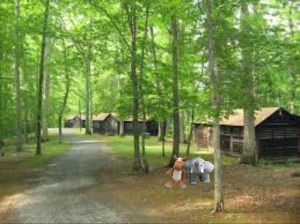
IMG_0472(1)

We had such a great time at beach camp in June! We hope everyone else did too!

As we enter the month of July, we move to our permanent camp location on the shores of Lake Salamander! So we start off this month’s camp with our camp song!

On the shores of Lake Salamander, among the old live oak…

We enjoy Camp Ellie and Edmond and the frogs that croak.

We salute you Camp E & E and all your animal friends…

All our days are each a gem.

While we sit next to the campfire, telling stories of old…

We laugh and sing and watch the stars of gold.

We love you Camp E &E and all our memories of our days…

We hold Camp E & E close to our hearts and we’ll never stray!


Let’s all sing along and unpack our bags in each campers cabin! Make sure you have your canoe ready and let’s get ready for another great month of Camp E&E!

IMG_0166

IMG_0167

Categories: adventure, Animals, Children, conservation, education, Environment, nature, science, wildlife | Leave a comment

SHARK STICK PUPPET!

SHARK STICK PUPPET!

It’s craft day once again at Camp E&E! Let’s get right to it and make a shark stick puppet!

IMG_0433

Materials:

  1. Scissors
  2. Blue or grey felt
  3. White stiff felt
  4. White soft felt
  5. Felt glue
  6. white pom pom or googly eye
  7. marker
  8. popsicle sticks
  9. shark pattern (below)


Instructions:

  • Print and cut out pattern.
  • Then cut out one shark from the blue or grey felt and one from the stiff white felt.

IMG_0434

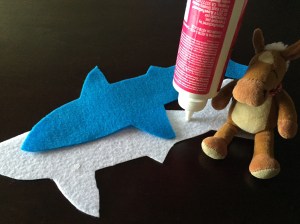
  • Glue the two sharks together.

IMG_0435

  • Cut out teeth from soft white felt and draw a black spot on the pom pom (skip if using a googly eye). Then glue the teeth and eye on your shark.

IMG_0436(1)

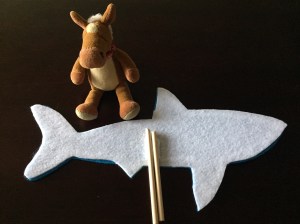
  • Then take your sticks and glue them on the back of your shark. Make sure they are fully dry before you pick up your shark!

IMG_0437

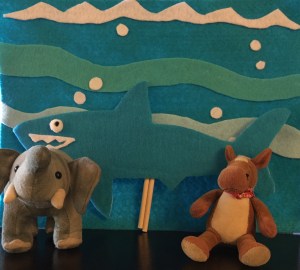
  • Once the sticks are dry! You can have a puppet show with your shark! Make sure you give him a nice clean ocean habitat!

FullSizeRender(62)


There you have it! Our shark stick puppet craft! Enjoy making yours and share it with us!

Printable shark pattern

Printable shark pattern

Categories: adventure, Animals, Children, conservation, crafts, education, Environment, nature, oceans, science, sharks, wildlife | Tags: , , , , , , , , , , , | Leave a comment

GUESS THE SHARK!

GUESS THE SHARK!

Can you guess the shark from the cartoon? Scroll down to the bottom to see if your answers are right and learn a few facts about each shark!

Shark A!

Shark A!


Shark B!

Shark B!


Shark C!

Shark C!


Shark A:

Bull shark!
They tend to head butt prey before biting.
They are known to swim in brackish & fresh water systems.
They are also known as the Zambezi shark.
They can grow to lengths of 11 feet & weigh up to 500lbs.
They are listed as near threatened.


Shark B:
Lemon shark!
They have a horizontal band in their retina that gives them ability to see color and detail.
They are crepuscular.
They rest on ocean floor- to get cleaned by other fish.
They are very social.
They are near threatened.


Shark C:
Tiger shark!

Their famous tiger stripes on a tiger shark usually disappear on adult sharks.

They can grow up to 14 feet long and weigh up to 1,400lbs!

They are called the “wastebaskets of the sea” because they are known to eat anything, including trash.

They are listed as near threatened.

They are nocturnal hunters!


Categories: adventure, Animals, Children, conservation, education, Environment, nature, oceans, science, sharks, wildlife | Tags: , , , , , , , , , , , | Leave a comment

C is for Cookie- Cookie Cutter Shark!

C is for Cookie- Cookie Cutter Shark!

Today we’re meeting a bizarre little shark today! We sure wouldn’t get to close to this crazy critter! Best to look from a distance campers!

  • Cookie cutter sharks can grow up to 22 inches.
  • They live in deep tropical waters world wide- especially near islands.
  • They are carnivores. They eat fish, marine mammals and even other sharkrs.
  • They are listed as least concern by IUCN.

cookie cutter

  • Cookie cutter sharks are members of dogfish family.
  • Cookie cutter sharks have light emitting photophores on it’s underside to blend in with moonlight.
  • They also have a bioluminescent collar that can flash & may help them attract prey.
  • They are famous for the cone shaped chunks it takes out of its prey- including larger sharks, marine mammals and fish.
  • Their famous bite marks have been seen on submarines and underwater cables.
  • Cookie cutter sharks  have lower teeth that are long, sharp and triangular shaped. There have 25-31 teeth on the bottom row of their mouth.
  • They travel in schools.
  • Cookie cutter sharks were discovered in the 1800s, but the strange bite marks were not attributed to the little sharks until the 1970s.

    cookie cutter2

    Aren’t they the craziest looking creatures ever? We think so! What’s your favorite crazy looking shark?

Categories: adventure, Animals, Children, conservation, education, Environment, nature, oceans, science, sharks, wildlife | Tags: , , , , , , , , , , | Leave a comment

Blog at WordPress.com.