endangered species

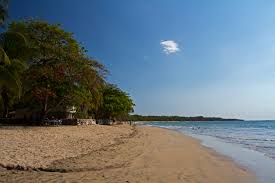
Costa Rica!

Costa Rica!

IMG_2913

Hello and greetings from Central America! We are settling in to our tree house that we are using for base camp. We’re going to learn more about this gorgeous little country today before we begin some of the awesome animals next week! Woohoo!

costa rica3


Costa Rica Fun Facts:

  • Costa Rica is located in Central America. The capital is San Jose.
  • Costa Rica’s marine areas are larger than its land area.
  • There are 7 active volcanoes in the country. Poas volcano has the 2nd largest crater in the world.

costa rica

  • There are 52 species of hummingbirds in Costa Rica.
  • 10% of the world’s butterflies call Costa Rica home. That is about 1,000 species.
  • Costa Rica has a rainy season & a dry season. We are end of the rainy season.
  • Costa Rica contains about 5% of the world’s biodiversity.
  • It borders the Pacific ocean and the Caribbean ocean.

costa rica2

This is one super neat place full of amazing species! We can hardly wait to meet some of them! See you Monday!


Categories: adventure, Animals, Children, conservation, education, endangered species, Environment, nature, science, Today's Post, wildlife | Tags: , , , , , , , , , | 1 Comment

Halloween Week

Halloween Week

We are taking a break from our usual programming to share some fun animals that remind us of Halloween- one of our favorite holidays! We’re sharing a Not So True Halloween Facts and then we’ll share some true facts about the animal!


2E5A4ED2-8651-4C5F-BB45-93E2B2B78B58

Goblin Shark Fun Facts: 

  • Goblin sharks live in the deep ocean.
  • They are able to thrust their jaws forward out of their mouth by 3 inches.
  • They can grow up to 12 ft long.
  • Goblin sharks are found mostly off the coast of Japan.
  • They are thought to be solitary.
  • Their upper jaw contains up to 53 teeth and their lower jaw can contain up to 62 teeth!

F5DA657A-6310-4245-AFF9-AC6B403869F1

Categories: adventure, Animals, Children, conservation, education, endangered species, Environment, fish, nature, oceans, science, sharks, Today's Post, wildlife | Leave a comment

Slow Mover

Slow Mover

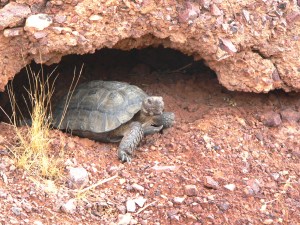
We headed to the heart of the Mojave Desert in search of one of two species of tortoises! These desert tortoises call this their home and we were thrilled to learn more about them!

7C6942F8-76AB-4ED6-867E-F9624A0E245C

Desert Tortoise Fun Facts:

  • These tortoises spend most of their time in burrows and shelters. They are inactive most of the year. They stay in cool areas to avoid losing water during the heat and they hibernate during the winter.
  • You’ll find them mostly after a rain.
  • They can live up to 80 years.
  • Desert tortoises have sharp claws that help them dig burrows. They can spend 95% of their lives in burrows.
  • Desert tortoises are slow growing. They still are only around 8 inches at 16 years old. They can reach up to 30 inches total.
  • These herbivores are listed as threatened and vulnerable- depending on the population.
  • Their biggest threat is habitat loss.

Desert Tortoise

These amazing creatures are made for the desert. They can survive a year without direct access to water! WOW!!

Categories: adventure, Animals, Children, conservation, education, endangered species, Environment, nature, reptiles, science, Today's Post, wildlife | Tags: , , , , , , , , , , | 1 Comment

Doggies of the Desert!

Doggies of the Desert!

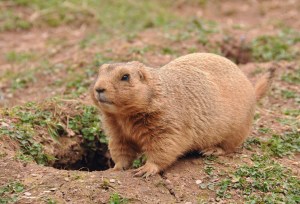
We headed out from camp today to meet on the residents for the prairie and the desert. We were excited to find these rodents. Can you guess who were are meeting?

Let’s learn more about the prairie dog!

Prairie Dog

Black Tailed Prairie Dog Fun Facts: 

  • Prairie dogs live in groups called coteries. These family groups include a male or two and several females. The females stay in their group for their whole lives.
  • Their prairie dog towns give shelter to other animals. Their towns also attract insects which birds depend on.
  • They are vocal. Scientists are just beginning to realize how complicated their language is.
  • Prairie dog populations have fallen by 95%, this is mainly due to habitat loss.
  • These prairie dogs do not hibernate.
  • Prairie dogs are herbivores.
  • Black tailed prairie dogs are listed as Least Concern by the ICUN.
  • They get their name from the barking noises they make.

29820FC6-4FBF-44D5-AEE7-AB759AF5D153These rodents and cousins of the common grey squirrel are one of our favorites. There are five species of these little dudes. Scientists are working to protect their habitat and them as they are important for the survival of many species.

Categories: adventure, Animals, Children, conservation, education, endangered species, Environment, mammals, nature, science, Today's Post, wildlife | Tags: , , , , , , , , , , | 1 Comment

Hello Kitty!

Hello Kitty!

EEA2B434-D773-447F-AE67-FD375D02B0EB

We are excited to meet our first animal of this year’s travels. We unpacked our gear at our camp. We’ll be exploring several kinds of habitats here the Southwest. We spent our first evening looking for a wild cat, the ocelot. These spotted cats roam in the southern most regions of the southwest. They are not easy to spot, but we were lucky and found one!

04A4EBB4-3127-441F-B433-A632945C473C

Ocelot Fun Facts: 

  • Ocelots are mostly nocturnal. Like all cats, they are carnivores. They eat rabbits, rodents, birds and reptiles.
  • Ocelots can swim well.
  • Ocelots are mostly solitary. They scent mark their territories.
  • They are kept as pets, which is a very bad idea. They are not like your domestic housecat, They are strong and destructive. These cats belong in the wild.
  • They are know to be shy.
  • Females give birth to a litter in a den, where the cubs will stay til they around 3 months old.

5FB30FE2-8FA7-4DDC-99F7-66ECC20A1FB2

These small big cats are gorgeous. The were once listed as threatened by the IUCN because they were hunted for their coats. They still are losing habitat, but for now their populations are stable. Yay!!!

Categories: adventure, Animals, Children, conservation, education, endangered species, Environment, nature, science, Today's Post, wildlife | Tags: , , , , , , , , , | 1 Comment

Back to Basics- Classifications

Back to Basics- Classifications

We are back! Sorry for the delay in posts- we had some issues with the Irma. The University is in Atlanta. And then we headed on a short vacation to see our friend TourGuide Ted- the touring bear!

Today we are talking about classification! How do we classify animals? Well we are going to tell you! Let’s start out from top to bottom with classification! Animal classification starts with the Kingdom- which includes all animals on earth! In order to explain classification we are going to break down how Edmond is classified!

IMG_7260


Kingdom – includes all animals! Edmond is an animal!

Phylum- includes more than one class of animals. Chordata is the phylum for animals with a back bone or vertebrate. Edmond definitely has a backbone. 

Class- includes all the animals that go together- such as mammals, birds, insects, etc… Edmond is a mammal.

Order-  included more than one class of animals. Edmond belongs to the perissodactyla order- which means odd toed ungulate. Other odd toed ungulates include tapirs and rhinos. These animals have one large middle toe or just symmetrical toe- like Edmond’s hoof!

Family– is often named after one of its common members. Edmond belongs to the horse family, which includes zebras and donkeys.

Genus– ranks below family, but includes one or more species. Edmond’s genus is Equus. There are seven species in this genus.

Species– a group of animals that have common characteristics and can usually mate with each other. Edmond is a domestic horse (quarter horse). The other species in the Equus genus include; three species of asses, and three species of zebra.

IMG_7262

Classification of animals can get very complicated. It is most often based on the animal’s anatomy. There are some animals that even have their classification changed as scientists learn more about them. Take the giant panda- they were once classified with raccoons and the red panda, but scientists realized that giant pandas are carnivores and belong to the bear family. Pretty crazy right?

Categories: adventure, Animals, Children, conservation, education, endangered species, Environment, horses, mammals, nature, science, Today's Post, wildlife | Tags: , , , , , , , , | 1 Comment

Back to Basics- Babies!

Back to Basics- Babies!

As we continue our back to basics month, we are talking about reproduction today! All animals have offspring, but how they have babies is very different! We are going to learn those different ways!

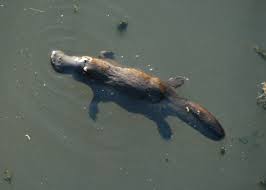
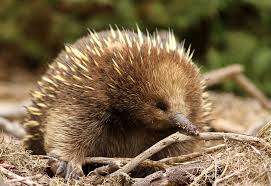
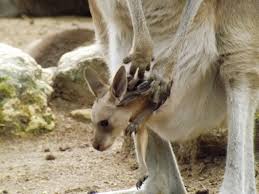
Viviparous: when an animal gives live birth. Animals that give live birth include, mammals, some fish and insects (ex- scorpions), some reptiles and amphibians. There are two mammals who lay eggs- the platypus & the echidna. Marsupials also are viviparous, they give live birth to underdeveloped babies who grow in the mother’s pouch.

platypus

echidnas


kangaroo


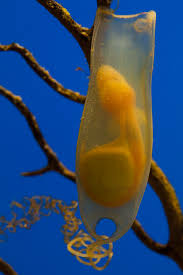
Oviparous: when an animal lays an egg that the offspring hatches from. Animals that lay eggs include birds, fish, our two mammal friends, reptiles, insects and most amphibians. Eggs are laid externally . Some sharks and ray lay eggs called mermaids purses.

shark egg

Ovoviparous: when an animal’s offspring develop inside an egg, that is incubated inside the mother’s body. It then gives live birth. Animals that give birth this way include fish (some sharks- like the great white), some fish, some insects and some snakes. The most famous ovoviparous animal is actually not a female, it’s the male seahorse. Male seahorses incubate the eggs and then give birth to live young! Some ovoviparous animals, can store sperm and incubate their eggs months later.


Some fun reproduction facts:

  • Elephants have the longest gestation period of any animal- 22 months.
  • Many insects die not long after giving birth or mating.
  • Female giant pacific octopus protect their eggs over the 6-7 months they are incubating. During this time the octopus doesn’t eat or leave her eggs. She dies soon after her babies are hatched.
  • Female alligators and crocodiles are one of the few reptiles that protect their nests and offspring after they hatch.
  • Male anglerfish attach to the much larger female and absorb in to her.
  • Suriname toads incubate their eggs on their backs. Tiny little frogs explode out of the skin on her back.

The animal world is full of some crazy mating stories and even more crazy birth stories! It just makes each animal that much more awesome!

Categories: adventure, Animals, Children, conservation, education, endangered species, nature, science, Today's Post, wildlife | Tags: , , , , , , | 2 Comments

Wear Your Bonnet

Wear Your Bonnet

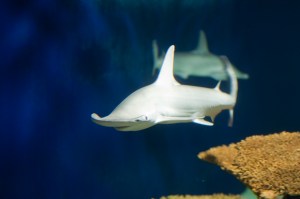
Can you imagine a shark wearing a bonnet? That would be funny looking- not to mention hard to swim with- hahaha! Today we are meeting a relative of the hammerhead- the bonnethead shark!!

IMG_0317

Bonnethead Shark Fun Facts: 

  • Bonnetheads are smaller sharks- they can grow up to 59 inches- about the length of a refrigerator.
  • They call estuaries, bays and sandy bottoms their home.
  • Their heads are more rounded than that of the larger hammerhead species.
  • Like all other sharks they are carnivores.
  • Bonnethead sharks live in small groups.
  • They can live up to 15 years.


IMG_0324

These smaller hammerheads are so cool. A recent study by scientists may suggest that they eat sea grass, which would make them omnivores! Wow! That would be super cool!

Categories: adventure, aliens, Animals, camp, Children, conservation, education, endangered species, Environment, fish, oceans, science, Today's Post, wildlife | Tags: , , , , , , , , , , , | 1 Comment

Know Your Sharks

Know Your Sharks

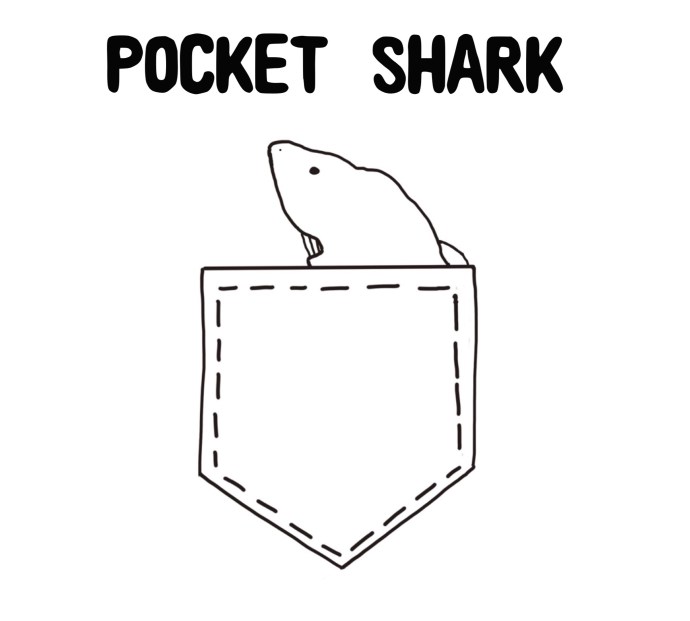
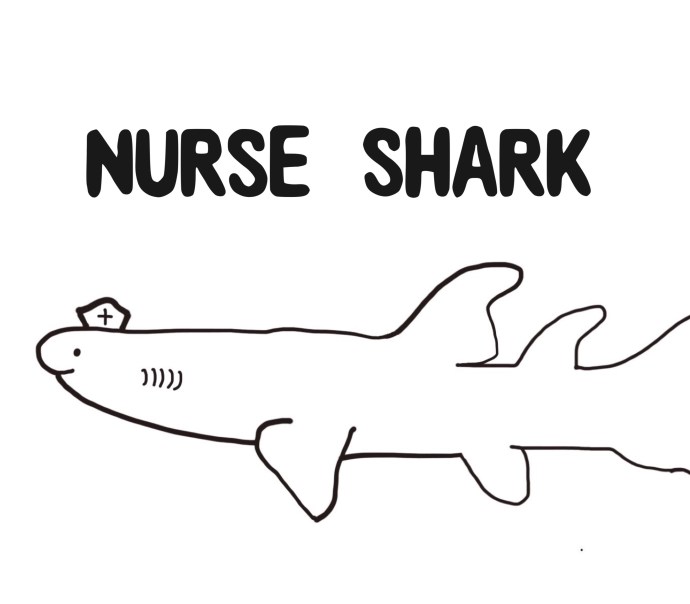
Today we have four coloring sheets for you in our continued series- know your sharks! So head on over to the craft cabin and grab something to color with and get to know your sharks!

FullSizeRender

Pocket Sharks have two pouches or pockets, one on each side of their body in front of their fins. Scientists are unsure of their purpose.


FullSizeRender

Bamboo Sharks are mostly nocturnal and only grow up to 37 inches long. 


FullSizeRender

Zebra sharks lose their stripes as they grow. Adults are actually covered in spots!

FullSizeRender


These large sharks (up to 14 ft) often rest on the ocean floor. They pump water over their gills using spiracles to pull in water. 


FullSizeRenderFullSizeRender


Categories: adventure, Animals, camp, Children, conservation, education, endangered species, Environment, fish, nature, oceans, science, Today's Post, wildlife | Tags: , , , , , , , , , , , , , | 1 Comment

Finding the Sandbar

Finding the Sandbar

We are heading out on the S.S E&E to meet a shark today! Often when you are at the beach, you’ll see where more sand has accumulated and even sticks out of the water- this is called sandbar! Well today we are meeting the sandbar shark! They are found around bays, estuaries and sandy bottoms.

IMG_0314

Sandbar Shark Fun Facts: 

  • These streamline sharks can grow up to 8 feet long.
  • Sandbar sharks have large dorsal fins.
  • These carnivores eat mollusks, crustaceans and fish.
  • Sandbar sharks are also called brown sharks.
  • They are listed as Vulnerable by the IUCN.
  • Sandbar sharks give birth to live young!


IMG_0323

These relatives of the bull shark are not aggressive like their cousins. Like other sharks, they are threatened by humans- due to shark finning, pollution and over fishing.

Categories: adventure, Animals, Children, conservation, education, endangered species, Environment, fish, nature, oceans, science, sharks, Today's Post, wildlife | Tags: , , , , , , , , , , , , | 1 Comment

Blog at WordPress.com.