Posts Tagged With: children

Pelican Pelican!

Pelican Pelican!

While bird watching on the beach, we spotted some pelicans. This large billed birds were not the brown pelicans we are use to seeing, but the American White Pelican. They were so fun to watch and we couldn’t wait to learn more about them.

index

American White Pelican Fun Facts:

  • White pelicans live near marshes and lakes.
  • These large birds can grow up to 70 inches long and weigh up to 14 lbs. Those famous bills can be 15 inches long.
  • Their wingspan is only 2nd to the California Condor.  Those wings can be 120 long when in flight! That is longer than a queen sized mattress, which measures 80 inches!
  • Males are larger than females.
  • These carnivores eat not only fish, but also bottom dwellers like salamanders and crayfish.
  • They are usually found in large flocks.
  • White pelicans do not dive for their food, but instead scoop it out of the water and drain the water out of their bills.
  • These big birds eat around 4 lbs of food a day!

pelican


We love pelicans! They are so funny and kind of derpy, but graceful too! It was fun to watch some swimming and catching their food that way instead of diving.
 

Categories: adventure, Animals, birds, camp, Children, conservation, education, Environment, nature, science, Today's Post, wildlife | Tags: , , , , , , , , , , , , | Leave a comment

Curlew!

Curlew!

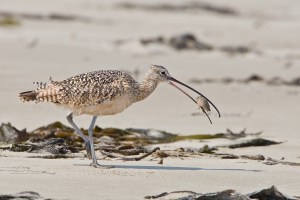
We are meeting our first resident of Camp EE at the beach- the long-billed curlew. One of our favorite pastimes at beach camp is to watch shore birds run around looking for food and running away from the waves.


2 of 5 Long-billed Curlew (Numenius americanus) bird eating sand

Long-billed curlew fun facts: 

  • These carnivores use those long bills to grab crustaceans and marine invertebrates.
  • They hunt for prey in groups.
  • They run or walk on the ground often.
  • They are the largest member of the sandpiper family.
  • Males do fancy flights to attract mates. They mate in grasslands and prairies away from the shore.
  • They are listed as Least Concern by the IUCN.

71ABD8D6-6128-4EAE-949B-6841DD096D45

We love these birdies with their skinny legs and long funny beaks. We could watch them all day and we might just do that!

Categories: adventure, Animals, birds, camp, Children, conservation, education, Environment, nature, science, Today's Post, wildlife | Tags: , , , , , , , , , , , , | 2 Comments

Camp E&E at the Beach

Camp E&E at the Beach

We are so excited to be back at camp after our vacation. We hope everyone had a nice time during the break too. The cabins are ready just off the beach and we are unpacking for 6 more weeks of adventures. There will be crazy fish, searching for shells, sharks, crafts, poems and much more! We hope you are ready!

6E17B8C0-1141-4CFB-8B20-484D8E9B6A9A

Beach rules:

  • Campers can not go on to the beach after dark without counselors.
  • All lights on the beach must have a red filter as to not disturb nesting turtles.
  • Only collect sea shells that are empty.
  • All trash must be taken back to camp.
  • No feeding the seagulls.
  • Have fun exploring and ask loads of questions.

5B65A9D3-3962-49C0-978B-F6F3C457374E

Categories: adventure, Animals, camp, Children, conservation, education, Environment, nature, science, Today's Post, wildlife | Tags: , , , , , , , , , , | 1 Comment

Goodbye Lake Salamander

Goodbye Lake Salamander

Time to pack up, it’s the last day of camp! We are off next week. Beach Camp E&E starts on July 9th! As we back up our trunks, we are a little sad to say goodbye to this special place. Come sit down with us and sing the camp song with us one more time. We are excited to see you at the beach.

87953750-6BCF-4035-920A-EDFEA746F4A0


On the shores of Lake Salamander, among the old live oak…

We enjoy Camp Ellie and Edmond and the frogs that croak.

We salute you Camp E & E and all your animal friends…

All our days are each a gem.

While we sit next to the campfire, telling stories of old…

We laugh and sing and watch the stars of gold.

We love you Camp E &E and all our memories of our days…

We hold Camp E & E close to our hearts and we’ll never stray!

9E868E12-699E-4A5B-AD8E-C39FD283CA4A

Categories: A, Animals, camp, Children, conservation, education, Environment, mammals, nature, science, Today's Post, wildlife | Tags: , , , , , , , , | 1 Comment

Foxy

Foxy

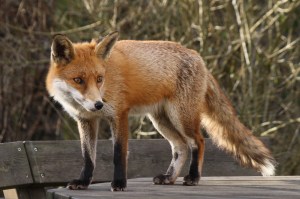
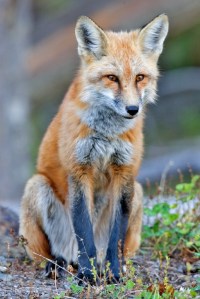
We met another resident of the woods around camp- the red fox. These canines are known for being clever and sneaky. We just think they are cool.

15F99CEF-B79E-4AE6-876C-FA8AB86F7309

Red Fox Fun Facts: 

  • Red fox can grow up to 21 inches long and weigh up to 24 lbs.
  • They are the largest member of the true fox family.
  • These graceful mammals walk on their toes!
  • They are mostly solitary.
  • These omnivores eat small mammals, fish and frogs, but also eat fruit and vegetation.
  • While the red fox is mostly nocturnal, they are known to come out during the day.
  • They are very vocal and can produce 28 different sounds. Does anyone here speak fox?
  • Those large fluffy tails are called brushes. Foxes use them for balance and to wrap themselves up in during colder months.

Red Fox (Male), Horsefly Peninsula, Quesnel Lake, British Columbia

You can hear the fox around Lake Salamander chatter. These gorgeous animals often get a bad wrap, but that is very much undeserved. They are one of the most successful members of the canine family and can be found on 5 continents.

Categories: adventure, Animals, camp, Children, conservation, education, Environment, mammals, nature, science, Today's Post, wildlife | Tags: , , , , , , , , , , | 1 Comment

Craft Day – clay salamanders!

Craft Day- clay salamanders!

We are ready for craft day and we are so excited! Our crafty opossum friend is in charge of crafts at Lake Salamander! Let’s get crafty!

Materials:
IMG_4878
Craft knife (adults please help small children)
Polymer clay in various colors
Oven
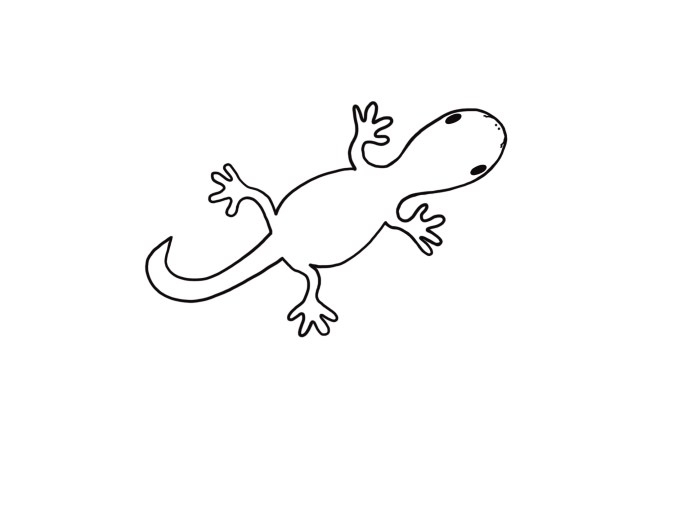
Salamander pattern
Magnets
Glue
 540B4BA4-99BD-47D8-A1E1-193A072EF611

Instructions:

  • Print and cut out salamander pattern
  • Choose the color you want to use for your salamander.
  • Roll out clay according to manufacture instructions.
  • Using the pattern, cut the salamander shape out of the clay.

IMG_4880

  • Use the other colors to decorate your salamander.

IMG_4881

  • Bake clay according to manufacture instructions.

IMG_4882

  • Once it cool, glue on magnet.

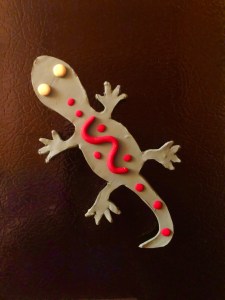
And there you have it! One adorable salamander magnet!

D5EBFCB0-94B2-4924-B2CC-D6D3AC82827B

Hanging on the fridge in the food hall!

Categories: adventure, amphibians, Animals, camp, crafts, education, Environment, nature, science, Today's Post, wildlife | Tags: , , , , , , , , | 1 Comment

Amphibian Friend at Lake Salamander

Amphibian Friend at Lake Salamander

We are so happy to meet our first friend of the summer! Camp E&E sits next to one beautiful lake- Lake Salamander. This special spot was named because of the special amphibians who live here! We are always so thrilled to find a few chilling in the woods.

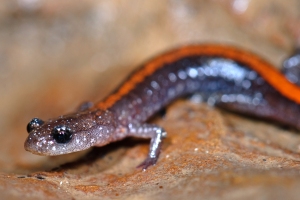
Today we are meeting the Southern Zigzag salamander. Woohoo!

03895B5D-FD41-4D4B-ADFC-8D73BB7270AD

Southern Zigzag Salamander Fun Facts: 

  • These adorable amphibians are carnivores. They eat mostly insects.
  • They only grow to about 3 1/2 inches long! Not a big animal for sure.
  • They call the forest floor their home, so watch where you are stepping while on hikes campers.
  • They have a zigzag stripe down their back. It can vary in color from red to yellow.
  • Females lay eggs in burrows. They guard their eggs until they hatch. Unlike a lot of salamanders, they do not go through an aquatic larva phase. When they are born, they look like miniature adults!
  • They are listed by the IUCN as Least Concern.

Can you imagine how cute teeny tiny zigzag salamanders are? We would hardly be able to stand it! We hear that Crafty Crab is coming up with a cute salamander craft later in the week! YAY!

Categories: adventure, amphibians, Animals, camp, Children, conservation, education, Environment, nature, science, Today's Post, wildlife | Tags: , , , , , , , , , , , | 1 Comment

We Spots a Spotted Owl

We Spots a Spotted Owl

When people think of Africa, people think of all the big animals, but rarely do they think of owls! Well, Africa is home to many species of owls. We went looking for the Spotted Eagle and we found one! Come learn more about them with us!

spotted eagle owl

Spotted Eagle-Owl Fun Facts:

  • Spotted eagle-owls have a 3 foot wing span!
  • They have large ear tufts and bright yellow eyes.
  • Like many owls they are nocturnal.
  • These carnivores eat mammals, birds and amphibians. They are also known to eat carrion.
  • Spotted eagle-owls are known to bond for life.
  • They are listed as Least Concern by the IUCN.

spotted eagle owl2

Seeing an owl in the wild is always a treat! These owls have a fun musical call. We could listen to them all night.

Categories: adventure, Animals, birds, Children, conservation, education, Environment, nature, science, Today's Post, wildlife | Tags: , , , , , , , , , , , , | 1 Comment

Flamingo!

Flamingo!

We are off to meet a bird who calls this country home- the greater flamingo! These iconic birds are one of our favorites too! Let’s learn more about them together.

Greater Flamingo

Greater Flamingo Fun Facts: 

  • These large birds can grow up to 59 inches tall and weigh up to almost 9 pounds. They are the largest member of the flamingo family.
  • Males are larger than females.
  • Greater flamingos are a soft whitish pink. They do have bright pink and black feathers on the back of their bodies.
  • Young flamingos are grey and turn pink after a few years. That pink coloration is caused by the food they eat.
  • During breeding season they turn brighter pink!
  • These carnivores eat small crustaceans, insects and fish.
  • They are highly social.

Greater Flamingo, Phoenicopterus roseus at Marievale Nature Rese

Flamigos always make us smile. Did you know that knobby joint they bend is actually their ankle? Their knees are closer to their bodies! Neat!

Categories: adventure, Animals, birds, Children, conservation, education, Environment, nature, science, Today's Post, wildlife | Tags: , , , , , , , , , , | 1 Comment

Armored Lizard

Armored Lizard

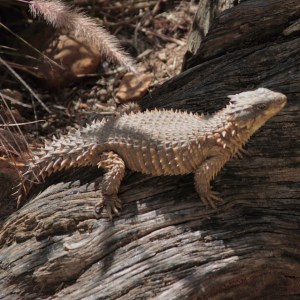
We decided we haven’t met enough lizards on our trip so far and headed out to meet one with some most interesting scales. This reptile was a definite look don’t touch kind of creature. Get ready to learn more about them.

013E30EB-3BDC-4094-A805-BD30C6DCCAC8

Giant Girdled Lizard Fun Facts: 

  • They are also known as the sungazer lizard.
  • Giant girdled lizards grow to about 7 inches long.
  • Though they live in rocky areas, they do dig their own burrows for shelter.
  • They are insectivores.
  • They live in groups.
  • They secret scents to communicate with other sungazers.
  • Giant girdled lizards are listed as Vulnerable by the IUCN.

42275B62-3B8E-4CF9-871E-42C0552388ED

We enjoyed spotting this little spiked lizard. It would be a smart predator to stay away from those scales.

Categories: adventure, Animals, Children, conservation, education, endangered species, Environment, lizards, nature, reptiles, science, Today's Post, wildlife | Tags: , , , , , , , , , , , | 2 Comments

Blog at WordPress.com.