Posts Tagged With: education blog

Back to Basics- Reptiles & Amphibians

Back to Basics- Reptiles & Amphibians

We are on our last day of learning the basics on the groups! We have much more to learn! Today Professor Carl the Chameleon is catching everyone up on reptiles and amphibians.

ellie_edmund_professors-chameleon


Let’s learn some reptile basics first and then more about our amphibian friends.

There are around 7,984 reptile species on earth. Reptiles first appeared on earth around 340 million years ago. The largest group of reptiles is lizards. You can find us on most continents except Antarctica. You can even find some of us in the worlds’ oceans.

What makes a reptile a reptile?

  • We are covered in scales.
  • We lay eggs.
  • We are ectothermic.
  • We have lungs for breathing.
  • We are vertebrates.

 reptile

Our scales cover our epidermis and they are made of keratin. When we grow we shed our scales. Some of us do this in pieces and some of us, like snakes- shed their whole layer at once.

Turtles, tortoises, crocodiles and most lizards have movable eyelids. Snakes have a fixed clear eye covering that they shed when they grow too.

Most reptiles have poor hearing and none of us can taste.

Snakes and some lizards have a forked tongue that they “smell” with. They pick up scent molecules with their tongue and use an organ in their brain called the Jacobson’s organ to analyze those molecules.

sea turtle

Most reptiles lay their eggs and leave them. They provide no parental care for their young.  There are some reptiles that incubate their eggs inside their body and give birth to live young.  The crocodilian family and a few lizards to protect their eggs and young.


Amphibians
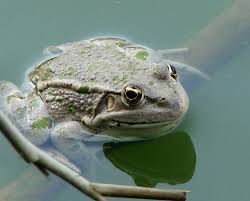
 frog


Now let’s talk some about our amphibian friends.

There are around 5,000 species of amphibians. They have been around for 370 million years.  There are three groups of amphibians; newts/salamander, frogs/toads and caecilians.

The word amphibian means dual life. They live a life in the water (usually as young) and then on land (usually as adults).

What makes an amphibian an amphibian?

  • We are ectothermic.
  • We are vertebrates.
  • We breathe through our skin.
  • We go through metamorphosis. We do not look the same as young as we do as adults.

Amphibian young use gills to breathe. Young frogs and toads are called tadpoles and they have tails and no legs.

We have no scales and no hair. Our skin can absorb water and we need water to keep it moist, this helps us breathe. We all have poison glands in our skin!

Adult amphibians have lungs, but we do not have rib cages. We can also absorb oxygen through our skin and through the lining of our mouth.

Most amphibians deposit eggs in water. We can lay anywhere from 2 to 50,000 eggs.


Categories: adventure, amphibians, Animals, Children, conservation, education, Environment, nature, reptiles, science, Today's Post, wildlife | Tags: , , , , , , , , , | 1 Comment

Back to Basics- Insects

Back to Basics- Insects

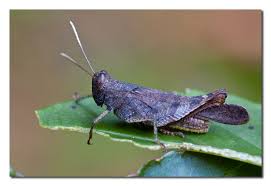
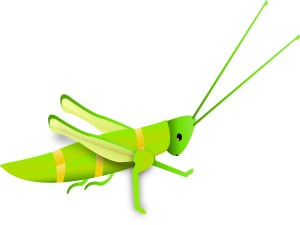
We are day number 3 of our back to basics month. Today we are learning about insects with our professor of insects Gracie Grasshopper!

ellie_edmund_professors-grasshopper

Number of species- nearly 1 million, that’s right we insects account for about 97% of all known species on earth. We arthropods outnumber all other animals on earth.

Insect traits:

  • Insects have a segmented body. It’s divided into 3 sections; the head, the thorax and the abdomen.
  • Insects are invertebrates. We do not have endoskeletons, like the mammals, birds, fish and reptiles. We have an exoskeleton! Our bodies are covered in hard coverings made of chitin.
  • We have two antennae and 6 legs. Each leg has five parts.
  • We hatch from eggs.

Insects are generally divided into two groups, insects with wings and insects without wings. I myself have wings.

insect

We either have compound eyes or simple eyes and there are some of us with both types.

We do not have true ears, but we have organs that help us listen to vibrations in our environment.

We do not have lungs or gills to breathe. Instead we have a series of tubes to “breathe” oxygen and expel carbon dioxide.

Yes, we insects have brains. They are tiny and we don’t quiet use them the way other animals do.

insect2

There you have the basics of being an insect!

Categories: adventure, Animals, Children, conservation, education, Environment, insects, nature, science, Today's Post, wildlife | Tags: , , , , , , , , , | 1 Comment

Back to Basics- Fish

Back to Basics- Fish

Time to brush up on your fish knowledge with professor Sylvia the Seahorse!

ellie_edmund_professors-seahorse


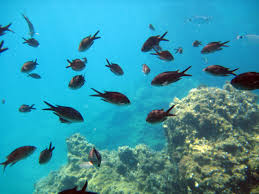
Number of fish species- 24,000 and growing! Scientists discover new species all the time! We fish were the first vertebrate animals on the earth! We occupy the world’s oceans and fresh water bodies of water; including lakes, rivers and ponds.

Fish traits:

  • Fish have gills that we use to extract oxygen from water and expel carbon dioxide. They serve the same function as a mammal’s lungs.
  • Fish have scales. Our scales are different, some are smooth and some are rough. Sharks’ scales are called dermal denticles. Some fish like hagfish have no scales.
  • Fish have fins for swimming. Fins are shaped for the type of swimming a fish does- some are built for speed and some are small (like mine).
  • We fish are vertebrates, we all have back bones.
  • Most fish are exothermic, cold blooded.

Fish are classified in three groups; jawless fish (hagfish and lamprey- they also have no scales), cartilaginous (sharks and rays) and bony.

fish2

Some fish lay eggs, some incubate their eggs in a womb and some incubate their young in wombs similar to mammals.

We fish can detect chemicals and vibrations. We often have keen eyesight and a great sense of smell.

Fish do have ears! Not big goofy ones like some mammals, but internal ones.

fish

We also have an extra “organ” to help us “hear” and detect vibrations. This is called the lateral-line. This line of cells runs the length of our bodies and helps us detect motion. Schooling fish who swim in synchronized groups use their lateral line to swim in these formations.

Sharks and rays have yet another “organ” that helps them detect electrical fields. It’s called the ampullae of Lorenzini, gel filled cells that help our cartilaginous cousins detect even the faintest of electrical fields. This is something no other animal can do!

We also have a swim bladder that keeps us buoyant in the water. Fresh water fish have a bigger swim bladder than salt water fish. Bony fish swim bladders are filled with a gas that is less dense than water. In cartilaginous fish, their swim bladder is a large oil rich liver that is less dense than water! 


Categories: adventure, Animals, Children, conservation, education, Environment, fish, nature, oceans, science, Today's Post, wildlife | Tags: , , , , , , , , , , | 1 Comment

Back to School 2017

Back to School 2017

ellie_edmund_professors-U-logo

Hellooooo! Welcome back everyone! We trust you had a wonderful summer, we know we enjoyed camp! It’s time to get back to the books and adventure though! This month we are kicking off school with a Back to Basics month! We’ll be go over some things you know and hopefully some things you don’t!

Come October we are heading off on our trip around the world just like last year, except where we go will be a secret. On the first day of each month, we’ll describe where we will be going and you will have to guess. We’ll have a prize each month for the first person to guess where we will be going!

As usual we’ll be meeting all kinds of new animal friends along the way! We hope you are excited for this wonderful new school year! Tomorrow we start with the bird basics!

Categories: adventure, Animals, Children, conservation, education, Environment, nature, science, Today's Post, wildlife | Tags: , , , , , , , , , | 1 Comment

Know Your Sharks

Know Your Sharks

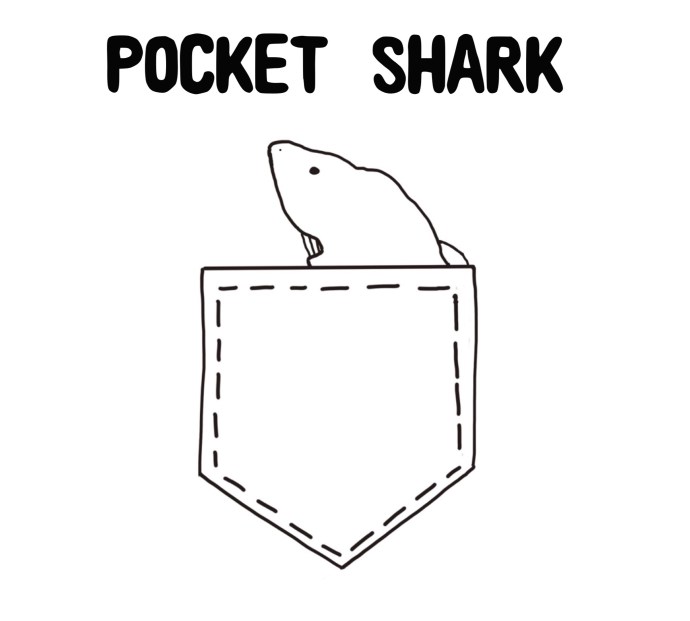
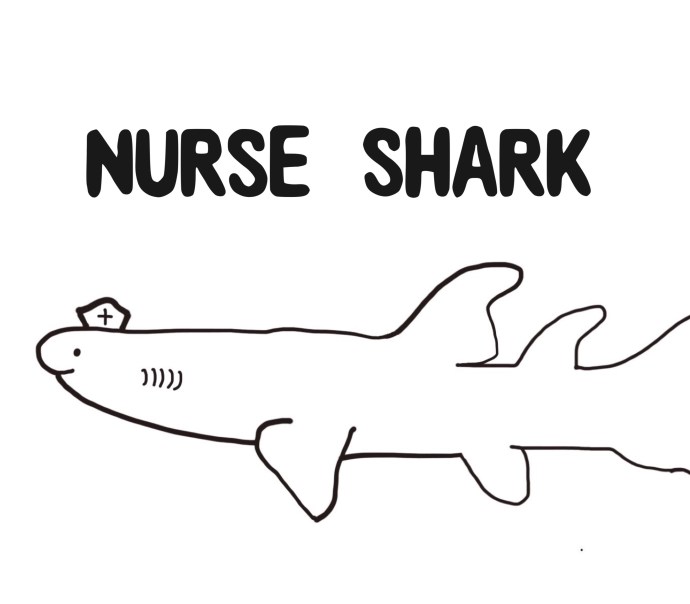
Today we have four coloring sheets for you in our continued series- know your sharks! So head on over to the craft cabin and grab something to color with and get to know your sharks!

FullSizeRender

Pocket Sharks have two pouches or pockets, one on each side of their body in front of their fins. Scientists are unsure of their purpose.


FullSizeRender

Bamboo Sharks are mostly nocturnal and only grow up to 37 inches long. 


FullSizeRender

Zebra sharks lose their stripes as they grow. Adults are actually covered in spots!

FullSizeRender


These large sharks (up to 14 ft) often rest on the ocean floor. They pump water over their gills using spiracles to pull in water. 


FullSizeRenderFullSizeRender


Categories: adventure, Animals, camp, Children, conservation, education, endangered species, Environment, fish, nature, oceans, science, Today's Post, wildlife | Tags: , , , , , , , , , , , , , | 1 Comment

Finding the Sandbar

Finding the Sandbar

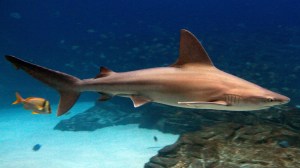
We are heading out on the S.S E&E to meet a shark today! Often when you are at the beach, you’ll see where more sand has accumulated and even sticks out of the water- this is called sandbar! Well today we are meeting the sandbar shark! They are found around bays, estuaries and sandy bottoms.

IMG_0314

Sandbar Shark Fun Facts: 

  • These streamline sharks can grow up to 8 feet long.
  • Sandbar sharks have large dorsal fins.
  • These carnivores eat mollusks, crustaceans and fish.
  • Sandbar sharks are also called brown sharks.
  • They are listed as Vulnerable by the IUCN.
  • Sandbar sharks give birth to live young!


IMG_0323

These relatives of the bull shark are not aggressive like their cousins. Like other sharks, they are threatened by humans- due to shark finning, pollution and over fishing.

Categories: adventure, Animals, Children, conservation, education, endangered species, Environment, fish, nature, oceans, science, sharks, Today's Post, wildlife | Tags: , , , , , , , , , , , , | 1 Comment

Meeting a SeaEdmond

Meeting a SeaEdmond

IMG_5264

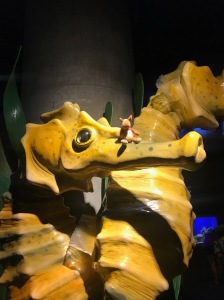
Our week of diving is continuing at camp and we are meeting a seahorse- or a SeaEdmond as we like to call them! Everyone ready? Grab those flippers and let’s goooooo!

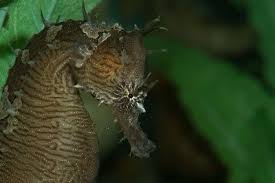
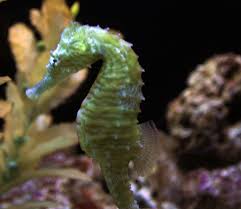
Lined Seahorse Fun Facts:

  • These tiny crustacean eaters are fish!
  • Lined seahorses camouflage in with their surroundings and ambush their prey.
  • Their eyes can rotate around and move independently of each other.
  • Males are larger and have longer tails than females.
  • They mate for life.
  • Like other seahorses, the males incubate the eggs in a pouch. They give birth to the baby seahorses. They are about the size of a flat thumbtack.
  • These little guys are not strong swimmers and attach to sea grass or other substrate to protect themselves.

lined seahorse2

lined seahorse

Categories: adventure, Animals, camp, Children, conservation, education, endangered species, Environment, fish, nature, oceans, science, Today's Post, wildlife | Tags: , , , , , , , , , , , | 1 Comment

Thorny Sea Star

Thorny Sea Star

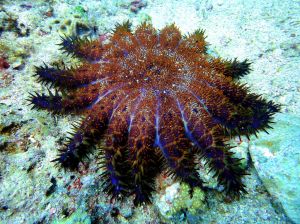
We are meeting our last sea star of the week!  This one is best to be observed but not to touch! Ouch- watch out for the crown-of-thorns sea star.

Crown of Thorns

Crown-of-thorn sea star fun facts: 

  • The thorns on this sea star are venomous.
  • These indimidating looking sea stars predate on coral!
  • They have only one predator- giant triton sea snail.
  • As you can see they have more than five arms.
  • They do have tube feet to move them along the reefs.
  • Unfortunately these predators have grown in numbers. Too many of them and that can mean trouble for a reef. They can destroy large areas.
  • Scientists and conservationists now will actively remove them when there is population boom.

IMG_0302

We love sea stars of all kinds, but this one might have gone to the dark side. Keeping a balance in habitats is crucial for all the animals that live there.

Categories: adventure, Animals, camp, Children, conservation, education, Environment, nature, oceans, sea stars, Today's Post, wildlife | Tags: , , , , , , , , , , , , | 1 Comment

Bring Your Basket- Star!

Bring Your Basket – Star!

We are so excited to see everyone here! It’s Sea Star week here at camp! You may know these amazing echinoderms as starfish, but scientists are now using sea star as these animals are not fish! We bet you’d like to know what an echinoderm is though– it’s an animal that has radial symmetry (arms radiating from a central body) and a hard covering. Other echinoderms include sea urchins, sea cucumbers and sand dollars.

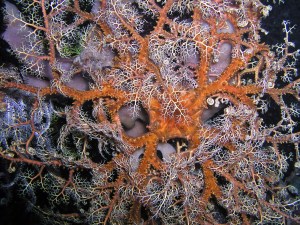
Today, we are meeting one of the craziest enchinoderms around the basket star. Woohoo!

IMG_0297

Basket Star Fun Facts: 

  • Basket stars belong to the brittle star family.
  • Most Basket stars are found in deep waters.
  • They can reach up to 28 inches across. The central disk is around 5 1/2 inches across.
  • They have 5 arms. Those 5 arms then have many many branches.
  • They have calcium carbonate structures called ossicles. These give all those arms flexibility and stability.
  • Some basket stars feed on plankton or small crustaceans.
  • They use spines and hooks to move food up their mouths on the central disk.
  • Basket stars also have tube feet to move them around.

OLYMPUS DIGITAL CAMERA

These amazing creatures have no brain, but they do have a complex nervous system. The oceans house the craziest critters on the planet!

Categories: adventure, Animals, camp, Children, conservation, education, Environment, nature, oceans, science, sea stars, Today's Post, wildlife | Tags: , , , , , , , , , , , | 1 Comment

Dave the Daddy Long Legs!

Dave the Daddy Long Legs!

IMG_4667

Hi! I’m Dave the daddy long legs! I’m that familiar arachnid that everyone knows, but what do your really know about me? Well campers I’m here to tell you 8 great things about daddy long legs!

  1. I’m not a true spider! Yes, I am an arachnid, but I have one solid body and one pair of eyes. Technically I’m more closing related to scorpions.
  2. I belong to a group of arachnids who are called harvestmen. We get that name because we are spotted near the time of the harvest.
  3. We’ve been on the planet for 400 million years! You can find my relatives on every continent but Antarctica- we leave that cold place for the penguins! Brrrrrrr!
  4. I don’t have venom. So that old wives tail that I’m deadly but my fangs are too short is just a big ole lie, because I don’t have fangs either!
  5. There are around 6,000-7,000 known species of us harvestmen. We come in big and small sizes and let me tell you- some of us are wild looking!
  6. No- my legs do not grow back! So, please leave them on me!
  7. We are clean and tidy. After meals, we run our legs through our jaws to clean them! We’re the cats of the arachnid world! Hahaha!
  8. We’re not in to traveling. We live our whole lives in one small area. So no need to try and sell us a suitcase.

daddy long legs

Well I hope now that you more about me and my cousins, it will make you appreciate us! Don’t worry- we won’t bite :)!


Categories: adventure, Animals, camp, Children, conservation, education, Environment, nature, science, Today's Post, wildlife | Tags: , , , , , , , , , , , | 1 Comment

Blog at WordPress.com.