Posts Tagged With: education blog

School’s Out

School’s Out

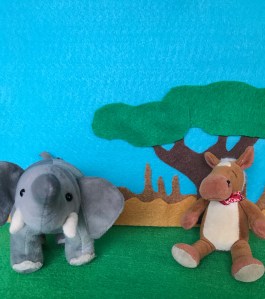
We are taking the next few weeks off to get ready for Camp E&E to start on June 4th. We sincerely apologize for our intermittent posts over the last month or so. Things have been a bit hectic and we are hoping life slows down as summer rolls in and after our much need vacation in the Pacific Northwest!

Get your camping gear ready and your Mud SPF 50 packed so we can enjoy an wonderful summer together at Camp E&E!

Categories: adventure, Animals, camp, Children, conservation, education, Environment, nature, science, Today's Post, wildlife | Tags: , , , , , , , , , | 1 Comment

Black & White Bird

Black & White Bird

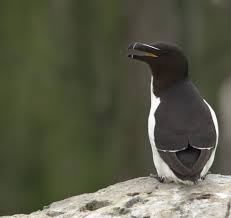
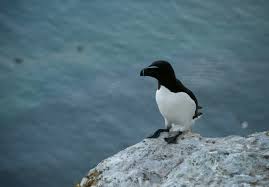
As we were exploring the cliffs and coasts to meet puffins, we met another neat sea bird- the razorbill! These neat looking birds look even more formal than penguins!

razorbills

Razorbill Fun Facts:

  • They grow up to 8 1/2 inches long and weigh up to 30 oz.
  • These carnivores eat fish and crustaceans.
  • These sea birds spend most of their life at sea. They spend time on cliffs and coastlines to breed in the spring.
  • Male and females mate for life. They come together to incubate the egg.
  • The oldest living razorbill lived to 41 years.
  • They are listed as Least Concern by the IUCN.

razorbills2

These gorgeous birds are so cool! They have the neatest little white lines on their beaks. They are quiet fun to watch dive for food.

Categories: adventure, Animals, birds, Children, conservation, education, Environment, nature, science, Today's Post, wildlife | Tags: , , , , , , , , , , , | 1 Comment

Large Lynx

Large Lynx

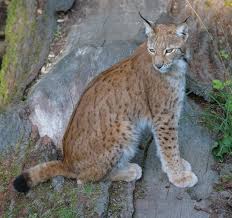
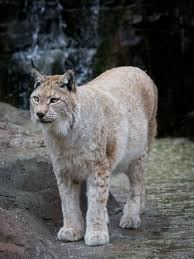
We met a neat cat today here in Norway! There are lynx in America, but the ones that call Europe home are the biggest members of the lynx family. Come learn more about them with us.

lynx

Eurasian Lynx Fun Facts:

  • These cats can grow up to 51 inches long and weigh up to 66 pounds.
  • These carnivores eat mammals, including small mammals and larger prey like reindeer.
  • Their back legs are slight longer than the front ones.
  • They are crepuscular- active at dusk and dawn.
  • Males occupy a large territory. There are several females living within that territory. That are usually solitary.
  • They have dense fur to keep them warm in the winter months. Longer fur grows on their paws to help them walk in snow.
  • Eurasian lynx are listed as Least Concern by the IUCN.

lynx2

These cats are quiet the predators. They can take down prey much bigger themselves. We love their ear tufts and big paws!

Categories: adventure, Animals, Children, conservation, education, Environment, mammals, nature, science, Today's Post, wildlife | Tags: , , , , , , , , , , | 1 Comment

We Spots a Spotted Owl

We Spots a Spotted Owl

When people think of Africa, people think of all the big animals, but rarely do they think of owls! Well, Africa is home to many species of owls. We went looking for the Spotted Eagle and we found one! Come learn more about them with us!

spotted eagle owl

Spotted Eagle-Owl Fun Facts:

  • Spotted eagle-owls have a 3 foot wing span!
  • They have large ear tufts and bright yellow eyes.
  • Like many owls they are nocturnal.
  • These carnivores eat mammals, birds and amphibians. They are also known to eat carrion.
  • Spotted eagle-owls are known to bond for life.
  • They are listed as Least Concern by the IUCN.

spotted eagle owl2

Seeing an owl in the wild is always a treat! These owls have a fun musical call. We could listen to them all night.

Categories: adventure, Animals, birds, Children, conservation, education, Environment, nature, science, Today's Post, wildlife | Tags: , , , , , , , , , , , , | 1 Comment

Hello Antelope!

Hello Antelope!

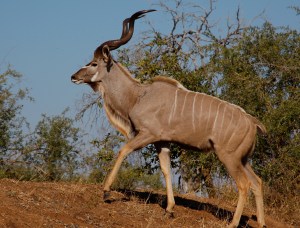
Happy Monday and we are so excited for you to meet the animal we spotted this weekend. They have some fantastic antlers! Are you ready to meet the kudu?

Kudu,_Living_Desert_3-15_(16792801682)

Greater Kudu Fun Facts:

  • Greater Kudu can grow up to 96 inches long and weigh up to 700 pounds.
  • Only the males have those impressive spiral horns.
  • Those horns can grow up to 3 feet long!
  • They have a crest of fur that runs down their back.
  • They live in family groups that consist of females and their offspring. The males are solitary or live in small bachelor groups.
  • These herbivores eat vegetation, fruit and grasses.
  • Greater kudu are listed as Least Concern by the IUCN.

Male_greater_kudu

It was fun to spot some males with their spectacular antlers! Can you imagine having those attached to your head all the time?

Categories: adventure, Animals, Children, conservation, education, Environment, mammals, nature, science, Today's Post, wildlife | Tags: , , , , , , , , , | 1 Comment

Armored Lizard

Armored Lizard

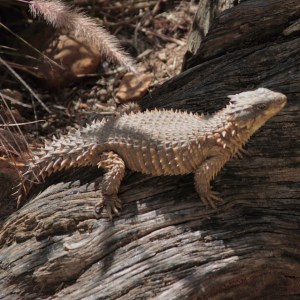
We decided we haven’t met enough lizards on our trip so far and headed out to meet one with some most interesting scales. This reptile was a definite look don’t touch kind of creature. Get ready to learn more about them.

013E30EB-3BDC-4094-A805-BD30C6DCCAC8

Giant Girdled Lizard Fun Facts: 

  • They are also known as the sungazer lizard.
  • Giant girdled lizards grow to about 7 inches long.
  • Though they live in rocky areas, they do dig their own burrows for shelter.
  • They are insectivores.
  • They live in groups.
  • They secret scents to communicate with other sungazers.
  • Giant girdled lizards are listed as Vulnerable by the IUCN.

42275B62-3B8E-4CF9-871E-42C0552388ED

We enjoyed spotting this little spiked lizard. It would be a smart predator to stay away from those scales.

Categories: adventure, Animals, Children, conservation, education, endangered species, Environment, lizards, nature, reptiles, science, Today's Post, wildlife | Tags: , , , , , , , , , , , | 2 Comments

Oh Those Ear Tufts!

Oh Those Ear Tufts!

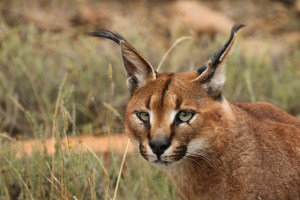
We headed out in a Jeep to find a predator on the plains today! We were looking for a feline, but not a lion, cheetah or leopard. So who were we looking for you ask? This cat is small, but mighty and they have some of the greatest ears around.

CA71DC92-76DD-46C7-B6C4-69B9355E0CCA

Caracal Fun Facts: 

  • These medium sized cats can grow up to 42 inches long and weigh up to 44 lbs. The males are larger than the females.
  • They are the largest member of the small cats in Africa.
  • They are famous for their large ear tufts or tassels. It is thought that they use these to communicate with other caracals.
  • These agile carnivores eat small mammals and birds.
  • They are able to leap 10 feet into the air to catch birds in flight.
  • Caracals are mostly solitary and highly territorial.
  • They mark their territories with scents and physical marks like claw marks on trees.
  • They are listed as Least Concern by the IUCN.

94EDFD65-2F97-4FDF-A24D-7279F183F8B3


We were so excited to spot this sleak predator. They remind us of the house cat that lives at HQs, except he is a bit plumper and lazier.

Categories: adventure, Animals, Children, conservation, education, Environment, mammals, nature, science, Today's Post, wildlife | Tags: , , , , , , , , , , | 1 Comment

Feeling Blue

Feeling Blue

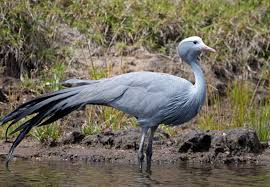
We are feeling blue- just kidding! We’re off to meet one regal blue bird! In fact they are the national bird of South Africa! Are you ready to learn more about the blue crane? Let’s gooooo!

blue crane

Blue Crane Fun Facts:

  • These cranes can grow up to 40 inches tall and weigh up to 11 pounds.
  • They are known for their loud honking calls.
  • These omnivores eats grasses, seeds and small invertebrates.
  • The males perform elaborate courtship dances.
  • The entire population of blue cranes call South Africa home.
  • Blue cranes are listed as Vulnerable by the IUCN.

blue crane2

These elegant but funny looking cranes are so amazing. There are several organizations that are working to protect these neat birds, including the International Crane Foundation!

Categories: adventure, Animals, birds, Children, conservation, education, endangered species, Environment, nature, science, Today's Post, wildlife | Tags: , , , , , , , , , , | 1 Comment

Hello Shrew

Hello Shrew

We are off to the southern part of the country for a day trip to locate one small mammal. They are named after elephants, but we can assure you they are not elephants. Grab your gear and let’s head off on today’s adventure to meet the cape elephant shrew.

cape elephant shrew

Cape Elephant Shrew Fun Facts:

  • Shrews are distantly related to moles. They are not rodents.
  • They are also called the Cape Elephant Sengi.
  • The cape elephant shrew weighs around 50 grams.
  • These insectivores eats insects of all kinds.
  • They get their names from their long noses like look like and elephant’s trunk.
  • Their scientific name includes the word- Elephantulus.
  • They prefer dry, rocky and arid habitats.
  • They are listed as LEAST CONCERN by the IUCN.


What a joy it was to spot this tiny little animal. It’s not easy and it took some patience waiting in an area where they are known to hunt for insects. Sometime we forget that habitats all around the world have some amazing little animals. These forgotten creatures are important too.

Categories: adventure, africa, Animals, Children, conservation, education, elephants, Environment, mammals, nature, science, Today's Post, wildlife | Tags: , , , , , , , , , , | 2 Comments

Off to South Africa

Off to South Africa

Did you guess where are our next adventure will be? If you guessed South Africa- you are correct! Yay! We are off to meet some of the iconic animals of this beautiful country, but first let’s learn more about South Africa today!

BE4E1BBA-5794-42BA-9D14-6F298F57892E

South Africa Fun Facts: 

  • Table Mountain in Cape Town in one of the oldest mountains in the world.
  • The waters off the coast of South Africa can be quiet dangerous. It is believed that 2,000 shipwreck are in the waters there.
  • South Africa is the 2nd largest producer of fruits in the nation.
  • The largest land mammal, the elephant calls South Africa home, as does the smallest mammal in the world- the least dwarf shrew.
  • Around 900 species of birds call South Africa home.
  • South Africa is home to Kruger National Park. The park is a huge! It is nearly 500,000 acres.
  • Kruger is home to cheetah, elephants, springbok, rhinos, zebra, giraffe and many other species.
  • Kruger was established in 1898.


Kruger is where we will be setting up our base camp for most of this trip! We are so excited to see of the animals of this amazing spot- especially Ellie’s relatives.

Categories: adventure, Animals, Children, conservation, education, elephants, endangered species, Environment, nature, science, Today's Post, wildlife | Tags: , , , , , , , , , , , | 2 Comments

Blog at WordPress.com.