
Posts Tagged With: fish
Happy World Oceans Day!
Happy World Oceans Day
Categories: adventure, Animals, Children, conservation, education, endangered species, Environment, fish, movies, nature, oceans, Today's Post, wildlife, Worlds Oceans Day
Tags: animals, conservation, coral reefs, earth, education, educational, fish, movie, nature, nature blogs, oceans, science, video, wildlife
1 Comment
Raccoon + Butterfly= Fish
Raccoon + Butterfly= Fish
We met another great animal during our snorkel trips- this time a wonderful reef fish- the raccoon butterflyfish! Meet them with us!
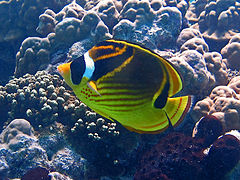
Raccoon Butterflyfish Fun Facts:
- These Butterflyfish average 8 inches long.
- They are nocturnal.
- These carnivores each small invertebrates and nudibranch.
- They have large eyes.
- They prefer shallow reefs.
- They have a false eyespot to fool predators.
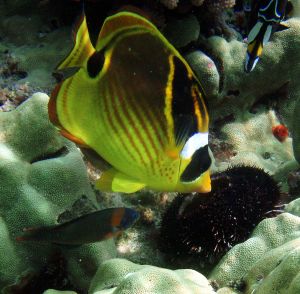
These little fish are fun! They are popular in aquariums too. We love their bright coloration!
Categories: adventure, Animals, Children, conservation, education, Environment, fish, nature, oceans, science, Today's Post, wildlife
Tags: adventure, animals, children, conservation, education, envrionment, fish, nature, oceans, science, wildlife
1 Comment
Hi Spot!
Hi Spot!
We spent the last few days snorkeling in and around the reefs around these magically islands. We met so many spectacular animals and we are sharing one with you today!
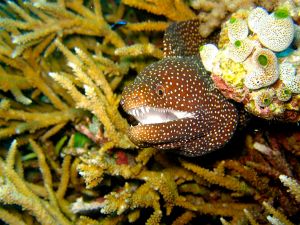
Spotted Moray Eel:
- Spotted morays can grow up to 6 ft long and weigh up to 5 1/2 lbs.
- These carnivores eat fish, mollusks and crustaceans.
- Spotted morays have two sets of jaws. The first set is in the front of their mouths. The second set is in the esophagus. The second set of jaws grabs the prey and pushes it down the throat.
- They have poor eyesight. They use their excellent sense of smell to locate prey.
- They are nocturnal.
- Typically spotted morays are nocturnal.
- They are listed as Threatened by the ICUN.
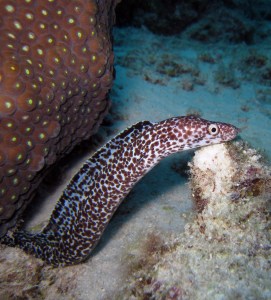
We had a blast snorkeling and it was even more special to meet the shy and elusive eels. They love to hide among the coral and in crevices in the rocks!
Categories: adventure, Animals, Children, conservation, education, elephants, Environment, fish, nature, oceans, science, Today's Post, wildlife
Tags: adventure, animals, conservatoin, education, education blog, educational, envrionment, fish, nature, nature blogs, oceans, science, wildlife
1 Comment
Piranha Relative
Piranha Relative
We decided to take a boat ride today to find some fish today! These funny round relatives of the piranha do not have the reputation of their cousins, but they’re no less cool!

Pacu Fun Facts:
- Pacu are a fresh water fish.
- They are herbivores and feed on aquatic plants.
- They are famous for their square teeth that resemble human teeth.
- Pacu can grow up to 3 1/2 feet and weigh up to 88 lbs.
- Some of them have red on their bellies and some of them do not.
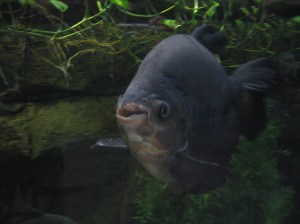
These fish are popular in the aquarium trade. Unfortunately they can be dumped in local rivers where they are not native. They can interrupt a local ecosystem though.
Categories: adventure, Animals, Children, conservation, education, Environment, fish, nature, science, Today's Post, wildlife
Tags: adventure, animals, children, conservation, education, fish, nature blogs, sciene, wildlife
1 Comment
Back to Basics- Fish
Back to Basics- Fish
Time to brush up on your fish knowledge with professor Sylvia the Seahorse!

Number of fish species- 24,000 and growing! Scientists discover new species all the time! We fish were the first vertebrate animals on the earth! We occupy the world’s oceans and fresh water bodies of water; including lakes, rivers and ponds.
Fish traits:
- Fish have gills that we use to extract oxygen from water and expel carbon dioxide. They serve the same function as a mammal’s lungs.
- Fish have scales. Our scales are different, some are smooth and some are rough. Sharks’ scales are called dermal denticles. Some fish like hagfish have no scales.
- Fish have fins for swimming. Fins are shaped for the type of swimming a fish does- some are built for speed and some are small (like mine).
- We fish are vertebrates, we all have back bones.
- Most fish are exothermic, cold blooded.
Fish are classified in three groups; jawless fish (hagfish and lamprey- they also have no scales), cartilaginous (sharks and rays) and bony.
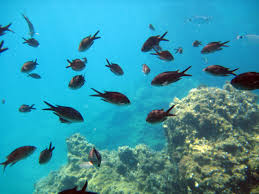
Some fish lay eggs, some incubate their eggs in a womb and some incubate their young in wombs similar to mammals.
We fish can detect chemicals and vibrations. We often have keen eyesight and a great sense of smell.
Fish do have ears! Not big goofy ones like some mammals, but internal ones.

We also have an extra “organ” to help us “hear” and detect vibrations. This is called the lateral-line. This line of cells runs the length of our bodies and helps us detect motion. Schooling fish who swim in synchronized groups use their lateral line to swim in these formations.
Sharks and rays have yet another “organ” that helps them detect electrical fields. It’s called the ampullae of Lorenzini, gel filled cells that help our cartilaginous cousins detect even the faintest of electrical fields. This is something no other animal can do!
We also have a swim bladder that keeps us buoyant in the water. Fresh water fish have a bigger swim bladder than salt water fish. Bony fish swim bladders are filled with a gas that is less dense than water. In cartilaginous fish, their swim bladder is a large oil rich liver that is less dense than water!
Categories: adventure, Animals, Children, conservation, education, Environment, fish, nature, oceans, science, Today's Post, wildlife
Tags: animals, children, conservation, education, education blog, fish, nature, nature blogs, oceans, science, wildlife
1 Comment
Know Your Sharks
Know Your Sharks
Today we have four coloring sheets for you in our continued series- know your sharks! So head on over to the craft cabin and grab something to color with and get to know your sharks!
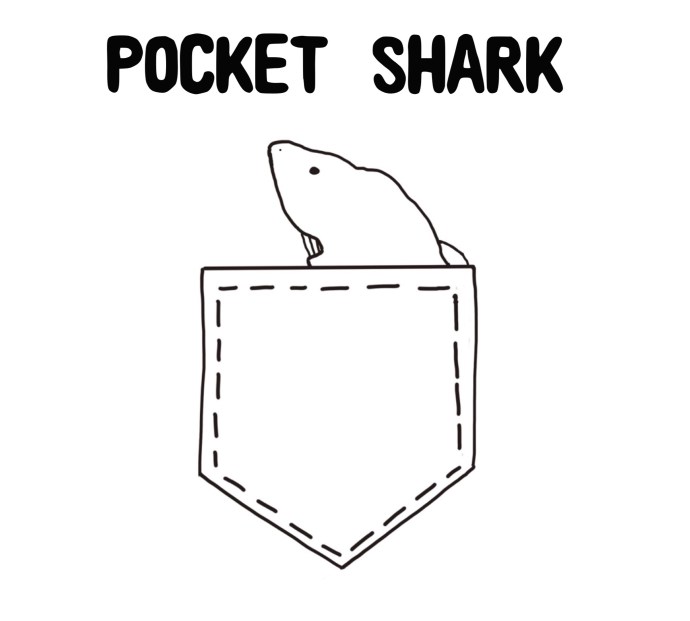
Pocket Sharks have two pouches or pockets, one on each side of their body in front of their fins. Scientists are unsure of their purpose.

Bamboo Sharks are mostly nocturnal and only grow up to 37 inches long.

Zebra sharks lose their stripes as they grow. Adults are actually covered in spots!
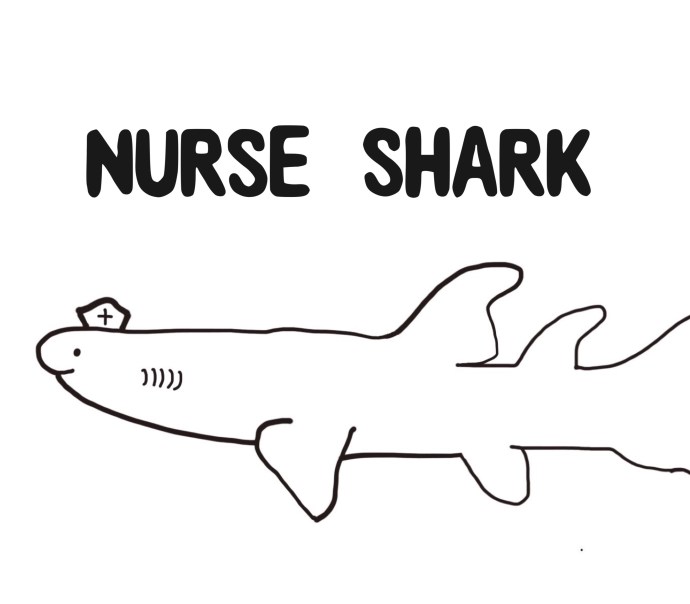
These large sharks (up to 14 ft) often rest on the ocean floor. They pump water over their gills using spiracles to pull in water.
Categories: adventure, Animals, camp, Children, conservation, education, endangered species, Environment, fish, nature, oceans, science, Today's Post, wildlife
Tags: animals, children, conservation, education, education blog, envrionment, fish, nature, nature blogs, oceans, science, sharks, summer camp, wildlife
1 Comment
Rocking with the Guitar
HRocking with the Guitar
It’s SHARK WEEK here at Camp E&E by the Sea! We love our cartilaginous friends and we are so excited for our campers to meet a few sharks and one of their relatives in the ray family. These creatures have been calling the world’s oceans home for over 400 million years. Today we’re going to meet a member of the ray family- the shovelnose guitarfish.

Shovelnose Guitarfish Fun Facts:
- Shovelnose guitarfish are members of the ray family.
- They look like you combined a ray and shark all in one.
- They range in color from olive to grey to tan.
- Females are larger than males.
- These bottom dwellers eat mollusks, crustaceans and fish.
- Shovelnose guitarfish are listed as Near Threatened by the IUCN.
- They have a row of spines along their back near the tail.

These amazing fish are so neat! Can you guess why they are called guitarfish? They are shaped like a guitar, but they have no strings attached! Hahaha!!
Categories: adventure, Animals, Children, conservation, education, endangered species, Environment, fish, nature, oceans, science, Today's Post, wildlife
Tags: animals, children, conservation, education, environment, fish, nature, nature blogs, oceans, science, science blog, wildlife
1 Comment
It’s a Garden of Eels!
It’s a Garden of Eels!
We have one more animal to meet and another day of diving! We are so excited to meet these little fish who bury themselves in the sand.

Spotted Garden Eel Fun Facts:
- They are around 40 cm long- about the size of two pencils.
- Spotted garden eels have gills and tiny pectoral fins.
- They dig a burrow where most of there body is protected.
- You will find them living in small to large colonies.
- They grab tiny plankton as it drifts by.
- Spotted garden eels rarely leave their burrow.
- Spotted garden eels have excellent eye sight.
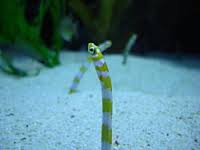
Whew! We are so tired after 3 days of diving with our campers! We know you guys must be tired too! Tomorrow we head back to base camp and it will be time for crafts! Woohoo!
Categories: adventure, Animals, camp, Children, conservation, education, Environment, fish, nature, oceans, science, Today's Post, wildlife
Tags: animal, children, conservation, education, envrionment, fish, nature, oceans, summer camp, wildlife
1 Comment
Meeting a SeaEdmond
Meeting a SeaEdmond
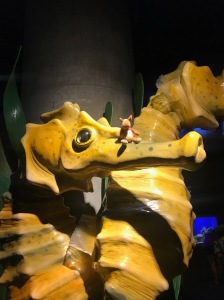
Our week of diving is continuing at camp and we are meeting a seahorse- or a SeaEdmond as we like to call them! Everyone ready? Grab those flippers and let’s goooooo!
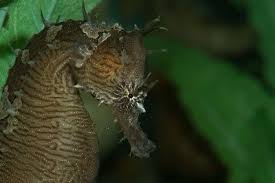
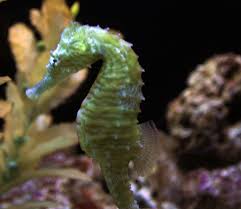
Lined Seahorse Fun Facts:
- These tiny crustacean eaters are fish!
- Lined seahorses camouflage in with their surroundings and ambush their prey.
- Their eyes can rotate around and move independently of each other.
- Males are larger and have longer tails than females.
- They mate for life.
- Like other seahorses, the males incubate the eggs in a pouch. They give birth to the baby seahorses. They are about the size of a flat thumbtack.
- These little guys are not strong swimmers and attach to sea grass or other substrate to protect themselves.
Categories: adventure, Animals, camp, Children, conservation, education, endangered species, Environment, fish, nature, oceans, science, Today's Post, wildlife
Tags: animal, children, conservation, education, education blog, envrionment, fish, nature, oceans, science, summer camp, wildlife
1 Comment
Peacock in the Ocean
Peacock in the Ocean
We’re loading up the SS E&E- our research boat with campers for the next three days as we head out to sea! It’s time for all our campers to grab their scuba gear and go diving! We’re exploring the ocean floor today! If we’re looking for a flat fish, so keep those eyes peeled for the Peacock flounder!

Peacock Flounder Fun Facts:
- They are known as the flowery flounder.
- Peacock flounders have flower shaped blue spots.
- They have have two eyes on the left side of their body.
- Each eye can move in all directions. They can move independently of each other.
- Flounder fry (babies) swim like normal fish. Their eyes on each side of their body. As they mature the eyes move to one side! CRAZY!
- Peacock flounders prey on crabs, shrimp and small fish.
- Peacock flounders have specialized skin cells that allow them to change their color to match their surroundings! They can do this in as little as 8 seconds.

Peacock flounders are amazing animals! These flat fish are masters of camouflage! We are glad our campers were able to spot a few! Hehehe!
Categories: adventure, Animals, camp, Children, conservation, education, Environment, fish, nature, oceans, science, Today's Post, wildlife
Tags: animal, children, conservation, education, envrionment, fish, nature, oceans, science, summer camp, wildlife
1 Comment
Today’s Post


 The Adventures of Ellie and Edmond