Posts Tagged With: oceans

IT’S A MORAY…

 IT’S A MORAY!

e & e snorkeling

Hehehehe! Who doesn’t love a good pun? Edmond loves them! When we were out looking for brain corals we spotted this special animal! They love to hide in the cracks and crevices of the coral reef and are considered very shy! So we were super excited to spot or maybe stripe is a better word, this creature!

zebra moray

Range/Habitat: Pacific-Indian Ocean/ reefs

 Diet: Carnivore: fish, crustaceans

 Length/Weight:  up to 35”/ 22 lb

 Conservation Status: common

 zebra moray2

Fun Facts:

  •          They have long muscular bodies with no pectoral or pelvic fins. They do have one long dorsal fin.
  •          Zebra morays usually hide in rocks or corals.
  •      They are almost blind and hunt by smell.
  •      They have flat teeth for crushing shells.
  •       Zebra morays breathe by passing water through their mouths over their gills.
  •          They have toxins in their skin to protect them from predators.

We love these beautiful eels. They look menacing, but are considered to be a social species of eel. The reef is one of our most favorite places to visit!


Categories: adventure, Animals, Children, conservation, education, Environment, nature, oceans, science, wildlife | Tags: , , , , , , , , , | Leave a comment

BRAINS!!!!

BRAINS!!

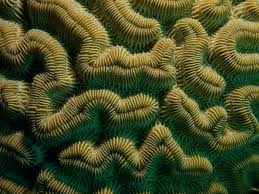
We have been thinking of all the wonderful animals that live in the ocean after last week’s We Are Fanimaly and Professor Tamandua’s post on mermaid’s purses. We decided to find out what makes a brain coral a brain coral! Who’s ready to find out with us?

e & e snorkeling

  • There are more than one species of brain coral.
  • They are found in coral reefs and help build those habitats.
  • Brain corals get their name from their resemblance to the brain with it’s groves and ridges.
  • Brain corals are made up of thousands of little polyps that form a calcium carbonate skeleton.

brain coral

  • They are stony or hard corals.
  • Brain coral can grow up to 6ft and can live for up to 900 years.
  • Brain coral feed at night on plankton. They extend their tentacles and sting their prey.
  • Brain coral are very slow growing.

brain coral2brain coral3Brain corals are amazing colony animals! We are always fascinated with these tiny animals that build a beautiful habitat that supports hundreds of other animals in the world’s coral reefs! What do you love about coral?


Categories: adventure, Animals, Children, conservation, education, Environment, nature, oceans, science, wildlife | Tags: , , , , , , , , , | 2 Comments

WE ARE FANIMALY!

WE ARE FANIMALY!!!

We have a whole new We Are Fanimaly for you today! It’s been a while since we did one and we’re super excited to talk about these animal relatives! Come meet these ocean dwelling relatives!

  • Coral and Jellies (often called jellyfish) are members of the cnidarian (the c is silent) family.
  • Corals are invertebrates (they lack a backbone).
  • Corals are mostly found in warm tropical ocean waters.
  • Corals live in a colony that is made of calcium carbonate. Each coral has it’s own skeleton that helps make one large coral.
  • The coral animal itself has a soft body that protects itself with that hard outer skeleton.
  • Coral come in all shapes, sizes and colors.
  • Corals build large reefs that then become a habitat for many other ocean animals, including fish, octopuses and sea turtles.
  • Corals have tiny stingy cells called nematocytes.
  • Jellies are also invertebrates.
  • Jellies are found in oceans around the earth.
  • Jellies are carnivores.
  • Jellies have thousands of stinging cells (also called nematocytes) along their tentacles.
  • A jellie’s tentacles can be very short or very long.
  • Jellies have no left or right side, only a top (called the bell) and a bottom.
  • Jellies have no brain or blood.


Wow! Who knew that corals and jellies were related? We sure will be wary around both creatures and those stinging cells! Jellies are one of the leatherback sea turtles favorite food! And without corals and their reefs, many ocean creatures would not have a habitat to live in! These two creatures are just another reason we should help protect our oceans!

Categories: adventure, Animals, Children, conservation, education, Environment, nature, oceans, science, wildlife | Tags: , , , , , , , , , | 2 Comments

FEATURE ANIMAL!

FEATURE ANIMAL: BLUE RINGED OCTOPUS!

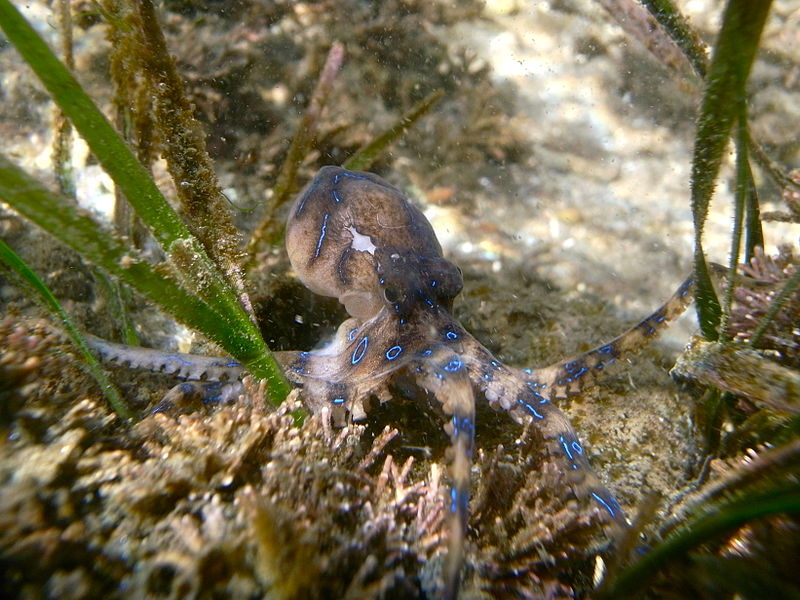
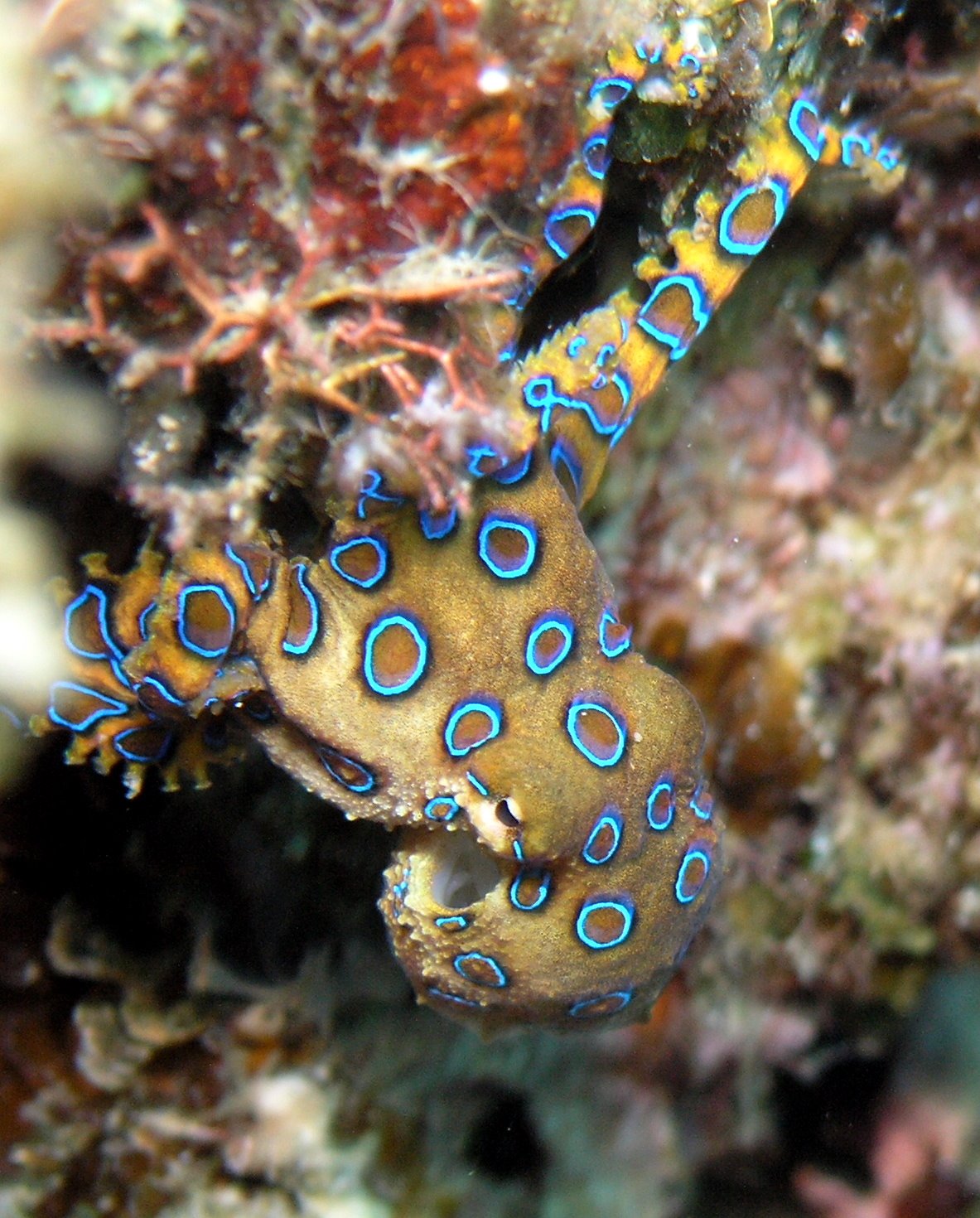
We’ve traveled to the Western Pacific Ocean, near Australia today to meet our creepy crawly Feature Animal. Yesterday was also World Octopus Day- so we knew we had to track down this elusive creature. It wasn’t easy to spot this cephalopod, but we did!

e & e snorkeling

BLUE RINGED OCTOPUS!

blue ringed octopus

Range/Habitat: Marine shallows, coral reefs/Western Pacific Ocean
Diet: Carnivore: crabs, fish, mollusks
Length/Weight: 5-7 1/2″/26 g
Conservation Status: common

OLYMPUS DIGITAL CAMERA

Fun Facts:
• Blue ringed octopuses are known to hide in caves, crevices and trash, such as bottles and cans.
• They are diurnal (hunt during the day).
•Blue ringed octopuses are shy!
• Blue ringed octopuses are extremely toxic. Their venom is more toxic than any land animal.
• They are not normally aggressive towards humans.
• They have rough wrinkly skin.
• Blue ringed octopuses display their famous blue spots when they feel threatened. This is called warning coloration.
• They are invertebrates.
• Blue ringed octopuses are considered intelligent.
blue ringed octopus3We love octopuses! They are such amazing creatures and so smart! Have you ever seen one solve a puzzle in an aquarium? Here’s a video of one opening a jar to get dinner! You humans are no match for our big brains- said all octopus :)!


Categories: adventure, Animals, Children, conservation, education, Environment, nature, oceans, octopus, science, wildlife | Tags: , , , , , , , , , | 1 Comment

SEA OTTER AWARENESS WEEK!!

SEA OTTER AWARENESS WEEK!

e & e otter

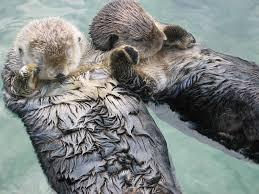
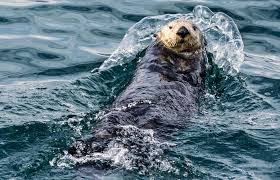
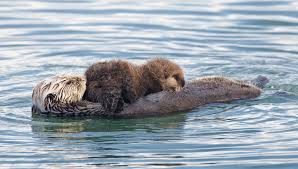
We’re celebrating Sea Otter Awareness Week! We know we are aware of how stinking cute otters are! These comical creatures have faced being endangered over the years, but with the help of conservationists their numbers are increasing. Come learn some fun facts about these ottertastic mammals!

sea otter5sea otter4

Sea Otter Fun Facts:

  • Sea Otters are members of the weasel family!
  • Sea Otters live in the Pacific ocean along the North American shore and the Northern Asian shore.
  • Sea Otters spend most of their time in water. They will occasionally come ashore to rest.
  • Sea Otters’ fur is water repellant and very thick. They can have up to 1 million furs per square inch.
  • Sea Otters role in order to trap air bubbles in their fur. The air bubbles help keep them warm.
  • Sea Otters are often found floating on the surface of kelp forests. They will even wrap the kelp around themselves to keep anchored while sleeping
  • Sea Otters groom themselves constantly. This helps keep their fur clean and waterproof. 
  • Sea Otters use rocks to break some of their prey, including crabs and sea urchins.
  • Sea Otters help keep the balance in a kelp forest. One of their favorite prey, sea urchins eat kelp; and without the otters to keep the urchin population in check, the kelp would be gone!

sea otter3sea otter


sea otter2

There are so many reasons to love sea otters and to protect them! There are many organizations that are working hard to make sure otters have a future in our oceans! Monterey Bay Aquarium has a great sea otter program.

What do you love about otters?

Categories: adventure, Animals, Children, conservation, education, Environment, nature, science, sea otters, wildlife | Tags: , , , , , , , , , , | Leave a comment

SHARK LOVE!!

SHARK LOVE!!!

e e sharks

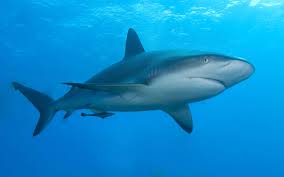
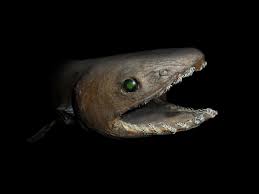
We know shark week is super popular on TV and we wanted to share some fun facts about sharks to celebrate these amazing creatures! We’re going to give you some great organizations that are working to protect sharks too!

shark

  • Shark skeletons are made of cartilage, the same tissue that makes up human noses and ears.
  • Sharks can range in size of a few feet to up to 25 ft (whale shark).
  • Some sharks can go through 30,000 teeth in a lifetime.
  • Sharks have been in the oceans for 400 million years.
  • The largest shark in the ocean is the whale shark, these spotty large fish are filter feeders!
  • Falling coconuts cause more deaths than sharks due.
  • Bull sharks can live in fresh water and salt water.
  • Great white sharks are warm blooded.
  • Most sharks must swim contentiously to pump water over their gills. Some sharks like the wobbegong and nurse shark can rest on the ocean floor and pump water over their gills.
  • Some sharks lay eggs, while others give birth to live young.
  • Sharks are covered in dermal denticles, triangle shaped scales that give them protection and flexibility.

shark2 shark5

shark4

We think sharks are amazing creatures! They come in so many shapes and sizes! As the top predator in our world’s oceans they play a very important roll in keeping our oceans healthy! There is no need to fear these beautiful animals! Unfortunately sharks are facing an uncertain future! Check out these two great organizations and see how they are helping our shark friends!

The Pew Trust and the Ocean Conservancy!

For some laughs check out the web comic Shaaark cartoons!

Categories: adventure, Animals, Children, conservation, education, Environment, nature, oceans, science, sharks, wildlife | Tags: , , , , , , , , , , | 2 Comments

Day 41- we meet a puffer fish…

Day #41 (7/16/2014) Dogface Pufferfish…

e & e snorkeling

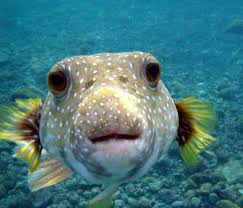
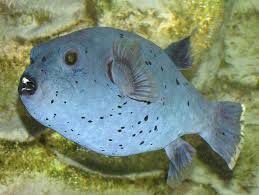
We went snorkeling at the Great Barrier Reef yesterday and spotted so many kinds of animals, from fish to crustaceans to cephalapods. We saw a curious funny faced fish. We realized it was a pufferfish and not just any pufferfish- a dogface pufferfish!
puffer fish
Their range/habitat: Indo-Pacific oceans/ coral reefs
Their length: 3-12″  Conservation Status: common
Their diet: Omivores– algae, seaweed, sponges

• Dogface pufferfish are also known as the blackspotted puffer.
• They have no pelvic fin.
• Dogface pufferfish are solitary and territorial.
• Dogface pufferfish to have toxins.
• They will puff up when threatened.
dog face puffer fish2

We were so excited to see this special fish with the dog like face! Puffer fish get a bad rap; who knew they could be so cute? We’re going to bed for the night, it is exhausting snorkeling all day! More adventures tomorrow!

-Ellie and Edmond


Categories: adventure, Animals, Children, conservation, education, Environment, fish, nature, science, Uncategorized, wildlife | Tags: , , , , , , , , , , | 1 Comment

GUESS THE ANIMAL!

Day #40 (6/14/14) – Guess the Animal
We had such a great time in Australia last week that we decided to stay and headed up to the Northeastern coast to see the Great Barrier Reef. We wanted to see one of the most diverse habitats on the planet. We spotted all kinds of fish on our first day! Can you guess this one?

yellow tang
• They are brightly colored.
• They have a long snout.
• They eat algae and seaweed.

Who is it?

-Ellie and Edmond

Categories: adventure, Animals, Children, conservation, education, Environment, nature, science, Uncategorized, wildlife | Tags: , , , , , , , , , | 1 Comment

SCIENCE WORD OF THE WEEK!

SCIENCE WORD OF THE WEEK!
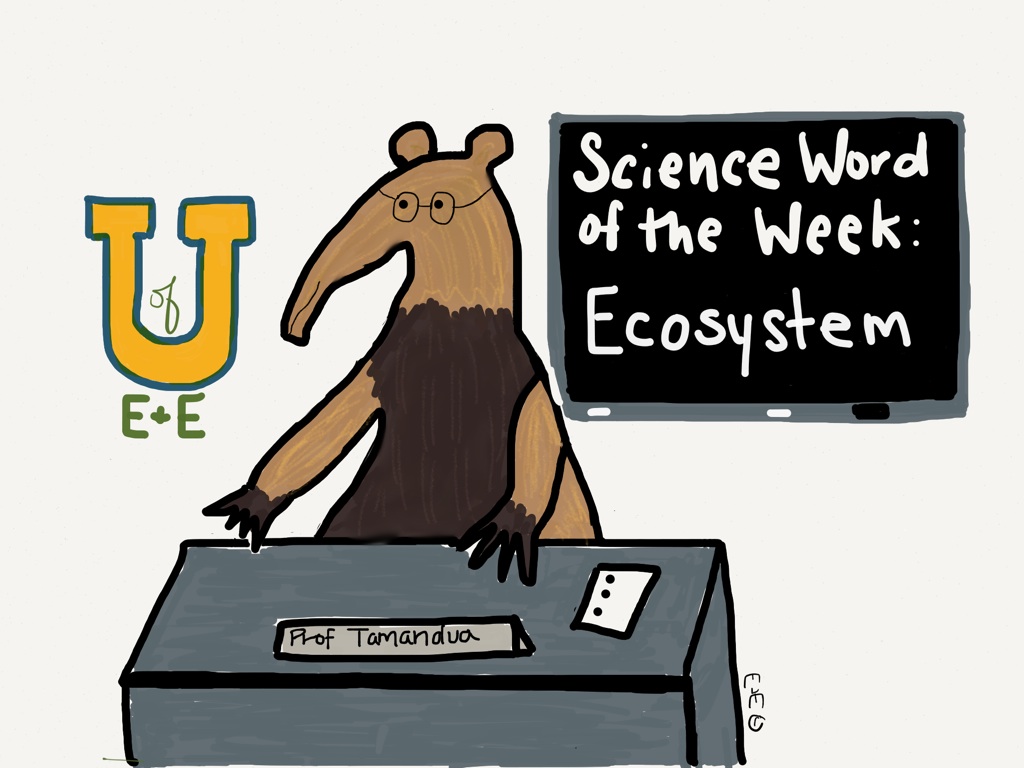
So nice to see everyone this fine Monday! Now that the computers here at the University have been fixed we can get on with the business of learning! We sure hope you enjoyed World Giraffe Day on Saturday! Those mammals know how to reach for the stars! Hahaha! So who’s ready to learn this weeks word? ME!

swow ecosystem

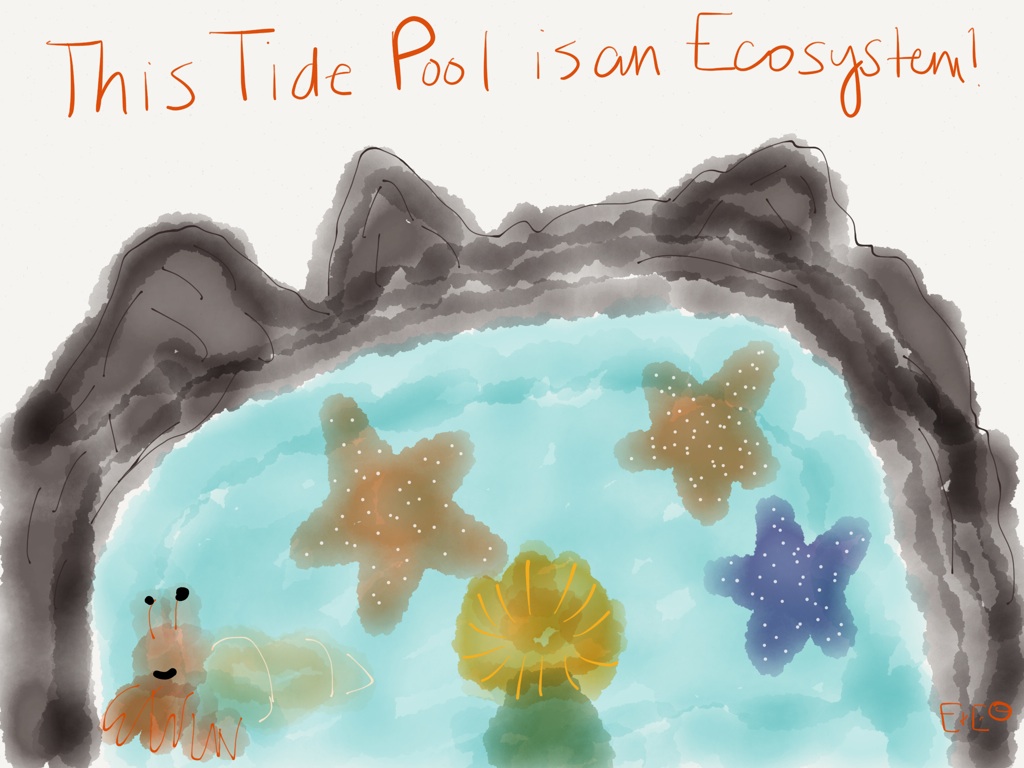
An Ecosystem ( ek-oh-sis-tuhm, ee-koh) is a group of living organisms (both plants and animals) that exist in one area together. Ecosystems include the soils, water and atmospheres that these organisms share.

Ecosystems can be very small to vast areas, such as savannas. The organisms that exist together in an ecosystem are dependent on each other to survive. One of my favorite ecosystems are tide pools. These amazing areas are where sea water and animals and plants are trapped during low tide on rocky coast lines. Tide pools are so fun to explore during the low tide, you can find sea stars, anemones, shrimp, crabs and seaweed among other things! Have any of you been lucky enough to explore a tide pool?

ecosystem cartoon

Categories: adventure, Animals, Children, conservation, education, Environment, nature, science, vocabulary, wildlife | Tags: , , , , , , , , , , | Leave a comment

WORLD SEA TURTLE DAY!

WORLD SEA TURTLE DAY!

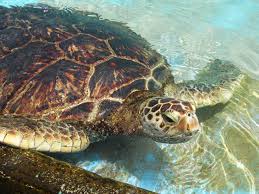
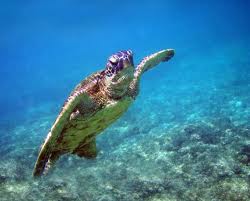
While the computer was down at HQs we missed World Sea Turtle Day! We so love these amazing reptiles that we could pass up a time to celebrate them and teach you some fun facts! We have seen 2 species in the wild- green sea turtles in the Caribbean and a Leatherback female laying her eggs on an island near Indonesia.

066

  • There are seven species of sea turtles: loggerhead, green, leatherback, flatback, Kemp’s ridley, Olive’s ridley, hawksbill.
  • Six out of the seven of these are threatened or endangered.
  • Sea turtles can not pull their head or limbs into their shells.
  • Sea turtles spend their whole lives in the ocean, except when the female comes ashore to lay her eggs.
  • Sea turtles are found in oceans all around the world.
  • Sea turtles eat everything from algae and grass to jellyfish and shellfish.
  • Sea turtles do not have teeth.
  • Their sizes range from 600 lbs to 1,300 lbs.
  • sea turtle


sea turtle4sea turtle5


Sea turtles are being affected by humans. Their often mistake trash for food. The babies get distracted by lights on the beach as they head towards the ocean. And turtles are often hit by boats. We can help our sea turtle friends by making sure our trash never enters the ocean or is left on the beaches. If you live where there may be nests, turn your lights off at night. For other tips on how you can help sea turtles- check out the Sea Turtle Conservancy!     Enjoy this sea turtle coloring sheet too!

sea turtle coloring page


Categories: adventure, Animals, Children, conservation, education, Environment, nature, oceans, science, turtles, Uncategorized, wildlife | Tags: , , , , , , , , , , | 3 Comments

Blog at WordPress.com.