Posts Tagged With: oceans

Know Your Sharks

Know Your Sharks

Today we have four coloring sheets for you in our continued series- know your sharks! So head on over to the craft cabin and grab something to color with and get to know your sharks!
FullSizeRender

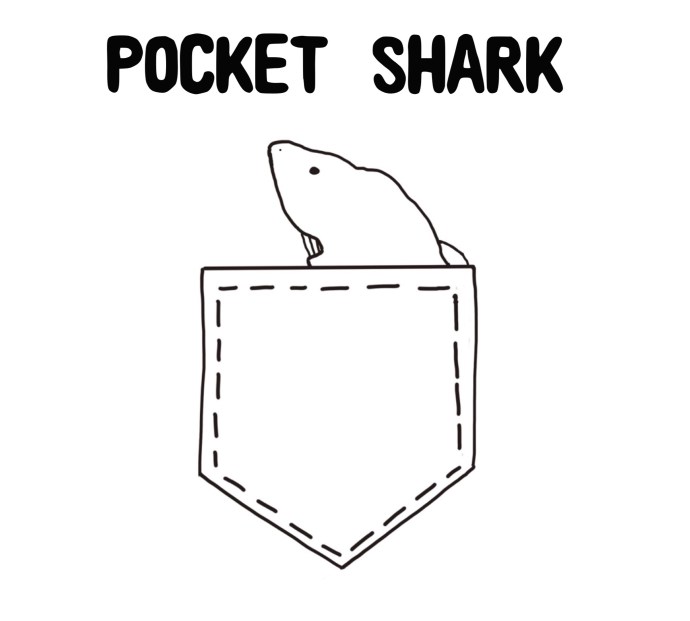
Pocket Sharks have two pouches or pockets, one on each side of their body in front of their fins. Scientists are unsure of their purpose.


FullSizeRender

Bamboo Sharks are mostly nocturnal and only grow up to 37 inches long. 


FullSizeRender

Zebra sharks lose their stripes as they grow. Adults are actually covered in spots!
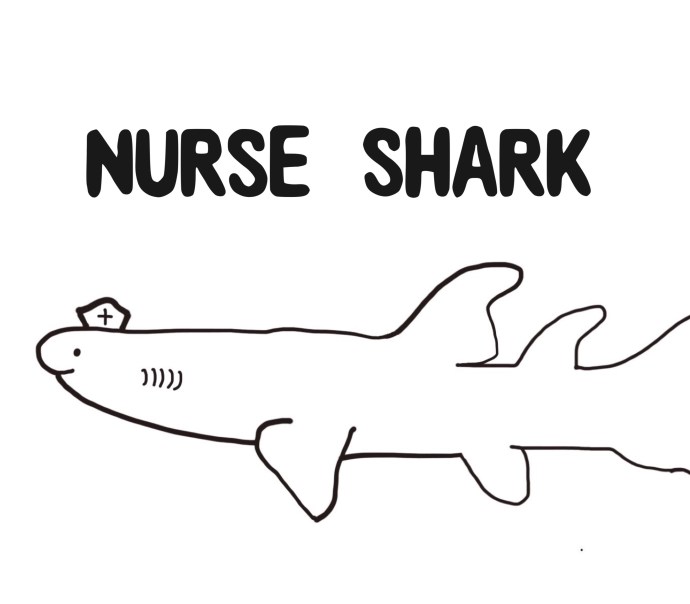
FullSizeRender


These large sharks (up to 14 ft) often rest on the ocean floor. They pump water over their gills using spiracles to pull in water. 


FullSizeRenderFullSizeRender


Categories: adventure, Animals, camp, Children, conservation, education, endangered species, Environment, fish, nature, oceans, science, Today's Post, wildlife | Tags: , , , , , , , , , , , , , | 1 Comment

Finding the Sandbar

Finding the Sandbar

We are heading out on the S.S E&E to meet a shark today! Often when you are at the beach, you’ll see where more sand has accumulated and even sticks out of the water- this is called sandbar! Well today we are meeting the sandbar shark! They are found around bays, estuaries and sandy bottoms.

IMG_0314

Sandbar Shark Fun Facts: 

  • These streamline sharks can grow up to 8 feet long.
  • Sandbar sharks have large dorsal fins.
  • These carnivores eat mollusks, crustaceans and fish.
  • Sandbar sharks are also called brown sharks.
  • They are listed as Vulnerable by the IUCN.
  • Sandbar sharks give birth to live young!


IMG_0323

These relatives of the bull shark are not aggressive like their cousins. Like other sharks, they are threatened by humans- due to shark finning, pollution and over fishing.

Categories: adventure, Animals, Children, conservation, education, endangered species, Environment, fish, nature, oceans, science, sharks, Today's Post, wildlife | Tags: , , , , , , , , , , , , | 1 Comment

Rocking with the Guitar

HRocking with the Guitar

It’s SHARK WEEK here at Camp E&E by the Sea! We love our cartilaginous friends and we are so excited for our campers to meet a few sharks and one of their relatives in the ray family. These creatures have been calling the world’s oceans home for over 400 million years. Today we’re going to meet a member of the ray family- the shovelnose guitarfish.

IMG_0316


Shovelnose Guitarfish Fun Facts: 

  • Shovelnose guitarfish are members of the ray family.
  • They look like you combined a ray and shark all in one.
  • They range in color from olive to grey to tan.
  • Females are larger than males.
  • These bottom dwellers eat mollusks, crustaceans and fish.
  • Shovelnose guitarfish are listed as Near Threatened by the IUCN.
  • They have a row of spines along their back near the tail.


IMG_0318

These amazing fish are so neat! Can you guess why they are called guitarfish? They are shaped like a guitar, but they have no strings attached! Hahaha!!

Categories: adventure, Animals, Children, conservation, education, endangered species, Environment, fish, nature, oceans, science, Today's Post, wildlife | Tags: , , , , , , , , , , , | 1 Comment

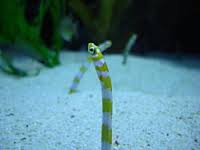
It’s a Garden of Eels!

It’s a Garden of Eels!

We have one more animal to meet and another day of diving! We are so excited to meet these little fish who bury themselves in the sand.

garden eels

Spotted Garden Eel Fun Facts:

  • They are around 40 cm long- about the size of two pencils.
  • Spotted garden eels have gills and tiny pectoral fins.
  • They dig a burrow where most of there body is protected.
  • You will find them living in small to large colonies.
  • They grab tiny plankton as it drifts by.
  • Spotted garden eels rarely leave their burrow.
  • Spotted garden eels have excellent eye sight.

garden eels2


Whew! We are so tired after 3 days of diving with our campers! We know you guys must be tired too! Tomorrow we head back to base camp and it will be time for crafts! Woohoo!

Categories: adventure, Animals, camp, Children, conservation, education, Environment, fish, nature, oceans, science, Today's Post, wildlife | Tags: , , , , , , , , , | 1 Comment

Meeting a SeaEdmond

Meeting a SeaEdmond

IMG_5264

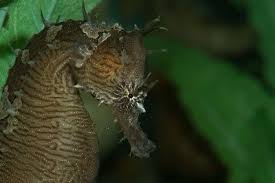
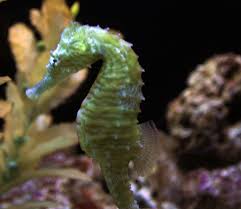
Our week of diving is continuing at camp and we are meeting a seahorse- or a SeaEdmond as we like to call them! Everyone ready? Grab those flippers and let’s goooooo!

Lined Seahorse Fun Facts:

  • These tiny crustacean eaters are fish!
  • Lined seahorses camouflage in with their surroundings and ambush their prey.
  • Their eyes can rotate around and move independently of each other.
  • Males are larger and have longer tails than females.
  • They mate for life.
  • Like other seahorses, the males incubate the eggs in a pouch. They give birth to the baby seahorses. They are about the size of a flat thumbtack.
  • These little guys are not strong swimmers and attach to sea grass or other substrate to protect themselves.

lined seahorse2

lined seahorse

Categories: adventure, Animals, camp, Children, conservation, education, endangered species, Environment, fish, nature, oceans, science, Today's Post, wildlife | Tags: , , , , , , , , , , , | 1 Comment

Peacock in the Ocean

Peacock in the Ocean

We’re loading up the SS E&E- our research boat with campers for the next three days as we head out to sea! It’s time for all our campers to grab their scuba gear and go diving! We’re exploring the ocean floor today! If we’re looking for a flat fish, so keep those eyes peeled for the Peacock flounder!

peacock flounder

Peacock Flounder Fun Facts:

  • They are known as the flowery flounder.
  • Peacock flounders have flower shaped blue spots.
  • They have have two eyes on the left side of their body.
  • Each eye can move in all directions. They can move independently of each other.
  • Flounder fry (babies) swim like normal fish. Their eyes on each side of their body. As they mature the eyes move to one side! CRAZY!
  • Peacock flounders prey on crabs, shrimp and small fish.
  • Peacock flounders have specialized skin cells that allow them to change their color to match their surroundings! They can do this in as little as 8 seconds.

peacock flounder2

Peacock flounders are amazing animals! These flat fish are masters of camouflage! We are glad our campers were able to spot a few! Hehehe!


Categories: adventure, Animals, camp, Children, conservation, education, Environment, fish, nature, oceans, science, Today's Post, wildlife | Tags: , , , , , , , , , , | 1 Comment

Thorny Sea Star

Thorny Sea Star

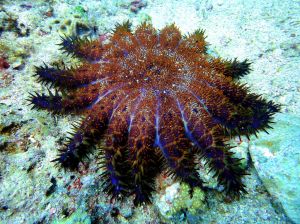
We are meeting our last sea star of the week!  This one is best to be observed but not to touch! Ouch- watch out for the crown-of-thorns sea star.

Crown of Thorns

Crown-of-thorn sea star fun facts: 

  • The thorns on this sea star are venomous.
  • These indimidating looking sea stars predate on coral!
  • They have only one predator- giant triton sea snail.
  • As you can see they have more than five arms.
  • They do have tube feet to move them along the reefs.
  • Unfortunately these predators have grown in numbers. Too many of them and that can mean trouble for a reef. They can destroy large areas.
  • Scientists and conservationists now will actively remove them when there is population boom.

IMG_0302

We love sea stars of all kinds, but this one might have gone to the dark side. Keeping a balance in habitats is crucial for all the animals that live there.

Categories: adventure, Animals, camp, Children, conservation, education, Environment, nature, oceans, sea stars, Today's Post, wildlife | Tags: , , , , , , , , , , , , | 1 Comment

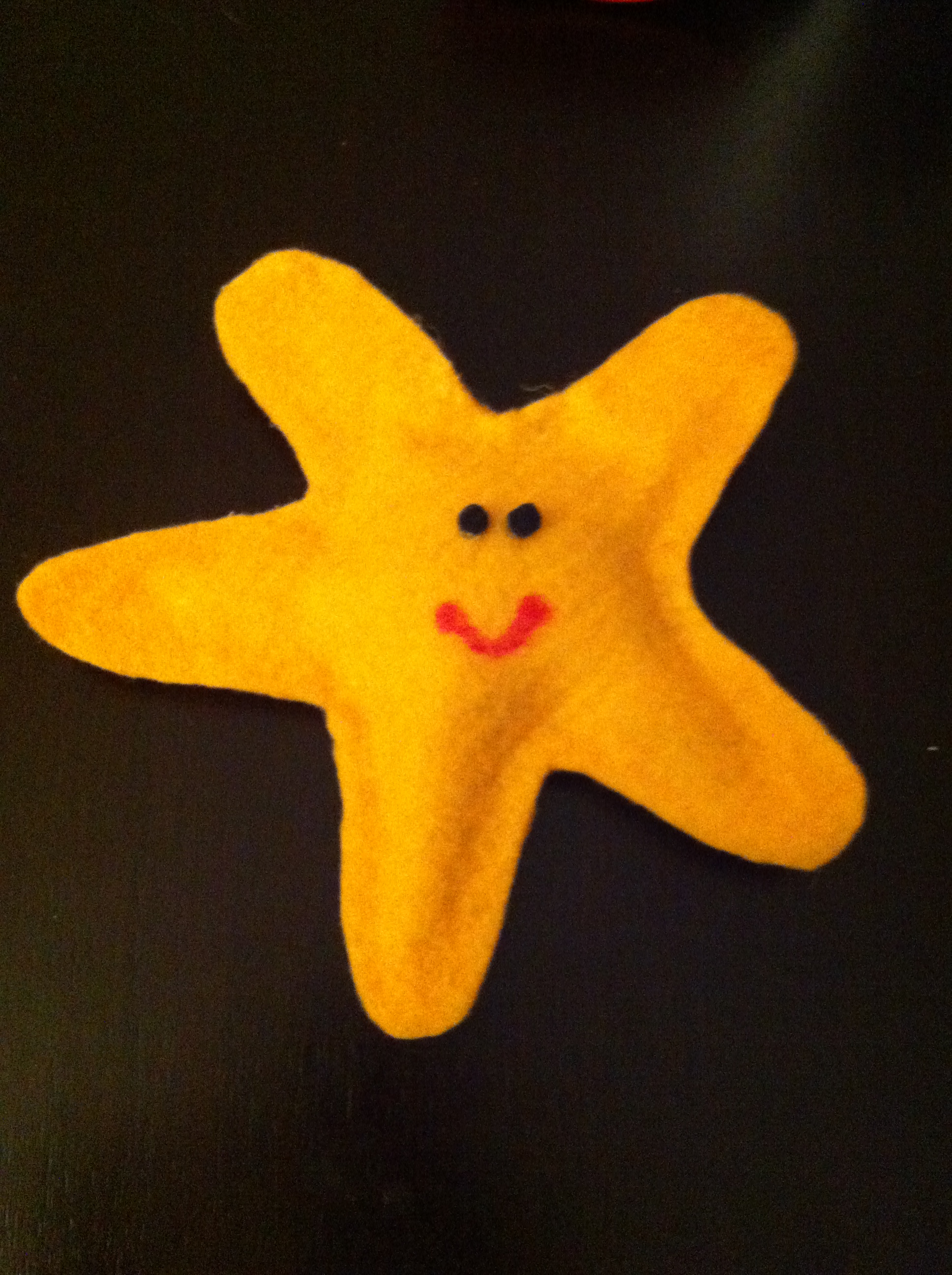
Craft Time- Sea Star Bean Bags


SEA STAR BEAN BAG

IMG_5033

We are in the craft cabin here at Camp E&E by the Sea and our dear friend Crafty Crab is going to help us with craft time! Today we’re making sea star bean bags for our sea star week! Woot! Woot!


MATERIALS:


  • Sea Star Pattern
  • Scissors
  • Felt (any color)
  • Hot glue gun (used by an adult)
  • Flax seed or stuffing
  • Funnel
  • Sharpie
  • Pom poms or googly eyes

Directions:

1)   Cut out pattern.

2)   Cut out two sea stars on felt.

3)   Hot glue the two pieces together, leaving a small opening.

4)   Put the flax seed in the sea star. If you don’t have a funnel, you can easily make one with paper, by rolling it in a cone shape. If you don’t have flax seed or stuffing or small dry beans will work too.

5)   Make sure you don’t overstuff it. Then glue the opening shut.

6)   Glue on the eyes and draw on the mouth.


You’re done! Toss your sea star, use him as a paper weight, or just give him a hug!


Categories: adventure, Animals, camp, Children, conservation, crafts, education, Environment, nature, science, Today's Post | Tags: , , , , , , , , , , | 1 Comment

Bring Your Basket- Star!

Bring Your Basket – Star!

We are so excited to see everyone here! It’s Sea Star week here at camp! You may know these amazing echinoderms as starfish, but scientists are now using sea star as these animals are not fish! We bet you’d like to know what an echinoderm is though– it’s an animal that has radial symmetry (arms radiating from a central body) and a hard covering. Other echinoderms include sea urchins, sea cucumbers and sand dollars.

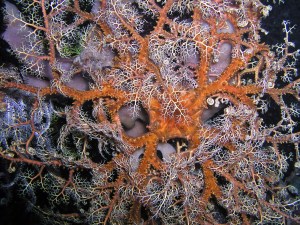
Today, we are meeting one of the craziest enchinoderms around the basket star. Woohoo!

IMG_0297

Basket Star Fun Facts: 

  • Basket stars belong to the brittle star family.
  • Most Basket stars are found in deep waters.
  • They can reach up to 28 inches across. The central disk is around 5 1/2 inches across.
  • They have 5 arms. Those 5 arms then have many many branches.
  • They have calcium carbonate structures called ossicles. These give all those arms flexibility and stability.
  • Some basket stars feed on plankton or small crustaceans.
  • They use spines and hooks to move food up their mouths on the central disk.
  • Basket stars also have tube feet to move them around.

OLYMPUS DIGITAL CAMERA

These amazing creatures have no brain, but they do have a complex nervous system. The oceans house the craziest critters on the planet!

Categories: adventure, Animals, camp, Children, conservation, education, Environment, nature, oceans, science, sea stars, Today's Post, wildlife | Tags: , , , , , , , , , , , | 1 Comment

Camp E&E by the Sea

Camp E&E by the Sea

FullSizeRender

Welcome back to camp everyone! We trust that you had a lovely holiday! We know we did! We have set up Camp E&E by the sea for the month of July and in to August! The cabins are ready and this year they are spiffy! We will also have some great tents for those that want to sleep by the ocean and hear the waves at night.

We will be meeting the animals that call the shore and ocean home! We have set up the craft cabin and here at the shore it’s run by Carl the Crafty Crab! We’ll also be enjoy a whole we dedicated to our cartilaginous friends- sharks and rays!

So back up your trunks (the box not the elephant nose) and get your cabin assisngment and let’s get ready to enjoy all the Camp E&E by the Sea brings us!

Dont’ forget your water shoes, surfboards, stand up boards, extra sunsuncreen, bug repellant (the gnats can be terrible), a flashlight with a red lens (must not disturb sea turtles) and your beach towels!


We will see you on Monday for Sea Star Week!

EA012875-DEEE-4FB5-8E0F-6B9F24E96EA1


Categories: adventure, Animals, camp, Children, conservation, education, Environment, nature, oceans, science, sea stars, Today's Post, wildlife | Tags: , , , , , , , , , | 1 Comment

Blog at WordPress.com.