Posts Tagged With: summer camp

Foxy

Foxy

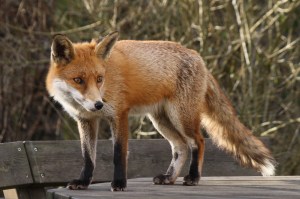
We met another resident of the woods around camp- the red fox. These canines are known for being clever and sneaky. We just think they are cool.
15F99CEF-B79E-4AE6-876C-FA8AB86F7309

Red Fox Fun Facts: 

  • Red fox can grow up to 21 inches long and weigh up to 24 lbs.
  • They are the largest member of the true fox family.
  • These graceful mammals walk on their toes!
  • They are mostly solitary.
  • These omnivores eat small mammals, fish and frogs, but also eat fruit and vegetation.
  • While the red fox is mostly nocturnal, they are known to come out during the day.
  • They are very vocal and can produce 28 different sounds. Does anyone here speak fox?
  • Those large fluffy tails are called brushes. Foxes use them for balance and to wrap themselves up in during colder months.
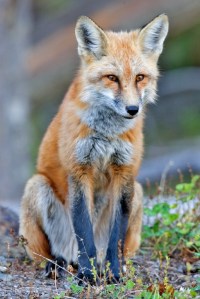
Red Fox (Male), Horsefly Peninsula, Quesnel Lake, British Columbia

You can hear the fox around Lake Salamander chatter. These gorgeous animals often get a bad wrap, but that is very much undeserved. They are one of the most successful members of the canine family and can be found on 5 continents.

Categories: adventure, Animals, camp, Children, conservation, education, Environment, mammals, nature, science, Today's Post, wildlife | Tags: , , , , , , , , , , | 1 Comment

Lighting Up the Night

Lighting Up the Night

One of the best parts of being at camp is watching the fireflies at night while we sit around the camp fire. We’re going to learn about these amazing beetles! That’s right- fireflies are beetles!

firefly2

Firefly fun facts:

  • Most fireflies have wings.
  • They on every continent except the Antarctica and the Arctic circle.
  • There are around 2,000 species of fireflies in the world.
  • Fireflies get that famous glow from a special organ under their abdomen. They take oxygen in to that organ and  it produces the glow with no heat!
  • Each species of firefly has their own pattern of flashes.
  • These lights are used to find potential mates.
  • These bioluminescent beetles can glow with yellow, red or green.
  • Scientist think that fireflies use their glow to help warn predators that they taste bad.
  • Fireflies are omnivores, eating worms as larva and nectar as adults.

firefly

We here at Camp E & E call fireflies, lightening bugs! It’s fun to gather them in a jar with holes poked in the lid to watch them glow for a bit and return them to the skies to find a mate. What do you call fireflies in your neck of the woods?

Categories: adventure, Animals, camp, Children, conservation, education, Environment, insects, nature, science, Today's Post, wildlife | Tags: , , , , , , , , , , | 1 Comment

Jeepers Creepers

Jeepers Creepers

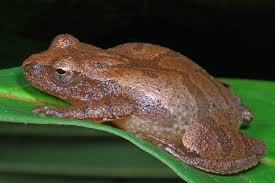
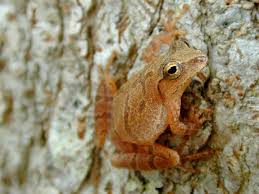
We are meeting a little frog that calls Lake Salamander. These little frogs sing their songs at night while we’re sitting by the lake. Luckily one little peeper hopped by to talk to us about spring peeper frogs.

spring peeper


Spring Peeper Fun Facts:

  • My calls usher in spring across the Eastern United States.
  • I am a member of a group of frogs known as chorus frogs.
  • I have pads on my toes that help me grip to surfaces.
  • Those pads help make me an excellent climber!
  • Like all frogs, I am a carnivore.
  • I like to winter in Florida, hahaha! Just kidding, I hide under piles of leaves and logs.
  • In the winter, I allow my body to freeze! Yep, bet you can’t do that!
  • I have a lovely X shaped pattern on my back.
  • You can hear our lovely chorus here!

spring peeper2

I am one shy frog and you won’t see me out during the day! But if you’re sitting outside listen for us and our lovely songs of spring!

Categories: adventure, amphibians, Animals, camp, Children, conservation, education, Environment, frogs, nature, science, Today's Post, wildlife | Tags: , , , , , , , , , , , , | 1 Comment

We Hear Howling

We Hear Howling

We were sitting around the camp fire last night when heard a howling! We knew immediately that it was the coyotes that call these woods home. We hoped it would be our friend Carla. Sure enough Carla met came down to the camp fire to meet the campers and tell us more about coyotes.

62F70B36-C4C1-4F30-9F2C-85BB39EAF3AD


Hello everyone! We coyotes are so glad to see you hear at camp. I’m going to tell you more about myself and my relatives.

  • We coyotes are members of the canine family.
  • We once roamed only the western plains, but we now call much of the North America our home.
  • The early human settlers of this place, the Native Americans told many legends of my kind. They said we were clever and mischievous.
  • No one ever called us dumb, that’s for sure.
  • We are predators and omnivores. We’ll eat most prey animals including snakes. Don’t worry campers, our diets don’t include you.
  • We coyotes have excellent senses of smell and sight.
  • And man are we fast! We can reach up to 40 mph!
  • I have a litter of cubs who were born this spring. My partner is watching over them. We take care them and protect our territory together.
  • You may think we are nocturnal, but in fact we are active all times of day depending on what animals are in our area. So you may see us during the day or you may hear us howling at night.

We coyotes are often misunderstood, like most predators. We all play our part in the ecosystems of North America. So next time you hear one of us howling, smile and howl back!


Categories: adventure, Animals, camp, Children, conservation, education, Environment, mammals, nature, science, Today's Post, wildlife | Tags: , , , , , , , , , , | 1 Comment

Amphibian Friend at Lake Salamander

Amphibian Friend at Lake Salamander

We are so happy to meet our first friend of the summer! Camp E&E sits next to one beautiful lake- Lake Salamander. This special spot was named because of the special amphibians who live here! We are always so thrilled to find a few chilling in the woods.

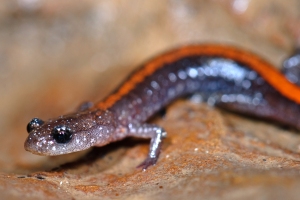
Today we are meeting the Southern Zigzag salamander. Woohoo!

03895B5D-FD41-4D4B-ADFC-8D73BB7270AD

Southern Zigzag Salamander Fun Facts: 

  • These adorable amphibians are carnivores. They eat mostly insects.
  • They only grow to about 3 1/2 inches long! Not a big animal for sure.
  • They call the forest floor their home, so watch where you are stepping while on hikes campers.
  • They have a zigzag stripe down their back. It can vary in color from red to yellow.
  • Females lay eggs in burrows. They guard their eggs until they hatch. Unlike a lot of salamanders, they do not go through an aquatic larva phase. When they are born, they look like miniature adults!
  • They are listed by the IUCN as Least Concern.

Can you imagine how cute teeny tiny zigzag salamanders are? We would hardly be able to stand it! We hear that Crafty Crab is coming up with a cute salamander craft later in the week! YAY!

Categories: adventure, amphibians, Animals, camp, Children, conservation, education, Environment, nature, science, Today's Post, wildlife | Tags: , , , , , , , , , , , | 1 Comment

Camp E&E 2018

Camp E&E Summer 2018

7552C7CF-F69D-4A02-98D4-96F37172AEBF


Hello and welcome to Camp E&E this summer! We have a great line-up this year with animals, camp fire stories, interviews, crafts and more!

We are spending June here at our home base next to Lake Salamander! There are so many animals to meet that call these woods home all year round . Some are small but mighty and some are scary to most people, but they all are special and they are ready to welcome us all to camp.

In July, we’ll be heading to beach camp to meet sea creatures and shore birds. By August you’ll not want to leave!

So campers- it’s time to pack your bags and get your cabin assignment. Camp E&E is kicking off summer of 2018.

Packing list:
Sheets
Flashlight
Bug spray
Hiking shoes
Water shoes
Swimsuits or trunks
Mud SPF 50 sunscreen
Your favorite stuffed animal to sleep with
Sleeping bag
Refillable water bottles
Swim goggles
Binoculars
Nature journal

0F9AAAB1-0DDC-42AE-A672-81CE65A4487A


We’ll meet our first animal tomorrow!

Categories: adventure, Animals, camp, Children, conservation, crafts, education, Environment, nature, science, Today's Post, wildlife | Tags: , , , , , , , , , | 1 Comment

School’s Out

School’s Out

We are taking the next few weeks off to get ready for Camp E&E to start on June 4th. We sincerely apologize for our intermittent posts over the last month or so. Things have been a bit hectic and we are hoping life slows down as summer rolls in and after our much need vacation in the Pacific Northwest!

Get your camping gear ready and your Mud SPF 50 packed so we can enjoy an wonderful summer together at Camp E&E!

Categories: adventure, Animals, camp, Children, conservation, education, Environment, nature, science, Today's Post, wildlife | Tags: , , , , , , , , , | 1 Comment

Last Day of Camp

Last Day of Camp

686ED16E-4D0A-4357-B118-C7877422A3BC

Well pals it is the last day of Camp Ellie & Edmond. It’s always sad to say goodbye to summer and our pals. We will be taking the next three weeks off to move our site and work on a few improvements!

Then we’ll be back for a whole new year at the University of Ellie & Edmond! We will be getting back to basics for a month and then a we have an exciting year.

We are introducing Where Will The Next E&E Adventure Be? Each month we will be going to a new place. On the first day you will get a chance to guess where we are and there will be a prize for the person who guesses it correctly first! We know we are excited for all that is coming!

Let’s end this amazing summer with the Camp E&E song:

On the shores of Lake Salamander, among the old live oak…

We enjoy Camp Ellie and Edmond and the frogs that croak.

We salute you Camp E & E and all your animal friends…

All our days are each a gem.

While we sit next to the campfire, telling stories of old…

We laugh and sing and watch the stars of gold.

We love you Camp E &E and all our memories of our days…

We hold Camp E & E close to our hearts and we’ll never stray!


We will see all our campers during the school year!

FullSizeRender

Categories: A, Animals, camp, Children, conservation, education, Environment, nature, science, Today's Post, wildlife | Tags: , , , , , , , , , | 1 Comment

Pelican! Pelican!

Pelican! Pelican!

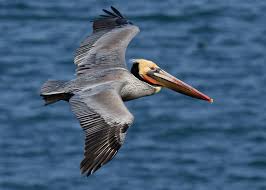
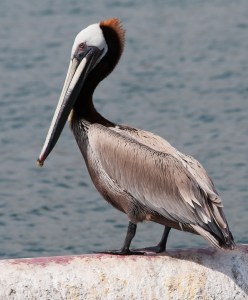
We are meeting one last animal at Camp E&E! The summer has flown by hasn’t it? We can hardly believe it! We could spend hours and hours watching the brown pelican take diving in the ocean scooping up eats! Let’s mee them today!

IMG_0337


Brown Pelcian Fun Facts: 

  • The Brown Pelican is the smallest of all pelican species.
  • They are plunge divers. They fly above the surface of the water and then drop or plunge into the sea to catch their prey.
  • Brown pelicans have a greenish skin on their face that is brighter during mating season.
  • Brown pelicans like to nest in trees, shrubs and mangroves.
  • Both parents incubate eggs. They usually have 2-3 chicks. One chick can eat up to 150 lbs of food by the time they are 10 months old! That’s a bunch of fish for little guys
  • Their pouch can hold up to 3 gallons and the stomach can hold around 1 gallon.
  • Brown pelicans are the state bird of Louisiana.

IMG_0339

We love pelicans! Love them! They are one of the coolest birds around! Do you love them as much as us? Stick around for the last craft day of camp tomorrow!

Categories: adventure, Animals, birds, camp, Children, conservation, education, Environment, nature, oceans, science, Today's Post, wildlife | Tags: , , , , , , , , , , , | 1 Comment

Catching Oysters with an Oystercatcher

Catching Oysters with an Oystercatcher

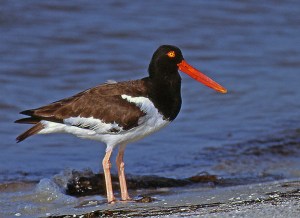
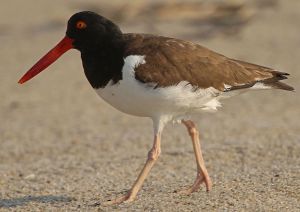
It’s the last week of Camp E&E by the Sea! Can you believe it? This week we’re hanging by the beach to meet shore birds. First up is the American Oystercatcher! This neat bird is easy to spot with its bright orange beak. So let’s head out to spot some campers!

IMG_0334

American Oystercatcher Fun Facts: 

  • These brightly colored birds call salt marshes and shores their home.
  • They feed on shellfish, mussels, clams, oysters and sea stars.
  • American oystercatchers tend to spend more time on the ground than flying.
  • They often grab the shellfish inside the shell before it can close. They severe the muscle and swallow the meat whole.
  • They nest in higher areas away from the high tide line.

IMG_0335

We could sit on the beach and watch shore birds all day! These funny birds with their long legs are one of our favorites. What’s your favorite shorebird?

Categories: adventure, Animals, birds, camp, Children, conservation, education, Environment, nature, oceans, science, Today's Post, wildlife | Tags: , , , , , , , , , , | 3 Comments

Blog at WordPress.com.