Posts Tagged With: envrionment

One Big Sea Snail

One Big Sea Snail

We were searching the beach for shells when we came across an abandoned shell that belongs to one big sea snail.  We wanted to know more about the animal that uses this shell- so here we are to learn more about the knobbed welk.

18D513F5-67DC-4207-871A-A5C7035482F1

Knobbed Welk Fun Facts: 

  • Knobbed welks can grow up to 12 inches long.
  • Knobbed welks are right sided. When you find them the openings will always be on the right.
  • They have 6 vertical coils.
  • They live in shallow and deep water depending on the time of year.
  • These carnivores eat oysters and clams. They use their shells to open their prey using their shell. They have a long probiscus they use to eat the flesh with.

360153E8-1767-4481-8173-A0D0BB677155

When you find abandoned sea shells on the beach, do you wonder what kind of animal lived in it? We love to go back with the shells and ID them.

Categories: adventure, Animals, camp, Children, conservation, education, Environment, nature, oceans, science, Today's Post, wildlife | Tags: , , , , , , , , , , | 1 Comment

Pelican Pelican!

Pelican Pelican!

While bird watching on the beach, we spotted some pelicans. This large billed birds were not the brown pelicans we are use to seeing, but the American White Pelican. They were so fun to watch and we couldn’t wait to learn more about them.

index

American White Pelican Fun Facts:

  • White pelicans live near marshes and lakes.
  • These large birds can grow up to 70 inches long and weigh up to 14 lbs. Those famous bills can be 15 inches long.
  • Their wingspan is only 2nd to the California Condor.  Those wings can be 120 long when in flight! That is longer than a queen sized mattress, which measures 80 inches!
  • Males are larger than females.
  • These carnivores eat not only fish, but also bottom dwellers like salamanders and crayfish.
  • They are usually found in large flocks.
  • White pelicans do not dive for their food, but instead scoop it out of the water and drain the water out of their bills.
  • These big birds eat around 4 lbs of food a day!

pelican


We love pelicans! They are so funny and kind of derpy, but graceful too! It was fun to watch some swimming and catching their food that way instead of diving.


Categories: adventure, Animals, birds, camp, Children, conservation, education, Environment, nature, science, Today's Post, wildlife | Tags: , , , , , , , , , , , , | Leave a comment

Curlew!

Curlew!

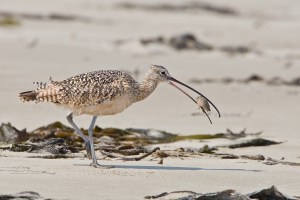
We are meeting our first resident of Camp EE at the beach- the long-billed curlew. One of our favorite pastimes at beach camp is to watch shore birds run around looking for food and running away from the waves.


2 of 5 Long-billed Curlew (Numenius americanus) bird eating sand

Long-billed curlew fun facts: 

  • These carnivores use those long bills to grab crustaceans and marine invertebrates.
  • They hunt for prey in groups.
  • They run or walk on the ground often.
  • They are the largest member of the sandpiper family.
  • Males do fancy flights to attract mates. They mate in grasslands and prairies away from the shore.
  • They are listed as Least Concern by the IUCN.

71ABD8D6-6128-4EAE-949B-6841DD096D45

We love these birdies with their skinny legs and long funny beaks. We could watch them all day and we might just do that!

Categories: adventure, Animals, birds, camp, Children, conservation, education, Environment, nature, science, Today's Post, wildlife | Tags: , , , , , , , , , , , , | 2 Comments

Strawberry Moon

Strawberry Moon

We have a special post today for you! We made a little video about how the moon affects animal behavior in collaboration with our science partner- Science With My Cat!

Learn some fun animal facts with us and then head on over to their site to find a fun activity about moon phases! YAY for science!

Categories: adventure, Animals, camp, Children, conservation, education, Environment, nature, oceans, science, space, Today's Post, wildlife | Tags: , , , , , , , , , , , , , | 1 Comment

Craft Day- Turtle Magnets

Craft Day- Turtle Magnets

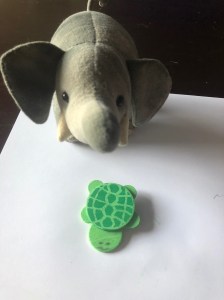
Happy Craft Day! We’re making little wood turtle magnets out of wood! Hehehe! Come join us in the craft tent!

Materials:

B90B4DFE-EFFD-4576-B285-FDBA47D0F9EC
Wood circles of different sizes
Markers
Glue
Magnet

Instructions:
1)Color all your circles- (you need 1 large & 5 smaller ones for feet & head)

B53DDC93-6AD0-41BE-8998-A01DE8F30111
2)Glue the circles together to make a turtle

C998CDDA-E3FB-418B-B028-B6B2AB213E27
3) Glue on magnet

AFB258B2-0161-4772-8217-BA728A764045

There is your wood turtle! Make him whatever color you like! Add glitter! Jazz him up!

856E52A5-C528-48AF-AC94-A705201F5917


Categories: adventure, Animals, camp, Children, conservation, crafts, education, endangered species, Environment, nature, science, Today's Post, turtles, wildlife | Tags: , , , , , , , , | 1 Comment

Meet Penny

0BA9430F-15CE-4F37-B4A3-40E2642BFBB8Meet Penny

Hi campers! We are meeting one of our favorite residents of the woods here at Lake Salamander, Penny the Porcupine! She hangs out with us around the campfire at night! She’s great at roasting load of marshmallows at once.


Hi Penny! We are so glad you have joined us at camp this year! Can you tell all the campers a little bit about yourself!

I’m happy to tell you all about porcupines!

  • We porcupines are rodents! That’s right, I’m related to squirrels and mice.
  • My back is covered in quills. I can not throw my quills, but if a predator like a wolf tries to attack me- I can release my quills.
  • I have around 30,000 quills!
  • My quills are made of keratin, the protein that make up human nails & hair.
  • I am a good climber and a good swimmer.
  • I like to eat a variety of plants, bark, berries and roots.
  • When I was a baby, I was called a porcupette! When we are born our quills are soft. They grow harder in just a few days.

Wow! You porcupines sure are neat! We just love your quills, especially that they are good for roasting marshmallows- hehehe! Thanks for coming!


Categories: adventure, Animals, camp, Children, conservation, education, Environment, mammals, nature, science, Today's Post, wildlife | Tags: , , , , , , , , , | 1 Comment

One Big Weasel

One Big Weasel

We are meeting a local here of the woods at Lake Salamander- the largest member of the weasel family- the wolverine. We are lucky to know one too, there aren’t many in these parts.

3B1F72C2-C741-4EEF-AFBD-C4D71882B286


Wolverine Fun Facts:

  • Wolverines are solitary. They live in a large territory. A male shares his territory with several females.
  • These predators are known to eat some vegetation and berries in the summer, but they are carnivores.
  • They can grow up to 42 inches long and weigh up to 55lbs. Males are larger than females.
  • Wolverines have thick fur coats that are water and frost resitant.
  • They are sometimes called the skunk bear because of the musky scent these use to mark their territory with.
  • The wolverine’s main predator is the grey wolf.
  • They are listed as Least Concern by the IUCN.

B613269F-3283-47F2-AA9C-7816505166A3

These animals are known for their tenacity. They have been known to steal carrion from larger animals than themselves.

Categories: adventure, Animals, camp, Children, conservation, education, Environment, mammals, nature, science, Today's Post, wildlife | Tags: , , , , , , , , , , | 1 Comment

Jeepers Creepers

Jeepers Creepers

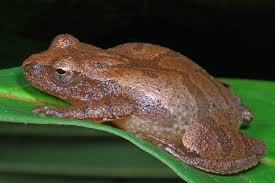
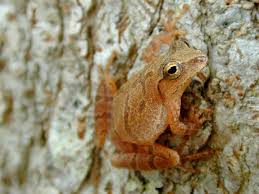
We are meeting a little frog that calls Lake Salamander. These little frogs sing their songs at night while we’re sitting by the lake. Luckily one little peeper hopped by to talk to us about spring peeper frogs.

spring peeper


Spring Peeper Fun Facts:

  • My calls usher in spring across the Eastern United States.
  • I am a member of a group of frogs known as chorus frogs.
  • I have pads on my toes that help me grip to surfaces.
  • Those pads help make me an excellent climber!
  • Like all frogs, I am a carnivore.
  • I like to winter in Florida, hahaha! Just kidding, I hide under piles of leaves and logs.
  • In the winter, I allow my body to freeze! Yep, bet you can’t do that!
  • I have a lovely X shaped pattern on my back.
  • You can hear our lovely chorus here!

spring peeper2

I am one shy frog and you won’t see me out during the day! But if you’re sitting outside listen for us and our lovely songs of spring!

Categories: adventure, amphibians, Animals, camp, Children, conservation, education, Environment, frogs, nature, science, Today's Post, wildlife | Tags: , , , , , , , , , , , , | 1 Comment

We Hear Howling

We Hear Howling

We were sitting around the camp fire last night when heard a howling! We knew immediately that it was the coyotes that call these woods home. We hoped it would be our friend Carla. Sure enough Carla met came down to the camp fire to meet the campers and tell us more about coyotes.

62F70B36-C4C1-4F30-9F2C-85BB39EAF3AD


Hello everyone! We coyotes are so glad to see you hear at camp. I’m going to tell you more about myself and my relatives.

  • We coyotes are members of the canine family.
  • We once roamed only the western plains, but we now call much of the North America our home.
  • The early human settlers of this place, the Native Americans told many legends of my kind. They said we were clever and mischievous.
  • No one ever called us dumb, that’s for sure.
  • We are predators and omnivores. We’ll eat most prey animals including snakes. Don’t worry campers, our diets don’t include you.
  • We coyotes have excellent senses of smell and sight.
  • And man are we fast! We can reach up to 40 mph!
  • I have a litter of cubs who were born this spring. My partner is watching over them. We take care them and protect our territory together.
  • You may think we are nocturnal, but in fact we are active all times of day depending on what animals are in our area. So you may see us during the day or you may hear us howling at night.

We coyotes are often misunderstood, like most predators. We all play our part in the ecosystems of North America. So next time you hear one of us howling, smile and howl back!


Categories: adventure, Animals, camp, Children, conservation, education, Environment, mammals, nature, science, Today's Post, wildlife | Tags: , , , , , , , , , , | 1 Comment

Puffins!!

Puffins!

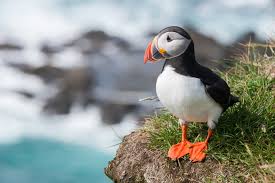
We headed to the coast line to meet one of the most iconic birds of Norway’s coastline- the Atlantic Puffin! These adorable birds are so much fun to watch. We wish one would come live with us the University.

puffin

Atlantic Puffin Fun Facts:

  • These little handsome birds grow up to 10 inches long and can weigh up to 17 oz.
  • They are nicknamed the “sea parrot”.
  • These carnivores eat fish.
  • Their brightly colored beaks are duller in color during the winter. They bright colors are brightest during breeding season.
  • These sea birds spend most of their life at sea. They can swim under water using a flying motion. They can even dive up to 200 feet deep.
  • In the air, they can fly up to 55 mph.
  • Both parents incubate the egg and then feed the chick.
  • They are listed as Vulnerable by the IUCN.

puffin2

These amazing birds form large breeding colonies. They breed in the same place every year. Scientists are not sure how the birds navigate back to the same place yet.

Categories: adventure, Animals, birds, Children, conservation, education, endangered species, Environment, nature, science, Today's Post, wildlife | Tags: , , , , , , , , , , | 1 Comment

Blog at WordPress.com.