Posts Tagged With: science

One Funny Looking Animal!

One Funny Looking Animal!

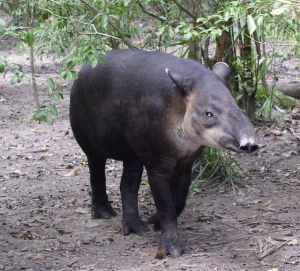
We went looking for one funny looking animal of the rainforest. Tapirs, with their long snouts look like they might be related to Ellie, but in reality they are related to Edmond! Neat! Today, we are meeting the largest of the tapir family.
OLYMPUS DIGITAL CAMERA


Baird’s Tapir Fun Facts: 

  • These large tapirs can grow up to 8 ft long and weigh over 800 lbs.
  • Their funny looking feet have four toes on the front and three on the back.
  • Tapirs use their long flexible noses for snorkels, sniffing odors in the forest and for finding food.
  • These nocturnal herbivores look for leaves and fruits during the evening hours.
  • They are excellent swimmers. They head to the water when threatened.
  • Once thought to be solitary, it is now believed they live in small family groups.
  • The young stay with their mothers for up to two years.
  • Baird’s tapirs are listed as endangered due to habitat loss and hunting.

0EF66EC7-2BB1-433E-9E1B-59C9FC579CEB

There are efforts to protect these beautiful animals. It would be a terrible thing to lose such a unique animal.

Categories: adventure, Animals, Children, conservation, education, endangered species, Environment, mammals, nature, science, Today's Post, wildlife | Tags: , , , , , , , , , | 1 Comment

Those are some peepers!

Those are some peepers!

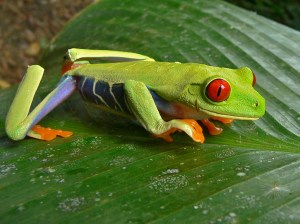
After meeting the macaws yesterday, we ran into a small resident of the rainforest. These little amphibians are brightly colored with big red eyes. They also make you jump! Hehehe!

B80D11A1-2C69-4EBB-97B2-28976AC6B835

Red Eyed Tree Frog Fun Facts: 

  • The nocturnal species hide on the under side of leaves during the day.
  • If they are found- they flash those big red eyes and startle any predators!
  • They frog’s other bright colors- including orange feet and blue streaks protect them by confusing a predator’s eye with too much color.
  • These carnivores eat insects they find in the trees.
  • These arboreal amphibians are amazing jumpers! (Say that fast five times 🙂
  • They are not poisonous.
  • Red eyed tree frogs are listed as least concern.

P1090418

We love these little frogs. They are so beautiful with their bright green eyes. That splash of blue on their legs make them the fashionistas of the rainforest. Hahaha!

Categories: adventure, Animals, Children, conservation, education, Environment, frogs, nature, science, Today's Post, wildlife | Tags: , , , , , , , , , , , , | 1 Comment

Hello Bright Colored Bird

Hello Bright Colored Bird

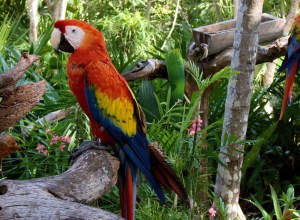
Hello! We went birding today! We were looking for one of the most brightly colored and gorgeous macaws on the planet. Come meet them with us!

6AE02071-421E-4B5E-947A-C6B0857BF41B

Scarlet Fun Facts: 

  • There are two subspecies of scarlet macaw. We met the North Central American Scarlet Macaw.
  • They have blue on their wings and not green. They are also larger than their South American cousins.
  • They weigh around 2 lbs and grow up to 32 inches long.
  • Scarlet macaws eat fruits, nuts and seeds.
  • They mate for life.
  • Chicks leave their parents after about a year.
  • They have a life span of around 40-50 years.

068001CA-5D65-4ACF-84B4-A1E27A753ABF

We enjoyed watching these beautiful birds. They are social and intelligent. They are kept as pets, which is often a bad idea. They have long life spans and are very high maintenance. They can also be very destructive.

Categories: adventure, Animals, birds, Children, conservation, education, Environment, nature, rainforests, science, Today's Post, wildlife | Tags: , , , , , , , , , , , | 1 Comment

Yep, That’s a Cat!

Yep, That’s a Cat!

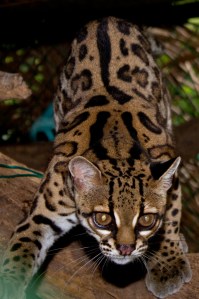
We are meeting our last animal this week here in Costa Rica and it’s a small wildcat. This place has so many interesting species. These small cats blend in quiet well, so we were super lucky to find one!

CCE5DFD9-247C-4EDF-B0FF-FC3F0ED0EA02


Margay Fun Facts:

  • Margays are built for life in the trees.
  • They have broad flexible toes and long tails that help them climb and keep their balance.
  • They can turn their hind feet 180 degrees allowing them to climb down a tree head first.
  • These solitary cats are carnivores. They eat birds, small mammals and reptiles.
  • Margays are listed as near threatened by the IUCN.
  • They are nocturnal.
  • The fur on the back of their necks grows the opposite direction of the rest of their coats.

D7F74D12-7ABD-4033-88E5-E0A97F724EFC

These gorgeous cats are often confused with the ocelot. They have longer tails and a bit smaller. They have those large round eyes to see in the dark too! We think they are just the cutest!

Categories: adventure, Animals, Children, conservation, education, endangered species, Environment, mammals, nature, science, Today's Post, wildlife | Tags: , , , , , , , , , , | 1 Comment

Teeny Tiny Bird

Teeny Tiny Bird

After our all nighter looking for frogs, we stayed up a bit longer to find a little bird before napping away the day. This little fast birdie was not easy to spot as it is one of the smallest hummingbirds around.

1D20B3A2-6579-4433-A376-F52D899E757E


Scintillant Hummingbird Fun Facts: 

  • These little birds grow up to around 3 inches long. It is just a little larger than the smallest bird in the world- the bee hummingbird.
  • They have little straight black beaks.
  • Scintillant hummingbirds eat nectar.
  • Males are very territorial.
  • Females build the nests, incubate the eggs and raise the babies.

579382F7-80DA-4F8B-81C2-D3F3CAB805D3

These teeny birds are so adorable. They are Ellie and Edmond sized :)!

Categories: adventure, Animals, birds, Children, conservation, education, Environment, nature, science, Today's Post, wildlife | Tags: , , , , , , , , , , | 1 Comment

The Real Kermit

The Real Kermit

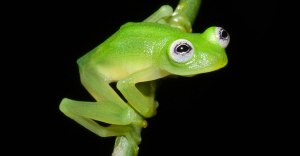
We went frogging during the evening. Costa Rica is one of the best places for spotting amphibians. We went looking for a very new species and we were not dissappointed.


C7B4F3D6-2A5D-4921-85AC-BCB8BD3ADA4A

Diane’s Bare-Hearted Glass Frog: 

  • Glass frogs have transparent skin on their bellies. You can see all of their organs!
  • These frogs are found in the mountains of Costa Rica. They are the first new glass frog species to be discovered in 40 years.
  • It has long thin fingers and toes.
  • They are nocturnal.
  • Males have an almost insect like call they use to attract females.
  • These cuties have white ping pong like eyeballs with black irises that make them look just like Kermit the frog.


We often think it is crazy that scientists are still discovering new species. It is so important to protect the wild places on earth so that all animals- known and not known have a healthy habitat to call home.

Categories: adventure, amphibians, Animals, Children, conservation, education, endangered species, Environment, nature, science, Today's Post, wildlife | Tags: , , , , , , , , , , , | 1 Comment

Costa Rica!

Costa Rica!

IMG_2913

Hello and greetings from Central America! We are settling in to our tree house that we are using for base camp. We’re going to learn more about this gorgeous little country today before we begin some of the awesome animals next week! Woohoo!

costa rica3


Costa Rica Fun Facts:

  • Costa Rica is located in Central America. The capital is San Jose.
  • Costa Rica’s marine areas are larger than its land area.
  • There are 7 active volcanoes in the country. Poas volcano has the 2nd largest crater in the world.

costa rica

  • There are 52 species of hummingbirds in Costa Rica.
  • 10% of the world’s butterflies call Costa Rica home. That is about 1,000 species.
  • Costa Rica has a rainy season & a dry season. We are end of the rainy season.
  • Costa Rica contains about 5% of the world’s biodiversity.
  • It borders the Pacific ocean and the Caribbean ocean.

costa rica2

This is one super neat place full of amazing species! We can hardly wait to meet some of them! See you Monday!


Categories: adventure, Animals, Children, conservation, education, endangered species, Environment, nature, science, Today's Post, wildlife | Tags: , , , , , , , , , | 1 Comment

Halloween Week- Vampires

Halloween Week- Vampires

We are continuing the Halloween fun with some vampires of the ocean! That’s right- vampire squid!

1AB9DDBA-282B-4105-BBDC-8B534E73556B

Vampire Squid Fun Facts: 

  • Vampire squid are black to red color.
  • They have skin that connects its eight arms.
  • Each arm has spines on it.
  • They eat marine animal debris that falls to the ocean floor.
  • Adults have two small fins on their mantle (head).
  • They are covered in light producing organs called photophores.
  • They are unable to change their skin color and texture like other squid.

Vampire squid are so amazing and weird! They call the dark deep ocean their home and it sure is a weird place!

Categories: adventure, Animals, Children, conservation, education, Environment, nature, oceans, science, Today's Post, wildlife | Tags: , , , , , , , , , | 1 Comment

Halloween Week- Mole Rats

Halloween Week- Mole Rats

16B00976-9D1D-4FD4-BE9A-79B21F28B077


Today we are meeting one cool rodent! It is super cute and creepy!

Demon Mole Rat Fun Facts: 

  • They use their teeth to dig burrows underground.
  • Demon mole rats are solitary and territorial.
  • They bang their heads on their burrows to communicate with other mole rats.
  • They are related to naked mole rats.
  • They live in East Africa and call savanas their home.
  • They have orange teeth.


Categories: adventure, Animals, Children, conservation, education, Environment, Halloween, nature, science, Today's Post, wildlife | Tags: , , , , , , , | 1 Comment

Halloween Week- Getting Crabby

Halloween Week- Getting Crabby

89A1670C-A798-4A5A-A163-08690D980CE8


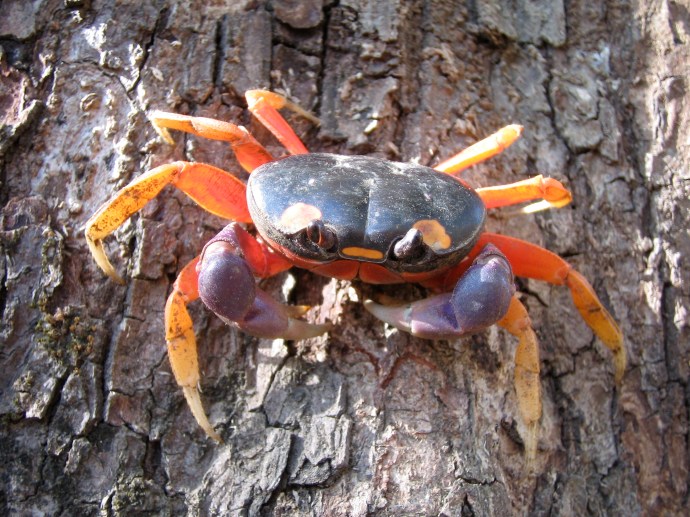
Have you ever heard of the Halloween Crab? We hadn’t either! These colorful land crabs remind us of this festive time of year!

Halloween Crab Fun Facts: 

  • They call the Pacific coast home.
  • Halloween crabs have large purple claws.
  • They are nocturnal.
  • They are also known as the Halloween moon crab.
  • Halloween crabs dig burrows.
  • They are herbivores.

83C25C87-1CEB-43F3-8BDC-C8C92E51845A

Categories: adventure, Animals, Children, conservation, education, Environment, nature, oceans, science, Today's Post, wildlife | Tags: , , , , | Leave a comment

Blog at WordPress.com.