Posts Tagged With: wildlife

Spring Break

Spring Break!

We’re off to the beach for the week! But make sure to check out our social media this week as we have some great animal friends who are taking over! Woohoo!

e e beach

Categories: adventure, Animals, Children, conservation, education, entertainment, Environment, nature, science, Today's Post, wildlife | Tags: , , , , , , , | 1 Comment

Give That Frog a Glass of Water

Give That Frog a Glass of Water

We had no internet yesterday! Darn-it! Well we spent that extra time looking for an unusual amphibian who calls the desert home! The water holding frog is soooo cool!

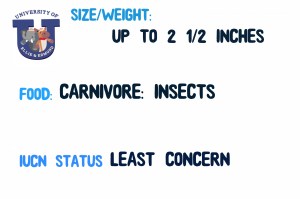
water holding frog

IMG_3395


Date: 4/7

Location: Great Victorian Desert

Water Holding Frog Fun Facts:

  • They have webbed toes.
  • Water holding frogs live underground.

IMG_3396

  • When they bury themselves, they cocoon themselves in a mucus to protect themselves.
  • Water holding frogs eat that mucus when they emerge from their dormant state.
  • Water holding frogs can hold water in their bladder and send it back to their mouths to drink. They can also store in pockets under their skin!
  • They come out of their sandy burrows to mate during rainy season.

Woohoo! Animals have the neatest adaptation ever! Even if they seem kind of gross! Hehehehe!

Categories: adventure, amphibians, Animals, Children, conservation, education, Environment, nature, science, Today's Post, wildlife | Tags: , , , , , , , , , , | 1 Comment

Tiny Marsupial

Tiny Marsupial

Well it doesn’t get much cuter than today’s animal! These tiny marsupials look like rodents, but they are not!

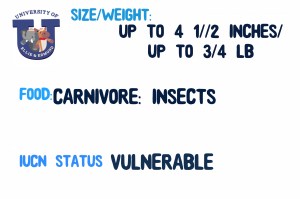
sandhill dunnart2

IMG_3325


Date : 4/5

Location: Great Victorian Desert

Sandhill Dunnart Fun Facts:

  • They are one of the largest members of the Dunnart family.
  • Sandhill dunnart have stiff black hairs on the underside of the tail.
  • These little marsupials are carnivores!
  • Their tails are longer then their bodies.

IMG_3352

  • They live in burrows under the spinifex hummocks shrubs.
  • Sandhill dunnarts store fat in their tails.

sandhill dunnart

These little marsupials are threatened unfortunately. There are efforts in Australian zoos to increase their numbers! Woohoo!

Categories: adventure, Animals, Children, conservation, education, endangered species, Environment, marsupial, nature, science, Today's Post, wildlife | Tags: , , , , , , , , , , , | 1 Comment

A Skink not a Skunk!

A Skink not a Skunk!

After we settled in at camp we decided where we should go on our first adventure! We wanted to meet a neat little lizard we knew lived in this habitat! We headed off for the day with our day packs full of snacks and MUD SPF 30 sunscreen!

great desert skink

IMG_3315


Date: 4/3

Location: Great Victorian Desert

Great Desert Skink Fun Facts:
  • Great desert skinks vary in color from tan to grey or dark brown.
  • They store fat in their tales during the winter.
  • Males are slightly larger than females.
  • Great desert skinks live in complex burrows with several entrances and areas.

IMG_3316

  • A family group occupies the burrow. Babies stay with their family for up to three years.
  • They generally hunt at night in the hotter months.

great desert skink2

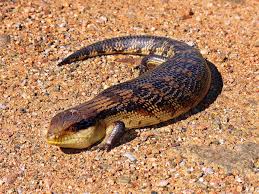
We had such fun going to look for these little short legged lizards! They remind us of another Australian skink- the blue tongued skink! They are both so cool! And they aren’t slimy at all- very smooth!

Categories: adventure, Animals, Children, conservation, education, endangered species, Environment, nature, reptiles, Today's Post, wildlife | Tags: , , , , , , , , , , | 1 Comment

Desert Down Under

Desert Down Under

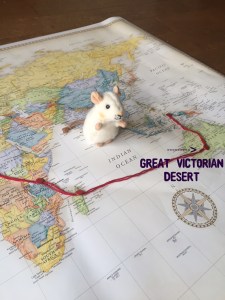
We have backed our bags again and headed off to the great island nation of Australia! It is a long way from HQs. We unpacked at camp just at the edge of the Great Victorian Desert. After getting over our jet lag. We set out to learn more about this vast and interesting habitat!
IMG_3317

Great Victorian Desert Fun Facts:

  • It is the largest desert in Australia.  It’s about 135,000 square miles.
  • It is located in the Southwest of Australia.
  • Temps can range from 104 degree Fahrenheit in summer to 64 in the winter.
  • The Mamungari Conservation Park lies within the Great Victorian Desert.

e e desert

  • Only very hard plants survive in the desert, but there is a great variety of plants.
  • There is quiet a variety of animals in the desert that are adapted to live in the harsh environment!

great victorian desert

We are super excited to meet some of the inhabitants of this great desert! We’ll be meeting an interesting lizard tomorrow! See you then!


Categories: adventure, Animals, Children, conservation, education, Environment, nature, science, Today's Post, wildlife | Tags: , , , , , , , , , | 1 Comment

Hello Little Lemur!

Hello Little Lemur!

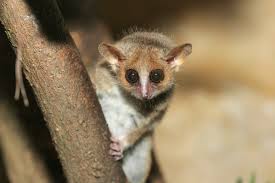
We are meeting our last animal on Madagascar! It’s a lemur of course! We are so excited! We are heading to the desert of Australia for the month of April! Woot! Woot! Let’s meet this special animal first!
mouse lemur

IMG_3206


Date: 3/30

Location: Madagascar

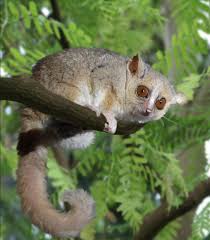
Grey Mouse Lemur Fun Facts:

  • Grey mouse lemurs are the largest members of the mouse lemur family. It is still one of the smallest primates in the world.
  • They are arboreal and nocturnal.
  • They forage for food alone, but sleep in groups in trees during the night.

IMG_3207

  • Those long tails help the mouse lemur navigate their treetop homes.
  • They store fat in their tails during the dry season, when food may not be as plentiful.
  • Grey mouse lemurs enter a daily state of torpor during the dry season. Their body temperatures drop and metabolism slow down to conserve energy.

mouse lemur2

mouse lemur3

We enjoyed watching these tiny lemurs forage during the night! Good thing we have night goggles! We have enjoyed our time on this magical island! We will have to come back!

Categories: adventure, Animals, Children, conservation, education, mammals, nature, science, Today's Post, wildlife | Tags: , , , , , , , , , , | 1 Comment

Civet Civet

Civet Civet!

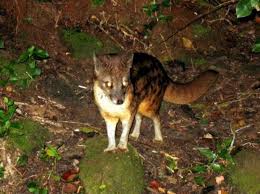
We spent the last nights of our adventure here in Madagascar looking for some really neat nocturnal animals! (And for those who asked- we are working on a glossary.)  We found the first of our discoveries on the forest floor looking for eats. This strange animal is so cool! We could hardly contain our excitement when we spotted it!

malagasy civet

IMG_3211


Date: 3/29

Location: Madagascar forest

Malagasy Civet Fun Facts:
  • Malagasy civets are shy animals.
  • They can be territorial. They scent mark their territories.
  • Malagasy civets are very vocal. They make a series of noises including grunts.
  • They spend their days asleep in trees and crevices.

IMG_3200

  • They are related to mongooses and fossa.
  • Malagasy civets are the second largest natural predator on Madagascar- the fossa is the largest.

malagasy civet2

We love these unusual little animals. They remind of us a raccoon and a fox put together! What do you think?

Categories: adventure, Animals, Children, conservation, education, endangered species, mammals, nature, science, Today's Post, wildlife | Tags: , , , , , , , , , | 2 Comments

Howdy Gecko!

Howdy Gecko!

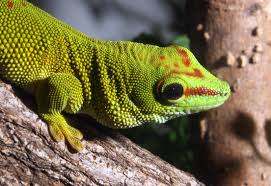
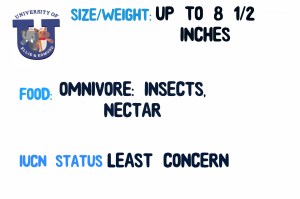
What’s more fun than meeting a new friend right in your camp? When you’re out exploring, some of the coolest animals can be found wandering around your home base! In this case, we found the Madagascar Day Gecko on the porch!
day gecko

IMG_3094

Date: 3/27

Location: Madagascar- Base Camp

Madagascar Day Gecko:

  • Madagascar day geckos do not have eyelids.
  • They have flat toe pads to help them grip when climbing.
  • Madagascar day geckos are one of the largest day gecko species.

IMG_3095

  • They can range from green to bluish-green in color.
  • Madagascar day geckos prefer a humid habitat.

day gecko2

We had the best time watching these little reptiles at camp. They are so cute and funny!

Categories: adventure, Animals, Children, conservation, education, nature, reptiles, science, Today's Post, wildlife | Tags: , , , , , , , , , | 1 Comment

Old Bright Eyes!

Old Bright Eyes!

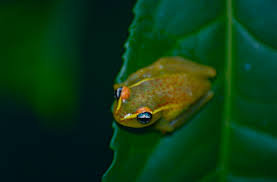
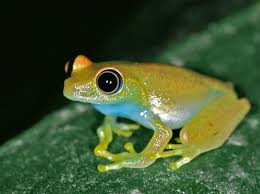
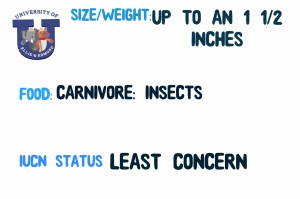
We spent our last day at camp this week looking for a small amphibian with big bright eyes. Good thing we have binoculars, because spotting these tiny frogs was not easy!

frog3

IMG_3040


Date: 3/23

Location: Madagascar

Green bright-eyed frog fun facts:
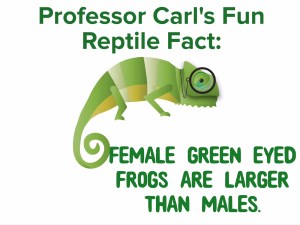
  • Green bright eyed frogs have a blue ring around the outer iris.
  • They are green with little spots and can change their color to a more reddish tone.
  • Green bright eyed frogs have webbed feet.

IMG_3041

  • During breeding season males call during the night to look for a mate.
  • Females lay their eggs in water.

frog2

frog


We had lovely time exploring the forest for these tiny frogs. So many sightings of them and other fascinating creatures! We really love this place!


Categories: adventure, amphibians, Animals, Children, conservation, education, Environment, nature, science, Today's Post, wildlife | Tags: , , , , , , , , , , | 1 Comment

Give us a V for Parrot!

Give us a V for Parrot!

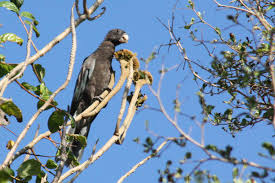
We wanted to meet one of the parrots of Madagascar! We were lucky enough to spot them in the trees on our afternoon trek yesterday! Let’s all get to know this bird together!
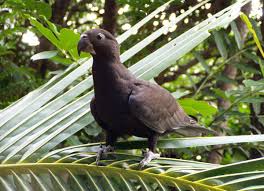
vasa parrot

IMG_3023


Date: 3/22

Location: Madagascar

Greater Vasa Parrot Fun Facts:

  • Vasa Parrots are dark grey to black in color.
  • Their dark beaks turn bright white during breeding season.

IMG_3024

  • Females are dominate and live with 3 to 8 males. This social set-up is highly unusual in parrots.
  • Vasa parrot eggs only incubate for 18 days. It’s the shortest incubation period for any parrot.
  • They are known to be voracious eaters.
  • Vasa parrots are vocal and intelligent.

vasa parrot2

vasa parrot3


We loved watching this interesting birds! They are not heard of much in the US or in the pet trade. We love to see parrots in the wild!


Categories: adventure, Animals, birds, Children, conservation, education, Environment, nature, Today's Post, wildlife | Tags: , , , , , , , , , | 1 Comment

Blog at WordPress.com.