Animals

Hornbills

Hornbills

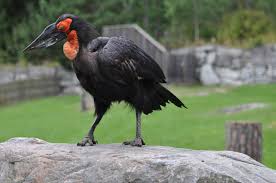
We enjoyed the best day learning more about some super neat birds- the Southern Ground Hornbill. We headed back to camp after getting to know them and then enjoyed a lovely night at base camp listening to the lions roar.

hornbill2

img_2243


Date: 2/16

Location: Serengeti

Southern Ground Hornbill Fun Facts:

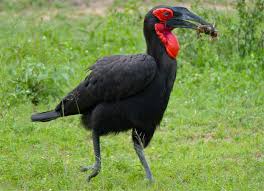
  • Southern Ground hornbills earned that name, because they spend most of their time on the ground foraging for food.
  • They are the largest of the hornbill family.
  • Females have a blue/black patch on their red throat pouch.
  • Southern Ground hornbills live in small family groups with a dominant pair.
  • The other birds help the dominate pair raise the young.
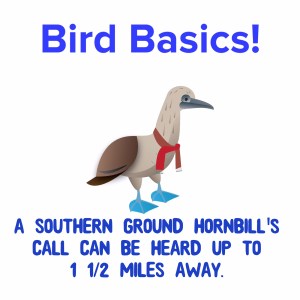
  • They are famous for their low pitches, haunting call.
img_2244

  • Ground hornbills can live up to 50-60 years.
  • They are known to groom warthogs to eat the parasites that live on them.
hornbill

honrbill


We love these vocal birds! They have such personalities! And the best eyelashes to help keep dirt out of their eyes. That is a great adaptation out on the Serengeti plain!

Categories: adventure, Animals, birds, Children, conservation, education, Environment, nature, science, Today's Post, wildlife | Tags: , , , , , , , , , | 1 Comment

We Found a New Secretary

We Found a New Secretary

Today we hung out with one of most favorite birds, the Secretary Bird. We wanted him to come be our new secretary at HQs, alas he decided to stay in the Serengeti- probably a good plan!

sec-bird

img_2209


Date: 2/14

Location: Serengeti

Secretary Fun Facts:

  • Secretary birds are diurnal (they’re active during the day) and nests in Acacia trees at night.
  • They have long powerful legs that they use for striking prey.
  • It’s thought that they were named after English secretaries because the crests on their heads look like quills that secretaries used to write with, but it’s now thought that is it comes from an Arabic word meaning “hunter bird”.

img_2210

  • Secretary birds walk more than they fly. They can walk up to 15 miles a day in search of food.
  • It is admired in Africa for its hunting skills, especially its ability to kill venomous snakes.
  • It’s even part of the Coat of Arms for South Africa.

sec-bird3

sec-bird2


We love these graceful menacing looking birds. You better watch out if you’re a snake in this bird’s path!
Categories: adventure, Animals, birds, Children, conservation, education, nature, science, Today's Post, wildlife | Tags: , , , , , , , , , , , | 1 Comment

Gotta Have Heart

Gotta Have Heart

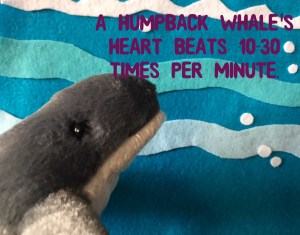
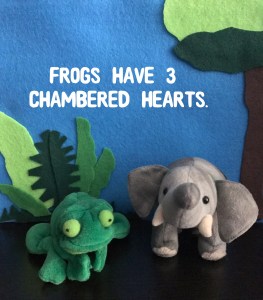
Since it’s Valentine’s Day, we thought we would share some fun facts about animal hearts!

img_2237


img_2238


img_2239


img_2241

img_2242


img_2236

img_2240


Categories: adventure, Animals, Children, conservation, education, Environment, nature, science, Today's Post, wildlife | Tags: , , , , , , , , | 2 Comments

Hello Antelope!

Hello Antelope!

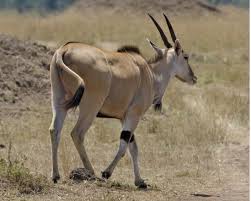
So nice to start off the week off enjoying the herds of animals on the plains! We took particular interest in the common eland. These large antelopes are graceful!

common-eland3

img_2208


Date: 2/13

Location: Serengeti

Common Eland Fun Facts:

  • The common eland is the second largest antelope in the world. The giant eland is the biggest.
  • Eland is Dutch for Elk.

img_2211

  • A male’s horns are thicker and shorter. They use their horns to compete for females during mating season.
  • Females use their horns for defense.
  • While they are not the fastest antelope, they can run long distances at slower speeds. They can also jump up to 8 ft.
  • Common elands are crepuscular.
  • They make a clicking sound when walking or running. This is unusual for antelopes.


common-eland2

common-eland


We loved watching these large and graceful animals. Often when you think of antelopes, you think of Thompson Gazelles. But these gentle giants and their tapping toes are super neat!

Categories: adventure, Animals, Children, conservation, education, Environment, mammals, nature, science, Today's Post, wildlife | Tags: , , , , , , , , , | 1 Comment

Ellie and Edmond Valentine’s

Ellie and Edmond Valentine’s

We made our annual Valentine’s for you to print and share! Save the photos to make cards or signs or to decorate a Valentine mailbox! Let your imagination go wild!

And if you are in the mood to send your sweetie something extra special-click on

Edmond’s Valentine Video and share the link with all your pals!

img_1822

img_1821

Categories: adventure, Animals, Children, crafts, education, Environment, nature, science, Today's Post, Valentines, wildlife | Tags: , , , , , , , , | 1 Comment

Pinkies!

Pinkies!

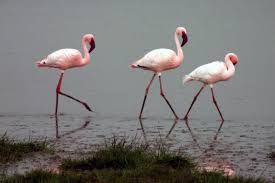
We’re back- after having an internet issue out here in the Serengeti, we got our signal back. We headed off to meet some bright pink birds! Flamingos are always one of our favorites!

img_2150

flamingo2

Date: 2/9

Location: Serengeti

Lesser Flamingo Fun Facts:

  • Lesser flamingos have black edges on their wings.
  • They have deep red bills and crimson legs.
  • Flamingos have no sense of smell.

img_2151

  • Lesser flamingos are famous for their group mating dances. These can include a few bird or up to several hundred.
  • Male and females incubate the egg.
  • Lesser flamingos travel around lakes to find food.

flamingo

We had fun watching these fabulous flamingos dance around and eat. We love long legged birds and flamingos fit the bill. Hehehe!


Categories: adventure, Animals, birds, Children, conservation, education, endangered species, Environment, nature, science, Today's Post, wildlife | Tags: , , , , , , , , , | 1 Comment

Dogs in Africa

Dogs in Africa

We spent our day watching a pack of wild dogs. These amazing canines are so fascinating. Let’s learn more about them!


wild-dog4


img_2094


Date: 2/7

Location: Serengeti

African Wild Dog Fun Facts:

  • African wild dogs’ name in Latin means painted wolf.
  • They are highly social. They live in a pack with a dominate breeding pair.
  • African wild dogs hunt in packs.
  • They can reach speeds of up to 35 mph. They generally can not outrun a prey animals, but instead can wear it out.

img_2095

  • Females are the ones who leave the pack when they are mature adults.
  • The entire pack eats together with no show of aggression to each other.
  • The pack also helps raise the pups.

wild-dog3

wild-dog


These gorgeous canines need a large territory. Unfortunately as their habitat disappears, so do the dogs. Many zoos in the US are working with partners in Africa to make sure these dogs are around for future generations.

Categories: adventure, Animals, Children, conservation, education, endangered species, Environment, mammals, nature, science, Today's Post, wildlife | Tags: , , , , , , , , , | 1 Comment

We’re Monitoring a Monitor

We’re Monitoring a Monitor

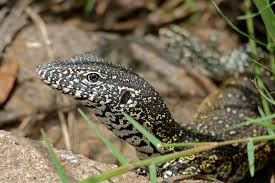
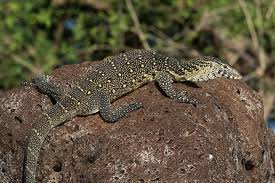
We’re spent our day looking for a large lizard that calls the Serengeti home. The monitor family includes the famous Komodo dragon! The lizard we were searching for does not get to be as big as a komodo, but they are just as cool!

nile-monitor3

img_2025


Date: 2/6

Location: Serengeti

Nile Monitor Fun Facts:

  • Nile monitor lizards are known by many names including the African small grain lizard.
  • Nile monitor lizards have long sharp claws for climbing, digging and ripping apart prey.
  • They have a range of colors from olive to to brown.
  • Nile monitors are the largest lizard in Africa.
  • They have a stout strong tail to help ward off predators.

img_2026

  • Those forked tongues give the Nile monitor a keen sense of smell.
  • They are known to hunt cooperatively. One monitor will lead a crocodile away from the  nest, while another eats the eggs.
  • Nile monitors are excellent swimmers and will take to water to escape a predator.

nile-monitor2

nile-monitor


We watched a monitor for quiet a while. These amazing lizards are intimidating to see in the wild. They are often kept as pets. As with all exotic pets, it is important to do your homework before getting a pet that will grow large and possibly unruly. There are now populations of Nile monitors in California and Florida. These lizards can be harmful to the local wildlife.

Categories: adventure, africa, Animals, Children, conservation, education, Environment, nature, reptiles, science, Today's Post, wildlife | Tags: , , , , , , , , , , | 1 Comment

Spots! Spots Everywhere!

Spots! Spots Everywhere!

After spending our first night and day adjusting, we stayed up in to the wee hours of the night to go exploring for some spotted hyenas! These social mammals are mostly nocturnal, so it was best to try and spot them at night. One of our guides is even teaching us and Professor Rita, Swahili! She’ll be sharing some of the vocabulary with you each day!

img_1836

spotted-hyena2


Date: 2/2

Location: Serengeti plain

Spotted Hyena Fun Facts

  • Spotted hyenas are the largest species of hyena.
  • They live in large clans that are led by the dominant females. The females are larger then the males.
  • Their have very complex social structures that look more like that of primates then of any other carnivore.
  • Hyenas are intelligent and resourceful predators and scavengers.

img_1842

  • They can digest every part of prey- including skin and bone!
  • Hyena have stout forelimbs and shoulders. They can run for long distances without getting tired.
  • Their large strong heads can produce a bite more than 40% stronger than that of a leopard.
  • Hyenas are very vocal and use a rang of sounds, including the famous “laughing” sound. That “laugh” is a signal of agitation or aggression.

spotted-hyena

spotted-hyena3


These marvelous animals can out hunt lions and chase them away from a kill. They are one of the most successful predators in the Serengeti. They have earned a bad reputation over years- one that is not deserved. These intelligent amazing animals have much to teach us. Remember, even the predators of the plains deserve our love and respect (from a distance of course :)!


Categories: adventure, africa, Animals, Children, conservation, Environment, mammals, nature, science, Today's Post, wildlife | Tags: , , , , , , , , | 1 Comment

Welcome to the Serengeti

Welcome to the Serengeti

fullsizerender

Whew! After heading back to HQs at the University, we unloaded all our ocean adventurer stuff and began packing for a three weeks in the Serengeti. We need rain gear as the wet season is just beginning and warm weather gear for the days and sweaters for the cool nights. Many think these dry plains are always hot, but it can get quiet cold at night. We packed our trunks – the box ones- not Ellie’s and we head all the way Africa!

We arrived at camp- it is lovely. We have a nice tent/cabin and great rangers to help us find the animals we are looking for this trip! We learned more about this magical place. The Serengeti is home to many species, including Ellie’s wild cousins- the African Elephant! There are many more fun facts about the Serengeti! Let’s learn more before we meet our first official animal tomorrow!

serengeti2

  • The Serengeti is not just flat savannas. It has hills, mountains, volcanic craters and forests.
  • The Serengeti National Park sits in Tanzania and Kenya. The park was originally established in the 1920s.
  • The Maasai tribe of people are probably one of the areas most famous group of people! They are known for their cattle.
  • There is one active volcano in the Serengeti- Ol Doinyo Lengai.
  • Many people know of the annual migration of wildebeest, zebras and antelopes. There are over a million animals that travel miles and miles to get to areas where fresh are.
  • Many animals call the Serengeti home, including antelope, buffalo, leopard, elephants, baboons, giraffes, wild dogs and many many more.
  • Some of the oldest human ancestors were found here- including Lucy, one of the most famous fossils ever found.

serengeti3

We’re super excited to meet the animals of the amazing habitat! We’ll see you tomorrow to meet an amazing predator!


Categories: adventure, africa, Animals, Children, conservation, education, Environment, nature, science, Today's Post, wildlife | Tags: , , , , , , , , | 1 Comment

Blog at WordPress.com.