conservation

It’s An Orange Fish

It’s An Orange Fish

On our first dive yesterday, one of the most striking fish we saw was the Garibaldi fish. These orange fish get their name from a famous Italian politician who often work bright orange/red. Mother nature gave this fish their color and thank goodness it did!
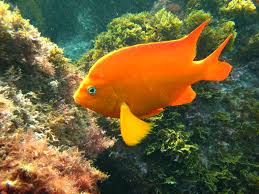
garibaldi3

img_15751


Date: 1/19

Location: Kelp forest

Garibaldi fish fun facts:

  • Garibaldi are members of the damselfish family.
  • They are the largest member of the damselfish family.
  • Garibaldi are very territorial.
  • Males will aggressively defend eggs while they are incubating. They are even known to bite divers who get to close.
  • When they charge, they make a grunting noise as a warning.

img_15761

  • Garibaldi are the state marine fish of California.
  • Females choose their mates by how much they like the nest a male has. Females can check out over a dozen nests before choosing the right one.
  • They often choose a nest that has other females’ eggs in it. This means the male defends the nest well.

garibaldi2

garibaldi

It’s amazing how nature works. Who knew that female Garibaldi were so picky. But who can blame them, when there are many predators in the sea who find your eggs to be so tasty.
Categories: adventure, Animals, Children, conservation, education, Environment, nature, oceans, science, Today's Post, wildlife | Tags: , , , , , , , , , | 1 Comment

One Swell Shark

One Swell Shark

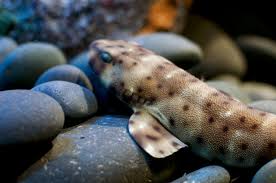
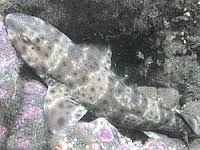
We went diving again today in the kelp forest. Our goal was to meet some of the fish who call this special place home! First up is one cool shark! Don’t worry- they are pretty shy and small :)!

img_1453

swell-shark

Date: 1/18

Location: Kelp forest

Swell Shark Fun Facts:

  • Swell sharks get their name from their unique defense mechanism. They grab their tail in their mouth and pump air or water in their stomach and swell to double their normal size.
  • They let out a barking noise when releasing the excess air.
  • Swell sharks are not strong swimmers.
  • They spend their days hiding in caves or crevices.
  • Swell sharks are mostly nocturnal and venture out to find prey.

img_14541

  • They lay eggs, called mermaids purses. The eggs are attached to hard structure to stay in play.
  • Swell sharks are biofluorescent. They absorb light electromagnetic light waves and re-emit as a different color. This neat adaptation was only discovered a few years ago.

swell-shark2

swell-shark3

We dove at two separate times -once during the day and once at night. We knew the little swell shark would be out at night. We were so excited to spot on swimming in the water. They are very shy and often when they see divers, freeze. It’s a shark that plays opossum- hehehe!

Categories: adventure, Animals, Children, conservation, education, Environment, nature, oceans, sharks, Today's Post, wildlife | Tags: , , , , , , , , , | 1 Comment

Bat of the sea!

Bat of the Sea!

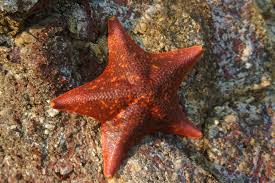
We’re spent the day looking for little sea stars that look a little funny- bat stars! We were lucky and found some!

batstar3

img_1449


Date: 1/16

Location: kelp forest

Bat Star Fun Facts:

  • Bat stars come in a variety of colors.
  • Some bat stars have more than 5 arms.

img_1455

  • Bat stars have gill like stars on their back.
  • Bat stars are scavengers. They eat prey and algae from the sea floor.
  • They have annelid worms that live in the groves of one arm eating bits of food leftover from the bat star.
  • Bat stars do not have endoskeleton or exoskeleton. They are covered in hard plates that are connected and embedded in the tissues of the bat star.

batstar2


batstar

We had fun searching tide pools for bat stars. These little echinoderms live all around the kelp forest and along the coast line. Sea stars are so cool.


Categories: adventure, Animals, Children, conservation, education, Environment, nature, oceans, science, Today's Post, wildlife | Tags: , , , , , , , | 1 Comment

Bird of the Sea!

Bird of the Sea!

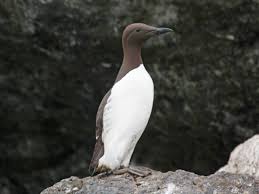
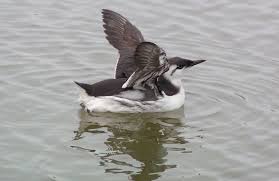
We spent the day on the cliffs bird watching. So many sea birds to love and learn about. We were especially thrilled to spot some black and white birds, reminiscent of penguins in appearance, but better fliers!

img_1445

common-mure


Date: 1/12

Location: kelp forest coastline

Common Murre Fun Facts:

  • Common murres are not very agile flyers, but are amazing at diving.
  • Common murres use their wings to propel them deep in the water to catch fish.
  • They have been recorded diving at depths of 590 ft.
  • They are related to gulls and terns.

img_1458

  • Common murre eggs are pointed on one end. They are also different colors.
  • It is thought the eggs are different colors to help the breeding pairs tell them apart.
  • After mating season, both females and males molt. During the molting season they can not fly.

common-mure3

common-mure2


We had a great time watching these birds dive and hang out on the rocks. It was a great way to end the week!

Categories: adventure, Animals, birds, Children, conservation, education, Environment, nature, oceans, science, Today's Post, wildlife | Tags: , , , , , , , | 1 Comment

Scorpions! Fish! Scorpionfish!

Scorpions! Fish! Scorpionfish!

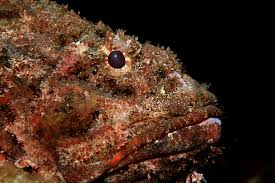
As we were diving – we met another inhabitant of the kelp forest, the California Scorpionfish. These menacing looking fish are not easy to spot because of their amazing camouflage ability.

img_1446

scorpionfish3


Date: 1/11

Location: kelp forest

California Scorpionfish

  • Scorpionfish do not stay in the one territory and often travel around.
  • They are a deep red or brown.
  • They are also called the spotted scorpionfish.
  • California scorpionfish have no swim bladder.

img_1447

  • Their venom effects heart rates and blood pressure.


scorpionfish2

scorpionfish


We had a great time spotting these neat and dangerous fish! They may not be the cutest, but they sure are cool!

Categories: adventure, Animals, Children, conservation, education, Environment, fish, nature, oceans, science, Today's Post, wildlife | Tags: , , , , , , , , | 1 Comment

We’re Seeing Red

We’re Seeing Red

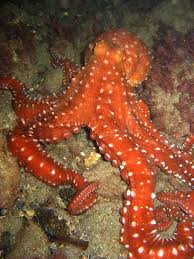
We decided to go diving in the kelp forest today to see if we could find an elusive but super cool animal- the red octopus! Octopus are one of our favorites. These cephalopods are intelligent and amazing!

img_1434

red-octopus


Date: 1/10

Location: Kelp forest

Red Octopus Fun Facts

  •  Red octopus have thousands of chemical receptors on their suckers to help them find food. Those same suckers also have millions of touch receptors.
  • Adult red octopus can be found as deep as 600 feet below the ocean’s surface.
  • Like other octopus, they can change color and texture in seconds!
  • Red octopus have a nasty venom they spit out after biting prey or a predator.
  • They use their sharp beaks to pry open shells of their favorite prey.

img_1435

  • Red octopus have excellent eyesight.
  • They are nocturnal.
  • Often red octopus leave the shells of their prey outside the caverns they hide in.

red-octopus2

These cunning predators are amazing to watch. Cephalopods always astound us with their ability to change color and texture so quickly. They are also highly intelligent and have been known to work out complicated puzzles in aquariums! Neat!


Categories: adventure, Animals, Children, conservation, education, Environment, nature, oceans, science, Today's Post, wildlife | Tags: , , , , , , | 1 Comment

We’re Seaing Lions

We’re Seaing Lions


img_0709      img_14241


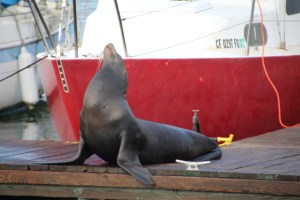
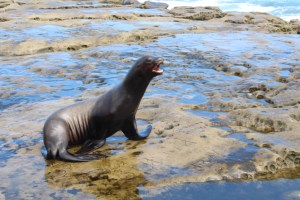
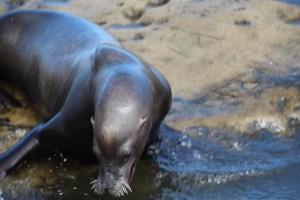
We’re starting off the week on the coast meeting some large, stinky and loud mammals.  Sea lions are so gregarious and fun to watch.

Date: 1/9

Location: California coast

California Sea Lion Fun Facts:

  • The large and in charge California sea lion is the fastest member of the pinniped family. They can reach speeds up to 25 mph.
  • A group of California sea lions is called a colony.
  • They have a thick layer of blubber to keep them warm in the cold waters off the coast of California.
  • They are agile swimmers. Their rear flippers rotate to help navigate when the haul out on land.

img_1425

  • Sea lions can slow their heart rates to help them stay under water for up to 10 mins.
  • Males are larger than females.
  • California sea lions are extremely social. They live in groups with a dominate male and females and their offspring.
  • They are very vocal. Their characteristic bark  is loud.
  • California sea lions are highly intelligent.


img_1464

img_1466


We had so much watching the sea lions interact with each other. They made us laugh. But goodness are they loud and they stink of fish :)!


Categories: adventure, Animals, Children, conservation, education, Environment, mammals, nature, science, Today's Post, wildlife | Tags: , , , , , , , | 1 Comment

Howdy Otter!

Howdy Otter!

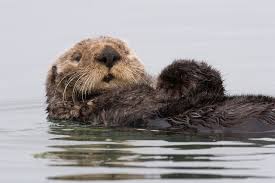
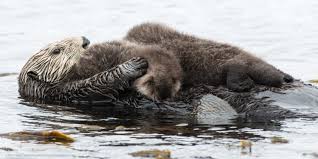
We spent our day on a boat going around the bay. We spotted several otters swimming, eating and snoozing! What a treat!

otter3

img_1312


  • Sea Otters are members of the weasel family.
  • Sea Otters live in the Pacific ocean along the North American shore and the Northern Asian shore.
  • Sea Otters spend most of their time in water. They will occasionally come ashore to rest.
  • Sea Otters’ fur is water repellent and very thick.

img_1372


  • Sea Otters role in order to trap air bubbles in their fur. The air bubbles help keep them warm.
  • Sea Otters are often found floating on the surface of kelp forests. They will even wrap the kelp around themselves to keep anchored while sleeping
  • Sea Otters groom themselves constantly. This helps keep their fur clean and waterproof.
  • Sea Otters use rocks to break some of their prey, including crabs and sea urchins.


otter2

otter


Sea Otters help keep the balance in a kelp forest. One of their favorite prey, sea urchins eat kelp; and without the otters to keep the urchin population in check, the kelp would be gone. We had such a great time watching these furry critters. It never gets old seeing otters in the wild!


Categories: adventure, Animals, Children, conservation, education, endangered species, mammals, oceans, science, Today's Post, wildlife | Tags: , , , , , , | 1 Comment

We Urchin You To Meet Us

We Urchin You To Meet Us

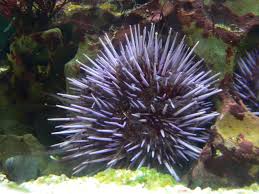
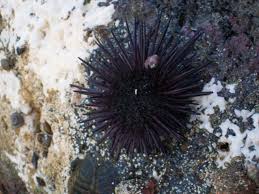
Hehe! Ok, we do love a good pun. Today we strapped on our dive gear (Ellie has a hard time getting her trunk covered) and we headed to ocean floor to see where the purple sea urchins call home. These kelp forest inhabitants are essential to the kelp forest ecosystem. Let’s learn more about them!

psuimg_1311


  • Purple sea urchins have spines that cover their bodies. These spines can move on ball and socket joints (like your shoulder).
  • The urchins use their spines to catch food and to protect themselves.
  • Sea urchins, like their relative the sea star has tiny tube feet that move them along the ocean floor.

img_1313

  • Purple sea urchins have toothlike plates around their mouths called the “Aristotle’s lantern. These strong plates help them dig holes in stones. They dig these as their burrow hideaway.
  • Purple sea urchins live in hordes. A group can decimate an entire kelp forest, by eating the plants from the bottoms up.
  • Purple sea urchins are a favorite food of the sea otter and the sunflower sea star- which swallow the urchin whole! WOW!!
  • Young sea urchins have green spines!
  • Like other echinoderms (the family sea stars belong in), they have five fold symmetry.

psu2purple-sea-urchin

We had such fun diving and watching these animals. Sea urchins don’t have eyes, they have light sensitive cells on the tips and the base of their spines. Soooooo cool!


Categories: adventure, Animals, Children, conservation, education, Environment, nature, oceans, science, Today's Post, wildlife | Tags: , , , , , , , | 1 Comment

Going to Kelp Forest

Going to the Kelp Forest

img_13091


We’re spending the month of January in Monterey, California where we will be exploring the kelp forests just off the coasts. This magnificent habitat is made up of giant algae called kelp. The kelp forests are a diverse habitat that hundreds of species call home. Kelp forests are often compared to rainforests, with a canopy and layers going deeper in the ocean.

Kelp forests fun facts:

  • Giant kelp grows about 10-12 inches a day!
  • Kelp has gas filled bladders along fronds. These help it grow vertical to the surface.
  • Giant kelp can grow up to 175 long.
  • Kelp is flexible and sways in the ocean currents.
  • Kelp does not have roots in the sand,  but it attaches to rocks.
  • Sea urchins can destroy a kelp forest when their populations are out of control.
  • Sea otter wrap kelp around themselves so they do not drift away while sleeping.
  • Many fish and invertebrates call the kelp forest home, including sea stars, garibaldi fish, sharks, anemones and sponges.

fullsizerender86

We are so excited to meet the animals of this amazing habitat! Are you ready to join us?

Categories: Animals, Children, conservation, education, Environment, habitats, nature, oceans, science, Today's Post, wildlife | Tags: , , , , , , , | 1 Comment

Blog at WordPress.com.