conservation

Is That a Lion in the Tree?

Is that a Lion in the Tree?

golden-lion-tamarinimg_2326


ellie_edmund_professors-bear


Date: 9/28

Location: Brazilian Rainforest


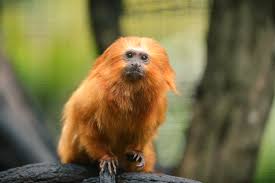
  • Golden Lion Tamarins have beautiful golden coats and fluffy manes around their faces.
  • They are diurnal (active during the day) and arboreal (live in the trees).
  • Golden Lion Tamarins live in small family groups led by a female-male breeding pair.
  • Mother Golden lion tamarins give birth to 1 or 2 offspring.
  • Father Golden lion tamarins take care of the babies and carry them on their backs. They give them to their mom when it’s time for feeding.

img_2325 golden-lion-tamarin3

golden-lion-tamarin2


Golden lion tamarins are adorable, but they are endangered. We saw a group because ranchers have saved parts of their land to give the monkeys a home. Zoos in America are raising these tamarins and sending them back to the wild to be released. They are tagged with radio collars and followed by scientists! This is conservation at work. It takes all of us!

Categories: adventure, Animals, Children, conservation, education, Environment, mammals, nature, science, Today's Post, wildlife | Tags: , , , , , , , , , , | Leave a comment

A Frog You Can See Through

A Frog You Can See Through

img_2321glass-frog


ellie_edmund_professors-chameleon(1)


Date: 9/27

Location: Cloud forest

  • Northern glass frogs like other glass frogs have clear or transparent skin on their bellies.
  • The top of the Northern glass frog is a pale green.

img_2327

  • They have yellow suction pads on their toes for gripping and yellow irises in their eyes.
  • Northern glass frogs are also known as the Fleischmann’s glass frog.
  • They are nocturnal.
  • Female glass frogs lay eggs under a leaf over running water. When the eggs hatch, the tadpoles fall into the water to develop.
  • Males guard the eggs until they hatch.
  • They are arboreal.

glass-frog2

It was not easy to climb high up in to the cloud forest today, but it was worth it. Edmond kept saying he wished we’d had frogs to eat all the bugs in our group. Professor Carl did eat a few!  We’ll need heavier mud to cover ourselves next time. But after our long, bug-filled hike, we spotted those cute little frogs. It was totally exciting. 

Categories: adventure, amphibians, Animals, Children, conservation, education, Environment, nature, science, Today's Post, wildlife | Tags: , , , , , , , , , | Leave a comment

A Fish with a Bite!

A Fish with a Bite!

img_2322red-pirahna3


ellie_edmund_professors-seahorse(1)


Date: 9/26

Location: Amazon River

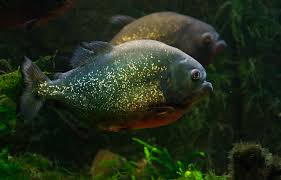
  • Red Bellied Piranha  are also known as red piranha.
  • They live in shallow waters of the Amazon river.
  • Red bellied piranha have a mouth full of triangular sharp teeth.
  • They can bite with enormous force.
  • Red bellied piranha rarely feed in groups. Feeding frenzies are rare.
  • If a feeding frenzy does take place, it happens when the fish are starving.
  • Attacks on humans are rare.
  • Red piranha make sounds using muscles associated with their swim bladder.

img_2329

  • They use these sounds to communicate with each other.

red-pirahna2red-pirahna

Piranha have such a bad reputation, but that is mostly a myth. They are mostly solitary and they even eat nuts and seeds! We learned quiet a bit about these misunderstood fish on our boat trip today. Tomorrow we head up in to the cloud forest to meet a tiny amphibian.
Categories: adventure, Animals, Children, conservation, education, Environment, fish, nature, science, Today's Post, wildlife | Tags: , , , , , , , , , | Leave a comment

Stork Spotting

Stork Spotting

stork3img_2148


ellie_edmund_professors-bfbooby


Date: 9/22

Location: Edge of the rainforest

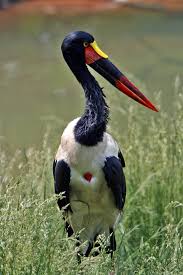
  • Jaribu storks are the tallest flying bird in South & Central America.

img_2150

  • Storks are mute. They click their beaks to communicate.
  • They gather in flocks in shallow water to feed in groups.
  • Jaribu storks use the red pouch on their neck to filter out water when scooping up food.

stork2

  • Females and male jaribu storks build large nests that they use every year. They often add to the nests each year.
  • Females and male jaribu storks incubate the eggs.
  • They can live up to 35 years.

img_2149stork

We sat near the edge of a swamp and watched these graceful long-legged births go fishing! They are quiet impressive. Those gorgeous markings are easy to spot on the marshes too! No one thinks storks are pretty, but we do now!


Categories: adventure, Animals, Children, conservation, education, Environment, nature, science, Today's Post, wildlife | Tags: , , , , , , , , | Leave a comment

Soooooo Slow!

Sooooo Slow!

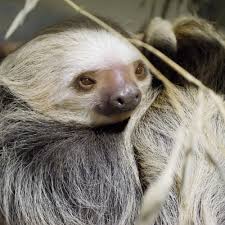
sloth3img_2146


ellie_edmund_professors-bear


Date: 9/21

Location: Amazon Rainforest

  • Sloths are related to armadillos and anteaters.
  • Two-toed sloths are arboreal. They spend most of their lives in the tops of the trees.
  • They only come down once a month to use the bathroom.
  • Like other sloths, they have algae and insects growing in their fur.

img_2147

  • Toe-toed sloths are nocturnal, they spend their evenings eating flowers and leaves.
  • They are excellent swimmers.
  • Two-toed sloths are larger than their cousins the three-toed sloths.
  • Two-toed sloths have no canines or incisor teeth.

sloth2sloth


Sloths have always been a favorite of ours. It was a treat to find one on our adventures in the rainforest this week. Of course, we needed binoculars to look so high up in the trees. Can you imagine spending most of your life hanging upside down in the trees? It works for the sloth!

Categories: adventure, Animals, Children, conservation, education, Environment, mammals, nature, science, Today's Post, wildlife | Tags: , , , , , , , , , | Leave a comment

Walks on Water!

Walks on Water!

basilisk3img_2144


ellie_edmund_professors-chameleon(1)


Date: 9/19

Location: Amazon rainforest


  • Common basilisks are also called the Jesus lizard for their ability to run on water.
  • Common basilisks can run up to 7 mph. The average is 5 mph.
  • They stand erect and run on their back feet. Younger, lighter lizards can run longer distances than adults.
  • They are also excellent swimmers and can stay in the water for up to a 1/2 hour.

img_2145

  • Common basilisks have large crests down their backs.
  • The males have crests on their heads and tails.
  • Commons basilisks are excellent climbers too.
  • These carnivores have a mouth full of sharp teeth.

img_2158basilisk

We happened upon a basilisk escaping from a predator as we walking around today. It ran so fast over the water before taking a swim. These lizards are amazing and those fast feet are a great adaptation to get away from predators.


Categories: adventure, Animals, Children, conservation, education, Environment, nature, reptiles, science, Today's Post, wildlife | Tags: , , , , , , , , , | Leave a comment

ONE BIG FISH!

ONE BIG FISH!

img_2134 arapiama3


ellie_edmund_professors-seahorse(1)


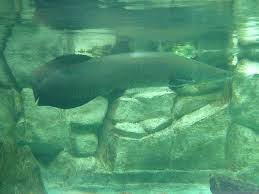
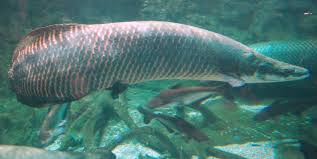
We had to head back to the University for a few days last week to honor one of our dear students who we lost. We’re back in the Amazon Rainforest today to meet a large fresh water fish- the arapaima.

arapiama

Date: 9/19

Location: Amazon Rainforest

Arapaima Facts:

  • Arapaima have long torpedo shaped bodies.
  • Arapaima scales are hard, heavy and are covered in minerals. These help protect them.
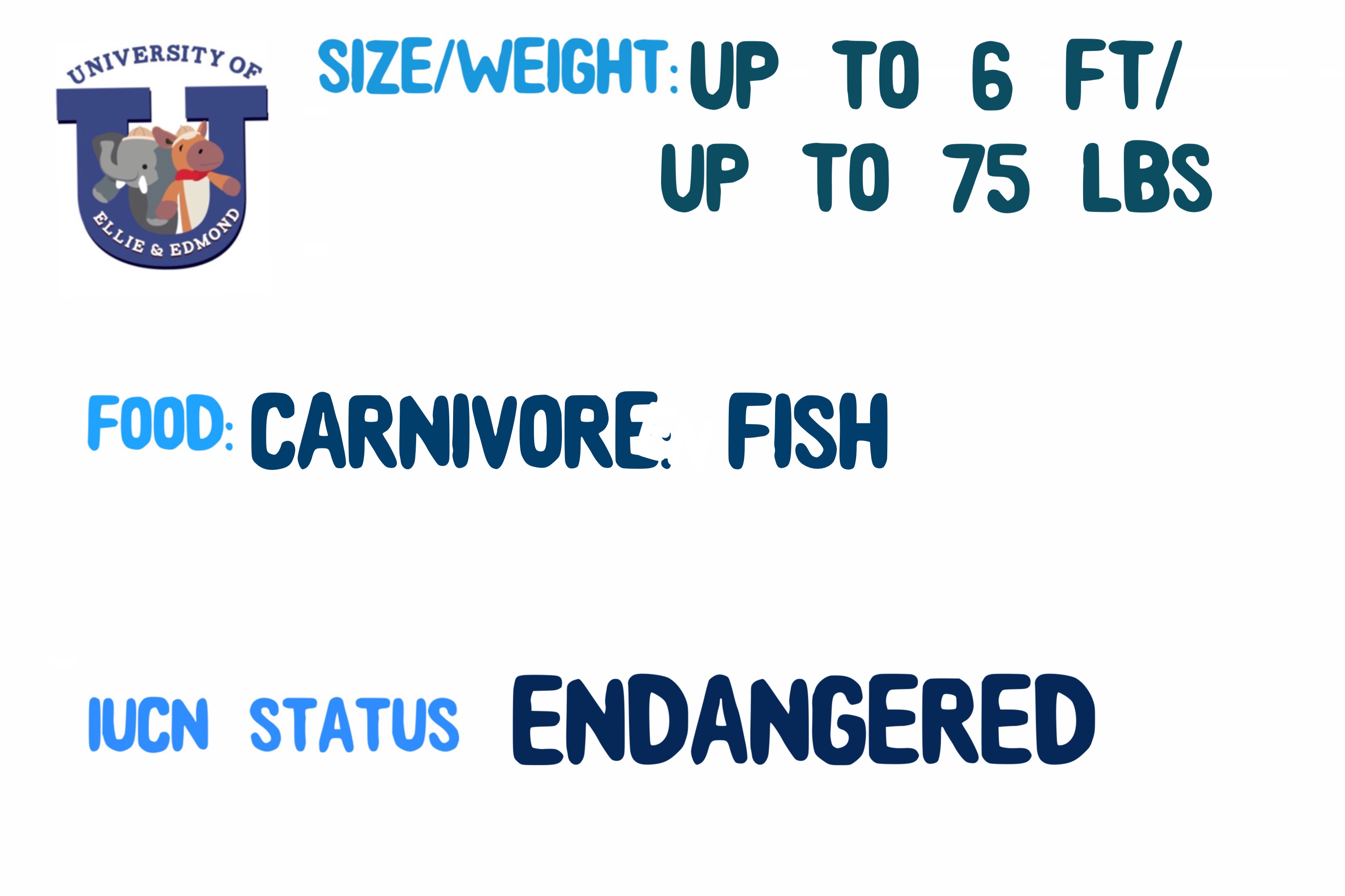
  • They are the largest fresh water fish on earth.

img_2136

  • They do have gills, but use a specialized organ to breathe air from the surface too.
  • They come to the surface every 5 to 15 minutes to breathe.
  • Male arapaima protect the babies in their mouths until they are big enough to protect themselves.
  • Arapaima have bony tongues.
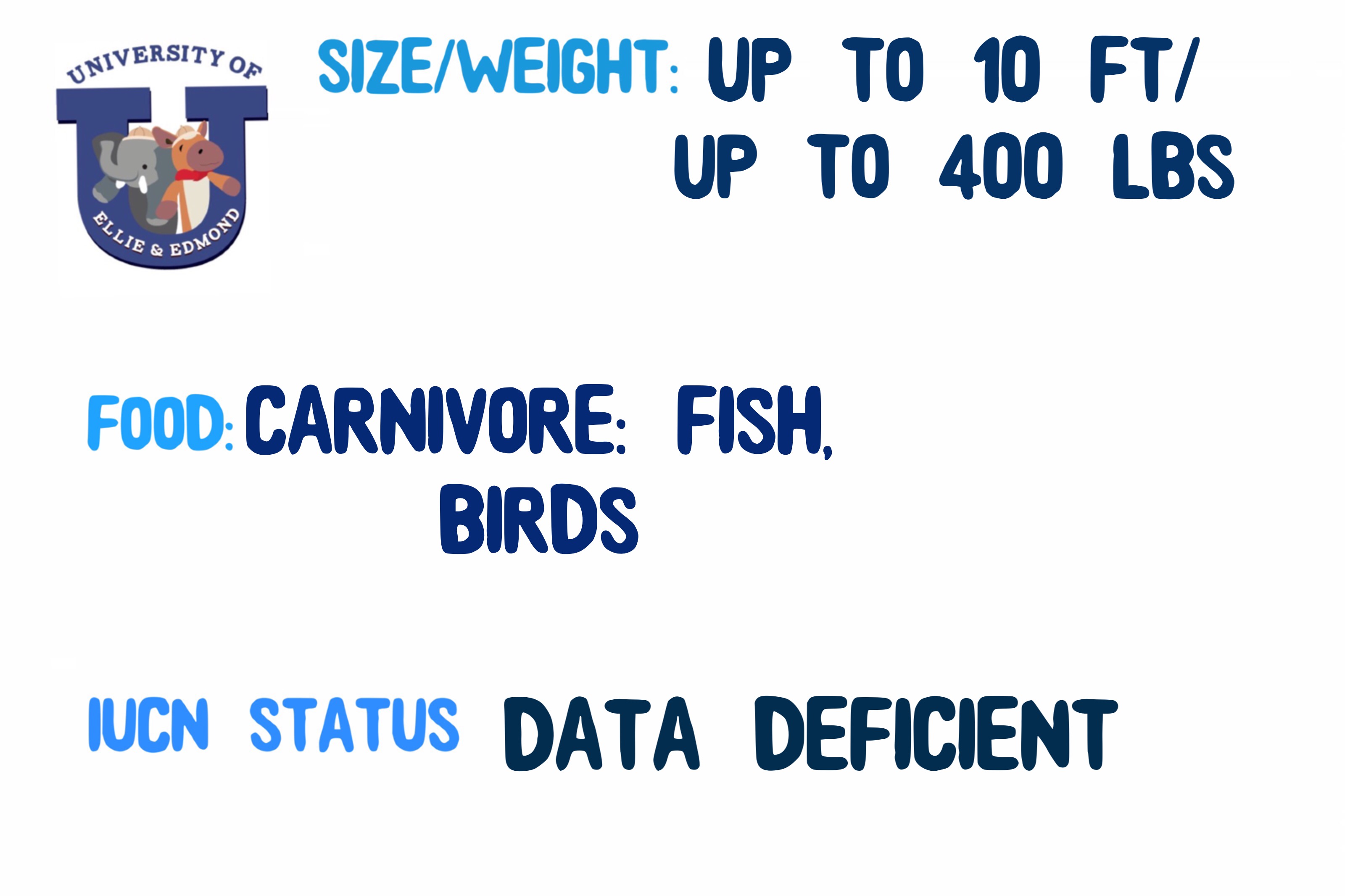
  • While they are listed as data deficient by the IUCN, they are listed as endangered by CITES and are protected from over fishing.

img_2135arapiama2


Arapaima are amazingly cool fish! Did you know there were fish that breathed air too? Isn’t that neat? It’s a great adaptation to have when you live in water that may not be very oxygen rich. We’re off to meet some new friends tomorrow!

Categories: adventure, Animals, Children, conservation, education, Environment, fish, nature, science, Today's Post, wildlife | Tags: , , , , , , , , , | Leave a comment

River Wolf!

River Wolf!

giant-otter3img_1875


ellie_edmund_professors-bear


Date: 9/14

Location: Amazon River

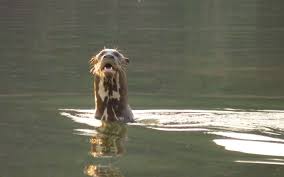
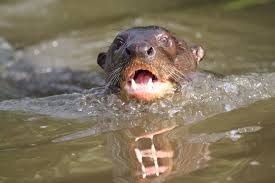
  • Giant river otters are highly social- live in family groups of one monogamous pair & offspring.
  • They are very vocal and make many different sounds including, clicks & whistle.
  • Giant river otters recognize each other by white marks on their chests. They pop up out of the water to look for food and other otters. It’s called periscoping!

giant-otter2

img_1876

  • Largest member of the otter family.
  • Giant river otters have webbed feet and a flat wing like tail for swimming.
  • They have dense fur to keep water from getting to it’s skin. That fur is velvet soft.
  • Giant river otters are considered to be apex predators in their habitats.
  • They eat 6-9 lbs of food a day!
  • The can detect changes in water currents & pressure with their whiskers.
  • Baby otters do not know how to swim when they are born. They are taught by their parents.


giant-otter


  img_1847


The Tupi people of Brazil call it the ariranha- meaning water jaguar and n Spanish the name means river wolf.


Wow! What a day we had on the river! In the past three days we spotted pacu, anaconda and today giant river otters! They were an extra special treat, as they are highly endangered and very rare to spot! Conservationists are working hard to protect this special species! We could sit on the boat all day and listen to them chirp and talk to each other!


Categories: adventure, Animals, Children, conservation, education, Environment, mammals, nature, science, Today's Post, wildlife | Tags: , , , , , , , , | Leave a comment

Don’t Let Them Get the Squeeze on You!

Don’t Let Them Get the Squeeze on You!

green-anaconda2img_1860


ellie_edmund_professors-chameleon(1)


Date: 9/13

Location: Amazon River

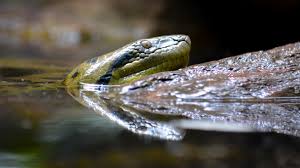
  • Green anacondas are members of the boa constrictor family.
  • They love swamps and marshes and spend most of their time in the water. They are very slow on land due to heavy bodies.

img_1880

  • They can swallow their prey whole, due to flexible ligaments in their jaws.
  • They can go weeks without eating.
  • Females incubate eggs inside and then give birth to live young.
  • Babies are almost 2 feet long when born and can take care of themselves.
  • Females can be 5x as big as the males.
  • They are nocturnal.
  • Their scientific name means “good swimmer” in Greek.

green-anaconda

We barely spotted this anaconda- hehehe- we rhymed! They are nocturnal and we were out during the day on our boat trip! We just caught a glimpse of its nostrils! These giants are amazing creatures, but we’ll stay away if they ask for a hug!

Categories: adventure, Animals, Children, conservation, education, Environment, nature, reptiles, science, Today's Post, wildlife | Tags: , , , , , , , , , | Leave a comment

That’s No Piranha!

That’s No Piranha!

pacuimg_1859


ellie_edmund_professors-seahorse(1)


Date:9/12

Location: Amazon river


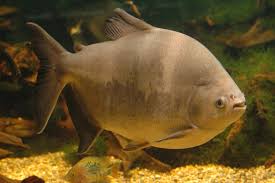
  • Pacu are fresh water fish.
  • They are related to piranha, but they are not carnivores like piranha.
  • They grow much larger than piranha.
  • Young pacu look very similar to piranha and will hide in schools of piranha for protection. Once they are bigger they will go off on their own.
  • They have flat molar like teeth. Pacu use those teeth to crush nuts.

pacu2

  • These teeth are famous for their human like appearance, which can be startling. 
  • Pacu are popular fish in the pet trade.
  • They are sold as small fish, but grow larger than expected and are then released into wild habitats where they don’t belong. They have been found in Southeast Asia, parts of North America and even in the UK.
  • It is illegal to dump non-native wildlife in most of those places and the Pacu can out compete local fish and wildlife.

pacu3

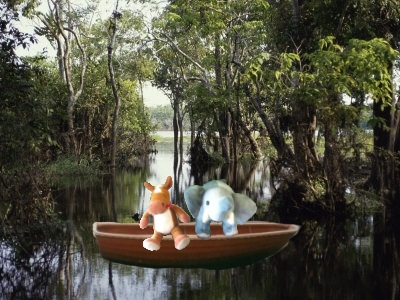
We enjoyed taking a boat down the Amazon river to see some of the amazing animals that call it home! We spotted several pacu and some other creatures who’ll meet later this week! This place is awesome!

e-e-river-boat

Categories: adventure, Animals, Children, conservation, education, Environment, fish, nature, science, Today's Post, wildlife | Tags: , , , , , , , , | Leave a comment

Blog at WordPress.com.