mammals

The Infamous Badger

The Infamous Badger

We have spent our day looking for an infamous inhabitant of the Serengeti- the honey badger! These tenacious creatures are the stuff of legends. We learned so much about them!

honey-badger3

img_2340


Date: 2/22

Location: Serengeti

Honey Badger Fun Facts:

  • Another name for the honey badger is the ratel.
  • They have loose thick skin that helps protect them from predators. Even porcupine quills can not penetrate it.
  • Honey badgers live in burrows. They can dig a hiding burrow in a matter of minutes.
  • Honey badgers are intelligent and are known to use tools.

img_2341

  • They are tenacious and will attack animals much larger than themselves, including lions.
  • Honey badgers have a gland at the base of their tale that releases a foul smelling liquid. It is used to mark their territory and to ward off predators.
  • They partner with honeyguide birds to locate a hive. The birds enjoy the spoils after the honey badger destroys the hive.

honey-badger2

honey-badger


We love these nasty, tough critters. They are one of the most fascinating animals we have seen. We sure wouldn’t pick a fight with one!

Categories: adventure, africa, Animals, Children, conservation, education, Environment, mammals, nature, science, Today's Post, wildlife | Tags: , , , , , , , , , , | 1 Comment

A is for Aardvark

A is for Aardvark

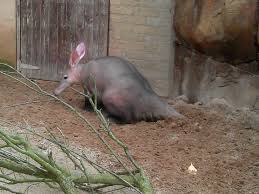
We had a lovely weekend exploring the area on our own. We headed out Sunday night with our ranger to see if we could find one super awesome and odd looking animal- the aardvark. We were so excited to find one snuffling around for eats!

img_2317

Date: 2/20

Location: Serengeti

Aardvark Fun Facts:

  • Aardvarks are burrowers. They live in large burrows during the day and forage for food at night.
  • They have large claws for digging in to ant and termite mounds. Those claws also help protect them.
  • Aardvarks have long tongues they use to eat their favorite meal. They close their nostrils to avoid dust and getting the insects in their snouts.

img_2318

  • Aardvarks have a keen sense of hearing with those large ears.
  • They have tough skin with little fur that helps protect them from insect bites.
  • Aardvarks can eat up 50,000 insects a day.
  • Aardvarks have webbed feet.

img_2319

aardvark2

Aardvarks are funny looking creatures with their large ears, long thick tails, snouts & claws. They are the most fun if you ask us! We can’t help but giggle when we see one! Do you love them as much as we do?

Categories: adventure, Animals, Children, conservation, education, Environment, mammals, nature, science, Today's Post, wildlife | Tags: , , , , , , , , , | 1 Comment

Hello Antelope!

Hello Antelope!

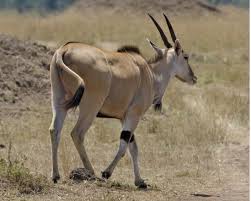
So nice to start off the week off enjoying the herds of animals on the plains! We took particular interest in the common eland. These large antelopes are graceful!

common-eland3

img_2208


Date: 2/13

Location: Serengeti

Common Eland Fun Facts:

  • The common eland is the second largest antelope in the world. The giant eland is the biggest.
  • Eland is Dutch for Elk.

img_2211

  • A male’s horns are thicker and shorter. They use their horns to compete for females during mating season.
  • Females use their horns for defense.
  • While they are not the fastest antelope, they can run long distances at slower speeds. They can also jump up to 8 ft.
  • Common elands are crepuscular.
  • They make a clicking sound when walking or running. This is unusual for antelopes.


common-eland2

common-eland


We loved watching these large and graceful animals. Often when you think of antelopes, you think of Thompson Gazelles. But these gentle giants and their tapping toes are super neat!

Categories: adventure, Animals, Children, conservation, education, Environment, mammals, nature, science, Today's Post, wildlife | Tags: , , , , , , , , , | 1 Comment

Dogs in Africa

Dogs in Africa

We spent our day watching a pack of wild dogs. These amazing canines are so fascinating. Let’s learn more about them!


wild-dog4


img_2094


Date: 2/7

Location: Serengeti

African Wild Dog Fun Facts:

  • African wild dogs’ name in Latin means painted wolf.
  • They are highly social. They live in a pack with a dominate breeding pair.
  • African wild dogs hunt in packs.
  • They can reach speeds of up to 35 mph. They generally can not outrun a prey animals, but instead can wear it out.

img_2095

  • Females are the ones who leave the pack when they are mature adults.
  • The entire pack eats together with no show of aggression to each other.
  • The pack also helps raise the pups.

wild-dog3

wild-dog


These gorgeous canines need a large territory. Unfortunately as their habitat disappears, so do the dogs. Many zoos in the US are working with partners in Africa to make sure these dogs are around for future generations.

Categories: adventure, Animals, Children, conservation, education, endangered species, Environment, mammals, nature, science, Today's Post, wildlife | Tags: , , , , , , , , , | 1 Comment

Spots! Spots Everywhere!

Spots! Spots Everywhere!

After spending our first night and day adjusting, we stayed up in to the wee hours of the night to go exploring for some spotted hyenas! These social mammals are mostly nocturnal, so it was best to try and spot them at night. One of our guides is even teaching us and Professor Rita, Swahili! She’ll be sharing some of the vocabulary with you each day!

img_1836

spotted-hyena2


Date: 2/2

Location: Serengeti plain

Spotted Hyena Fun Facts

  • Spotted hyenas are the largest species of hyena.
  • They live in large clans that are led by the dominant females. The females are larger then the males.
  • Their have very complex social structures that look more like that of primates then of any other carnivore.
  • Hyenas are intelligent and resourceful predators and scavengers.

img_1842

  • They can digest every part of prey- including skin and bone!
  • Hyena have stout forelimbs and shoulders. They can run for long distances without getting tired.
  • Their large strong heads can produce a bite more than 40% stronger than that of a leopard.
  • Hyenas are very vocal and use a rang of sounds, including the famous “laughing” sound. That “laugh” is a signal of agitation or aggression.

spotted-hyena

spotted-hyena3


These marvelous animals can out hunt lions and chase them away from a kill. They are one of the most successful predators in the Serengeti. They have earned a bad reputation over years- one that is not deserved. These intelligent amazing animals have much to teach us. Remember, even the predators of the plains deserve our love and respect (from a distance of course :)!


Categories: adventure, africa, Animals, Children, conservation, Environment, mammals, nature, science, Today's Post, wildlife | Tags: , , , , , , , , | 1 Comment

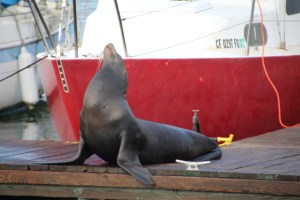
We’re Seaing Lions

We’re Seaing Lions


img_0709      img_14241


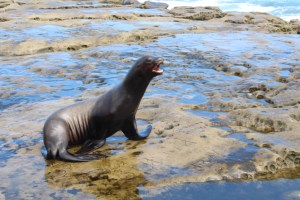
We’re starting off the week on the coast meeting some large, stinky and loud mammals.  Sea lions are so gregarious and fun to watch.

Date: 1/9

Location: California coast

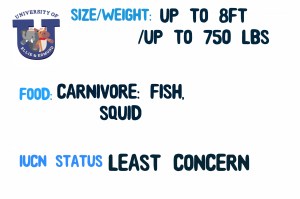
California Sea Lion Fun Facts:

  • The large and in charge California sea lion is the fastest member of the pinniped family. They can reach speeds up to 25 mph.
  • A group of California sea lions is called a colony.
  • They have a thick layer of blubber to keep them warm in the cold waters off the coast of California.
  • They are agile swimmers. Their rear flippers rotate to help navigate when the haul out on land.

img_1425

  • Sea lions can slow their heart rates to help them stay under water for up to 10 mins.
  • Males are larger than females.
  • California sea lions are extremely social. They live in groups with a dominate male and females and their offspring.
  • They are very vocal. Their characteristic bark  is loud.
  • California sea lions are highly intelligent.


img_1464

img_1466


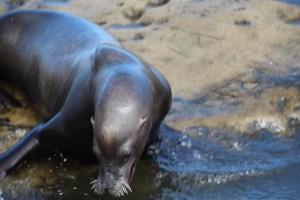
We had so much watching the sea lions interact with each other. They made us laugh. But goodness are they loud and they stink of fish :)!


Categories: adventure, Animals, Children, conservation, education, Environment, mammals, nature, science, Today's Post, wildlife | Tags: , , , , , , , | 1 Comment

Howdy Otter!

Howdy Otter!

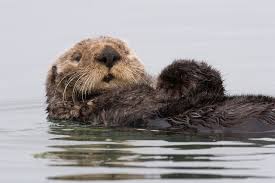
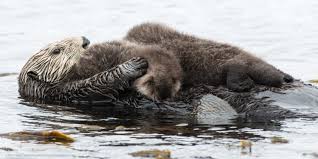
We spent our day on a boat going around the bay. We spotted several otters swimming, eating and snoozing! What a treat!

otter3

img_1312


  • Sea Otters are members of the weasel family.
  • Sea Otters live in the Pacific ocean along the North American shore and the Northern Asian shore.
  • Sea Otters spend most of their time in water. They will occasionally come ashore to rest.
  • Sea Otters’ fur is water repellent and very thick.

img_1372


  • Sea Otters role in order to trap air bubbles in their fur. The air bubbles help keep them warm.
  • Sea Otters are often found floating on the surface of kelp forests. They will even wrap the kelp around themselves to keep anchored while sleeping
  • Sea Otters groom themselves constantly. This helps keep their fur clean and waterproof.
  • Sea Otters use rocks to break some of their prey, including crabs and sea urchins.


otter2

otter


Sea Otters help keep the balance in a kelp forest. One of their favorite prey, sea urchins eat kelp; and without the otters to keep the urchin population in check, the kelp would be gone. We had such a great time watching these furry critters. It never gets old seeing otters in the wild!


Categories: adventure, Animals, Children, conservation, education, endangered species, mammals, oceans, science, Today's Post, wildlife | Tags: , , , , , , | 1 Comment

Unicorns of the Sea!

Unicorns of the Sea!

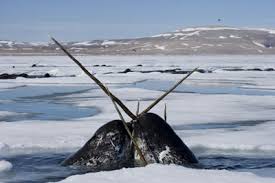
We couldn’t resist to make one last stop in our trip to the Arctic Circle to see some narwhals! They are one of our favorites- we even have two narwhals living at HQs! We had a great time on the SS Ellie and Edmond boat watching these unicorns of the sea!

narwhalimg_0893


ellie_edmund_professors-bear


Date: 12/20

Location: arctic circle

  • The Narwhal is often called the unicorn of the sea.
  • They have the most northerly range of any mammal on the planet.
  • Narwhals have a modified upper incisor tooth that grows up to 9ft long.
  • This tooth looks like a horn. It grows through the upper mouth and is seen mostly in male Narwhals, but females can have small tusks.  Scientists aren’t completely sure what the purpose of the tusk is, but think it might be for attracting females.
  • The long tusk is made of ivory, just like an elephants tusks!

img_08941

  • Narwhals have a thick layer of blubber, like other arctic animals that help keep them warm in the cold water.
  • Narwhals swim in groups called pods. Pods can include as many as 1000 individuals.
  • Narwhals are very communicative and use a wide range sounds, including clicks and whistles.
  • They suck food through their powerful lips and tongue.

narwhalnarwhal2


Narwhals are amazing animals! They survive in very cold waters and grow this awesome long tusk that makes them look unique!  If you could pick a crazy adaptation like tusks what would it be?


Categories: adventure, Animals, Children, conservation, education, Environment, mammals, nature, science, Today's Post, wildlife | Tags: , , , , , , , , , , , | Leave a comment

Meeting the Caribou!

Meeting the Caribou!

reindeer3img_0734


ellie_edmund_professors-bear


Date: 12/14

Location: Arctic circle

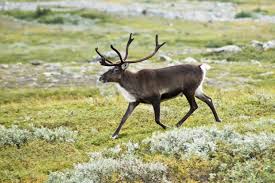
  • Reindeer are also called caribou.
  • They vary in color and size depending on where they live. Reindeer that live closest to the arctic are white in color.
  • Both female and male reindeer have antlers. Males lose their antlers in the winter.
  • Reindeer antlers are covered in a layer of fur called velvet.
  • Their noses are specialized to warm cold air before it enters their lungs.

img_0736

  • Reindeer have a four chambered stomach!
  • One of their favorite foods is called reindeer moss.
  • Some reindeer populations migrate. They can migrate up to 3,000 miles in one year! Whew, they must be tired!

reindeer2reindeer


We have seen reindeer before, but our excitement never diminishes. These graceful members of the deer family with their velvet covered antlers are so amazing! Plus we are always on the lookout for one with a shiny red nose and we have yet to find one! Haha!


Categories: adventure, Animals, Children, conservation, education, Environment, mammals, nature, science, Today's Post, wildlife | Tags: , , , , , , , , , | Leave a comment

We are the Walrus

We are the Walrus

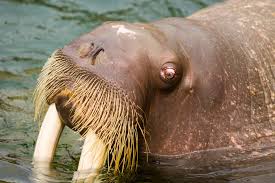
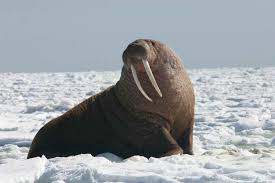
We’re off to the Pacific ocean in Northern Canada to meet the gregarious, fat and funny walrus. We love these giant marine mammals and we couldn’t have been more excited to see them again! We made sure to bundle up before making our way over on the ice!
walrusimg_0730

ellie_edmund_professors-bear

Date: 12/12

Location: Arctic circle

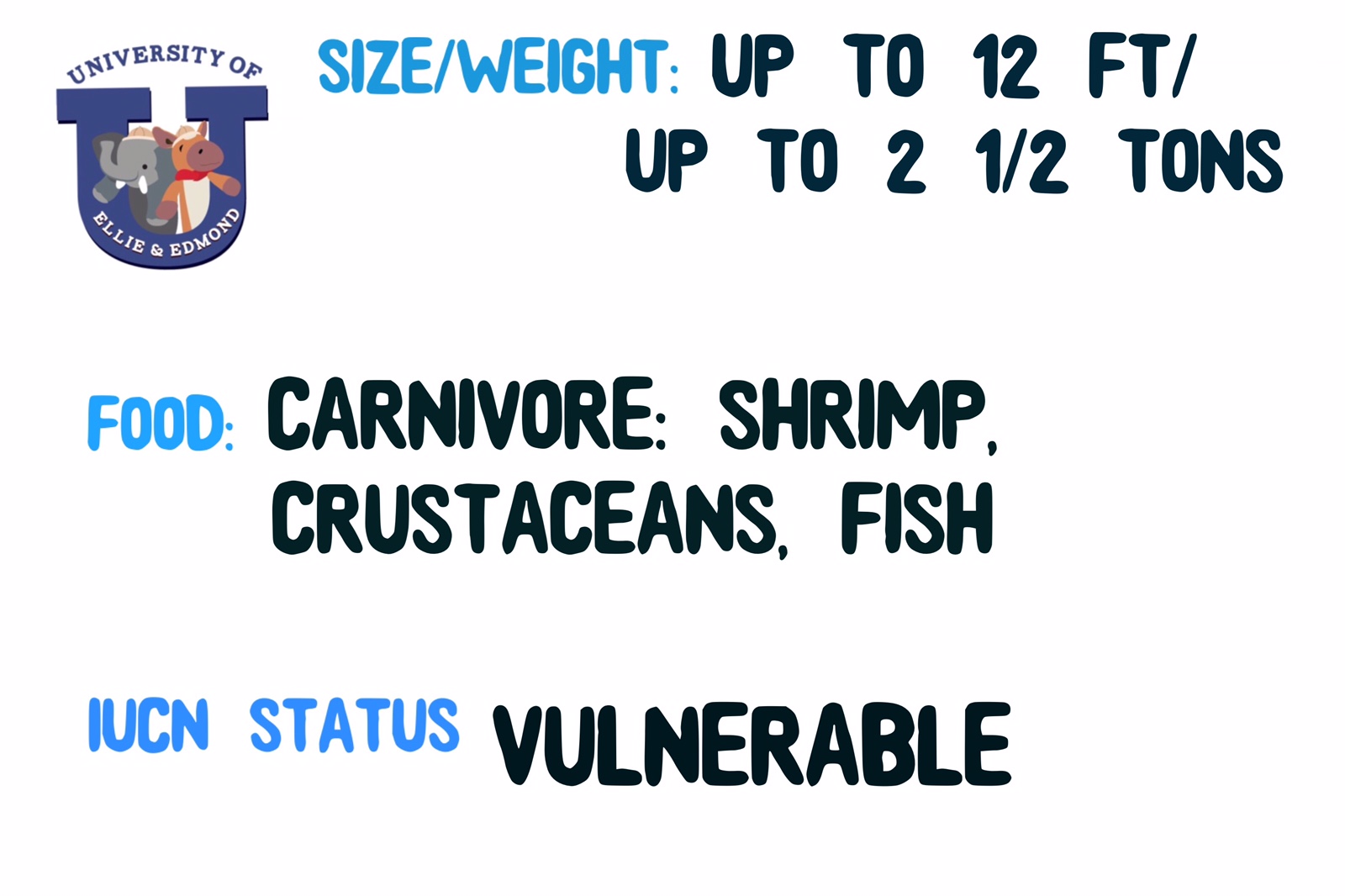
  • Walrus eat prey off the bottom of the oceans and use suction to eat.
  • They can stay underwater for up to 25 minutes and can dive down to 330ft deep.
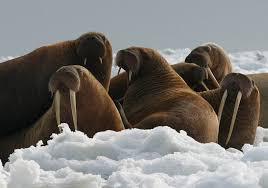
  • They are highly social and often are seen in large groups, called herds.
  • Male walruses are twice the size of females.
  • They have rough wrinkly skin and very whiskery faces.
  • A walrus’ skin can be up to 4″ thick.


  • Walruses have tusks of ivory. They can grow up to 3 ft 3” long.
  • Walrus babies can weigh up to 174lbs when born.
  • Like seals, they lack external ears.

walrus2walrus3

Those magnificent tusks always remind Ellie of her tusks. These social animals always make us laugh with their grunting and barking sounds. We can’t even handle how they get around- so funny!
Categories: adventure, Animals, Children, conservation, education, Environment, mammals, nature, science, Today's Post, wildlife | Tags: , , , , , , , , , , | Leave a comment

Blog at WordPress.com.